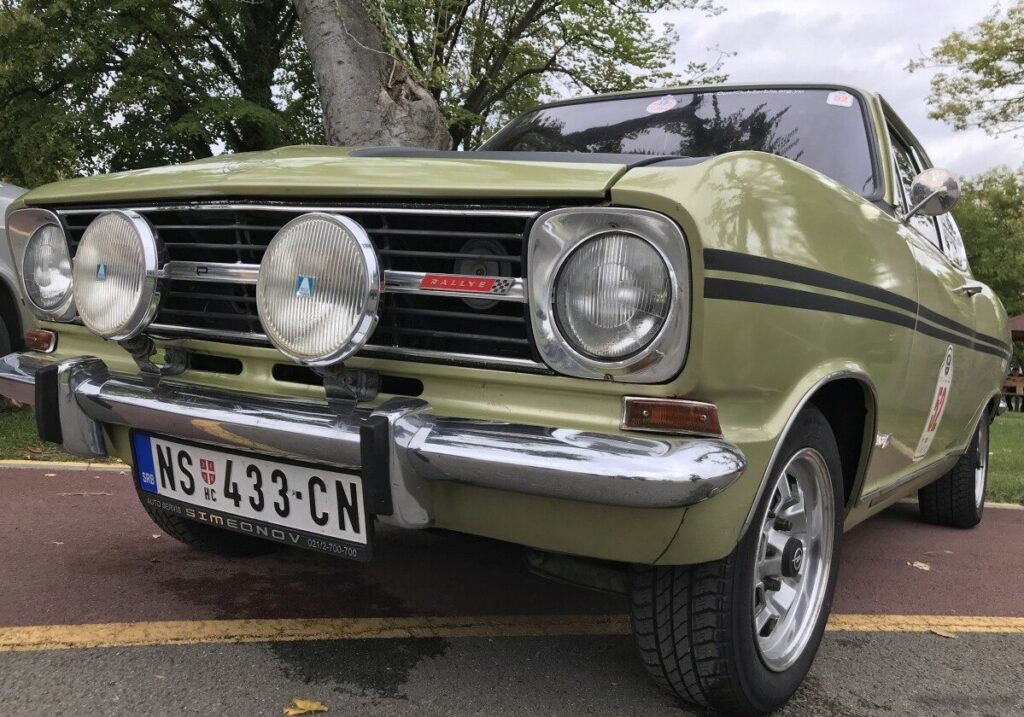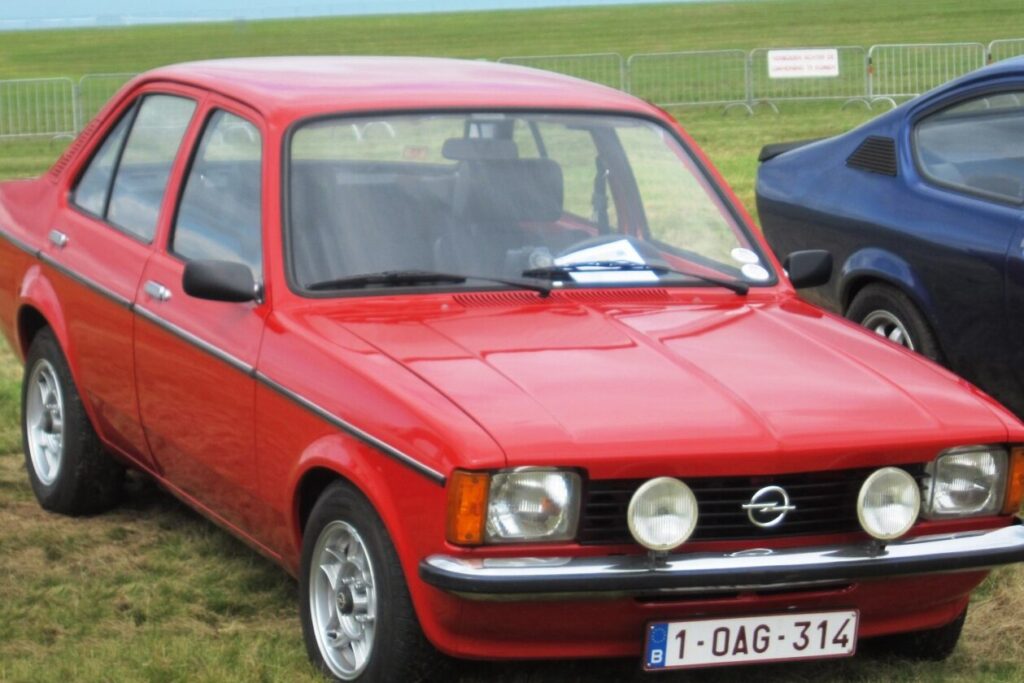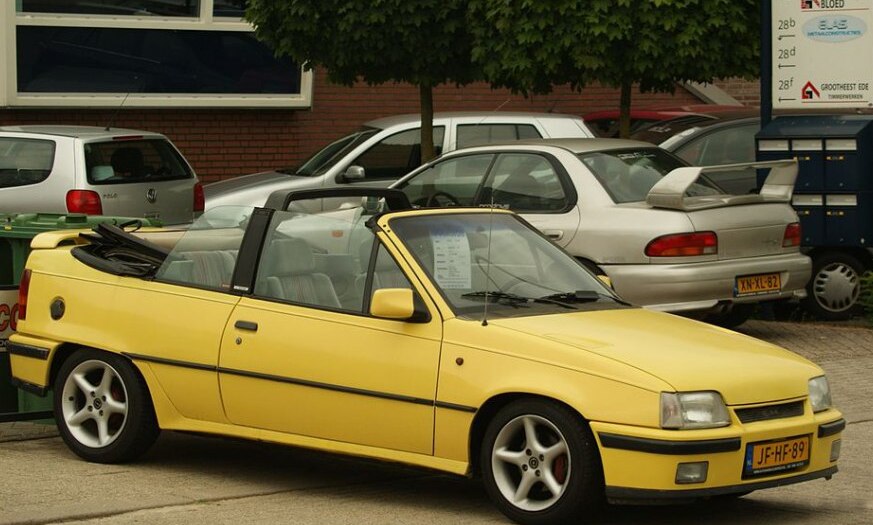
The Opel Kadett E Cabrio 2.0i, produced between 1986 and 1993, represented the final iteration of the Kadett E series, and the last open-top Kadett offered by Opel. Positioned as a more premium variant within the Kadett E Cabrio range, the 2.0i model aimed to provide a blend of style, performance, and open-air driving enjoyment. It was a key offering in the European compact convertible market, competing with models like the Volkswagen Golf Cabriolet and Peugeot 205 Convertible. The Kadett E Cabrio, and particularly the 2.0i, holds a nostalgic place for many European drivers of the era, representing affordable and accessible motoring.
Technical Specifications
| Brand | Opel |
| Model | Kadett |
| Generation | Kadett E Cabrio |
| Type (Engine) | 2.0i (115 Hp) |
| Start of production | 1986 |
| End of production | 1993 |
| Powertrain Architecture | Internal Combustion engine |
| Body type | Cabriolet |
| Seats | 5 |
| Doors | 2 |
| Fuel Type | Petrol (Gasoline) |
| Acceleration 0 – 100 km/h | 10 sec |
| Acceleration 0 – 62 mph | 10 sec |
| Acceleration 0 – 60 mph | 9.5 sec |
| Maximum speed | 195 km/h (121.17 mph) |
| Weight-to-power ratio | 9.1 kg/Hp, 110 Hp/tonne |
| Weight-to-torque ratio | 6.1 kg/Nm, 162.7 Nm/tonne |
| Power | 115 Hp @ 5400 rpm |
| Power per litre | 57.6 Hp/l |
| Torque | 170 Nm @ 3000 rpm (125.39 lb.-ft. @ 3000 rpm) |
| Engine layout | Front, Transverse |
| Engine Model/Code | 20NE |
| Engine displacement | 1998 cm3 (121.93 cu. in.) |
| Number of cylinders | 4 |
| Engine configuration | Inline |
| Cylinder Bore | 86 mm (3.39 in.) |
| Piston Stroke | 86 mm (3.39 in.) |
| Compression ratio | 9.2:1 |
| Number of valves per cylinder | 2 |
| Fuel injection system | Multi-port manifold injection |
| Engine aspiration | Naturally aspirated engine |
| Valvetrain | SOHC |
| Engine oil capacity | 4 l (4.23 US qt | 3.52 UK qt) |
| Coolant | 6.9 l (7.29 US qt | 6.07 UK qt) |
| Kerb Weight | 1045 kg (2303.83 lbs.) |
| Max. weight | 1455 kg (3207.73 lbs.) |
| Max load | 410 kg (903.9 lbs.) |
| Trunk (boot) space – minimum | 290 l (10.24 cu. ft.) |
| Trunk (boot) space – maximum | 620 l (21.9 cu. ft.) |
| Fuel tank capacity | 52 l (13.74 US gal | 11.44 UK gal) |
| Length | 3998 mm (157.4 in.) |
| Width | 1663 mm (65.47 in.) |
| Height | 1380 mm (54.33 in.) |
| Wheelbase | 2520 mm (99.21 in.) |
| Front track | 1406 mm (55.35 in.) |
| Rear (Back) track | 1406 mm (55.35 in.) |
| Minimum turning circle | 10.5 m (34.45 ft.) |
| Drivetrain Architecture | The Internal combustion engine (ICE) drives the front wheels of the vehicle. |
| Drive wheel | Front wheel drive |
| Number of gears and type of gearbox | 5 gears, manual transmission |
| Front brakes | Ventilated discs |
| Rear brakes | Drum |
| Tires size | 185/60 R14 |
| Wheel rims size | 14 |
Powertrain & Engine Architecture
The Kadett E Cabrio 2.0i was powered by the 20NE engine, a 1998cc inline four-cylinder unit. This engine was a mainstay of the Opel/Vauxhall range during the late 1980s and early 1990s, known for its relative simplicity and durability. The 20NE featured a single overhead camshaft (SOHC) valvetrain operating two valves per cylinder. Fuel delivery was handled by Bosch multi-port fuel injection, contributing to improved efficiency and smoother power delivery compared to earlier carbureted Opel engines. The engine produced 115 horsepower at 5400 rpm and 170 Nm (125 lb-ft) of torque at 3000 rpm. The engine was transversely mounted, driving the front wheels. The standard transmission was a five-speed manual gearbox, offering a reasonably engaging driving experience. While an automatic transmission was available on some Kadett E models, it was less common with the 2.0i engine.
Driving Characteristics
The 2.0i Cabrio offered a noticeable step up in performance compared to the lower-displacement Kadett E Cabrio models. The 115 hp engine provided adequate acceleration, with a 0-60 mph time of around 9.5 seconds, and a top speed of 195 km/h (121 mph). The five-speed manual transmission allowed drivers to keep the engine in its optimal power band. While not a sports car, the 2.0i Cabrio was capable of comfortable cruising on motorways and provided enough power for overtaking maneuvers. The handling was typical of front-wheel-drive cars of the era – safe and predictable, but not particularly sporty. The convertible top, while adding to the open-air experience, did slightly compromise structural rigidity compared to the coupe versions.
Equipment & Trim Levels
The 2.0i Cabrio was generally well-equipped for its time, representing a higher trim level within the Kadett E Cabrio range. Standard features typically included power steering, central locking, electric front windows, and a decent audio system. Interior upholstery was usually cloth, with options for upgraded materials. The dashboard layout was functional and straightforward, with clear instrumentation. Optional extras included alloy wheels, a sunroof (in addition to the convertible top), and upgraded sound systems. The 2.0i often featured a more refined interior trim compared to the base models, with improved seat fabrics and door panel finishes.
Chassis & Braking
The Kadett E Cabrio utilized a MacPherson strut front suspension and a torsion beam rear suspension. The front suspension provided a comfortable ride and decent handling, while the torsion beam rear setup was a cost-effective solution that offered acceptable stability. Braking was handled by ventilated disc brakes at the front and drum brakes at the rear. While adequate for everyday driving, the braking system wasn’t particularly powerful by modern standards. The Kadett E Cabrio’s chassis was reinforced compared to the standard Kadett to compensate for the loss of structural rigidity due to the removal of the roof.
Market Reception & Comparison
The Kadett E Cabrio 2.0i was generally well-received by automotive critics. It was praised for its stylish design, comfortable ride, and relatively affordable price. However, some critics noted the car’s somewhat bland handling and the limited space in the rear seats. Compared to the 1.6-liter Kadett E Cabrio, the 2.0i offered a significant performance boost, making it a more appealing option for drivers who enjoyed spirited driving. The 2.0i also offered better fuel economy than the more powerful, but less common, 2.0 GSI variant. The Volkswagen Golf Cabriolet was a primary competitor, offering a similar level of refinement and performance, but often at a higher price point.
Legacy
The Opel Kadett E Cabrio 2.0i has become a sought-after classic car among enthusiasts. The 20NE engine is known for its reliability, provided it is properly maintained. However, like all cars of this era, rust can be a significant issue, particularly in areas exposed to salt during winter. Parts availability is generally good, although some specific trim pieces can be difficult to find. Today, the Kadett E Cabrio 2.0i represents a nostalgic reminder of a simpler era of motoring, offering a unique blend of style, affordability, and open-air driving enjoyment. Well-maintained examples continue to command reasonable prices in the used car market, appealing to collectors and enthusiasts alike.