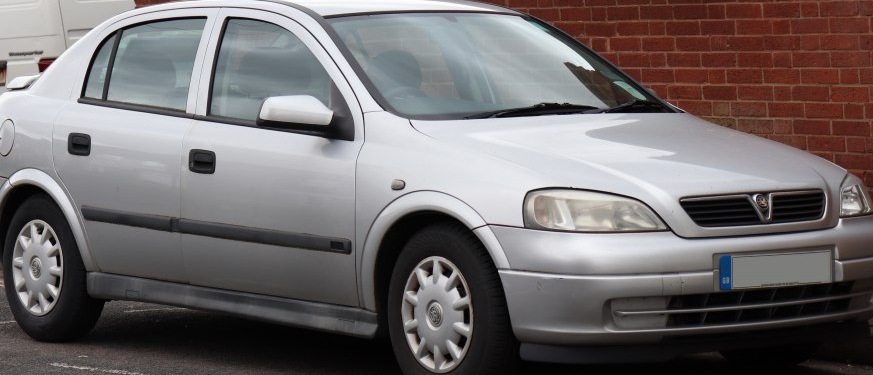
The Vauxhall Astra Mk IV 1.6 (75 hp) represents an entry-level variant of the fourth-generation Astra, produced between 1998 and 2004. Positioned as the most affordable option in the Mk IV range, it served as a practical and economical choice for buyers prioritizing fuel efficiency and low running costs. This model was a key component of Vauxhall’s strategy to offer a broad range of Astra configurations, catering to diverse customer needs within the competitive C-segment family car market in the United Kingdom and Europe. It was built on the GM240 platform, shared with the Opel Astra F and other GM vehicles.
Technical Specifications
| Brand | Vauxhall |
| Model | Astra |
| Generation | Astra Mk IV |
| Type (Engine) | 1.6 (75 Hp) |
| Start of production | 1998 |
| End of production | 2004 |
| Powertrain Architecture | Internal Combustion engine |
| Body type | Sedan |
| Seats | 5 |
| Doors | 4 |
| Fuel consumption (urban) | 9.7 l/100 km (24.2 US mpg) |
| Fuel consumption (extra urban) | 5.8 l/100 km (40.6 US mpg) |
| Fuel consumption (combined) | 7.2 l/100 km (32.7 US mpg) |
| CO2 emissions | 173 g/km |
| Fuel Type | Petrol (Gasoline) |
| Acceleration 0 – 100 km/h | 14.5 sec |
| Acceleration 0 – 62 mph | 14.5 sec |
| Acceleration 0 – 60 mph | 13.8 sec |
| Maximum speed | 170 km/h (105.63 mph) |
| Weight-to-power ratio | 15 kg/Hp |
| Weight-to-torque ratio | 8.8 kg/Nm |
| Power | 75 Hp @ 5200 rpm |
| Torque | 128 Nm @ 2800 rpm (94.41 lb.-ft. @ 2800 rpm) |
| Engine layout | Front, Transverse |
| Engine Model/Code | X16SZR |
| Engine displacement | 1598 cm3 (97.52 cu. in.) |
| Number of cylinders | 4 |
| Engine configuration | Inline |
| Number of valves per cylinder | 2 |
| Fuel injection system | Multi-port manifold injection |
| Engine aspiration | Naturally aspirated |
| Engine oil capacity | 3.25 l (3.43 US qt | 2.86 UK qt) |
| Coolant capacity | 5.8 l (6.13 US qt | 5.1 UK qt) |
| Kerb Weight | 1127 kg (2484.61 lbs) |
| Trunk (boot) space (minimum) | 459 l (16.21 cu. ft) |
| Fuel tank capacity | 52 l (13.74 US gal | 11.44 UK gal) |
| Permitted trailer load (with brakes) | 1150 kg (2535.32 lbs) |
| Permitted trailer load (without brakes) | 570 kg (1256.63 lbs) |
| Length | 4252 mm (167.4 in) |
| Width | 1709 mm (67.28 in) |
| Width including mirrors | 1967 mm (77.44 in) |
| Height | 1425 mm (56.1 in) |
| Wheelbase | 2606 mm (102.6 in) |
| Ride height (ground clearance) | 160 mm (6.3 in) |
| Drag coefficient (Cd) | 0.29 |
| Minimum turning circle | 10 m (32.81 ft) |
| Drivetrain Architecture | Front wheel drive |
| Number of gears | 5 |
| Gearbox type | Manual transmission |
| Front brakes | Ventilated discs |
| Rear brakes | Drum |
Powertrain & Engine Architecture
The Astra Mk IV 1.6 utilized the X16SZR engine, a 1.6-liter inline-four cylinder petrol engine. This engine featured a two-valve-per-cylinder configuration and a multi-port fuel injection system. The X16SZR was a relatively simple and robust design, prioritizing reliability and fuel economy over outright performance. It produced 75 horsepower at 5200 rpm and 128 Nm (94.41 lb-ft) of torque at 2800 rpm. The engine’s design was a carryover from previous Opel/Vauxhall models, representing a well-established and refined powertrain. The five-speed manual transmission was the standard offering, providing adequate gear ratios for everyday driving. The transmission was known for its smooth operation, though it wasn’t particularly sporty in feel.
Driving Characteristics
The 1.6-liter engine, paired with the five-speed manual gearbox, delivered modest performance. Acceleration from 0-60 mph took approximately 13.8 seconds, and the top speed was around 105.63 mph. The car felt somewhat underpowered, especially when fully loaded or tackling steep inclines. The gear ratios were geared towards economy, meaning the engine needed to be revved to extract the most performance. Compared to the more powerful 1.8-liter and 2.0-liter variants, the 1.6 offered a noticeably less engaging driving experience. However, its lighter weight contributed to nimble handling in urban environments.
Equipment & Trim Levels
The 1.6-liter Astra Mk IV typically came with a basic level of equipment. Standard features included central locking, power steering, and an adjustable steering column. Interior upholstery was typically cloth, and the dashboard featured a simple, functional design. Optional extras included air conditioning, electric windows, and an upgraded stereo system. The trim level was generally considered the base model, aimed at budget-conscious buyers. It lacked many of the comfort and convenience features found in higher-spec Astra variants.
Chassis & Braking
The Astra Mk IV 1.6 featured a MacPherson strut front suspension and a torsion beam rear suspension. The front brakes were ventilated discs, providing adequate stopping power, while the rear brakes were drums. This configuration was typical for vehicles in this weight class and price range. The suspension setup prioritized ride comfort over sporty handling, resulting in a relatively soft and forgiving ride. Stabilizer bars were fitted to both the front and rear axles, helping to reduce body roll during cornering.
Market Reception & Comparison
The Astra Mk IV 1.6 was generally well-received as an affordable and practical family car. Critics praised its fuel efficiency and low running costs, but noted its lack of performance. Compared to the 1.8-liter and 2.0-liter models, the 1.6 offered significantly less power and a less refined driving experience. However, it was considerably cheaper to purchase and insure. The 1.6 also offered better fuel economy than the higher-output engines, making it an attractive option for drivers covering long distances. Reliability was generally good, with the X16SZR engine proving to be a durable and dependable unit.
Legacy
The Astra Mk IV 1.6 (75 hp) remains a relatively common sight on used car markets today. Its simple mechanical design and robust engine contribute to its longevity. While not a particularly exciting car to drive, it offers a practical and affordable transportation solution. The X16SZR engine is known for its reliability, although regular maintenance is essential to prevent issues such as oil leaks and timing chain wear. Parts availability is generally good, and repair costs are relatively low. The 1.6-liter Astra Mk IV represents a solid, if unspectacular, example of a late-1990s/early-2000s family car.