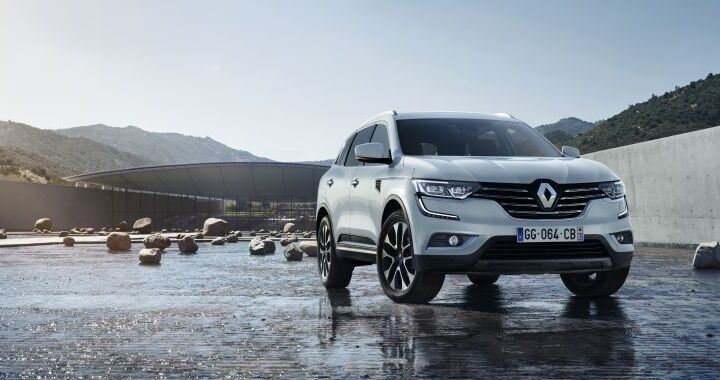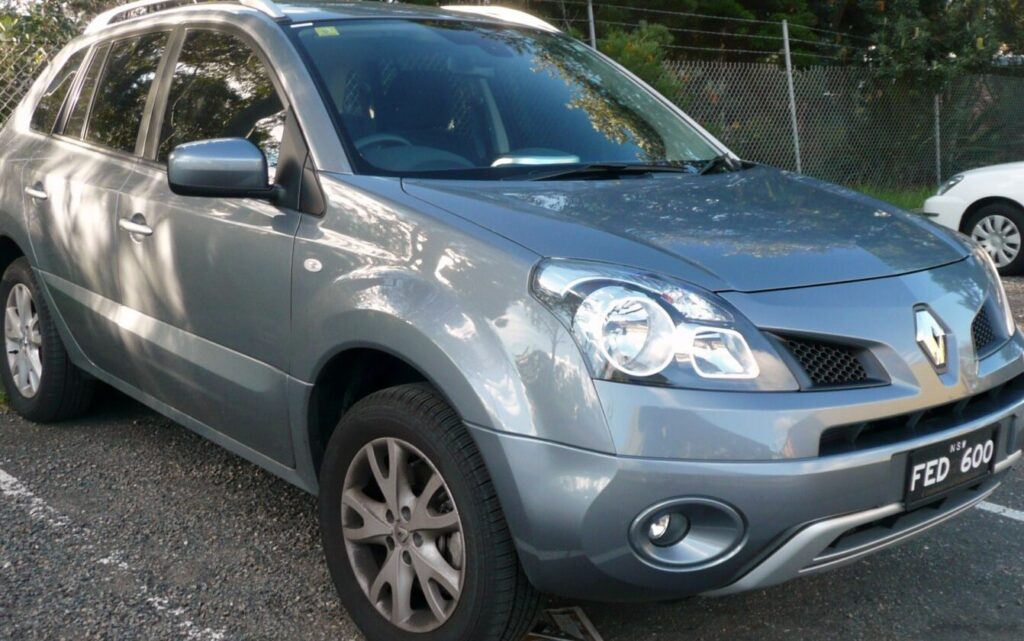
The Renault Koleos 2.0 dCi (173 hp) FAP 4×4 was a mid-size SUV produced by the French manufacturer Renault from 2008 to 2011. Positioned as a competitor to vehicles like the Honda CR-V and Toyota RAV4, the Koleos represented Renault’s entry into the growing crossover SUV segment. This particular variant, equipped with the 2.0-liter diesel engine and a six-speed automatic transmission, offered a blend of fuel efficiency, all-wheel-drive capability, and a relatively comfortable ride. It was part of the first generation of the Koleos, which was based on a shared platform with the Nissan X-Trail.
Technical Specifications
| Brand | Renault |
| Model | Koleos |
| Type (Engine) | 2.0 dCi (173 Hp) FAP 4×4 |
| Start of production | 2008 |
| End of production | 2011 |
| Powertrain Architecture | Internal Combustion engine |
| Body type | SUV |
| Seats | 5 |
| Doors | 5 |
| Fuel consumption (urban) | 9.6 l/100 km (24.5 US mpg) |
| Fuel consumption (extra urban) | 6.8 l/100 km (34.6 US mpg) |
| Fuel consumption (combined) | 7.9 l/100 km (29.8 US mpg) |
| Fuel Type | Diesel |
| Acceleration 0 – 100 km/h | 9.9 sec |
| Acceleration 0 – 62 mph | 9.9 sec |
| Acceleration 0 – 60 mph | 9.4 sec |
| Maximum speed | 191 km/h (118.68 mph) |
| Emission standard | Euro 4 |
| Weight-to-power ratio | 10 kg/Hp |
| Weight-to-torque ratio | 4.6 kg/Nm |
| Power | 173 Hp @ 3750 rpm |
| Torque | 380 Nm @ 2000 rpm (280.27 lb.-ft. @ 2000 rpm) |
| Engine layout | Front, Transverse |
| Engine Model/Code | M9R |
| Engine displacement | 1995 cm3 (121.74 cu. in.) |
| Number of cylinders | 4 |
| Engine configuration | Inline |
| Fuel injection system | Diesel Commonrail |
| Engine aspiration | Turbocharger, Intercooler |
| Engine oil capacity | 7.4 l (7.82 US qt | 6.51 UK qt) |
| Coolant capacity | 7.9 l (8.35 US qt | 6.95 UK qt) |
| Kerb Weight | 1730 kg (3814 lbs.) |
| Max. weight | 2250 kg (4960.4 lbs.) |
| Max load | 520 kg (1146.4 lbs.) |
| Trunk (boot) space – minimum | 450 l (15.89 cu. ft.) |
| Trunk (boot) space – maximum | 1380 l (48.73 cu. ft.) |
| Fuel tank capacity | 65 l (17.17 US gal | 14.3 UK gal) |
| Length | 4520 mm (177.95 in.) |
| Width | 1855 mm (73.03 in.) |
| Height | 1695 mm (66.73 in.) |
| Wheelbase | 2690 mm (105.91 in.) |
| Front track | 1545 mm (60.83 in.) |
| Rear track | 1550 mm (61.02 in.) |
| Minimum turning circle | 11.6 m (38.06 ft.) |
| Drive wheel | All wheel drive (4×4) |
| Number of gears | 6 |
| Gearbox type | Automatic transmission |
| Front suspension | Independent, McPherson with coil spring and anti-roll bar |
| Rear suspension | Independent multi-link with stabilizer |
| Front brakes | Ventilated discs |
| Rear brakes | Disc |
| Tires size | 225/60 R17 H |
| Wheel rims size | 6.5J x 17 |
Powertrain & Engine Architecture
The heart of the Koleos 2.0 dCi was the M9R engine, a 2.0-liter inline-four cylinder diesel. This engine utilized a common rail direct injection system, delivering fuel at extremely high pressure for improved combustion efficiency and reduced emissions. A turbocharger with an intercooler was employed to boost power output. The M9R engine was known for its relatively robust construction, but also for potential issues with the diesel particulate filter (DPF), a component designed to trap soot emissions. The FAP (Filtre à Particules) in the name denotes the presence of this filter. The six-speed automatic transmission, sourced from Aisin, was chosen for its smoothness and reliability. It featured adaptive shift logic, attempting to optimize gear selection based on driving conditions and driver input.
Driving Characteristics
The 173 horsepower and 280 lb-ft of torque provided by the 2.0 dCi engine offered adequate performance for everyday driving. Acceleration from 0-60 mph took around 9.4 seconds, which was competitive within its class, but noticeably slower than the more powerful gasoline-powered Koleos variants. The automatic transmission, while smooth, could sometimes feel hesitant during quick acceleration or when attempting to overtake. The all-wheel-drive system provided enhanced traction in slippery conditions, making the Koleos a capable vehicle for inclement weather or light off-road use. The gear ratios were tuned more for fuel economy than outright performance, resulting in a relaxed cruising experience but less responsiveness when pushed.
Equipment & Trim Levels
The 2.0 dCi 4×4 trim typically included features such as air conditioning, power windows and mirrors, a CD player with auxiliary input, and alloy wheels. Higher trim levels added features like leather upholstery, a sunroof, automatic climate control, and a navigation system. Safety features included ABS brakes, electronic stability control, and multiple airbags. The Koleos aimed for a comfortable and well-equipped interior, though the materials used were generally not as premium as those found in some of its European competitors.
Chassis & Braking
The Koleos utilized an independent suspension setup at all four corners, with McPherson struts at the front and a multi-link system at the rear. This configuration provided a comfortable ride quality, absorbing bumps and imperfections in the road surface effectively. The braking system consisted of ventilated discs at the front and solid discs at the rear. ABS (Anti-lock Braking System) was standard, enhancing braking performance and stability. Stabilizer bars were fitted to both the front and rear axles to reduce body roll during cornering.
Market Reception & Comparison
The Renault Koleos 2.0 dCi 4×4 was generally well-received by automotive critics as a practical and comfortable SUV. However, it was often criticized for its somewhat uninspired styling and its lack of a truly engaging driving experience. Compared to the gasoline-powered Koleos variants, the 2.0 dCi offered significantly better fuel economy, making it a popular choice for drivers who prioritized efficiency. The diesel engine also provided more low-end torque, which was beneficial for towing or driving in challenging conditions. However, the diesel version carried a higher purchase price and potentially higher maintenance costs due to the DPF system.
Legacy
The Renault Koleos 2.0 dCi (173 hp) FAP 4×4, while not a standout performer in its segment, remains a reasonably reliable and affordable used SUV. The M9R engine, when properly maintained, can provide many years of service. However, potential buyers should be aware of the potential for DPF issues and ensure that the vehicle has a documented service history. The Koleos represented Renault’s attempt to establish a foothold in the competitive crossover SUV market, and paved the way for the second-generation model, which offered a more refined and modern design.