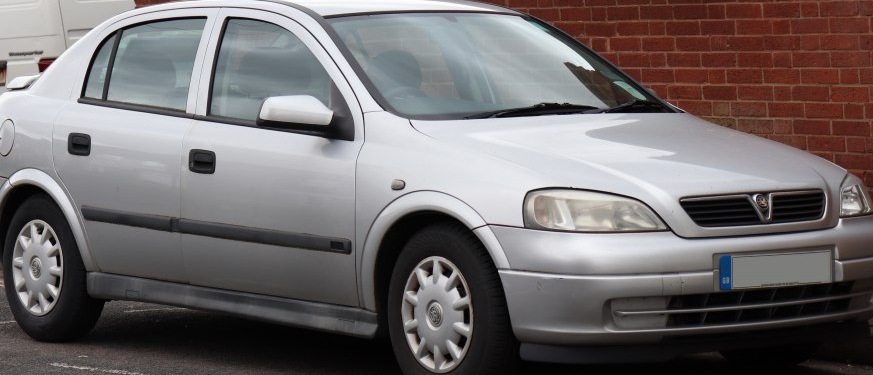
The Vauxhall Astra Mk IV 1.7 DTi 16V, produced between 2000 and 2004, represented an entry-level diesel offering within the fourth generation of the popular Astra compact. Positioned as a fuel-efficient and affordable option, it catered to buyers prioritizing economy over outright performance. This variant utilized the Isuzu-sourced 1.7-liter turbodiesel engine, a common choice for European manufacturers seeking a reliable and cost-effective diesel powerplant. The Mk IV Astra, built on the GM240 platform (internally known as the 1HX0), aimed to improve upon its predecessor with enhanced refinement, safety features, and a more modern interior. The 1.7 DTi model, while not the most powerful in the range, played a significant role in broadening the Astra’s appeal to a wider customer base.
Technical Specifications
| Brand | Vauxhall |
| Model | Astra |
| Generation | Astra Mk IV |
| Type (Engine) | 1.7 DTi 16V (75 Hp) |
| Start of production | 2000 year |
| End of production | 2004 year |
| Powertrain Architecture | Internal Combustion engine |
| Body type | Sedan |
| Seats | 5 |
| Doors | 4 |
| Fuel consumption (urban) | 6.1 l/100 km (38.6 US mpg, 46.3 UK mpg, 16.4 km/l) |
| Fuel consumption (extra urban) | 4 l/100 km (58.8 US mpg, 70.6 UK mpg, 25 km/l) |
| Fuel consumption (combined) | 4.8 l/100 km (49 US mpg, 58.9 UK mpg, 20.8 km/l) |
| CO2 emissions | 130 g/km |
| Fuel Type | Diesel |
| Acceleration 0 – 100 km/h | 14.5 sec |
| Acceleration 0 – 62 mph | 14.5 sec |
| Acceleration 0 – 60 mph | 13.8 sec |
| Maximum speed | 170 km/h (105.63 mph) |
| Weight-to-power ratio | 15.3 kg/Hp, 65.2 Hp/tonne |
| Weight-to-torque ratio | 7 kg/Nm, 143.5 Nm/tonne |
| Power | 75 Hp @ 4400 rpm |
| Power per litre | 44.5 Hp/l |
| Torque | 165 Nm @ 1800 rpm (121.7 lb.-ft. @ 1800 rpm) |
| Engine layout | Front, Transverse |
| Engine Model/Code | Y17DT |
| Engine displacement | 1686 cm3 (102.89 cu. in.) |
| Number of cylinders | 4 |
| Engine configuration | Inline |
| Number of valves per cylinder | 4 |
| Fuel injection system | Direct injection |
| Engine aspiration | Turbocharger |
| Engine oil capacity | 4.5 l (4.76 US qt | 3.96 UK qt) |
| Coolant capacity | 7.1 l (7.5 US qt | 6.25 UK qt) |
| Kerb Weight | 1150 kg (2535.32 lbs.) |
| Max. weight | 1725 kg (3802.97 lbs.) |
| Max load | 575 kg (1267.66 lbs.) |
| Trunk (boot) space – minimum | 460 l (16.24 cu. ft.) |
| Fuel tank capacity | 52 l (13.74 US gal | 11.44 UK gal) |
| Permitted trailer load with brakes (12%) | 1150 kg (2535.32 lbs.) |
| Permitted trailer load without brakes | 600 kg (1322.77 lbs.) |
| Length | 4252 mm (167.4 in.) |
| Width | 1709 mm (67.28 in.) |
| Width including mirrors | 1967 mm (77.44 in.) |
| Height | 1425 mm (56.1 in.) |
| Wheelbase | 2606 mm (102.6 in.) |
| Ride height (ground clearance) | 160 mm (6.3 in.) |
| Drag coefficient (Cd) | 0.29 |
| Minimum turning circle | 10 m (32.81 ft.) |
| Drivetrain Architecture | Internal Combustion engine (ICE) drives the front wheels. |
| Drive wheel | Front wheel drive |
| Number of gears and type of gearbox | 5 gears, manual transmission |
| Front brakes | Ventilated discs |
| Rear brakes | Disc |
Powertrain & Engine Architecture
The heart of the Astra 1.7 DTi 16V is the Y17DT engine, a 1.7-liter inline-four cylinder diesel produced by Isuzu. This engine utilizes direct injection technology, injecting fuel directly into the combustion chamber for improved efficiency and reduced emissions. The 16-valve cylinder head, featuring four valves per cylinder, enhances breathing and contributes to a broader torque curve. A turbocharger, though relatively small, provides a boost in power and helps overcome the inherent limitations of a small-displacement diesel. The engine’s fuel injection system is a mechanical unit, typical for the era, and while reliable, it lacks the sophistication of later common-rail systems. The five-speed manual transmission was the standard offering for this variant, providing a relatively long gearing setup optimized for fuel economy. The transmission’s ratios were geared towards maximizing efficiency at cruising speeds, rather than providing rapid acceleration.
Driving Characteristics
The 1.7 DTi 16V Astra offered a decidedly unhurried driving experience. With 75 horsepower and 165 Nm (121.7 lb-ft) of torque, acceleration was modest, taking around 14.5 seconds to reach 62 mph. However, the engine’s torque delivery, peaking at 1800 rpm, provided reasonable pulling power for everyday driving situations. The long gearing of the five-speed manual transmission meant that the engine rarely felt strained at highway speeds, contributing to a quiet and comfortable ride. Compared to the more powerful 1.8-liter petrol versions or the later 2.0-liter diesels, the 1.7 DTi felt significantly slower, particularly when overtaking. However, its strength lay in its exceptional fuel economy, making it an ideal choice for high-mileage drivers.
Equipment & Trim Levels
The 1.7 DTi 16V typically came equipped with a basic level of trim, reflecting its position as an entry-level model. Standard features generally included central locking, power steering, and an adjustable steering column. Interior upholstery was typically cloth, and the dashboard featured a functional, if somewhat basic, design. Optional extras, such as air conditioning, alloy wheels, and an upgraded stereo system, were available, but often added a significant cost to the vehicle. Safety features were relatively limited by modern standards, typically including driver and passenger airbags and ABS brakes.
Chassis & Braking
The Astra Mk IV utilized a MacPherson strut front suspension and a torsion beam rear suspension. This setup provided a reasonable balance between ride comfort and handling. The 1.7 DTi models typically featured smaller wheels and tires compared to higher-spec variants, contributing to a slightly softer ride. Braking was handled by ventilated discs at the front and solid discs at the rear. While adequate for normal driving conditions, the braking system lacked the stopping power of larger-braked models.
Market Reception & Comparison
The Astra 1.7 DTi 16V was generally well-received by critics as a practical and economical choice. Its fuel efficiency was a major selling point, and it proved popular with drivers seeking a low-cost-to-operate vehicle. However, its lack of performance was often criticized, and it was generally considered to be outclassed by higher-spec Astra models. Compared to the 1.8-liter petrol versions, the 1.7 DTi offered significantly better fuel economy but considerably less power. The later 2.0-liter diesel models provided a better balance of performance and economy, but at a higher price point.
Legacy
The Y17DT engine, while not known for being particularly exciting, proved to be a robust and reliable unit. Many examples of the Astra 1.7 DTi 16V are still on the road today, testament to its durability. However, age and mileage can take their toll, and potential buyers should be aware of common issues such as turbocharger wear and fuel injector problems. In the used car market, the 1.7 DTi 16V remains an affordable option for those seeking a basic, economical, and reliable compact car. Its simplicity and relatively low maintenance costs continue to appeal to budget-conscious buyers.