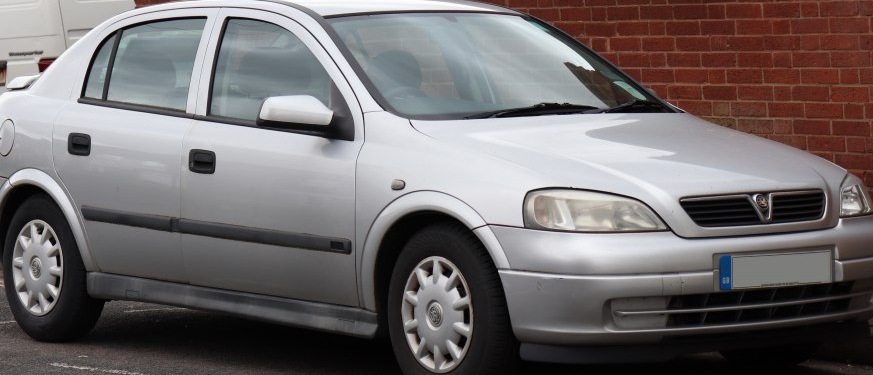
The Vauxhall Astra Mk IV 1.7 TD, produced between 1998 and 2004, represented an economical entry point into the fourth generation of the popular Astra compact. Positioned as a budget-friendly option within the Mk IV range – which also included petrol variants and a more powerful 2.0-liter diesel – the 1.7 TD catered to drivers prioritizing fuel efficiency and low running costs. This variant was primarily sold in European markets, including the United Kingdom where it was a common sight as a family car or fleet vehicle. It utilized the X17DTL engine, a turbocharged diesel designed for practicality rather than outright performance, and was typically paired with a five-speed manual transmission, though automatic options were available in some markets.
Technical Specifications
| Brand | Vauxhall |
| Model | Astra |
| Generation | Astra Mk IV |
| Type (Engine) | 1.7 TD (68 Hp) |
| Start of production | 1998 |
| End of production | 2004 |
| Powertrain Architecture | Internal Combustion engine |
| Body type | Sedan |
| Seats | 5 |
| Doors | 4 |
| Fuel consumption (urban) | 7.7 l/100 km (30.5 US mpg, 36.7 UK mpg, 13 km/l) |
| Fuel consumption (extra urban) | 4.9 l/100 km (48 US mpg, 57.6 UK mpg, 20.4 km/l) |
| Fuel consumption (combined) | 5.9 l/100 km (39.9 US mpg, 47.9 UK mpg, 16.9 km/l) |
| CO2 emissions | 158 g/km |
| Fuel Type | Diesel |
| Acceleration 0 – 100 km/h | 17 sec |
| Acceleration 0 – 62 mph | 17 sec |
| Acceleration 0 – 60 mph | 16.2 sec |
| Maximum speed | 163 km/h (101.28 mph) |
| Weight-to-power ratio | 16.4 kg/Hp, 61 Hp/tonne |
| Weight-to-torque ratio | 8.4 kg/Nm, 118.4 Nm/tonne |
| Power | 68 Hp @ 4500 rpm |
| Power per litre | 40 Hp/l |
| Torque | 132 Nm @ 1800 rpm (97.36 lb.-ft. @ 1800 rpm) |
| Engine layout | Front, Transverse |
| Engine Model/Code | X17DTL |
| Engine displacement | 1700 cm3 (103.74 cu. in.) |
| Number of cylinders | 4 |
| Engine configuration | Inline |
| Number of valves per cylinder | 2 |
| Fuel injection system | Precombustion chamber injection |
| Engine aspiration | Turbocharger |
| Engine oil capacity | 5.5 l (5.81 US qt | 4.84 UK qt) |
| Coolant capacity | 8.7 l (9.19 US qt | 7.65 UK qt) |
| Kerb Weight | 1115 kg (2458.15 lbs) |
| Max. weight | 1685 kg (3714.79 lbs) |
| Max load | 570 kg (1256.63 lbs) |
| Trunk (boot) space – minimum | 460 l (16.24 cu. ft.) |
| Fuel tank capacity | 52 l (13.74 US gal | 11.44 UK gal) |
| Permitted trailer load with brakes (12%) | 1000 kg (2204.62 lbs) |
| Permitted trailer load without brakes | 600 kg (1322.77 lbs) |
| Length | 4252 mm (167.4 in) |
| Width | 1709 mm (67.28 in) |
| Width including mirrors | 1967 mm (77.44 in) |
| Height | 1425 mm (56.1 in) |
| Wheelbase | 2606 mm (102.6 in) |
| Ride height (ground clearance) | 160 mm (6.3 in) |
| Drag coefficient (Cd) | 0.29 |
| Minimum turning circle | 10 m (32.81 ft) |
| Drivetrain | Front wheel drive |
| Number of gears | 5 |
| Gearbox type | Manual transmission |
| Front brakes | Ventilated discs |
| Rear brakes | Drum |
Powertrain & Engine Architecture
The heart of the Astra 1.7 TD was the X17DTL engine, a 1.7-liter inline-four cylinder diesel. This engine utilized a precombustion chamber injection system, a common technology in diesel engines of the era. This system involved injecting fuel into a small precombustion chamber within the cylinder head, where it partially ignited before being fully combusted in the main cylinder. This design aided in smoother combustion and reduced engine noise. A turbocharger was employed to boost power output, bringing the engine’s peak output to 68 horsepower at 4500 rpm and 132 Nm (97 lb-ft) of torque at 1800 rpm. The five-speed manual transmission was the most common pairing, offering a relatively long gearing aimed at maximizing fuel economy. The automatic transmission, when available, typically featured four speeds and further prioritized comfort over performance.
Driving Characteristics
The 1.7 TD Astra was not designed for spirited driving. Acceleration was modest, taking around 17 seconds to reach 62 mph (100 km/h). The focus was on providing adequate power for everyday commuting and long-distance journeys while minimizing fuel consumption. The turbocharger did provide a noticeable boost in torque at lower engine speeds, making it reasonably drivable in urban environments. However, overtaking maneuvers required careful planning. Compared to the higher-output petrol versions of the Mk IV Astra, or even the 2.0-liter diesel, the 1.7 TD felt significantly slower. The manual transmission offered more control and a slightly more engaging driving experience, while the automatic prioritized ease of use.
Equipment & Trim Levels
The 1.7 TD typically occupied the entry-level position in the Mk IV Astra lineup. Standard equipment generally included central locking, power steering, and an adjustable steering column. Interior upholstery was typically cloth, and the dashboard featured a functional but basic design. Optional extras, depending on the market and year, could include air conditioning, electric windows, and an upgraded stereo system. Higher trim levels within the Mk IV range offered features like alloy wheels, upgraded interior trim, and more advanced audio systems, but these were generally not available on the base 1.7 TD model.
Chassis & Braking
The Astra Mk IV 1.7 TD utilized a MacPherson strut front suspension and a torsion beam rear suspension. This setup provided a reasonable balance between ride comfort and handling. The front brakes were ventilated discs, offering adequate stopping power, while the rear brakes were drums, a cost-saving measure common on lower-spec models. Stabilizer bars were fitted to both the front and rear axles to reduce body roll during cornering. The relatively light weight of the 1.7 TD – around 1115 kg (2458 lbs) – helped to mitigate the effects of the modest engine power.
Market Reception & Comparison
The Astra 1.7 TD was well-received by buyers seeking an economical and reliable family car. Critics praised its fuel efficiency and low running costs, but noted its lack of performance. Compared to the petrol-powered Astras, the 1.7 TD offered significantly better fuel economy, but at the expense of acceleration and refinement. The 2.0-liter diesel offered a compromise between performance and economy, but came at a higher price point. The 1.7 TD’s simplicity and robust construction contributed to its reputation for reliability.
Legacy
The X17DTL engine, while not known for its high performance, proved to be a durable and reliable unit. Astra Mk IV 1.7 TD models are now relatively affordable on the used car market, and well-maintained examples can still provide economical transportation. The engine’s simplicity makes it relatively easy to maintain, although finding parts may become increasingly challenging as the cars age. The 1.7 TD represents a practical and sensible choice for drivers prioritizing fuel efficiency and affordability over outright performance, and remains a testament to Vauxhall’s commitment to providing accessible transportation.