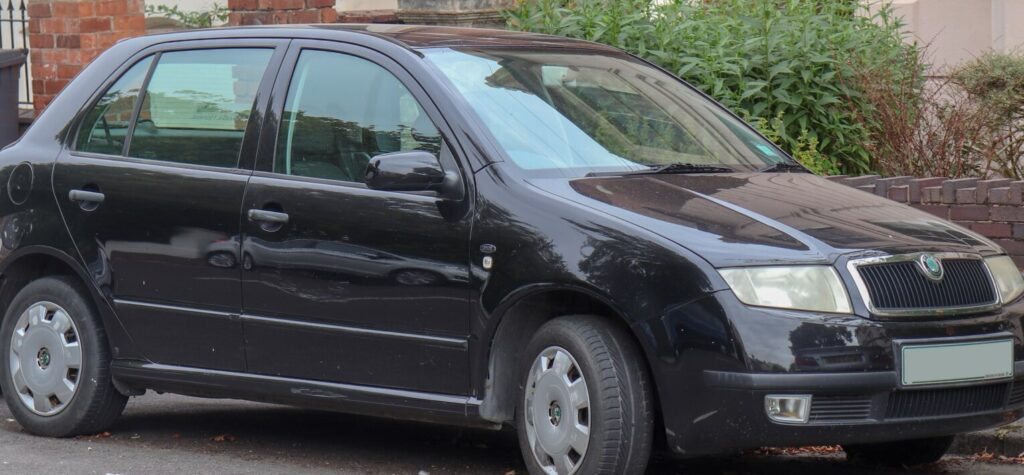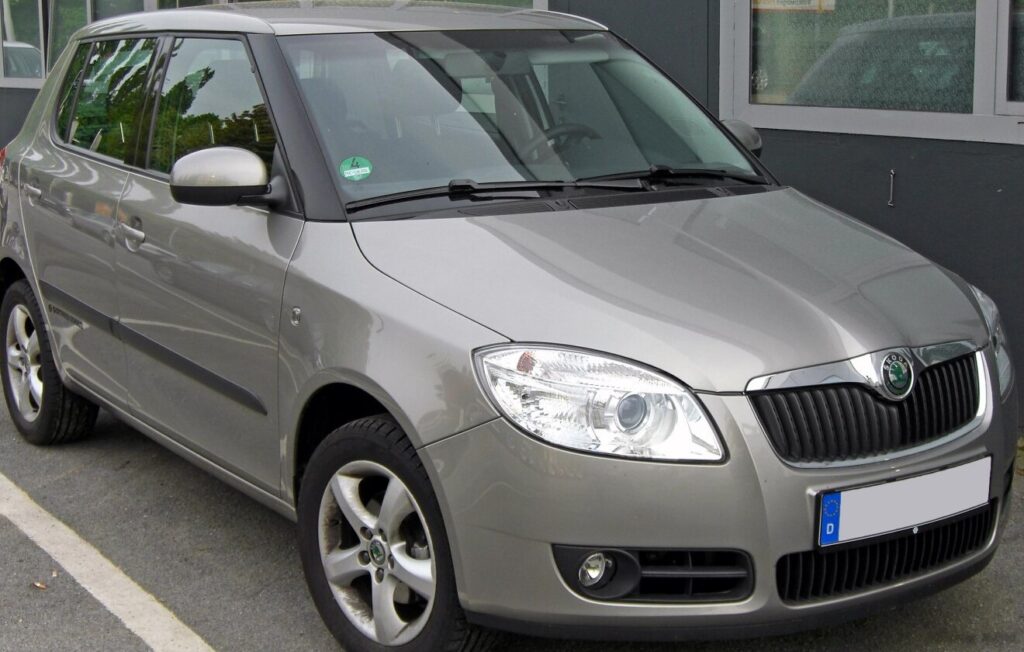
The Skoda Fabia II 1.6 i 16V, produced from April 2007 to 2010, represented a significant step forward for Skoda’s popular subcompact hatchback. Positioned as a mid-range offering within the Fabia II lineup (which spanned from the 1.2 HTP to the 1.9 TDI diesel), this variant combined a naturally aspirated 1.6-liter gasoline engine with a five-speed manual transmission. It aimed to provide a balance of affordability, reasonable performance, and practicality for European drivers seeking a versatile and economical vehicle. The Fabia II itself was built on the Volkswagen Group’s A5 (or PQ35) platform, shared with models like the Volkswagen Polo Mk5 and SEAT Ibiza Mk4.
Technical Specifications
| Brand | Skoda |
| Model | Fabia |
| Generation | Fabia II |
| Type (Engine) | 1.6 i 16V (105 Hp) |
| Start of production | April, 2007 |
| End of production | 2010 |
| Powertrain Architecture | Internal Combustion engine |
| Body type | Hatchback |
| Seats | 5 |
| Doors | 5 |
| Fuel consumption (urban) | 9.3 l/100 km (25.3 US mpg) |
| Fuel consumption (extra urban) | 5.5 l/100 km (42.8 US mpg) |
| Fuel consumption (combined) | 6.9 l/100 km (34.1 US mpg) |
| Fuel Type | Petrol (Gasoline) |
| Acceleration 0 – 100 km/h | 10.1 sec |
| Acceleration 0 – 62 mph | 10.1 sec |
| Acceleration 0 – 60 mph | 9.6 sec |
| Maximum speed | 190 km/h (118.06 mph) |
| Emission standard | Euro 4 |
| Weight-to-power ratio | 10.2 kg/Hp |
| Weight-to-torque ratio | 7 kg/Nm |
| Power | 105 Hp @ 5600 rpm |
| Torque | 153 Nm @ 3800 rpm (112.85 lb.-ft. @ 3800 rpm) |
| Engine layout | Front, Transverse |
| Engine Model/Code | EA111 / BTS |
| Engine displacement | 1598 cm3 (97.52 cu. in.) |
| Number of cylinders | 4 |
| Engine configuration | Inline |
| Cylinder Bore | 76.5 mm (3.01 in.) |
| Piston Stroke | 86.9 mm (3.42 in.) |
| Compression ratio | 10.5:1 |
| Number of valves per cylinder | 4 |
| Fuel injection system | Multi-port manifold injection |
| Engine aspiration | Naturally aspirated |
| Engine oil capacity | 3.6 l (3.8 US qt | 3.17 UK qt) |
| Coolant capacity | 5.9 l (6.23 US qt | 5.19 UK qt) |
| Kerb Weight | 1070 kg (2358.95 lbs.) |
| Max. weight | 1585 kg (3494.33 lbs.) |
| Max load | 515 kg (1135.38 lbs.) |
| Trunk (boot) space – minimum | 300 l (10.59 cu. ft.) |
| Trunk (boot) space – maximum | 1163 l (41.07 cu. ft.) |
| Fuel tank capacity | 45 l (11.89 US gal | 9.9 UK gal) |
| Length | 3992 mm (157.17 in.) |
| Width | 1642 mm (64.65 in.) |
| Height | 1498 mm (58.98 in.) |
| Wheelbase | 2462 mm (96.93 in.) |
| Front track | 1436 mm (56.54 in.) |
| Rear track | 1426 mm (56.14 in.) |
| Drivetrain Architecture | Front wheel drive |
| Number of gears | 5 |
| Gearbox type | Manual transmission |
| Front suspension | Spring Strut |
| Rear suspension | Coil spring |
| Front brakes | Ventilated discs |
| Rear brakes | Disc |
| Assisting systems | ABS (Anti-lock braking system) |
| Steering type | Steering rack and pinion |
| Tires size | 185/60 R14 |
INTRODUCTION
The Skoda Fabia II 1.6 i 16V, launched in 2007, was a key component of Skoda’s strategy to offer a compelling alternative to mainstream European hatchbacks. Building on the success of the first-generation Fabia, the MkII brought improved refinement, safety features, and a more modern design. This 1.6-liter variant was positioned as a sweet spot in the range, offering a balance between the lower-cost, lower-powered engines and the more expensive, higher-performance options. It was primarily aimed at drivers who prioritized fuel efficiency and everyday usability over outright speed.
Powertrain & Engine Architecture
At the heart of the Fabia II 1.6 i 16V lies the EA111 engine family, specifically the BTS code. This 1.6-liter inline-four cylinder engine is a naturally aspirated unit featuring multi-point fuel injection. The 16-valve cylinder head, with four valves per cylinder, contributes to improved breathing and a broader powerband. The engine produces 105 horsepower at 5600 rpm and 153 Nm (113 lb-ft) of torque at 3800 rpm. The five-speed manual transmission was the standard offering for this trim, providing a relatively direct connection between the engine and the front wheels. The EA111 engine, while generally reliable, is known for its potential for oil consumption as it ages, a characteristic shared across many variants within the family.
Driving Characteristics
The Fabia II 1.6 i 16V offered a comfortable and predictable driving experience. While not particularly sporty, the engine provided adequate power for everyday driving, including highway cruising and overtaking. Acceleration from 0 to 60 mph took around 9.6 seconds, and the top speed was approximately 118 mph. The five-speed manual gearbox was well-matched to the engine’s characteristics, offering smooth shifts and a reasonable spread of ratios. Compared to the more powerful 1.9 TDI diesel, the 1.6-liter petrol engine felt less responsive at lower revs, but it offered a smoother and quieter operation. Against the 1.4-liter engines, the 1.6 provided a noticeable boost in performance, making it a more suitable choice for drivers who frequently carried passengers or luggage.
Equipment & Trim Levels
The 1.6 i 16V trim typically included features such as central locking, electric front windows, a basic audio system, and ABS brakes. Higher trim levels, such as the ‘Elegance’ and ‘Sport’ variants, added features like alloy wheels, air conditioning, a multi-function steering wheel, and upgraded interior trim. Interior upholstery was typically cloth, with a functional and durable design. Optional extras included a sunroof, parking sensors, and a more advanced audio system with CD player. The dashboard layout was straightforward and user-friendly, prioritizing practicality over stylistic flair.
Chassis & Braking
The Fabia II utilized a MacPherson strut front suspension and a twist-beam rear suspension. This setup provided a good balance between ride comfort and handling. The front brakes were ventilated discs, while the rear brakes were solid discs, offering adequate stopping power for the vehicle’s weight and performance. ABS (Anti-lock Braking System) was standard, enhancing safety in emergency braking situations. The steering was a rack and pinion system, providing precise and responsive control.
Market Reception & Comparison
The Skoda Fabia II 1.6 i 16V was generally well-received by automotive critics. It was praised for its practicality, fuel efficiency, and competitive pricing. However, some reviewers noted that the engine lacked the refinement and performance of some of its rivals. Compared to the 1.9 TDI, the 1.6-liter petrol engine offered lower fuel economy but a smoother and quieter driving experience. Against other petrol-powered competitors, such as the Ford Fiesta and Volkswagen Polo, the Fabia II offered a compelling value proposition, with a spacious interior and a generous level of standard equipment.
Legacy
The Skoda Fabia II 1.6 i 16V remains a popular choice in the used car market, particularly for buyers seeking an affordable and reliable hatchback. The EA111 engine, while prone to oil consumption in some cases, is generally durable and relatively inexpensive to maintain. Parts availability is good, and the Fabia II’s simple construction makes it relatively easy to repair. Today, these vehicles represent a good value for those needing a dependable and economical daily driver, though prospective buyers should be aware of the potential for oil consumption and ensure regular maintenance has been performed.