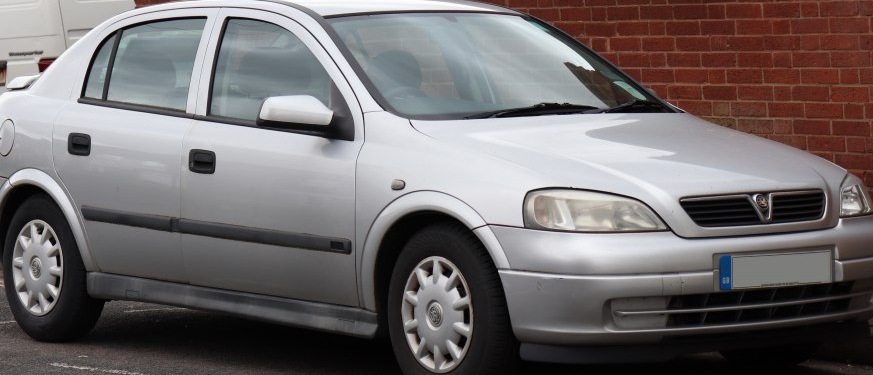
The Vauxhall Astra Mk IV 1.8 16V, produced between 1998 and 2004, represented a significant step forward for the Astra range. Positioned as a mid-range offering within the Mk IV lineup (designated as the G platform internally), this variant aimed to balance performance with affordability, appealing to a broad spectrum of family car buyers in the United Kingdom and Europe. It was a key model in Vauxhall’s strategy to compete with established rivals like the Ford Focus and Volkswagen Golf. The 1.8 16V engine, coupled with a five-speed manual transmission, offered a noticeable upgrade over the base 1.4-liter models, while remaining more accessible than the higher-performance variants like the GSi.
Technical Specifications
| Brand | Vauxhall |
| Model | Astra |
| Generation | Astra Mk IV |
| Type (Engine) | 1.8 16V (116 Hp) |
| Start of production | 1998 |
| End of production | 2004 |
| Powertrain Architecture | Internal Combustion engine |
| Body type | Sedan |
| Seats | 5 |
| Doors | 4 |
| Fuel consumption (urban) | 10.9 l/100 km (21.6 US mpg, 25.9 UK mpg, 9.2 km/l) |
| Fuel consumption (extra urban) | 6 l/100 km (39.2 US mpg, 47.1 UK mpg, 16.7 km/l) |
| Fuel consumption (combined) | 7.8 l/100 km (30.2 US mpg, 36.2 UK mpg, 12.8 km/l) |
| CO2 emissions | 188 g/km |
| Fuel Type | Petrol (Gasoline) |
| Acceleration 0 – 100 km/h | 10 sec |
| Acceleration 0 – 62 mph | 10 sec |
| Acceleration 0 – 60 mph | 9.5 sec |
| Maximum speed | 200 km/h (124.27 mph) |
| Weight-to-power ratio | 9.9 kg/Hp, 101.3 Hp/tonne |
| Weight-to-torque ratio | 6.7 kg/Nm, 148.5 Nm/tonne |
| Power | 116 Hp @ 5400 rpm |
| Power per litre | 64.6 Hp/l |
| Torque | 170 Nm @ 3400 rpm (125.39 lb.-ft. @ 3400 rpm) |
| Engine layout | Front, Transverse |
| Engine Model/Code | X18XE1 |
| Engine displacement | 1796 cm3 (109.6 cu. in.) |
| Number of cylinders | 4 |
| Engine configuration | Inline |
| Number of valves per cylinder | 4 |
| Fuel injection system | Multi-port manifold injection |
| Engine aspiration | Naturally aspirated engine |
| Engine oil capacity | 4.25 l (4.49 US qt | 3.74 UK qt) |
| Coolant capacity | 6.3 l (6.66 US qt | 5.54 UK qt) |
| Kerb Weight | 1145 kg (2524.29 lbs) |
| Max. weight | 1665 kg (3670.7 lbs) |
| Max load | 520 kg (1146.4 lbs) |
| Trunk (boot) space – minimum | 460 l (16.24 cu. ft) |
| Fuel tank capacity | 52 l (13.74 US gal | 11.44 UK gal) |
| Length | 4252 mm (167.4 in) |
| Width | 1709 mm (67.28 in) |
| Width including mirrors | 1967 mm (77.44 in) |
| Height | 1425 mm (56.1 in) |
| Wheelbase | 2606 mm (102.6 in) |
| Ride height (ground clearance) | 160 mm (6.3 in) |
| Drag coefficient (Cd) | 0.29 |
| Minimum turning circle | 10 m (32.81 ft) |
| Drivetrain Architecture | The Internal combustion engine (ICE) drives the front wheels of the vehicle. |
| Drive wheel | Front wheel drive |
| Number of gears and type of gearbox | 5 gears, manual transmission |
| Front brakes | Ventilated discs |
| Rear brakes | Disc |
| Tires size | 195/60 R15 |
| Wheel rims size | 15 |
Powertrain & Engine Architecture
The heart of the Astra Mk IV 1.8 16V is the X18XE1 engine, a member of Vauxhall/Opel’s Ecotec family. This 1.8-liter, inline-four cylinder engine features a cast iron block and an aluminum cylinder head. The “16V” designation indicates the four valves per cylinder, contributing to improved breathing and higher power output. Fuel delivery is managed by a Bosch Motronic multi-port fuel injection system, optimizing fuel atomization and combustion efficiency. The engine utilizes a single overhead camshaft (SOHC) design, simplifying the valvetrain and reducing weight. The five-speed manual transmission, a Getrag unit, provided precise gear changes and contributed to the car’s relatively engaging driving experience. This transmission was known for its durability and relatively low maintenance requirements.
Driving Characteristics
The 1.8 16V Astra offered a noticeable improvement in performance compared to the lower-displacement engines. With 116 horsepower and 125 lb-ft of torque, it provided adequate acceleration for everyday driving and comfortable cruising speeds. The 0-60 mph time of around 9.5 seconds was respectable for its class in the late 1990s. The five-speed gearbox allowed drivers to keep the engine in its optimal power band, providing responsive acceleration. Compared to the more powerful GSi models, the 1.8 16V prioritized fuel economy and ease of driving over outright performance. The gear ratios were tuned for a balance between acceleration and fuel efficiency, making it a practical choice for daily commutes and longer journeys. While not a sports car, the 1.8 16V offered a reasonably enjoyable driving experience, with predictable handling and adequate power for most situations.
Equipment & Trim Levels
The 1.8 16V Astra typically came equipped with features such as power steering, central locking, electric front windows, and an adjustable steering column. Interior upholstery was generally cloth, with options for upgraded materials available. Trim levels varied depending on the market, but common options included air conditioning, alloy wheels, and a CD player. Higher-spec models might also feature features like a sunroof, rear electric windows, and upgraded interior trim. The dashboard layout was functional and straightforward, prioritizing usability over stylistic flair. Safety features included driver and passenger airbags, and ABS brakes were often standard or available as an option.
Chassis & Braking
The Astra Mk IV utilized a MacPherson strut front suspension and a torsion beam rear suspension. This setup provided a good balance between ride comfort and handling. The front suspension featured a stabilizer bar to reduce body roll during cornering. Braking duties were handled by ventilated discs at the front and solid discs at the rear. The braking system was generally considered adequate for the car’s performance, providing sufficient stopping power in most conditions. The 15-inch wheels were typically fitted with 195/60 R15 tires, offering a good compromise between grip and ride comfort.
Market Reception & Comparison
The Astra Mk IV 1.8 16V was generally well-received by automotive critics. It was praised for its comfortable ride, spacious interior, and reasonable performance. However, some critics noted that the interior plastics felt somewhat low-quality compared to some rivals. In terms of fuel economy, the 1.8 16V offered a reasonable compromise between performance and efficiency, achieving around 30 mpg on the combined cycle. Compared to the 1.4-liter models, the 1.8 16V offered a significant performance boost, while remaining more affordable than the higher-output GSi variants. The 1.8 16V also proved to be a reliable engine, with relatively few reported issues.
Legacy
The Astra Mk IV 1.8 16V remains a popular choice among used car buyers, particularly those seeking an affordable and reliable family car. The X18XE1 engine is known for its durability and relatively low maintenance costs. Parts availability is generally good, making it relatively easy to keep these cars on the road. While not a particularly collectible model, the Astra Mk IV 1.8 16V represents a solid and practical choice for those seeking a dependable and affordable vehicle from the late 1990s and early 2000s. Its blend of performance, economy, and practicality ensured its success in the competitive family car market.