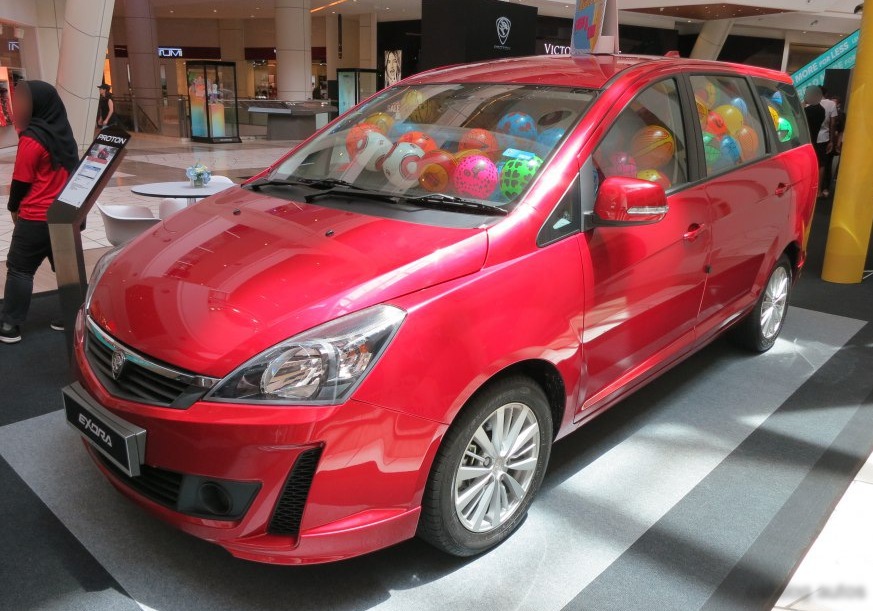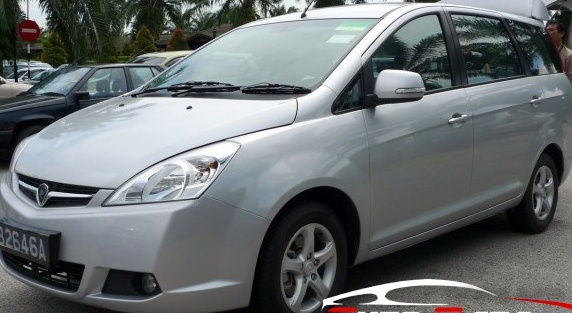
The Proton Exora 1.6 16V, produced between April 2009 and 2010, represents Proton’s initial foray into the multi-purpose vehicle (MPV) segment. Positioned as a family-oriented vehicle, the Exora aimed to provide affordable seven-seat transportation for the Malaysian market and select export regions. This particular 1.6-liter variant served as the entry-level offering within the Exora range, offering a balance between practicality and cost-effectiveness. It was built on Proton’s own platform, derived from collaborations with Mitsubishi, and represented a significant step for Proton in terms of interior space and passenger comfort.
Technical Specifications
| Brand | Proton |
| Model | Exora |
| Generation | Exora |
| Type (Engine) | 1.6 16V (126 Hp) |
| Start of production | April, 2009 |
| End of production | 2010 |
| Powertrain Architecture | Internal Combustion engine |
| Body type | MPV |
| Seats | 7 |
| Doors | 5 |
| Fuel Type | Petrol (Gasoline) |
| Weight-to-power ratio | 11.1 kg/Hp, 90 Hp/tonne |
| Weight-to-torque ratio | 9.3 kg/Nm, 107.1 Nm/tonne |
| Power | 126 Hp @ 6500 rpm |
| Power per litre | 78.9 Hp/l |
| Torque | 150 Nm @ 4500 rpm (110.63 lb.-ft. @ 4500 rpm) |
| Engine Model/Code | CPS |
| Engine displacement | 1597 cm3 (97.45 cu. in.) |
| Number of cylinders | 4 |
| Engine configuration | Inline |
| Cylinder Bore | 76 mm (2.99 in.) |
| Piston Stroke | 88 mm (3.46 in.) |
| Number of valves per cylinder | 4 |
| Fuel injection system | Multi-port manifold injection |
| Engine aspiration | Naturally aspirated engine |
| Valvetrain | DOHC |
| Engine oil capacity | 4.05 l (4.28 US qt | 3.56 UK qt) |
| Coolant | 5 l (5.28 US qt | 4.4 UK qt) |
| Kerb Weight | 1400-1420 kg (3086.47 – 3130.56 lbs.) |
| Length | 4592 mm (180.79 in.) |
| Width | 1809 mm (71.22 in.) |
| Height | 1691 mm (66.57 in.) |
| Wheelbase | 2730 mm (107.48 in.) |
| Ride height (ground clearance) | 156 mm (6.14 in.) |
| Minimum turning circle (turning diameter) | 10.8 m (35.43 ft.) |
| Drivetrain Architecture | The Internal combustion engine (ICE) drives the front wheels of the vehicle. |
| Drive wheel | Front wheel drive |
| Number of gears and type of gearbox | 5 gears, manual transmission |
| Front suspension | Independent type McPherson |
| Rear suspension | Torsion |
| Front brakes | Ventilated discs |
| Rear brakes | Drum |
| Assisting systems | ABS (Anti-lock braking system) |
| Steering type | Steering rack and pinion |
| Power steering | Hydraulic Steering |
| Tires size | 195/65 R15 |
| Wheel rims size | 6.0J x 15 |
Powertrain & Engine Architecture
The Proton Exora 1.6 16V is powered by Proton’s CamPro CPS (Camshaft Profile Switching) engine. This 1.6-liter inline-four engine utilizes a multi-port fuel injection system and a double overhead camshaft (DOHC) valvetrain. The CPS technology allows for variable valve timing, optimizing performance and fuel efficiency across the engine’s operating range. The engine produces 126 horsepower at 6500 rpm and 150 Nm (110.63 lb-ft) of torque at 4500 rpm. The engine’s design prioritized reliability and affordability, making it suitable for the intended market segment. The engine block is constructed from cast iron, contributing to its durability. The five-speed manual transmission was the standard offering for this variant, providing a direct connection between the engine and the front wheels.
Driving Characteristics
The 1.6-liter engine, paired with the five-speed manual transmission, provided adequate performance for everyday driving. Acceleration was not particularly brisk, but sufficient for merging onto highways and overtaking slower traffic. The gear ratios were tuned for fuel economy and drivability rather than outright performance. Compared to potential future turbocharged variants, the 1.6L felt less responsive, particularly when fully loaded with passengers and luggage. The manual transmission allowed for greater driver control, but the shift quality was sometimes criticized for being slightly notchy. The front-wheel-drive configuration offered predictable handling, although it wasn’t designed for sporty driving.
Equipment & Trim Levels
The base Exora 1.6 16V typically came equipped with basic amenities such as air conditioning, power windows, and central locking. Interior upholstery was generally cloth, and the dashboard featured a functional, if somewhat basic, design. Standard safety features included ABS (Anti-lock Braking System). Optional extras, depending on the market and year, could include a stereo system with CD player, alloy wheels, and rear parking sensors. The interior prioritized space and practicality, with a focus on providing comfortable seating for seven passengers. The third-row seats were typically foldable, allowing for increased cargo capacity when not in use.
Chassis & Braking
The Exora utilized an independent McPherson strut suspension system at the front, providing a reasonable level of ride comfort. The rear suspension employed a torsion beam setup, which was a cost-effective solution for maintaining stability and handling. The front brakes were ventilated discs, offering adequate stopping power, while the rear brakes were drum brakes. The steering system was a hydraulic rack and pinion, providing a decent level of feedback. The 195/65 R15 tires offered a balance between comfort and grip. The chassis was designed to accommodate the vehicle’s weight and passenger load, prioritizing stability and safety.
Market Reception & Comparison
The Proton Exora 1.6 16V was generally well-received in the Malaysian market as an affordable and practical MPV. Critics praised its spacious interior and seven-seat configuration, but some noted the engine’s lack of outright power. Compared to other MPVs available at the time, the Exora offered a competitive price point and a relatively generous level of standard equipment. Fuel economy was considered average for its class. Compared to higher-spec Exora variants with more powerful engines, the 1.6L model was seen as a more economical choice for budget-conscious buyers. It was often compared to other entry-level MPVs in the region, such as the Perodua Alza.
Legacy
The Proton Exora 1.6 16V laid the foundation for Proton’s presence in the MPV segment. While the model was discontinued after a relatively short production run, it remains a popular choice in the used car market in Malaysia. The CamPro CPS engine, while not known for its exceptional performance, proved to be reasonably reliable with proper maintenance. Common issues reported by owners include occasional oil leaks and wear on the suspension components. Today, the Exora 1.6 16V is often sought after by families looking for an affordable and spacious vehicle for daily use. Its simplicity and relatively low maintenance costs contribute to its continued appeal.