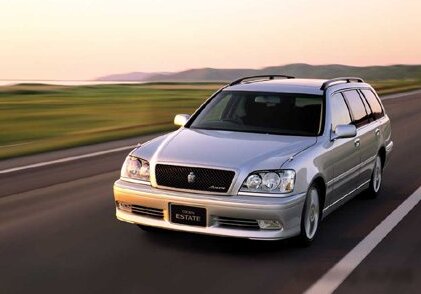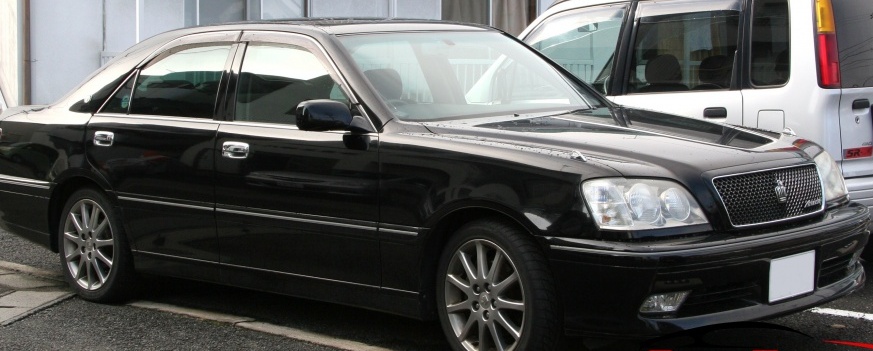
The Toyota Crown XI Athlete (S170, facelifted in 2001) represents a significant iteration of Toyota’s flagship sedan, primarily aimed at the Japanese domestic market (JDM). Produced from 2001 to 2003, this variant, specifically the 3.0-liter 24-valve (220 horsepower) model paired with an automatic transmission, occupied a premium position within the Crown lineup. It was designed to appeal to buyers seeking a blend of luxury, performance, and advanced technology. The S170 series, and particularly the Athlete trim, sought to modernize the Crown’s image while retaining its reputation for reliability and comfort. This model sat above the more basic Crown models, offering a sportier aesthetic and enhanced driving experience.
Technical Specifications
| Brand | Toyota |
| Model | Crown |
| Generation | Crown XI Athlete (S170, facelift 2001) |
| Type (Engine) | 3.0 24V (220 Hp) Automatic |
| Start of production | 2001 |
| End of production | 2003 |
| Powertrain Architecture | Internal Combustion engine |
| Body type | Sedan |
| Seats | 5 |
| Doors | 4 |
| Fuel Type | Petrol (Gasoline) |
| Weight-to-power ratio | 7.2 kg/Hp, 138.4 Hp/tonne |
| Weight-to-torque ratio | 5.4 kg/Nm, 184.9 Nm/tonne |
| Power | 220 Hp @ 5600 rpm |
| Power per litre | 73.4 Hp/l |
| Torque | 294 Nm @ 3600 rpm (216.84 lb.-ft. @ 3600 rpm) |
| Engine layout | Front, Longitudinal |
| Engine Model/Code | 2JZ-FSE |
| Engine displacement | 2997 cm3 (182.89 cu. in.) |
| Number of cylinders | 6 |
| Engine configuration | Inline |
| Cylinder Bore | 86 mm (3.39 in.) |
| Piston Stroke | 86 mm (3.39 in.) |
| Compression ratio | 11.3:1 |
| Number of valves per cylinder | 4 |
| Fuel injection system | Direct injection |
| Engine aspiration | Naturally aspirated engine |
| Valvetrain | DOHC |
| Engine oil capacity | 5.4 l (5.71 US qt | 4.75 UK qt) |
| Coolant | 7.5 l (7.93 US qt | 6.6 UK qt) |
| Kerb Weight | 1590 kg (3505.35 lbs) |
| Fuel tank capacity | 70 l (18.49 US gal | 15.4 UK gal) |
| Length | 4820 mm (189.76 in) |
| Width | 1765 mm (69.49 in) |
| Height | 1455 mm (57.28 in) |
| Wheelbase | 2780 mm (109.45 in) |
| Front track | 1495 mm (58.86 in) |
| Rear (Back) track | 1475 mm (58.07 in) |
| Ride height (ground clearance) | 155 mm (6.1 in) |
| Minimum turning circle (turning diameter) | 10.6 m (34.78 ft) |
| Drivetrain Architecture | The Internal combustion engine (ICE) drives the rear wheels of the vehicle. |
| Drive wheel | Rear wheel drive |
| Number of gears and type of gearbox | 5 gears, automatic transmission |
| Front suspension | Double wishbone |
| Rear suspension | Double wishbone |
| Front brakes | Ventilated discs |
| Rear brakes | Disc |
| Assisting systems | ABS (Anti-lock braking system) |
| Steering type | Steering rack and pinion |
| Tires size | 215/55 R16 |
| Wheel rims size | 16 |
Powertrain & Engine Architecture
The heart of the Crown XI Athlete 3.0 was the 2JZ-FSE engine, a 3.0-liter inline-six cylinder powerplant. This engine was notable for its direct fuel injection (D-4) system, a technology Toyota pioneered to improve fuel efficiency and reduce emissions. The D-4 system allowed for precise fuel delivery, optimizing combustion and enhancing throttle response. The engine featured a double overhead camshaft (DOHC) valvetrain, contributing to its high-revving nature and strong power output. The 2JZ-FSE produced 220 horsepower at 5600 rpm and 294 Nm (216.84 lb-ft) of torque at 3600 rpm. This engine was longitudinally mounted, driving the rear wheels. The automatic transmission was a 5-speed unit, designed to provide smooth and comfortable shifts. While not a performance-oriented transmission, it was well-suited to the Crown’s grand touring character.
Driving Characteristics
The 3.0-liter automatic Crown Athlete offered a refined and comfortable driving experience. The automatic transmission, while not as engaging as a manual, provided seamless gear changes and made the car easy to drive in urban environments. The engine delivered ample power for effortless cruising and confident overtaking. Compared to the base model Crowns with smaller engines, the 3.0-liter variant offered a noticeable performance advantage. However, it wasn’t intended to compete with dedicated sports sedans. The rear-wheel-drive configuration contributed to balanced handling, although the car’s weight (1590 kg / 3505.35 lbs) was noticeable in spirited driving. The gear ratios were tuned for comfortable highway cruising, with a focus on maximizing fuel efficiency rather than outright acceleration.
Equipment & Trim Levels
The Athlete trim level of the Crown XI was well-equipped, reflecting its position as a premium offering. Standard features typically included power-adjustable front seats, woodgrain interior trim, a high-quality audio system, automatic climate control, and alloy wheels. The interior upholstery was often a combination of leather and fabric, providing a luxurious feel. Optional extras could include a navigation system, sunroof, and upgraded audio components. The Athlete trim also featured unique exterior styling cues, such as a more aggressive front bumper and side skirts, differentiating it from the more conservatively styled base models.
Chassis & Braking
The Crown XI Athlete utilized a double wishbone suspension system both front and rear, providing a comfortable ride and good handling characteristics. The suspension was tuned to prioritize comfort over outright sportiness, but it still offered a stable and predictable driving experience. Braking duties were handled by ventilated discs at the front and solid discs at the rear. An Anti-lock Braking System (ABS) was standard, enhancing safety and control during emergency braking situations. The steering system was a rack and pinion setup, providing precise and responsive steering feel.
Market Reception & Comparison
The Toyota Crown XI Athlete 3.0 Automatic was generally well-received in the Japanese market. Critics praised its comfortable ride, refined interior, and powerful engine. It was seen as a strong competitor to other luxury sedans in its class, such as the Nissan Cima and the Honda Inspire. Compared to the smaller-engined Crown models, the 3.0-liter variant offered a significant performance upgrade, but at a higher price point. Fuel economy was reasonable for a car of its size and performance, but it wasn’t as fuel-efficient as the smaller-engined models or the diesel-powered variants available in some markets. Reliability was a key strength, as with most Toyota products of this era.
Legacy
The Toyota Crown XI Athlete 3.0 Automatic has maintained a reputation for reliability and durability. These cars are still relatively common on Japanese used car markets, and well-maintained examples can command a premium price. The 2JZ-FSE engine is known for its longevity and ability to withstand high mileage. While the direct injection system can require specialized maintenance, the engine is generally considered to be robust and dependable. Today, the Crown XI Athlete 3.0 is appreciated by enthusiasts for its blend of luxury, performance, and classic Japanese styling. It represents a high point in Toyota’s long history of producing high-quality, reliable sedans.