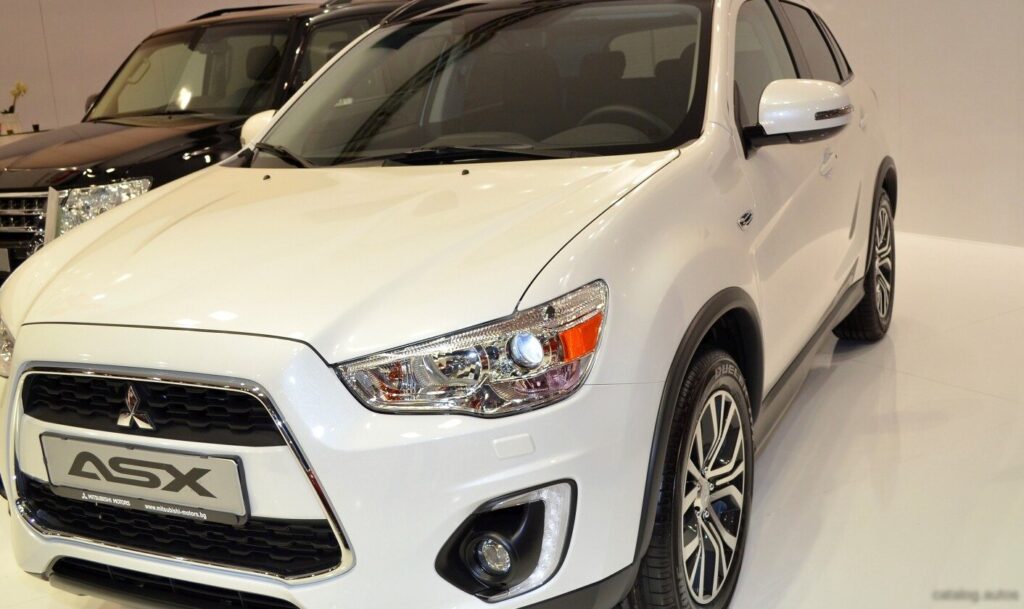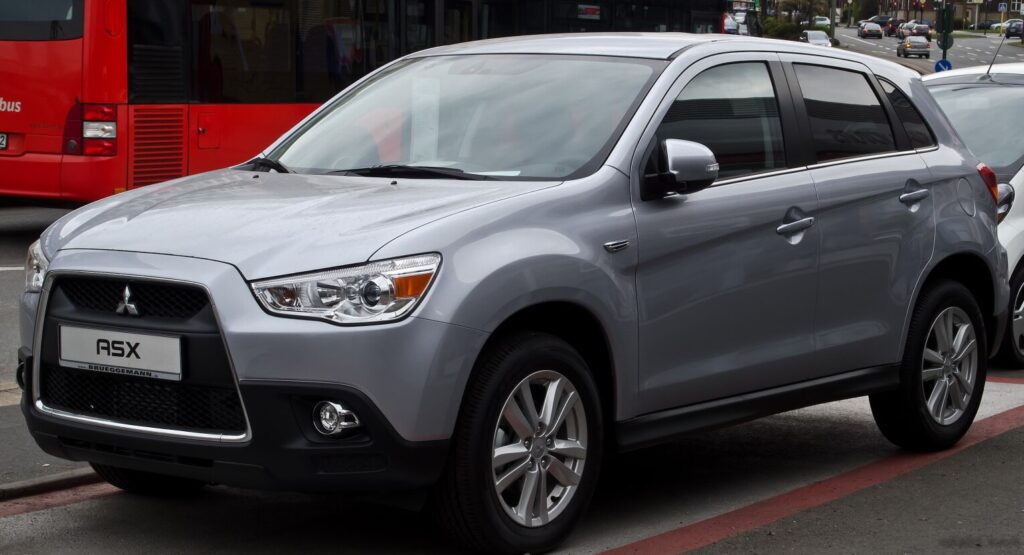
Technical Specifications
| Brand | Mitsubishi |
| Model | ASX |
| Generation | ASX I |
| Type (Engine) | 1.8 DI-D DOHC MIVEC (150 Hp) 4WD |
| Start of production | 2010 |
| End of production | 2012 |
| Powertrain Architecture | Internal Combustion engine |
| Body type | SUV, Crossover |
| Seats | 5 |
| Doors | 5 |
| Fuel consumption (urban) | 7 l/100 km (33.6 US mpg, 40.4 UK mpg, 14.3 km/l) |
| Fuel consumption (extra urban) | 4.9 l/100 km (48 US mpg, 57.6 UK mpg, 20.4 km/l) |
| Fuel consumption (combined) | 5.7 l/100 km (41.3 US mpg, 49.6 UK mpg, 17.5 km/l) |
| Fuel Type | Diesel |
| Acceleration 0 – 100 km/h | 10 sec |
| Acceleration 0 – 62 mph | 10 sec |
| Acceleration 0 – 60 mph | 9.5 sec |
| Maximum speed | 198 km/h (123.03 mph) |
| Emission standard | Euro 5 |
| Weight-to-power ratio | 10.1 kg/Hp, 99.3 Hp/tonne |
| Weight-to-torque ratio | 5 kg/Nm, 198.7 Nm/tonne |
| Power | 150 Hp @ 4000 rpm |
| Power per litre | 83.4 Hp/l |
| Torque | 300 Nm @ 2000-3000 rpm (221.27 lb.-ft. @ 2000-3000 rpm) |
| Engine layout | Front, Transverse |
| Engine Model/Code | 4J10 |
| Engine displacement | 1798 cm3 (109.72 cu. in.) |
| Engine configuration | Inline |
| Fuel injection system | Diesel Commonrail |
| Engine aspiration | Turbocharger, Intercooler |
| Valvetrain | DOHC |
| Engine oil capacity | 5.3 l (5.6 US qt | 4.66 UK qt) |
| Coolant capacity | 7.5 l (7.93 US qt | 6.6 UK qt) |
| Kerb Weight | 1510 kg (3328.98 lbs.) |
| Trunk (boot) space – minimum | 442 l (15.61 cu. ft.) |
| Trunk (boot) space – maximum | 1219 l (43.05 cu. ft.) |
| Fuel tank capacity | 60 l (15.85 US gal | 13.2 UK gal) |
| Length | 4295 mm (169.09 in.) |
| Width | 1770 mm (69.69 in.) |
| Height | 1615 mm (63.58 in.) |
| Wheelbase | 2670 mm (105.12 in.) |
| Minimum turning circle | 10.6 m (34.78 ft.) |
| Drive wheel | All wheel drive (4×4) |
| Number of gears | 6 gears, manual transmission |
| Front suspension | Independent, type McPherson with coil spring and anti-roll bar |
| Rear suspension | Independent multi-link suspension |
| Front brakes | Ventilated discs |
| Rear brakes | Disc |
The Mitsubishi ASX I 1.8 DI-D DOHC MIVEC 4WD, produced between 2010 and 2012, was a significant variant within the first generation of Mitsubishi’s compact crossover SUV. Designed primarily for the European and Asian markets, it aimed to deliver a blend of fuel efficiency, practicality, and all-weather capability. The ASX (Active Sport Crossover) marked Mitsubishi’s entry into the burgeoning compact SUV segment, and was developed in collaboration with Peugeot and Citroën, sharing its platform with the 4008 and C4 Aircross respectively. This particular 1.8-liter diesel version occupied a mid-range position within the ASX lineup, offering a step up from the base gasoline engines while remaining more accessible than the higher-output diesel options.
Powertrain & Engine Architecture
At the core of the ASX I 1.8 DI-D lies Mitsubishi’s 4J10 engine, a 1.8-liter inline-four cylinder diesel. This engine employs a common rail direct injection system, injecting fuel at exceptionally high pressure to optimize combustion efficiency. The DOHC (Double Overhead Camshaft) configuration, combined with Mitsubishi’s MIVEC (Mitsubishi Innovative Valve timing Electronic Control) technology, provides variable valve timing, enhancing both power output and fuel economy. A turbocharger, coupled with an intercooler, further improves performance by increasing air intake to the engine. The engine generates 150 horsepower at 4000 rpm and a robust 300 Nm (221 lb-ft) of torque between 2000 and 3000 rpm. This substantial torque is a hallmark of diesel engines, providing strong pulling power, particularly at lower engine speeds. Power is delivered to all four wheels through a six-speed manual transmission and Mitsubishi’s sophisticated all-wheel-drive system.
Driving Characteristics
The 1.8 DI-D 4WD ASX provides a composed and practical driving experience. While not focused on outright performance, the engine’s torque delivers adequate acceleration for everyday driving needs. A 0-60 mph time of approximately 9.5 seconds is respectable for a vehicle in this class. The six-speed manual transmission allows for precise gear selection, and the all-wheel-drive system enhances traction in challenging road conditions. Compared to the base gasoline engines, the diesel variant offers significantly improved fuel economy. However, it doesn’t quite match the responsiveness of the more powerful 2.0-liter diesel versions available in certain markets. The gear ratios are optimized for fuel efficiency and usability, prioritizing smooth operation over rapid acceleration.
Equipment & Trim Levels
The ASX I 1.8 DI-D 4WD typically came standard with a reasonable array of features. These generally included air conditioning, power windows and mirrors, a CD/MP3 stereo system, and alloy wheels. Safety equipment such as ABS (Anti-lock Braking System), electronic brakeforce distribution, and multiple airbags were also standard. Higher trim levels offered optional upgrades like climate control, a touchscreen infotainment system with navigation, leather upholstery, and parking sensors. The interior design was functional and modern, emphasizing practicality and durability. Upholstery was typically cloth, with leather available as an optional upgrade.
Chassis & Braking
The ASX I features a McPherson strut front suspension and an independent multi-link rear suspension, contributing to a comfortable ride and good handling characteristics. The suspension is tuned to strike a balance between ride comfort and body control. The braking system utilizes ventilated discs at the front and solid discs at the rear. The all-wheel-drive system is generally a selectable system, allowing the driver to switch between two-wheel drive and four-wheel drive modes depending on prevailing road conditions. Stabilizer bars are fitted to both the front and rear axles to minimize body roll during cornering maneuvers.
Market Reception & Comparison
The Mitsubishi ASX I 1.8 DI-D 4WD was generally well-received by automotive reviewers as a practical and fuel-efficient crossover SUV. It was praised for its spacious interior, comfortable ride quality, and capable all-wheel-drive system. Some critics, however, noted that the engine could be somewhat noisy and lacked the refinement found in some competing models. Compared to other trims within the ASX lineup, the 1.8 DI-D offered a compelling balance of performance and economy. The gasoline engines were less fuel-efficient, while the more powerful diesel options carried a higher price tag. In terms of reliability, the 4J10 engine has proven to be generally robust, provided regular maintenance is performed.
Legacy
The Mitsubishi ASX I 1.8 DI-D 4WD remains a relatively common vehicle on the used car market today. The 4J10 diesel engine, when properly maintained, is known for its longevity and durability. However, prospective buyers should be aware of the typical maintenance requirements for diesel engines, including regular oil changes, filter replacements, and potential issues related to the diesel particulate filter (DPF). The ASX I’s all-wheel-drive system continues to be a valuable asset for drivers in regions experiencing inclement weather. Overall, the 1.8 DI-D 4WD variant represents a dependable and solid choice in the used compact crossover SUV segment.