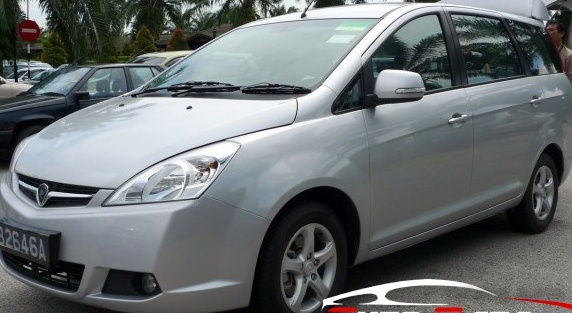
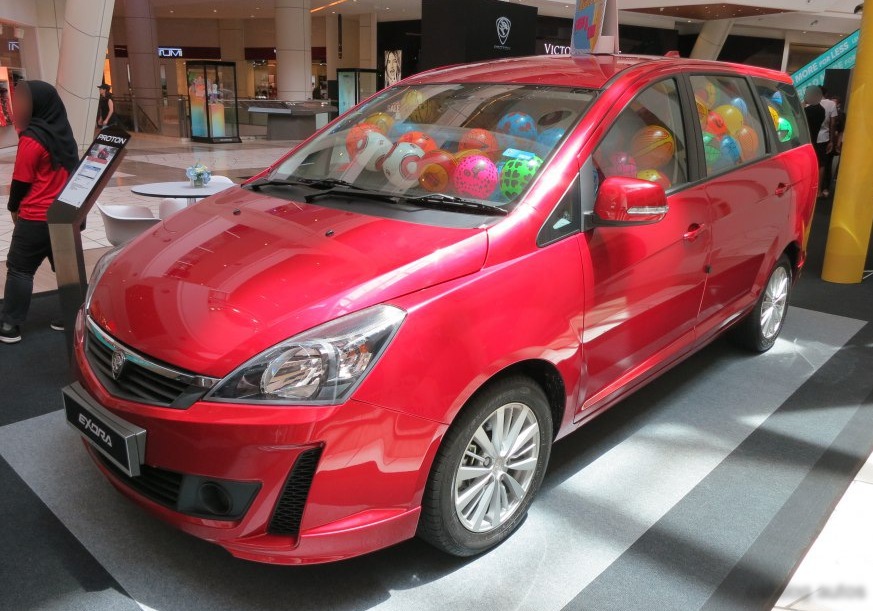
The Proton Exora MC 1.6 16V (140 Hp) CVT, produced between 2010 and 2011, represents a significant iteration of Proton’s multi-purpose vehicle (MPV) offering. Positioned as a mainstream family transport solution, the Exora MC aimed to provide affordable seven-seat capacity with a degree of modern convenience. It was built upon the Exora platform, designated internally as the MPV, and represented a mid-cycle refresh (MC) of the original Exora introduced in 2009. The model was primarily targeted at the Malaysian domestic market, where MPVs enjoy considerable popularity, and sought to compete with established players like the Toyota Avanza and Perodua Ertiga.
Technical Specifications
| Brand | Proton |
| Model | Exora |
| Generation | Exora MC |
| Type (Engine) | 1.6 16V (140 Hp) CVT |
| Start of production | 2010 |
| End of production | 2011 |
| Powertrain Architecture | Internal Combustion engine |
| Body type | MPV |
| Seats | 7 |
| Doors | 5 |
| Fuel consumption (combined) | 7.4 l/100 km (31.8 US mpg, 38.2 UK mpg, 13.5 km/l) |
| Fuel Type | Petrol (Gasoline) |
| Acceleration 0 – 100 km/h | 11.3 sec |
| Acceleration 0 – 62 mph | 11.3 sec |
| Acceleration 0 – 60 mph | 10.7 sec |
| Maximum speed | 185 km/h (114.95 mph) |
| Weight-to-power ratio | 10.4 kg/Hp, 96.2 Hp/tonne |
| Weight-to-torque ratio | 7.1 kg/Nm, 140.9 Nm/tonne |
| Power | 140 Hp @ 5000 rpm |
| Power per litre | 87.7 Hp/l |
| Torque | 205 Nm @ 2000 rpm (151.2 lb.-ft. @ 2000 rpm) |
| Engine displacement | 1597 cm3 (97.45 cu. in.) |
| Number of cylinders | 4 |
| Engine configuration | Inline |
| Cylinder Bore | 76 mm (2.99 in.) |
| Piston Stroke | 88 mm (3.46 in.) |
| Number of valves per cylinder | 4 |
| Fuel injection system | Multi-port manifold injection |
| Engine aspiration | Naturally aspirated engine |
| Valvetrain | DOHC |
| Engine oil capacity | 4.05 l (4.28 US qt | 3.56 UK qt) |
| Coolant | 5 l (5.28 US qt | 4.4 UK qt) |
| Kerb Weight | 1455 kg (3207.73 lbs.) |
| Fuel tank capacity | 55 l (14.53 US gal | 12.1 UK gal) |
| Length | 4592 mm (180.79 in.) |
| Width | 1809 mm (71.22 in.) |
| Height | 1691 mm (66.57 in.) |
| Wheelbase | 2730 mm (107.48 in.) |
| Ride height (ground clearance) | 156 mm (6.14 in.) |
| Minimum turning circle | 10.8 m (35.43 ft.) |
| Drivetrain Architecture | Front wheel drive |
| Number of gears and type of gearbox | automatic transmission CVT |
| Front suspension | Independent type McPherson |
| Rear suspension | Torsion |
| Front brakes | Ventilated discs |
| Rear brakes | Drum |
| Assisting systems | ABS (Anti-lock braking system) |
| Steering type | Steering rack and pinion |
| Power steering | Hydraulic Steering |
| Tires size | 205/55 R16 |
| Wheel rims size | 16 |
Powertrain & Engine Architecture
The Exora MC 1.6 16V utilizes Proton’s CamPro 1.6-liter inline-four engine. This engine, designated as the E13, is a naturally aspirated unit featuring a double overhead camshaft (DOHC) valvetrain and multi-point fuel injection. The engine produces 140 horsepower at 5000 rpm and 205 Nm (151.2 lb-ft) of torque at 2000 rpm. The engine’s design prioritizes drivability and fuel efficiency over outright performance. The engine block is constructed from cast iron, while the cylinder head is aluminum. The Exora MC paired this engine with a Continuously Variable Transmission (CVT), a relatively new technology for Proton at the time. The CVT aimed to improve fuel economy and provide smoother acceleration compared to a traditional automatic transmission. The CVT’s gear ratios are continuously adjusted to keep the engine operating in its most efficient range.
Driving Characteristics
The 1.6L engine and CVT combination in the Exora MC delivers adequate, but not particularly brisk, performance. Acceleration from 0-60 mph takes approximately 10.7 seconds, and top speed is around 115 mph. The CVT contributes to a smooth driving experience, minimizing harsh shifts. However, it can sometimes exhibit a “rubber band” effect, where engine revs rise quickly under acceleration without a corresponding increase in speed. Compared to the manual transmission versions of the Exora, the CVT offers less direct control and a slightly less engaging driving experience. The Exora MC’s suspension is tuned for comfort, providing a reasonably compliant ride, even on less-than-perfect road surfaces. The relatively high kerb weight of 1455 kg does impact handling agility, making it feel somewhat ponderous in corners.
Equipment & Trim Levels
The Exora MC 1.6 16V CVT typically came equipped with features such as air conditioning, power windows, power steering, and a basic audio system. Higher trim levels, such as the Premium variant, added features like alloy wheels, fog lamps, a multi-function steering wheel, and upgraded interior trim. The interior generally featured cloth upholstery and a functional, if somewhat basic, dashboard layout. Optional extras included a roof rack, a reverse parking sensor, and a DVD player for the rear passengers. Safety features included ABS (Anti-lock Braking System), but airbags were often limited to the front occupants depending on the specific trim level.
Chassis & Braking
The Exora MC utilizes a McPherson strut independent suspension setup at the front and a torsion beam suspension at the rear. This configuration represents a common setup for front-wheel-drive MPVs, balancing cost-effectiveness with acceptable ride quality. The front brakes are ventilated discs, providing adequate stopping power, while the rear brakes are drums. The steering is rack and pinion with hydraulic power assistance. The tires are typically 205/55 R16, offering a reasonable compromise between comfort and grip. The Exora MC’s chassis is designed to prioritize passenger comfort and space efficiency rather than sporty handling.
Market Reception & Comparison
The Proton Exora MC 1.6 16V CVT was generally well-received in the Malaysian market as an affordable and practical family vehicle. Critics praised its spacious interior, comfortable ride, and relatively fuel-efficient CVT transmission. However, some reviewers noted the engine’s lack of outright power and the CVT’s occasional “rubber band” effect. Compared to other MPVs in its class, such as the Toyota Avanza, the Exora MC offered more space and a more comfortable ride, but it often lagged behind in terms of brand reputation and resale value. Fuel economy was competitive, averaging around 7.4 l/100 km (31.8 US mpg).
Legacy
The Proton Exora MC 1.6 16V CVT, while not a groundbreaking vehicle, played an important role in establishing Proton as a competitive player in the Malaysian MPV market. The CamPro 1.6 engine and CVT transmission proved to be reasonably reliable, although long-term maintenance can be affected by the availability of spare parts. In the used car market, the Exora MC remains a popular choice for budget-conscious families seeking a spacious and practical vehicle. Its affordability and relatively low running costs continue to make it an attractive option, despite its age. The Exora platform continued to be updated and refined in subsequent years, demonstrating Proton’s commitment to the MPV segment.