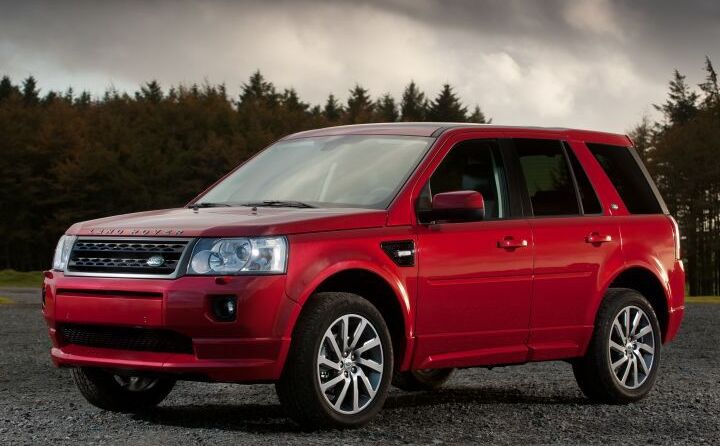
The Land Rover Freelander II (facelift, produced from 2010 to 2012) 2.2 SD4 AWD Automatic represents a significant refinement of the second-generation Freelander, introduced in 2006. Positioned as a mid-range offering within the Freelander II lineup, the SD4 variant aimed to balance performance, fuel efficiency, and capability, appealing to buyers seeking a premium compact SUV with genuine off-road credentials. This facelift brought styling updates, improved interior materials, and crucially, enhancements to the 2.2-liter diesel engine, solidifying the Freelander’s position in the competitive European SUV market. The vehicle is built on the Ford-derived D3 platform, shared with the Volvo XC60 and later Land Rover Discovery Sport.
Technical Specifications
| Brand | Land Rover |
| Model | Freelander |
| Generation | Freelander II (facelift 2010) |
| Type (Engine) | 2.2 SD4 (190 Hp) AWD Automatic |
| Start of production | 2010 |
| End of production | 2012 |
| Powertrain Architecture | Internal Combustion engine |
| Body type | SUV |
| Seats | 5 |
| Doors | 5 |
| Fuel consumption (urban) | 8.7 l/100 km (27 US mpg, 32.5 UK mpg, 11.5 km/l) |
| Fuel consumption (extra urban) | 5.7 l/100 km (41.3 US mpg, 49.6 UK mpg, 17.5 km/l) |
| Fuel consumption (combined) | 7 l/100 km (33.6 US mpg, 40.4 UK mpg, 14.3 km/l) |
| CO2 emissions | 185 g/km |
| Fuel Type | Diesel |
| Acceleration 0 – 100 km/h | 9.5 sec |
| Acceleration 0 – 62 mph | 9.5 sec |
| Acceleration 0 – 60 mph | 9 sec |
| Maximum speed | 190 km/h (118.06 mph) |
| Emission standard | Euro 5 |
| Weight-to-power ratio | 9.5 kg/Hp, 105.3 Hp/tonne |
| Weight-to-torque ratio | 4.3 kg/Nm, 232.7 Nm/tonne |
| Power | 190 Hp |
| Power per litre | 87.2 Hp/l |
| Torque | 420 Nm (309.78 lb.-ft.) |
| Engine layout | Front, Transverse |
| Engine Model/Code | 224DT |
| Engine displacement | 2179 cm3 (132.97 cu. in.) |
| Number of cylinders | 4 |
| Engine configuration | Inline |
| Cylinder Bore | 85 mm (3.35 in.) |
| Piston Stroke | 96 mm (3.78 in.) |
| Compression ratio | 15.8:1 |
| Number of valves per cylinder | 4 |
| Fuel injection system | Diesel Commonrail |
| Engine aspiration | Turbocharger, Intercooler |
| Engine oil capacity | 5.9 l (6.23 US qt | 5.19 UK qt) |
| Coolant | 8.2 l (8.66 US qt | 7.21 UK qt) |
| Kerb Weight | 1805 kg (3979.34 lbs.) |
| Fuel tank capacity | 68 l (17.96 US gal | 14.96 UK gal) |
| Length | 4500 mm (177.17 in.) |
| Width including mirrors | 2195 mm (86.42 in.) |
| Height | 1740 mm (68.5 in.) |
| Wheelbase | 2660 mm (104.72 in.) |
| Minimum turning circle | 11.3 m (37.07 ft.) |
| Drive wheel | All wheel drive (4×4) |
| Number of gears | 6 |
| Gearbox type | automatic transmission |
| Front suspension | Independent, type McPherson with coil spring and anti-roll bar |
| Rear suspension | Independent coil spring |
| Front brakes | Ventilated discs |
| Rear brakes | Disc |
Powertrain & Engine Architecture
The heart of the Freelander 2.2 SD4 is the 224DT engine, a 2.2-liter four-cylinder diesel. This engine is a product of PSA-Ford joint venture, and was also used in various Peugeot and Citroën models. The 224DT utilizes a common rail direct injection system, delivering fuel at extremely high pressures for optimized combustion. A variable geometry turbocharger (VGT) and intercooler work in tandem to boost power and torque while managing turbo lag. The engine produces 190 horsepower and a substantial 420 Nm (309.78 lb-ft) of torque. The six-speed automatic transmission, sourced from Aisin, was specifically tuned to handle the engine’s torque output and provide smooth shifts. This transmission featured a manual shift mode for greater driver control, though it wasn’t particularly sporty in its operation.
Driving Characteristics
The 2.2 SD4 Automatic offers a comfortable and capable driving experience. While not exceptionally quick – 0-60 mph takes around 9 seconds – the ample torque provides strong acceleration in everyday driving situations. The automatic transmission prioritizes smoothness over outright performance, resulting in relaxed cruising and effortless overtaking. Compared to the manual transmission versions, the automatic sacrifices some responsiveness, but gains in convenience. The higher-output 2.2 eD4 (210 hp) offered a noticeable performance increase, while the 2.2 TD4 (150 hp) provided a more economical, but less powerful, alternative. The all-wheel-drive system, featuring Land Rover’s Terrain Response system, provides excellent traction on various surfaces, making the Freelander a genuinely capable off-roader.
Equipment & Trim Levels
The SD4 trim typically included features such as leather upholstery, automatic climate control, a touchscreen infotainment system, and parking sensors. Optional extras included a panoramic sunroof, heated seats, and upgraded audio systems. The interior design was generally well-appointed, though material quality, while improved in the facelifted model, wasn’t quite on par with some of its German rivals. Standard safety equipment included ABS, electronic stability control, and multiple airbags.
Chassis & Braking
The Freelander II utilizes an independent suspension setup at all four corners, providing a comfortable ride quality. McPherson struts are used at the front, while a multi-link setup is employed at the rear. The braking system consists of ventilated discs at the front and solid discs at the rear. ABS (Anti-lock Braking System) is standard, enhancing braking performance and stability. Stabilizer bars are fitted front and rear to reduce body roll during cornering.
Market Reception & Comparison
The Freelander II 2.2 SD4 Automatic was generally well-received by automotive critics. It was praised for its comfortable ride, capable all-wheel-drive system, and relatively fuel-efficient engine. However, some reviewers noted the automatic transmission’s lack of sportiness and the interior’s slightly dated design. Compared to rivals like the BMW X3 and Audi Q5, the Freelander offered a more affordable price point and superior off-road capability, but lacked the same level of refinement and driving dynamics. Fuel economy was competitive, averaging around 33.6 US mpg in combined driving, and reliability was generally good, though some owners reported issues with the diesel particulate filter (DPF).
Legacy
The Land Rover Freelander II 2.2 SD4 Automatic remains a popular choice in the used car market. The 224DT engine, while not without its quirks (particularly regarding DPF maintenance), has proven to be relatively durable when properly maintained. The Freelander’s combination of practicality, capability, and affordability continues to appeal to buyers seeking a versatile and stylish SUV. However, potential buyers should be aware of the potential for DPF issues and ensure that the vehicle has been regularly serviced. The Freelander II laid the groundwork for the successful Discovery Sport, which continues Land Rover’s tradition of building capable and desirable compact SUVs.