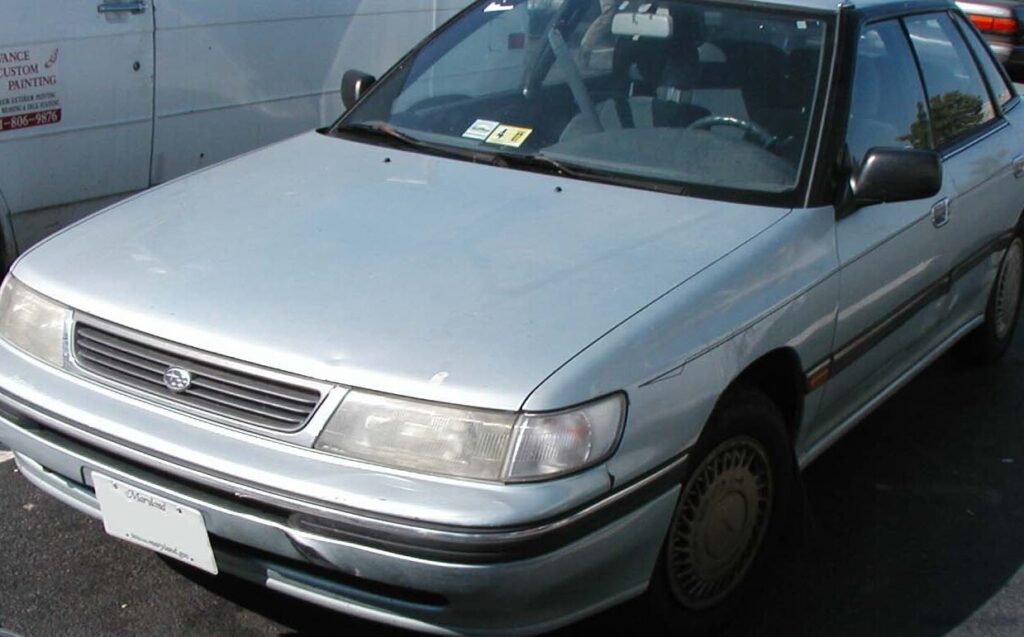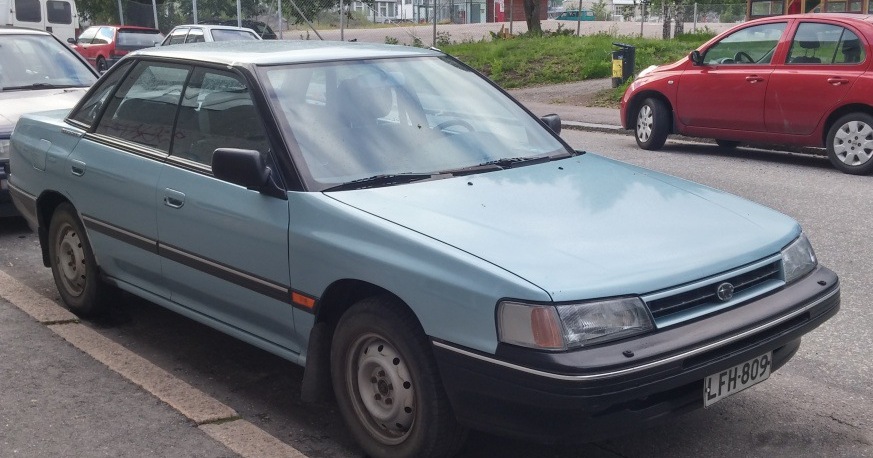
The Subaru Legacy I (BC), produced between 1989 and 1991, represented Subaru’s initial foray into the mid-size sedan market, aiming to compete with established Japanese and American rivals. The 2000 model, equipped with a 150 horsepower engine and all-wheel drive (AWD), was a key variant within the BC generation, positioned as a well-equipped and capable offering. This model was primarily sold in Japan, Australia, and select European markets, establishing the Legacy’s reputation for reliability and all-weather performance. It served as a foundational model for Subaru, paving the way for subsequent Legacy generations and solidifying the brand’s commitment to symmetrical all-wheel drive.
Technical Specifications
| Brand | Subaru |
| Model | Legacy |
| Generation | Legacy I (BC) |
| Type | 2000 (150 Hp) AWD |
| Start of production | 1989 |
| End of production | 1991 |
| Powertrain Architecture | Internal Combustion engine |
| Body type | Sedan |
| Seats | 5 |
| Doors | 4 |
| Fuel consumption (urban) | 13 l/100 km (18.1 US mpg, 21.7 UK mpg) |
| Fuel consumption (extra urban) | 8 l/100 km (29.4 US mpg, 35.3 UK mpg) |
| Fuel Type | Petrol (Gasoline) |
| Maximum speed | 200 km/h (124.27 mph) |
| Weight-to-power ratio | 8.5 kg/Hp, 117.2 Hp/tonne |
| Weight-to-torque ratio | 7.4 kg/Nm, 134.4 Nm/tonne |
| Power | 150 Hp @ 6800 rpm |
| Power per litre | 75.2 Hp/l |
| Torque | 172 Nm @ 5200 rpm (126.86 lb.-ft. @ 5200 rpm) |
| Engine layout | Front, Longitudinal |
| Engine Model/Code | EJ20 |
| Engine displacement | 1994 cm3 (121.68 cu. in.) |
| Number of cylinders | 4 |
| Engine configuration | Boxer |
| Cylinder Bore | 92 mm (3.62 in.) |
| Piston Stroke | 75 mm (2.95 in.) |
| Compression ratio | 9.7:1 |
| Number of valves per cylinder | 4 |
| Fuel injection system | Multi-port manifold injection |
| Engine aspiration | Naturally aspirated engine |
| Valvetrain | DOHC |
| Engine oil capacity | 4.5 l (4.76 US qt | 3.96 UK qt) |
| Coolant capacity | 6.1 l (6.45 US qt | 5.37 UK qt) |
| Kerb Weight | 1280 kg (2821.92 lbs.) |
| Trunk (boot) space (minimum) | 405 l (14.3 cu. ft.) |
| Trunk (boot) space (maximum) | 630 l (22.25 cu. ft.) |
| Fuel tank capacity | 60 l (15.85 US gal | 13.2 UK gal) |
| Length | 4510 mm (177.56 in.) |
| Width | 1690 mm (66.54 in.) |
| Height | 1385 mm (54.53 in.) |
| Wheelbase | 2580 mm (101.57 in.) |
| Front track | 1465 mm (57.68 in.) |
| Rear track | 1455 mm (57.28 in.) |
| Ride height (ground clearance) | 170 mm (6.69 in.) |
| Minimum turning circle | 10.1 m (33.14 ft.) |
| Drive wheel | All wheel drive (4×4) |
| Number of gears | 5 |
| Gearbox type | Manual transmission |
| Front suspension | Wishbone |
| Rear suspension | Several levers and rods |
| Front brakes | Disc |
| Rear brakes | Disc |
| Assisting systems | ABS (Anti-lock braking system) |
| Steering type | Steering rack and pinion |
| Power steering | Hydraulic Steering |
| Tires size | 185/65 R14 |
| Wheel rims size | 14 |
Powertrain & Engine Architecture
The heart of the Legacy I 2000 AWD was the EJ20 engine, a 2.0-liter (1994 cc) naturally aspirated, horizontally-opposed (boxer) four-cylinder. This engine configuration, a Subaru hallmark, offered inherent balance and a lower center of gravity, contributing to improved handling. The EJ20 featured a multi-port fuel injection system, delivering fuel directly into the intake ports, and a double overhead camshaft (DOHC) valvetrain, optimizing airflow for increased power output. The 9.7:1 compression ratio was a compromise between performance and fuel efficiency. The five-speed manual transmission was the standard offering, providing drivers with direct control over the engine’s power. The longitudinally mounted engine and all-wheel drive system necessitated a more complex drivetrain layout compared to front-wheel drive competitors.
Driving Characteristics
The 150 hp output of the EJ20, coupled with the all-wheel drive system, provided the Legacy I 2000 AWD with respectable performance for its time. While not a sports car, it offered brisk acceleration and confident handling in various conditions. The manual transmission allowed for precise gear selection, maximizing the engine’s power band. Compared to the base 1.8L models, the 2000 offered a noticeable increase in torque, making it more capable for highway cruising and overtaking. The all-wheel drive system provided enhanced traction, particularly on slippery surfaces, a significant advantage over rear-wheel drive or front-wheel drive competitors. The gear ratios were tuned for a balance between acceleration and fuel economy, with fifth gear designed for comfortable highway speeds.
Equipment & Trim Levels
The Legacy I 2000 AWD was generally well-equipped for its era. Standard features typically included power steering, a basic audio system, and cloth upholstery. Depending on the market, air conditioning, power windows, and central locking were often included or available as options. The interior design was functional and straightforward, prioritizing practicality over luxury. Higher trim levels, where available, might have featured upgraded upholstery, additional sound insulation, and alloy wheels. The overall aesthetic was conservative, reflecting the Japanese design philosophy of the time.
Chassis & Braking
The Legacy I utilized a wishbone front suspension and a multi-link rear suspension, providing a comfortable ride and predictable handling. The all-wheel drive system added weight, but the suspension was tuned to mitigate body roll and maintain stability. Disc brakes were fitted on all four wheels, providing adequate stopping power. An Anti-lock Braking System (ABS) was available, enhancing safety by preventing wheel lockup during hard braking. The chassis was designed to accommodate the all-wheel drive components while maintaining a relatively low center of gravity.
Market Reception & Comparison
The Subaru Legacy I 2000 AWD was generally well-received by automotive critics. It was praised for its all-weather capability, comfortable ride, and reliable engine. However, some critics noted that its styling was somewhat conservative compared to its competitors. Compared to other mid-size sedans of the time, the Legacy offered a unique combination of all-wheel drive and a boxer engine, setting it apart from the competition. Fuel economy was comparable to other 2.0-liter sedans, but the all-wheel drive system did result in a slight penalty. Reliability was a strong point, with the EJ20 engine proving to be durable and long-lasting.
Legacy
The Subaru Legacy I 2000 AWD established the Legacy as a credible contender in the mid-size sedan segment. The EJ20 engine became a mainstay in Subaru’s lineup for many years, known for its robustness and tunability. The all-wheel drive system, pioneered by Subaru, became a defining feature of the Legacy and other Subaru models. In the used car market today, the Legacy I 2000 AWD is sought after by enthusiasts and collectors who appreciate its unique engineering and all-weather capability. While age and mileage can affect reliability, well-maintained examples continue to provide dependable transportation. The Legacy I laid the groundwork for Subaru’s continued success in the automotive industry, solidifying its reputation for building durable, capable, and all-weather vehicles.