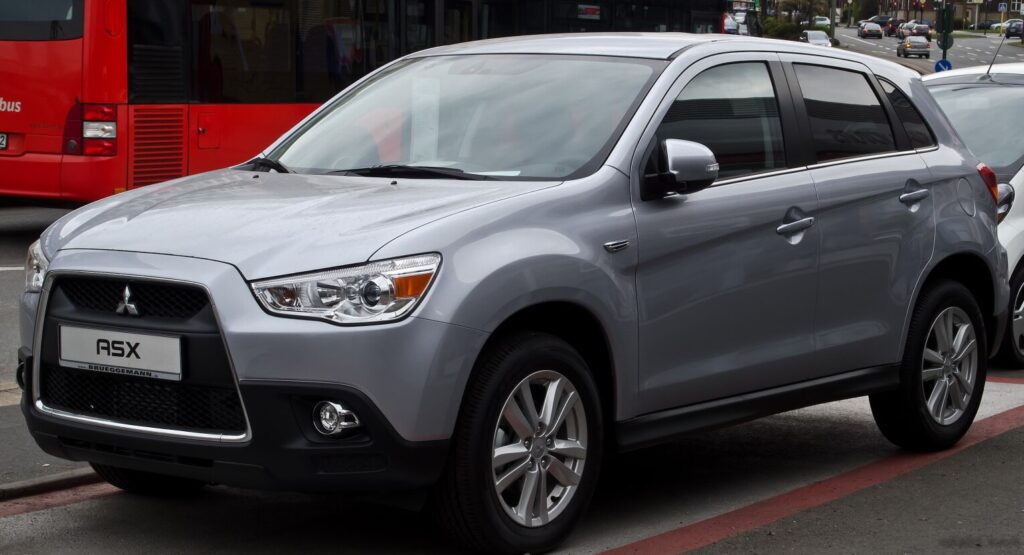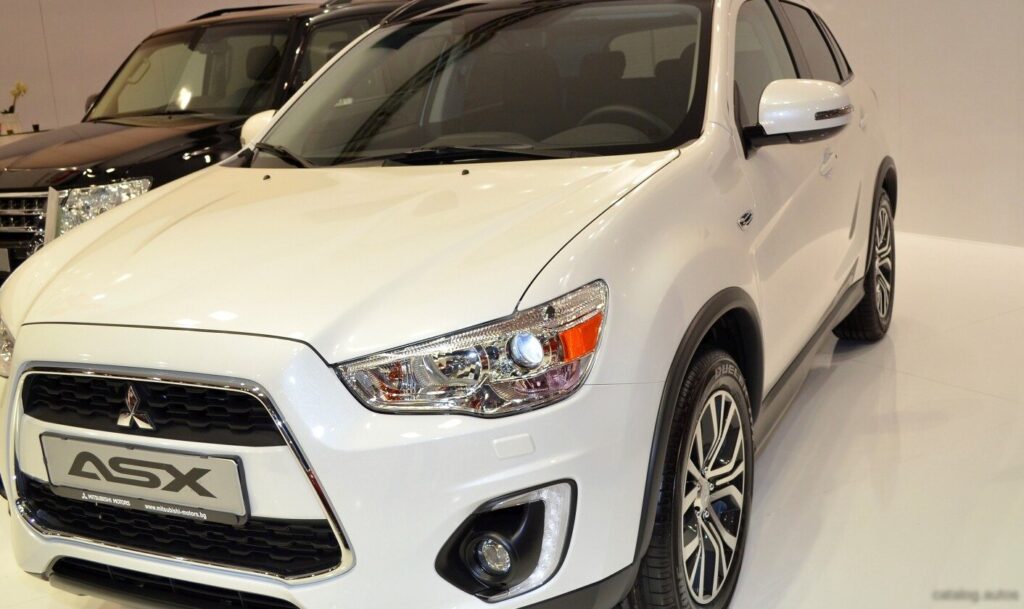
The Mitsubishi ASX I (facelift 2012) 1.6 MIVEC, producing 117 horsepower, was a key variant of Mitsubishi’s compact crossover SUV offered primarily in the European and Asian markets from 2013 to 2016. Positioned as an entry-level option within the ASX range, it aimed to provide affordable and fuel-efficient transportation for urban drivers and small families. This model represented Mitsubishi’s attempt to capture a larger share of the growing crossover segment, competing with vehicles like the Nissan Qashqai and Kia Sportage. The facelifted ASX, introduced in 2012, brought updated styling and improved features compared to the original model launched in 2010.
Technical Specifications
| Brand | Mitsubishi |
| Model | ASX |
| Generation | ASX I (facelift 2012) |
| Type (Engine) | 1.6 MIVEC (117 Hp) |
| Start of production | 2013 |
| End of production | 2016 |
| Powertrain Architecture | Internal Combustion engine |
| Body type | SUV, Crossover |
| Seats | 5 |
| Doors | 5 |
| Fuel consumption (urban) | 7.4 l/100 km (31.8 US mpg) |
| Fuel consumption (extra urban) | 4.9 l/100 km (48 US mpg) |
| Fuel consumption (combined) | 5.8 l/100 km (40.6 US mpg) |
| CO2 emissions | 135 g/km |
| Fuel Type | Petrol (Gasoline) |
| Acceleration 0 – 100 km/h | 11.5 sec |
| Acceleration 0 – 62 mph | 11.5 sec |
| Acceleration 0 – 60 mph | 10.9 sec |
| Maximum speed | 183 km/h (113.71 mph) |
| Emission standard | Euro 6 |
| Weight-to-power ratio | 10.8 kg/Hp |
| Weight-to-torque ratio | 8.2 kg/Nm |
| Power | 117 Hp @ 6000 rpm |
| Torque | 154 Nm @ 4000 rpm (113.58 lb.-ft. @ 4000 rpm) |
| Engine layout | Front, Transverse |
| Engine Model/Code | 4A92 |
| Engine displacement | 1590 cm3 (97.03 cu. in.) |
| Number of cylinders | 4 |
| Engine configuration | Inline |
| Number of valves per cylinder | 4 |
| Fuel injection system | Multi-port manifold injection |
| Engine aspiration | Naturally aspirated engine |
| Valvetrain | DOHC |
| Engine oil capacity | 4.2 l (4.44 US qt | 3.7 UK qt) |
| Coolant capacity | 6 l (6.34 US qt | 5.28 UK qt) |
| Kerb Weight | 1260-1285 kg (2777.82 – 2832.94 lbs.) |
| Trunk (boot) space – minimum | 419 l (14.8 cu. ft.) |
| Trunk (boot) space – maximum | 1219 l (43.05 cu. ft.) |
| Fuel tank capacity | 63 l (16.64 US gal | 13.86 UK gal) |
| Length | 4295 mm (169.09 in.) |
| Width | 1770 mm (69.69 in.) |
| Width including mirrors | 1810 mm (71.26 in.) |
| Height | 1625 – 1635 mm (63.98 – 64.37 in.) |
| Wheelbase | 2670 mm (105.12 in.) |
| Ride height (ground clearance) | 190 mm (7.48 in.) |
| Minimum turning circle | 10.6 m (34.78 ft.) |
| Drivetrain Architecture | Front wheel drive |
| Number of gears | 5 |
| Gearbox type | Manual transmission |
| Front suspension | Independent type McPherson |
| Rear suspension | Independent multi-link suspension |
| Front brakes | Ventilated discs |
| Rear brakes | Disc |
| Assisting systems | ABS (Anti-lock braking system) |
| Steering type | Steering rack and pinion |
Powertrain & Engine Architecture
The 1.6-liter 4A92 MIVEC engine powering this ASX variant is a naturally aspirated, inline-four cylinder gasoline engine. Mitsubishi’s MIVEC (Mitsubishi Innovative Valve timing Electronic Control) technology continuously adjusts the timing of both intake and exhaust valves, optimizing engine performance and fuel efficiency across the rev range. The engine utilizes a multi-point fuel injection system, delivering fuel directly into the intake ports. The 4A92 engine is known for its relatively simple design, contributing to its reliability. The engine is transversely mounted in the front of the vehicle. Paired with this engine was a five-speed manual transmission, chosen for its affordability and simplicity. While an automatic transmission was offered on other ASX models, the 1.6 MIVEC was primarily sold with the manual gearbox in many markets.
Driving Characteristics
The 117 hp and 154 Nm (113.58 lb-ft) of torque produced by the 1.6 MIVEC engine provided adequate, but not exhilarating, performance. Acceleration from 0-60 mph took around 10.9 seconds, making it suitable for everyday commuting and urban driving. The five-speed manual transmission offered a reasonable level of control, but the relatively wide gear ratios meant that frequent shifting was often necessary, especially when overtaking or climbing hills. Compared to the more powerful 1.8-liter DID diesel or the 2.0-liter gasoline variants, the 1.6 MIVEC felt noticeably less responsive. However, it offered a smoother and quieter driving experience than the diesel, and its lighter weight contributed to slightly better handling.
Equipment & Trim Levels
The 1.6 MIVEC ASX typically came with a base level of equipment, focusing on practicality and value. Standard features generally included air conditioning, power windows, central locking, and a basic audio system with USB connectivity. Safety features such as ABS, front airbags, and stability control were also standard. Higher trim levels, available as options, added features like alloy wheels, rear parking sensors, cruise control, and a more sophisticated infotainment system. Interior upholstery was typically cloth, with a functional and durable design. The dashboard layout was straightforward and easy to use, prioritizing ergonomics over luxury.
Chassis & Braking
The ASX I utilized a front-wheel-drive platform with independent suspension all around – McPherson struts at the front and a multi-link setup at the rear. This suspension configuration provided a comfortable ride quality, absorbing bumps and imperfections in the road surface effectively. The front brakes were ventilated discs, offering good stopping power, while the rear brakes were solid discs. The steering was a rack-and-pinion system, providing reasonably precise and responsive handling. The vehicle’s weight, ranging from 1260 to 1285 kg (2777.82 – 2832.94 lbs.), was relatively light for a crossover SUV, contributing to its agility.
Market Reception & Comparison
The Mitsubishi ASX 1.6 MIVEC was generally well-received as an affordable and fuel-efficient crossover option. Critics praised its comfortable ride, practical interior, and reasonable running costs. However, some reviewers noted its lack of outright performance and its relatively basic interior compared to some competitors. Compared to the diesel variants, the 1.6 MIVEC offered lower purchase price and simpler maintenance, but at the expense of fuel economy and torque. Against rivals like the Nissan Qashqai and Kia Sportage, the ASX 1.6 MIVEC offered a competitive package, particularly for buyers prioritizing value and reliability.
Legacy
The 1.6 MIVEC engine, while not known for being particularly groundbreaking, proved to be a reliable and durable unit when properly maintained. The ASX I, in general, has a reputation for being a dependable vehicle, and the 1.6 MIVEC variant remains a relatively affordable option on the used car market. Common issues are generally minor, often related to wear and tear on components like the clutch and suspension. The ASX I helped establish Mitsubishi as a player in the European crossover market, paving the way for subsequent generations of the model. Today, the 1.6 MIVEC ASX represents a practical and economical choice for buyers seeking a compact SUV with a proven track record.