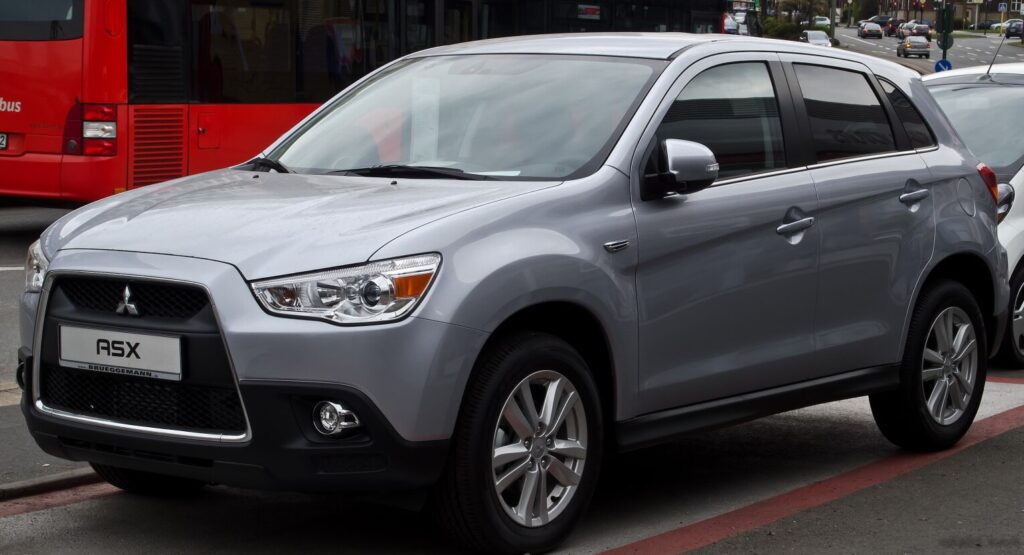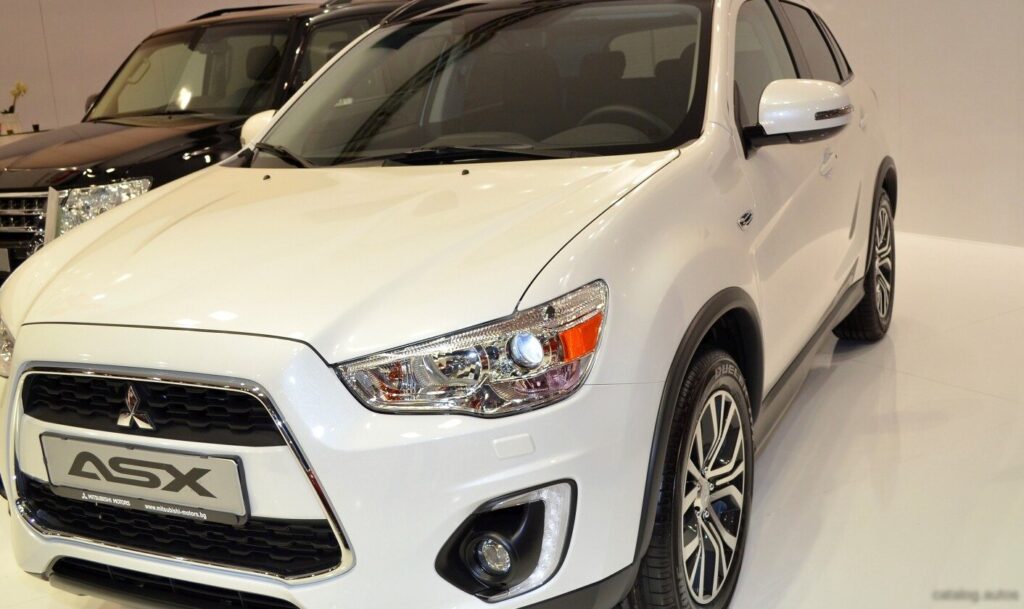
The Mitsubishi ASX 1.8 (140 hp) CVT, part of the first generation ASX (GAW) range produced from 2012 to 2016, represented a key offering in Mitsubishi’s compact crossover lineup. Positioned as a mid-range option, it aimed to balance affordability with reasonable performance and fuel efficiency. The facelifted model, introduced in 2012, brought styling updates and refinements to the original ASX, which was initially launched in 2010. This variant was primarily marketed in Europe, Australia, and other international markets, offering a practical and versatile vehicle for families and individuals seeking a comfortable and economical SUV.
Technical Specifications
| Brand | Mitsubishi |
| Model | ASX |
| Generation | ASX I (facelift 2012) |
| Type (Engine) | 1.8 (140 Hp) CVT |
| Start of production | 2012 |
| End of production | 2016 |
| Powertrain Architecture | Internal Combustion engine |
| Body type | SUV, Crossover |
| Seats | 5 |
| Doors | 5 |
| Fuel consumption (urban) | 9.8 l/100 km (24 US mpg, 28.8 UK mpg, 10.2 km/l) |
| Fuel consumption (extra urban) | 6.4 l/100 km (36.8 US mpg, 44.1 UK mpg, 15.6 km/l) |
| Fuel consumption (combined) | 7.6 l/100 km (30.9 US mpg, 37.2 UK mpg, 13.2 km/l) |
| CO2 emissions | 181 g/km |
| Fuel Type | Petrol (Gasoline) |
| Maximum speed | 186 km/h (115.58 mph) |
| Weight-to-power ratio | 9.9 kg/Hp, 100.7 Hp/tonne |
| Weight-to-torque ratio | 7.9 kg/Nm, 127.3 Nm/tonne |
| Power | 140 Hp @ 6000 rpm |
| Power per litre | 77.9 Hp/l |
| Torque | 177 Nm @ 4200 rpm (130.55 lb.-ft. @ 4200 rpm) |
| Engine layout | Front, Transverse |
| Engine Model/Code | 4B10 |
| Engine displacement | 1798 cm3 (109.72 cu. in.) |
| Number of cylinders | 4 |
| Engine configuration | Inline |
| Cylinder Bore | 86 mm (3.39 in.) |
| Piston Stroke | 77.4 mm (3.05 in.) |
| Number of valves per cylinder | 4 |
| Fuel injection system | Multi-port manifold injection |
| Engine aspiration | Naturally aspirated engine |
| Valvetrain | DOHC |
| Engine oil capacity | 4.3 l (4.54 US qt | 3.78 UK qt) |
| Coolant | 7.5 l (7.93 US qt | 6.6 UK qt) |
| Kerb Weight | 1390 kg (3064.43 lbs.) |
| Max. weight | 1970 kg (4343.11 lbs.) |
| Max load | 580 kg (1278.68 lbs.) |
| Trunk (boot) space – minimum | 384 l (13.56 cu. ft.) |
| Trunk (boot) space – maximum | 1219 l (43.05 cu. ft.) |
| Fuel tank capacity | 60 l (15.85 US gal | 13.2 UK gal) |
| Max. roof load | 80 kg (176.37 lbs.) |
| Permitted trailer load with brakes (12%) | 1300 kg (2866.01 lbs.) |
| Permitted trailer load without brakes | 725 kg (1598.35 lbs.) |
| Permitted towbar download | 65 kg (143.3 lbs.) |
| Length | 4295 mm (169.09 in.) |
| Width | 1770 mm (69.69 in.) |
| Height | 1625 mm (63.98 in.) |
| Wheelbase | 2670 mm (105.12 in.) |
| Front track | 1525 mm (60.04 in.) |
| Rear (Back) track | 1525 mm (60.04 in.) |
| Front overhang | 870 mm (34.25 in.) |
| Rear overhang | 755 mm (29.72 in.) |
| Ride height (ground clearance) | 195 mm (7.68 in.) |
| Drivetrain Architecture | The Internal combustion engine (ICE) drives the front wheels of the vehicle. |
| Drive wheel | Front wheel drive |
| Number of gears and type of gearbox | automatic transmission CVT |
| Front suspension | Independent, type McPherson with coil spring and anti-roll bar |
| Rear suspension | Independent multi-link spring suspension with stabilizer |
| Front brakes | Ventilated discs |
| Rear brakes | Disc |
| Assisting systems | ABS (Anti-lock braking system) |
| Steering type | Steering rack and pinion |
| Power steering | Electric Steering |
| Tires size | 215/65 R16; 215/60 R17 |
| Wheel rims size | 6.5J x 16; 6.5J x 17 |
INTRODUCTION
The Mitsubishi ASX 1.8 CVT (2012-2016) is a compact crossover SUV that served as a crucial model for Mitsubishi, particularly in the European market. Built on the Mitsubishi GS platform (shared with models like the Outlander and Lancer), the ASX aimed to provide a practical, affordable, and stylish option in the burgeoning crossover segment. The 1.8-liter engine paired with a Continuously Variable Transmission (CVT) was positioned as a balance between fuel economy and usability, appealing to buyers who didn’t require the performance of higher-powered variants. The 2012 facelift brought revised front-end styling, interior enhancements, and improvements to the suspension, further refining the ASX’s appeal.
Powertrain & Engine Architecture
The heart of this ASX variant is the 4B10 1.8-liter inline-four cylinder gasoline engine. This engine utilizes a naturally aspirated configuration with multi-point fuel injection and a double overhead camshaft (DOHC) valvetrain. The 4B10 engine is known for its relatively simple design and reasonable reliability. It produces 140 horsepower at 6000 rpm and 177 Nm (130.55 lb-ft) of torque at 4200 rpm. The engine’s design prioritizes fuel efficiency and smooth operation over outright performance. The CVT transmission is a key component of this variant. Unlike traditional automatic transmissions with fixed gear ratios, a CVT uses a belt and pulley system to provide a virtually infinite number of gear ratios, optimizing engine speed for efficiency or power as needed. This contributes to smoother acceleration and improved fuel economy, but can sometimes result in a different driving feel compared to conventional automatics.
Driving Characteristics
The ASX 1.8 CVT delivers a comfortable and predictable driving experience. The CVT transmission provides smooth, stepless acceleration, although it can sometimes feel less responsive than a traditional automatic or manual gearbox. The 140 hp engine provides adequate power for everyday driving situations, but it’s not particularly sporty. Acceleration is best described as adequate, and overtaking maneuvers require planning. The CVT’s programming often prioritizes fuel efficiency, which can sometimes lead to the engine ‘drone’ at higher RPMs during hard acceleration. Compared to the more powerful 2.0-liter variants, the 1.8L CVT ASX feels noticeably less energetic. However, it offers a more relaxed and fuel-efficient driving experience, making it well-suited for urban commuting and long highway journeys.
Equipment & Trim Levels
The ASX 1.8 CVT typically came equipped with a reasonable level of standard features. These generally included air conditioning, power windows and mirrors, a basic audio system with USB connectivity, and ABS brakes. Higher trim levels, such as the ‘Invite’ or ‘Inform’ variants (depending on the market), added features like alloy wheels, climate control, rear parking sensors, and a more advanced audio system with Bluetooth connectivity. Optional extras often included a panoramic sunroof, leather upholstery, and a navigation system. Interior upholstery was typically cloth, with higher trims offering partial leather options. The dashboard layout was functional and straightforward, with a focus on ease of use.
Chassis & Braking
The ASX 1.8 CVT features a front-wheel-drive layout with an independent McPherson strut suspension at the front and an independent multi-link suspension at the rear. This suspension setup provides a comfortable ride quality, absorbing bumps and imperfections in the road effectively. Stabilizer bars are fitted to both the front and rear axles to reduce body roll during cornering. Braking duties are handled by ventilated discs at the front and solid discs at the rear. ABS (Anti-lock Braking System) is standard, providing enhanced braking performance and stability in emergency situations. The suspension and braking systems were tuned to provide a balance between comfort, handling, and safety, suitable for the vehicle’s intended use as a family crossover.
Market Reception & Comparison
The Mitsubishi ASX 1.8 CVT was generally well-received by critics as a practical and affordable crossover. It was praised for its comfortable ride, spacious interior, and reasonable fuel economy. However, some reviewers noted that the engine lacked outright power and the CVT transmission could feel somewhat unresponsive. Compared to rivals like the Nissan Qashqai and Kia Sportage, the ASX offered a competitive package, particularly in terms of value for money. The 1.8L CVT variant typically achieved combined fuel economy figures of around 7.6 l/100 km (30.9 US mpg), which was competitive for its class. Reliability was generally considered good, although some owners reported minor issues with the CVT transmission over time.
Legacy
The Mitsubishi ASX 1.8 CVT remains a relatively common sight on the used car market. The 4B10 engine is known for its durability, and with proper maintenance, it can provide many years of reliable service. The CVT transmission, while generally reliable, requires regular fluid changes to ensure optimal performance and longevity. Overall, the ASX 1.8 CVT represents a solid and practical choice for buyers seeking an affordable and fuel-efficient compact crossover. Its blend of comfort, practicality, and reasonable running costs continues to make it an appealing option in the used car market today.