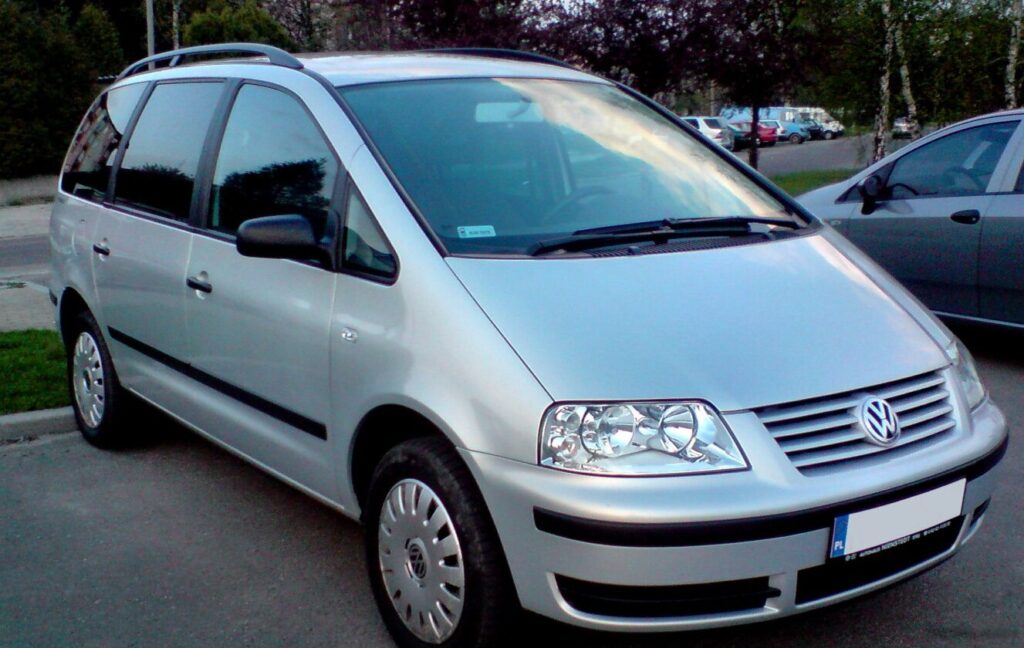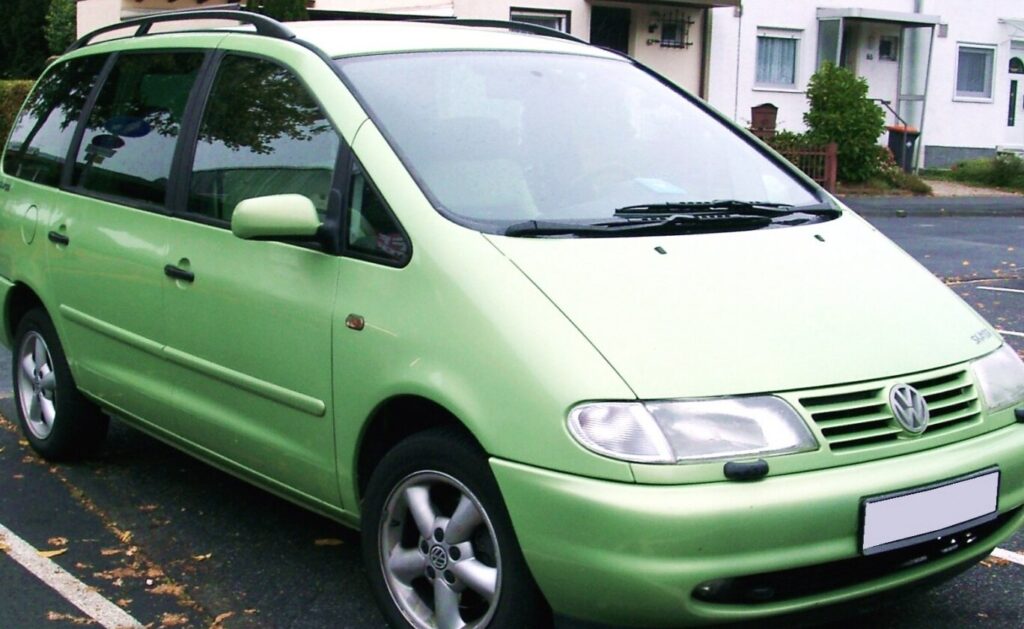
The Volkswagen Sharan I 1.9 TDI (90 hp) was a significant variant within the first generation of the Sharan, produced between September 1995 and July 1996. Positioned as a practical and economical choice within the Sharan lineup, it catered to families and those requiring a versatile seven-seater MPV. The Sharan I, built in collaboration with Ford (resulting in the Ford Galaxy), represented Volkswagen’s entry into the burgeoning people-carrier market, competing with established models like the Renault Espace and Chrysler Voyager. This particular 1.9 TDI engine and five-speed manual transmission combination aimed to balance fuel efficiency with acceptable performance for everyday driving.
Technical Specifications
| Brand | Volkswagen |
| Model | Sharan |
| Generation | Sharan I |
| Type (Engine) | 1.9 TDI (90 Hp) |
| Start of production | September, 1995 |
| End of production | July, 1996 |
| Powertrain Architecture | Internal Combustion engine |
| Body type | Minivan, MPV |
| Seats | 7 |
| Doors | 5 |
| Fuel consumption (urban) | 8.6 l/100 km (27.4 US mpg) |
| Fuel consumption (extra urban) | 5.4 l/100 km (43.6 US mpg) |
| Fuel Type | Diesel |
| Acceleration 0 – 100 km/h | 19.3 sec |
| Acceleration 0 – 62 mph | 19.3 sec |
| Acceleration 0 – 60 mph | 18.3 sec |
| Maximum speed | 160 km/h (99.42 mph) |
| Weight-to-power ratio | 19.7 kg/Hp |
| Weight-to-torque ratio | 8.8 kg/Nm |
| Power | 90 Hp @ 4000 rpm |
| Power per litre | 47.5 Hp/l |
| Torque | 202 Nm @ 1900 rpm (148.99 lb.-ft. @ 1900 rpm) |
| Engine layout | Front, Longitudinal |
| Engine Model/Code | AHU, 1Z |
| Engine displacement | 1896 cm3 (115.7 cu. in.) |
| Number of cylinders | 4 |
| Engine configuration | Inline |
| Cylinder Bore | 79.5 mm (3.13 in.) |
| Piston Stroke | 95.5 mm (3.76 in.) |
| Compression ratio | 19.5:1 |
| Number of valves per cylinder | 2 |
| Fuel injection system | Direct injection |
| Engine aspiration | Turbocharger, Intercooler |
| Valvetrain | OHC |
| Engine oil capacity | 4.3 l (4.54 US qt | 3.78 UK qt) |
| Coolant | 6.8 l (7.19 US qt | 5.98 UK qt) |
| Kerb Weight | 1775 kg (3913.21 lbs.) |
| Max. weight | 2430 kg (5357.23 lbs.) |
| Max load | 655 kg (1444.03 lbs.) |
| Trunk (boot) space – minimum | 256 l (9.04 cu. ft.) |
| Trunk (boot) space – maximum | 2610 l (92.17 cu. ft.) |
| Fuel tank capacity | 75 l (19.81 US gal | 16.5 UK gal) |
| Length | 4620 mm (181.89 in.) |
| Width | 1810 mm (71.26 in.) |
| Height | 1730 mm (68.11 in.) |
| Wheelbase | 2835 mm (111.61 in.) |
| Front track | 1510 mm (59.45 in.) |
| Rear (Back) track | 1500 mm (59.06 in.) |
| Drivetrain Architecture | The Internal combustion engine (ICE) drives the front wheels of the vehicle. |
| Drive wheel | Front wheel drive |
| Number of gears and type of gearbox | 5 gears, manual transmission |
| Front suspension | Spring Strut |
| Rear suspension | Coil spring |
| Front brakes | Ventilated discs |
| Rear brakes | Disc |
| Assisting systems | ABS (Anti-lock braking system) |
| Steering type | Steering rack and pinion |
| Power steering | Hydraulic Steering |
| Tires size | 195/65 R15 |
| Wheel rims size | 6J x 15 |
Powertrain & Engine Architecture
The heart of this Sharan variant was the 1.9-liter, four-cylinder diesel engine, typically identified by engine codes AHU or 1Z. This engine was a member of Volkswagen’s well-regarded TDI (Turbocharged Direct Injection) family. Direct injection, combined with a turbocharger and intercooler, allowed for a relatively high level of power and torque from a small displacement engine. The engine featured an overhead camshaft (OHC) valvetrain with two valves per cylinder. The 1.9 TDI produced 90 horsepower at 4000 rpm and 202 Nm (148.99 lb-ft) of torque at a low 1900 rpm. This torque curve was particularly beneficial for a vehicle of the Sharan’s size and weight, providing good pulling power for carrying passengers and luggage. The engine was mounted longitudinally in the front of the vehicle, driving the front wheels through a five-speed manual transmission. This transmission was chosen for its efficiency and cost-effectiveness, although it wasn’t known for particularly sporty gear changes.
Driving Characteristics
The 1.9 TDI 90 hp Sharan offered a pragmatic driving experience. Acceleration was not its strong suit, with a 0-60 mph time of around 18.3 seconds. However, the engine’s strong low-end torque made it feel more responsive in everyday driving situations, such as overtaking on the highway or climbing hills. The five-speed manual transmission allowed drivers to keep the engine in its optimal power band. Compared to the more powerful 2.0-liter gasoline versions, the 1.9 TDI prioritized fuel economy over outright performance. It also offered a more relaxed driving experience than the higher-output TDI variants, which could feel strained when fully loaded. The gear ratios were geared towards maximizing fuel efficiency, rather than providing quick acceleration.
Equipment & Trim Levels
The 1.9 TDI typically represented a mid-range trim level within the Sharan I lineup. Standard equipment generally included power steering, central locking, electric front windows, and an adjustable steering column. Interior upholstery was typically cloth, and the dashboard featured a functional, if somewhat utilitarian, design. Optional extras included air conditioning, alloy wheels, a sunroof, and upgraded audio systems. The Sharan’s key selling point was its spacious interior and flexible seating arrangement, with the ability to fold or remove the rear seats to create a large cargo area. Safety features were relatively basic for the time, consisting primarily of ABS anti-lock brakes.
Chassis & Braking
The Sharan I utilized a relatively conventional chassis design, with a MacPherson strut front suspension and a coil spring rear suspension. The suspension was tuned for comfort rather than sporty handling, prioritizing a smooth ride quality. Braking was provided by ventilated discs on the front wheels and solid discs on the rear. The ABS system helped to maintain steering control during emergency braking. Given the vehicle’s weight and size, the braking performance was adequate but not exceptional. Stabilizer bars were fitted to both the front and rear axles to reduce body roll during cornering.
Market Reception & Comparison
The 1.9 TDI Sharan was generally well-received by critics as a practical and economical family vehicle. Its fuel efficiency was a major selling point, particularly in Europe where diesel fuel was significantly cheaper than gasoline. Compared to the gasoline-powered Sharan models, the TDI offered significantly better fuel economy, although it came with a slightly higher purchase price. The 1.9 TDI was often seen as a sweet spot in the range, offering a good balance between performance, economy, and price. It was a popular choice for families who needed a spacious and versatile vehicle for long journeys.
Legacy
The 1.9 TDI engine proved to be remarkably durable and reliable, and many examples are still on the road today. The Sharan I 1.9 TDI is now considered a classic MPV, and well-maintained examples are sought after by enthusiasts. While the engine itself is generally robust, common issues include wear and tear on the turbocharger and fuel injection system. The Sharan’s spacious interior and practical design continue to appeal to buyers looking for a versatile and affordable family vehicle. The 1.9 TDI engine’s reputation for longevity and fuel efficiency has cemented its place as a popular choice in the used car market.