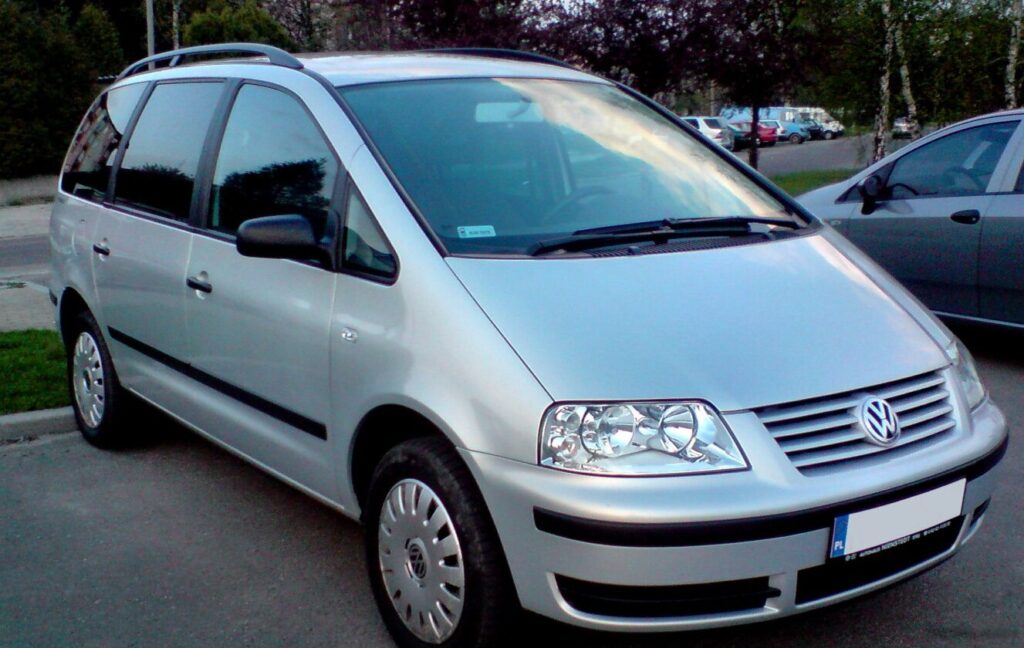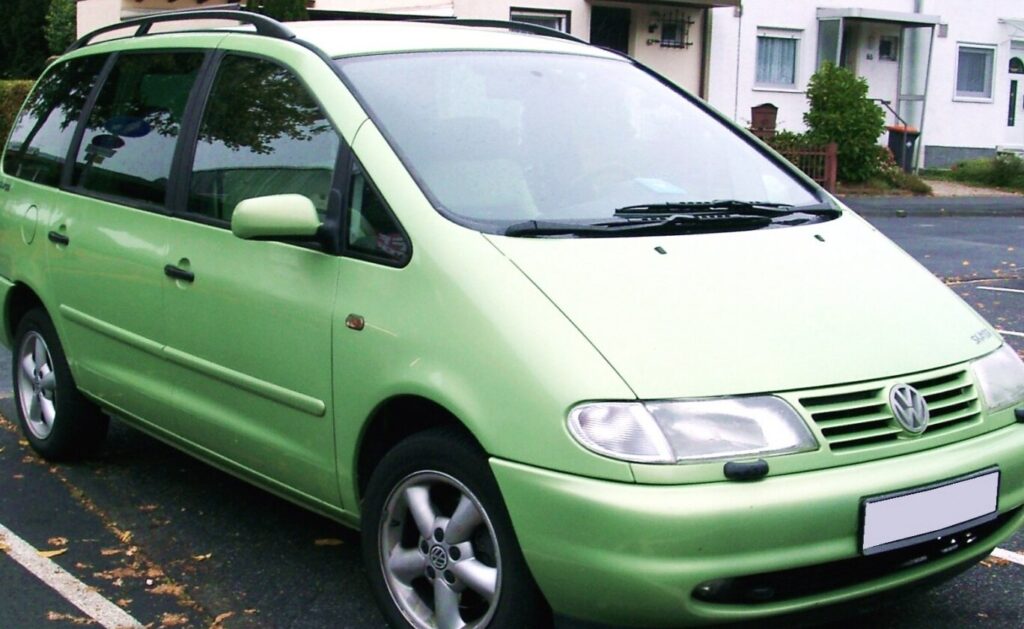
The Volkswagen Sharan I 2.0 i (116 hp) was a popular European minivan produced between September 1995 and February 2000. Part of the first generation Sharan (Typ 7M), it represented Volkswagen’s entry into the rapidly growing multi-purpose vehicle (MPV) segment. Developed in collaboration with Ford – resulting in the mechanically similar Ford Galaxy – the Sharan aimed to provide a spacious, practical, and family-oriented vehicle. The 2.0-liter, 116 horsepower variant occupied a mid-range position in the Sharan I lineup, offering a balance between affordability and performance, appealing to families seeking a versatile vehicle without the expense of the higher-powered options.
Technical Specifications
| Brand | Volkswagen |
| Model | Sharan |
| Generation | Sharan I |
| Type (Engine) | 2.0 i (116 Hp) |
| Start of production | September, 1995 |
| End of production | February, 2000 |
| Powertrain Architecture | Internal Combustion engine |
| Body type | Minivan, MPV |
| Seats | 7 |
| Doors | 5 |
| Fuel consumption (urban) | 13.9 l/100 km (16.9 US mpg, 20.3 UK mpg, 7.2 km/l) |
| Fuel consumption (extra urban) | 7.7 l/100 km (30.5 US mpg, 36.7 UK mpg, 13 km/l) |
| Fuel Type | Petrol (Gasoline) |
| Acceleration 0 – 100 km/h | 15.4 sec |
| Acceleration 0 – 62 mph | 15.4 sec |
| Acceleration 0 – 60 mph | 14.6 sec |
| Maximum speed | 177 km/h (109.98 mph) |
| Weight-to-power ratio | 14.8 kg/Hp, 67.6 Hp/tonne |
| Weight-to-torque ratio | 10.3 kg/Nm, 96.8 Nm/tonne |
| Power | 116 Hp @ 5400 rpm |
| Power per litre | 58.5 Hp/l |
| Torque | 166 Nm @ 3600 rpm (122.44 lb.-ft. @ 3600 rpm) |
| Engine layout | Front, Transverse |
| Engine Model/Code | ADY |
| Engine displacement | 1984 cm3 (121.07 cu. in.) |
| Number of cylinders | 4 |
| Engine configuration | Inline |
| Cylinder Bore | 82.5 mm (3.25 in.) |
| Piston Stroke | 92.8 mm (3.65 in.) |
| Compression ratio | 10:1 |
| Number of valves per cylinder | 2 |
| Fuel injection system | Multi-port manifold injection |
| Engine aspiration | Naturally aspirated engine |
| Valvetrain | OHC |
| Engine oil capacity | 4 l (4.23 US qt | 3.52 UK qt) |
| Coolant | 6.3 l (6.66 US qt | 5.54 UK qt) |
| Kerb Weight | 1715 kg (3780.93 lbs.) |
| Max. weight | 2350 kg (5180.86 lbs.) |
| Max load | 635 kg (1399.94 lbs.) |
| Trunk (boot) space – minimum | 256 l (9.04 cu. ft.) |
| Trunk (boot) space – maximum | 2610 l (92.17 cu. ft.) |
| Fuel tank capacity | 60 l (15.85 US gal | 13.2 UK gal) |
| Length | 4617 mm (181.77 in.) |
| Width | 1810 mm (71.26 in.) |
| Height | 1730 mm (68.11 in.) |
| Wheelbase | 2835 mm (111.61 in.) |
| Front track | 1530 mm (60.24 in.) |
| Rear (Back) track | 1524 mm (60 in.) |
| Drivetrain Architecture | The Internal combustion engine (ICE) drives the front wheels of the vehicle. |
| Drive wheel | Front wheel drive |
| Number of gears and type of gearbox | 5 gears, manual transmission |
| Front suspension | Spring Strut |
| Rear suspension | Coil spring |
| Front brakes | Ventilated discs |
| Rear brakes | Ventilated discs |
| Assisting systems | ABS (Anti-lock braking system) |
| Steering type | Steering rack and pinion |
| Power steering | Hydraulic Steering |
| Tires size | 195/65 R15 T |
| Wheel rims size | 15 |
Powertrain & Engine Architecture
The Sharan I 2.0 i utilized the Volkswagen Group’s ADY engine code, a 1.984-liter inline-four cylinder gasoline engine. This engine featured a single overhead camshaft (OHC) design with two valves per cylinder. Fuel delivery was managed by a multi-port fuel injection system, providing a balance between efficiency and performance. The ADY engine was known for its relative simplicity and durability, though it wasn’t a powerhouse in terms of outright performance. The engine produced 116 horsepower at 5400 rpm and 166 Nm (122.44 lb-ft) of torque at 3600 rpm. The engine’s 10:1 compression ratio was typical for the era. The 5-speed manual transmission was the standard offering, designed to efficiently deliver power to the front wheels. While an automatic transmission was available, it was less common and often criticized for impacting fuel economy and responsiveness.
Driving Characteristics
The 2.0 i Sharan with the manual transmission offered adequate, but not exhilarating, performance. Acceleration from 0-60 mph took around 14.6 seconds, and top speed was approximately 109.98 mph. The engine felt somewhat strained when fully loaded with passengers and luggage, particularly on inclines. The gear ratios were tuned for practicality and fuel efficiency rather than sporty driving. Compared to the more powerful 2.8 VR6 version, the 2.0 i felt significantly slower, but it offered a more economical driving experience. The automatic transmission further diminished performance, resulting in slower acceleration and a less engaging driving experience. However, the automatic provided convenience for urban driving and drivers prioritizing ease of use.
Equipment & Trim Levels
The 2.0 i Sharan typically came with a reasonable level of standard equipment. This included power windows, central locking, and an adjustable steering wheel. Interior upholstery was generally cloth, with options for upgraded materials. Air conditioning was a common option. Higher trim levels added features such as alloy wheels, a sunroof, and upgraded audio systems. The Sharan’s interior was designed with practicality in mind, offering a flexible seating arrangement with the ability to remove or fold down the rear seats to maximize cargo space. The dashboard layout was functional and straightforward, prioritizing ease of use.
Chassis & Braking
The Sharan I featured a front-wheel-drive layout with a MacPherson strut suspension in the front and a coil spring suspension in the rear. The suspension was tuned for comfort and ride quality, prioritizing a smooth ride over sporty handling. Braking duties were handled by ventilated disc brakes on all four wheels, providing adequate stopping power for the vehicle’s weight. Anti-lock Braking System (ABS) was standard, enhancing safety. The Sharan’s chassis was designed to accommodate the vehicle’s large size and weight, providing a stable and predictable driving experience.
Market Reception & Comparison
The Sharan I 2.0 i was generally well-received by critics as a practical and spacious family vehicle. It was praised for its versatility, comfortable ride, and reasonable fuel economy. However, some reviewers noted that the 2.0-liter engine felt underpowered, especially when the vehicle was fully loaded. Compared to the VR6 model, the 2.0 i offered a more affordable entry point into the Sharan range, but at the expense of performance. The 1.9 TDI diesel version offered superior fuel economy and torque, making it a popular choice for drivers covering long distances. The 2.0 i appealed to buyers who prioritized affordability and a comfortable driving experience over outright performance.
Legacy
The Volkswagen Sharan I 2.0 i remains a relatively common sight on European roads today, testament to its durability and practicality. The ADY engine is known for its reliability, although regular maintenance is essential to prevent issues such as oil leaks and timing belt failure. Parts availability is generally good, making it relatively easy to keep these vehicles running. In the used car market, the 2.0 i Sharan represents a good value proposition for buyers seeking a spacious and affordable MPV. While it may not offer the performance of more powerful variants, its simplicity and reliability make it a practical choice for families and those needing a versatile vehicle.