
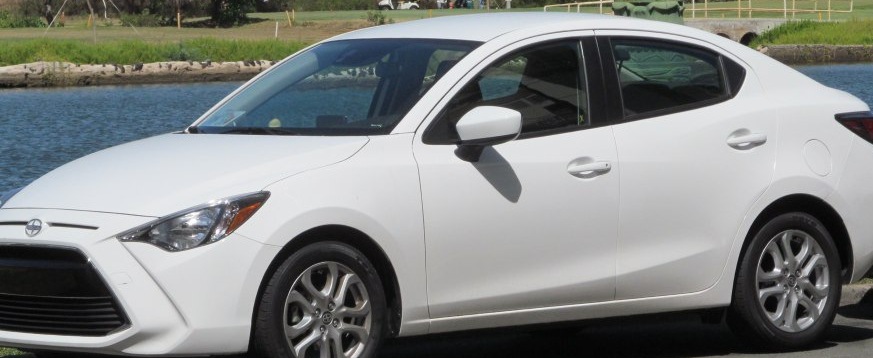
The Scion iA 1.5, produced for the 2016 model year (though often associated with its 2015 introduction), represented a significant entry for the now-defunct Scion brand into the subcompact sedan segment. Built in partnership with Mazda, the iA was essentially a rebadged second-generation Mazda2, offering a compelling blend of affordability, fuel efficiency, and surprisingly engaging driving dynamics. It served as the entry point into the Scion lineup, positioned below the FR-S sports coupe and the iM hatchback. The iA was designed to appeal to a younger demographic seeking a practical and stylish urban commuter vehicle. Production was limited to a short run, making it a relatively uncommon sight on today’s roads.
Technical Specifications
| Brand | Scion |
| Model | iA |
| Generation | iA |
| Type (Engine) | 1.5 (106 Hp) |
| Start of production | 2015 |
| End of production | 2016 |
| Powertrain Architecture | Internal Combustion engine |
| Body type | Sedan |
| Seats | 5 |
| Doors | 4 |
| Fuel consumption (economy) – urban | 7.6 l/100 km (30.9 US mpg) |
| Fuel consumption (economy) – extra urban | 5.7 l/100 km (41.3 US mpg) |
| Fuel consumption (economy) – combined | 6.7 l/100 km (35.1 US mpg) |
| Fuel Type | Petrol (Gasoline) |
| Weight-to-power ratio | 10.2 kg/Hp |
| Weight-to-torque ratio | 7.7 kg/Nm |
| Power | 106 Hp @ 6000 rpm |
| Power per litre | 70.9 Hp/l |
| Torque | 140 Nm @ 4000 rpm (103.26 lb.-ft. @ 4000 rpm) |
| Engine layout | Front, Transverse |
| Engine displacement | 1496 cm3 (91.29 cu. in.) |
| Number of cylinders | 4 |
| Engine configuration | Inline |
| Cylinder Bore | 76 mm (2.99 in.) |
| Piston Stroke | 82.6 mm (3.25 in.) |
| Compression ratio | 12:1 |
| Number of valves per cylinder | 4 |
| Fuel injection system | Direct injection |
| Engine aspiration | Naturally aspirated engine |
| Valvetrain | DOHC |
| Engine oil capacity | 4.2 l (4.44 US qt | 3.7 UK qt) |
| Kerb Weight | 1082 kg (2385.4 lbs.) |
| Fuel tank capacity | 44 l (11.62 US gal | 9.68 UK gal) |
| Length | 4346 mm (171.1 in.) |
| Width | 1694 mm (66.69 in.) |
| Height | 1486 mm (58.5 in.) |
| Wheelbase | 2570 mm (101.18 in.) |
| Front track | 1496 mm (58.9 in.) |
| Rear track | 1486 mm (58.5 in.) |
| Ride height (ground clearance) | 140 mm (5.51 in.) |
| Minimum turning circle | 9.8 m (32.15 ft.) |
| Drivetrain Architecture | Front wheel drive |
| Number of gears and type of gearbox | 6 gears, manual transmission |
| Front suspension | Independent type McPherson |
| Rear suspension | Semi-independent, coil spring |
| Front brakes | Ventilated discs |
| Rear brakes | Drum |
| Assisting systems | ABS (Anti-lock braking system) |
| Steering type | Steering rack and pinion |
| Power steering | Electric Steering |
| Tires size | 185/60 R16 |
| Wheel rims size | 5.5J x 16 |
Powertrain & Engine Architecture
The Scion iA’s heart is Mazda’s 1.5-liter inline-four cylinder engine, designated as the 2MZ-VE. This engine utilizes direct fuel injection and a double overhead camshaft (DOHC) valvetrain with four valves per cylinder. The 2MZ-VE produces 106 horsepower at 6000 rpm and 140 Nm (103 lb-ft) of torque at 4000 rpm. The engine’s relatively high compression ratio of 12:1 contributes to its efficiency. The iA was exclusively offered with a six-speed manual transmission in the US market, prioritizing driver engagement. The engine is a naturally aspirated design, meaning it doesn’t employ turbocharging or supercharging. This results in a linear power delivery, though it lacks the immediate punch of forced-induction engines.
Driving Characteristics
The 1.5-liter engine paired with the six-speed manual transmission provides adequate, though not exhilarating, performance. Acceleration is best described as sufficient for everyday driving, with a 0-60 mph time estimated around 9 seconds. The manual gearbox is well-matched to the engine’s characteristics, offering precise shifts and a relatively short throw. The iA’s light weight (approximately 2385 lbs) contributes to its nimble handling. Compared to potential higher-output variants (had Scion offered them), the 1.5L manual prioritizes fuel economy and affordability over outright speed. The gear ratios are tuned for maximizing fuel efficiency, meaning the engine can feel somewhat strained at highway speeds when attempting to overtake.
Equipment & Trim Levels
The Scion iA was relatively well-equipped for its price point. Standard features included a 7-inch touchscreen infotainment system with Bluetooth connectivity, a rearview camera, and automatic climate control. Safety features such as antilock brakes and stability control were also standard. The interior featured cloth upholstery and a straightforward dashboard layout. Optional extras were limited, primarily consisting of floor mats and paint options. The iA was offered in a single, well-equipped trim level, simplifying the buying process.
Chassis & Braking
The iA utilizes a McPherson strut front suspension and a semi-independent coil spring rear suspension. This setup provides a comfortable ride quality while maintaining reasonable handling characteristics. The front brakes are ventilated discs, providing adequate stopping power, while the rear brakes are drums, a cost-saving measure common in this segment. The steering is electrically assisted, offering light and precise control. The relatively narrow tires (185/60 R16) contribute to fuel efficiency but limit ultimate grip.
Market Reception & Comparison
Critics generally praised the Scion iA for its value, fuel efficiency, and surprisingly enjoyable driving dynamics. It was often compared favorably to competitors such as the Honda Fit, Kia Rio, and Nissan Versa. The iA’s Mazda-derived chassis and engine were seen as a significant advantage over many of its rivals. Fuel economy was a strong point, with the iA achieving an EPA-estimated 31 mpg city / 41 mpg highway. Reliability was also considered good, benefiting from Mazda’s engineering expertise. However, some reviewers noted the iA’s relatively small interior space and limited cargo capacity.
Legacy
The Scion iA, despite its short production run, has developed a modest following among enthusiasts. Its combination of affordability, fuel efficiency, and engaging driving dynamics makes it an attractive option in the used car market. The 1.5-liter engine and six-speed manual transmission are generally considered reliable, with proper maintenance. Parts availability is good, as many components are shared with the Mazda2. The iA represents a unique chapter in Scion’s history, showcasing the brand’s ability to offer compelling and well-engineered vehicles, even if only for a brief period.
