Technical Specifications
| Brand | Mercedes-Benz |
| Model | R-class |
| Generation | R-class (W251) |
| Type (Engine) | R 320 CDI V6 (224 Hp) 4MATIC G-TRONIC |
| Start of production | 2007 |
| End of production | 2009 |
| Powertrain Architecture | Internal Combustion engine |
| Body type | Station wagon (estate) |
| Seats | 5-7 |
| Doors | 5 |
| Fuel consumption (combined) | 9.3 l/100 km (25.3 US mpg, 30.4 UK mpg, 10.8 km/l) |
| CO2 emissions | 246 g/km |
| Fuel Type | Diesel |
| Acceleration 0 – 100 km/h | 8.7 sec |
| Acceleration 0 – 62 mph | 8.7 sec |
| Acceleration 0 – 60 mph | 8.3 sec |
| Maximum speed | 222 km/h (137.94 mph) |
| Emission standard | Euro 5 |
| Weight-to-power ratio | 10 kg/Hp, 99.6 Hp/tonne |
| Weight-to-torque ratio | 4.4 kg/Nm, 226.7 Nm/tonne |
| Power | 224 Hp |
| Power per litre | 75 Hp/l |
| Torque | 510 Nm (376.16 lb.-ft.) |
| Maximum engine speed | 4500 rpm |
| Engine layout | Front, Longitudinal |
| Engine Model/Code | OM 642.950 |
| Engine displacement | 2987 cm3 (182.28 cu. in.) |
| Number of cylinders | 6 |
| Engine configuration | V-engine |
| Cylinder Bore | 83 mm (3.27 in.) |
| Piston Stroke | 92 mm (3.62 in.) |
| Compression ratio | 16.5:1 |
| Number of valves per cylinder | 4 |
| Fuel injection system | Diesel Commonrail |
| Engine aspiration | Turbocharger, Intercooler |
| Engine oil capacity | 8.5 l (8.98 US qt | 7.48 UK qt) |
| Coolant | 10.1 l (10.67 US qt | 8.89 UK qt) |
| Kerb Weight | 2250 kg (4960.4 lbs.) |
| Max. weight | 2840 kg (6261.13 lbs.) |
| Max load | 590 kg (1300.73 lbs.) |
| Trunk (boot) space – minimum | 550 l (19.42 cu. ft.) |
| Trunk (boot) space – maximum | 1950 l (68.86 cu. ft.) |
| Fuel tank capacity | 80 l (21.13 US gal | 17.6 UK gal) |
| Max. roof load | 100 kg (220.46 lbs.) |
| Permitted trailer load with brakes (12%) | 2100 kg (4629.71 lbs.) |
| Permitted trailer load without brakes | 750 kg (1653.47 lbs.) |
| Length | 4922 mm (193.78 in.) |
| Width | 1922 mm (75.67 in.) |
| Height | 1659 mm (65.31 in.) |
| Wheelbase | 2980 mm (117.32 in.) |
| Drive wheel | All wheel drive (4×4) |
| Number of gears and type of gearbox | 7 gears, automatic transmission G-TRONIC |
| Front suspension | Double wishbone |
| Rear suspension | Independent multi-link spring suspension with stabilizer |
| Front brakes | Disc |
| Rear brakes | Disc |
| Assisting systems | ABS (Anti-lock braking system) |
| Steering type | Steering rack and pinion |
| Power steering | Hydraulic Steering |
| Tires size | 235/65 R17 |
| Wheel rims size | 7.5J x 17 |
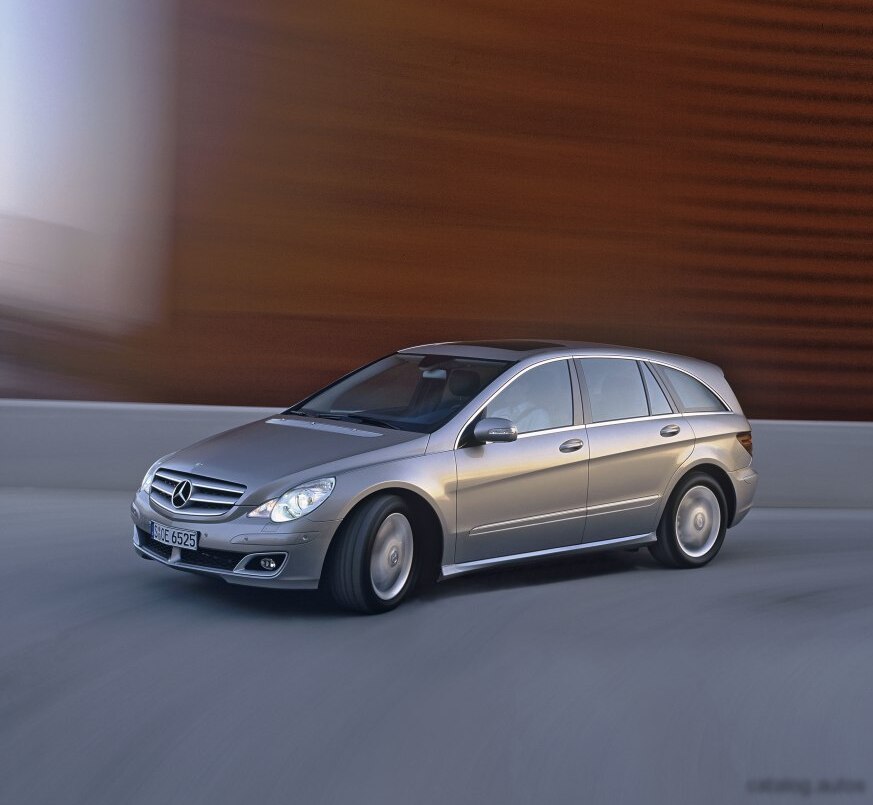
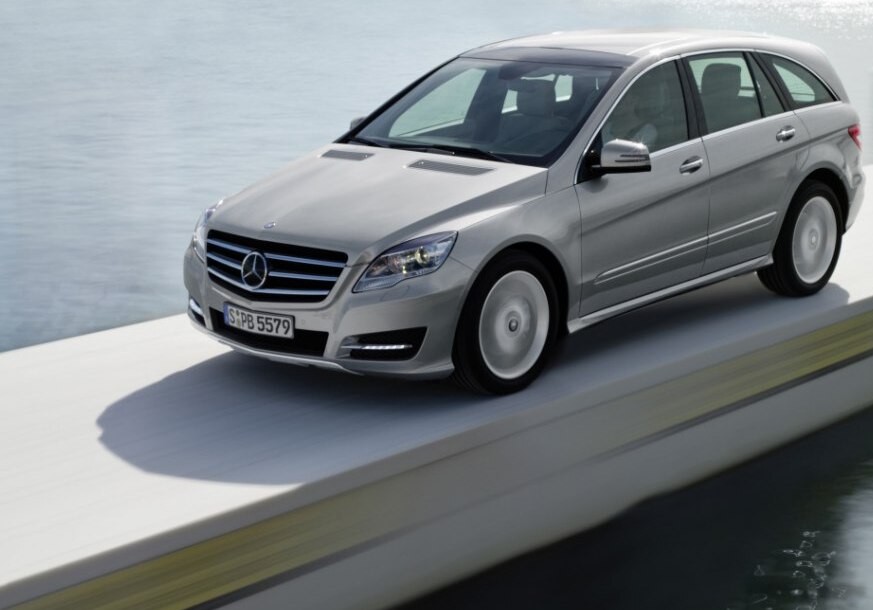
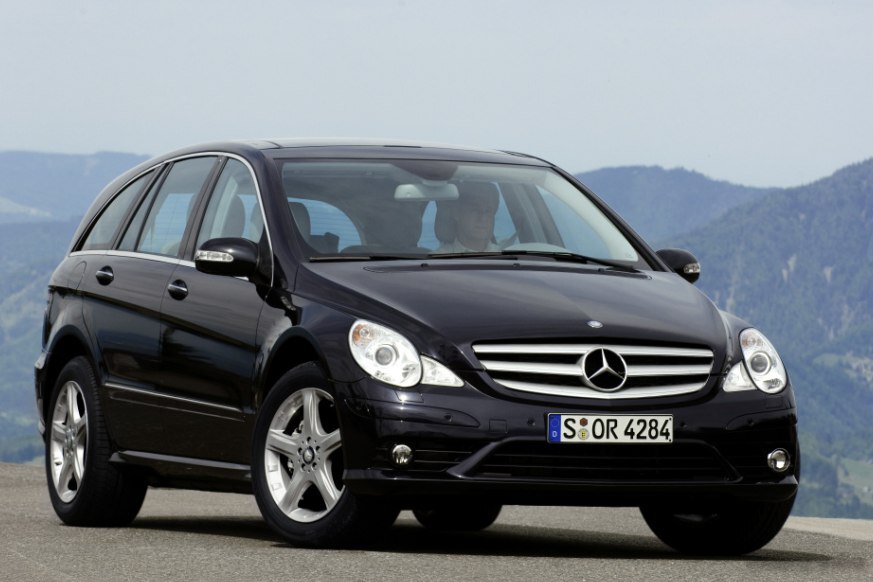
The W251 Mercedes-Benz R-Class, launched in 2005, was a bold attempt to create a new vehicle category. The R 320 CDI V6 4MATIC G-TRONIC, introduced in 2007, represented a significant engine option within the range, offering a diesel-powered alternative to the gasoline engines. This variant was produced until 2009, coinciding with a minor facelift for the R-Class. The R-Class was built on the extended version of the Mercedes-Benz M-Class (W164) platform, offering either five or seven seats depending on the configuration. The R 320 CDI aimed to appeal to buyers who desired the luxury and refinement of a Mercedes-Benz, combined with the practicality of a larger vehicle and the fuel efficiency of a diesel engine.
Powertrain & Engine Architecture
The heart of the R 320 CDI is the OM 642.950 3.0-liter V6 diesel engine. This engine is a robust and technologically advanced design, featuring a common rail direct injection system, a variable geometry turbocharger, and an intercooler. The common rail system, operating at extremely high pressures, allows for precise fuel delivery and optimized combustion. The V6 configuration provides inherent smoothness and balance. The engine produces 224 horsepower and a substantial 510 Nm (376 lb-ft) of torque. The torque curve is particularly flat, providing strong pulling power across a wide range of engine speeds. The engine is longitudinally mounted in the chassis. Paired with the engine is the 7G-TRONIC seven-speed automatic transmission. This transmission is known for its smooth and quick shifts, contributing to both performance and fuel efficiency. The 7G-TRONIC allows the engine to operate in its optimal power band more frequently, enhancing responsiveness.
Driving Characteristics
The R 320 CDI offers a comfortable and refined driving experience. The abundant torque from the diesel engine provides effortless acceleration, even with a fully loaded vehicle. While not a sports car, the R 320 CDI feels surprisingly agile for its size, thanks to the responsive transmission and the 4MATIC all-wheel-drive system. The 0-60 mph time of around 8.3 seconds is respectable for a vehicle of this size and weight. Compared to the gasoline-powered R 350, the R 320 CDI offers superior fuel economy and a more relaxed driving style. The seven-speed transmission keeps the engine in its sweet spot, minimizing noise and maximizing efficiency. Compared to the higher-performance R 500, the R 320 CDI prioritizes fuel economy and torque over outright horsepower.
Equipment & Trim Levels
The R 320 CDI typically came well-equipped with standard features including leather upholstery, dual-zone automatic climate control, a premium audio system, and power-adjustable front seats. Optional extras included a panoramic sunroof, rear seat entertainment system, and advanced driver-assistance features such as Distronic adaptive cruise control and parking assist. Trim levels varied depending on the market, but generally offered increasing levels of luxury and technology. The interior design emphasized comfort and functionality, with a focus on providing a spacious and inviting cabin for both driver and passengers.
Chassis & Braking
The R-Class features a double wishbone front suspension and an independent multi-link rear suspension, providing a comfortable ride and good handling characteristics. Stabilizer bars are fitted to both axles to reduce body roll. The 4MATIC all-wheel-drive system provides excellent traction in all weather conditions. The braking system consists of ventilated disc brakes on all four wheels, coupled with ABS (Anti-lock Braking System) and Electronic Stability Program (ESP) for enhanced safety. The suspension was tuned to prioritize ride comfort, making it well-suited for long journeys.
Market Reception & Comparison
The R-Class, in general, received mixed reviews. Critics praised its spaciousness, comfort, and available features, but questioned its styling and somewhat awkward proportions. The R 320 CDI was generally well-regarded for its fuel efficiency and strong torque output. Compared to other luxury SUVs and minivans, the R 320 CDI offered a unique blend of attributes. Its fuel economy was significantly better than that of the gasoline-powered R 350 and R 500, making it an attractive option for buyers who prioritized efficiency. However, its price point was higher than many competing vehicles.
Legacy
The Mercedes-Benz R-Class was discontinued after the 2009 model year due to slow sales. While it didn’t achieve mainstream success, the R-Class remains a unique and interesting vehicle. The OM 642 diesel engine is known for its durability and reliability, and well-maintained examples of the R 320 CDI can still provide years of service. On the used car market, the R 320 CDI is often sought after by buyers looking for a spacious, comfortable, and fuel-efficient luxury vehicle. Its distinctive styling and unique combination of features have also earned it a small but dedicated following.