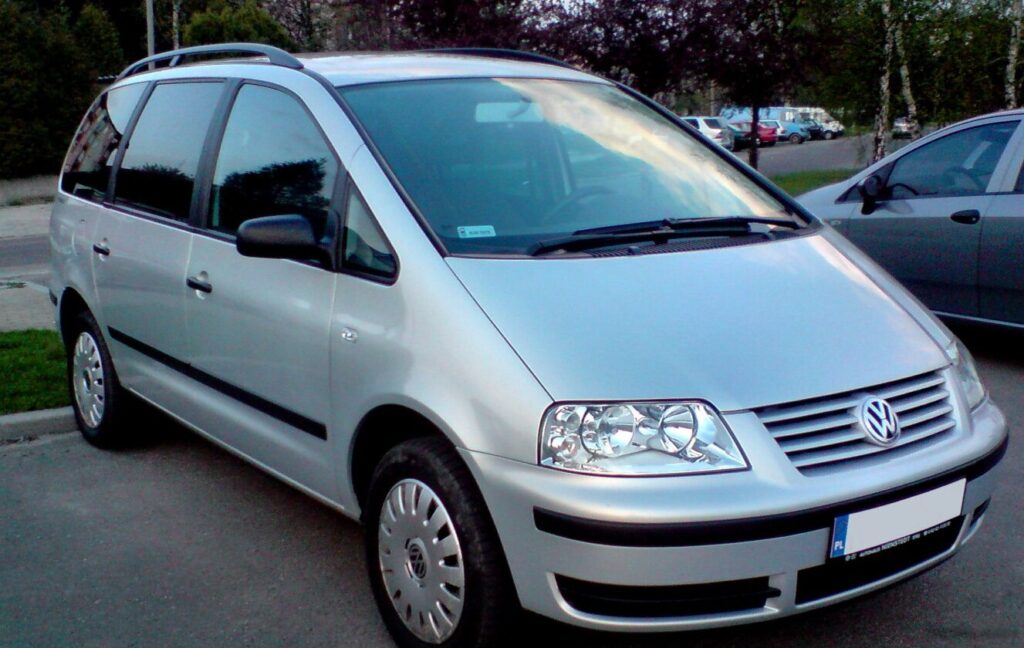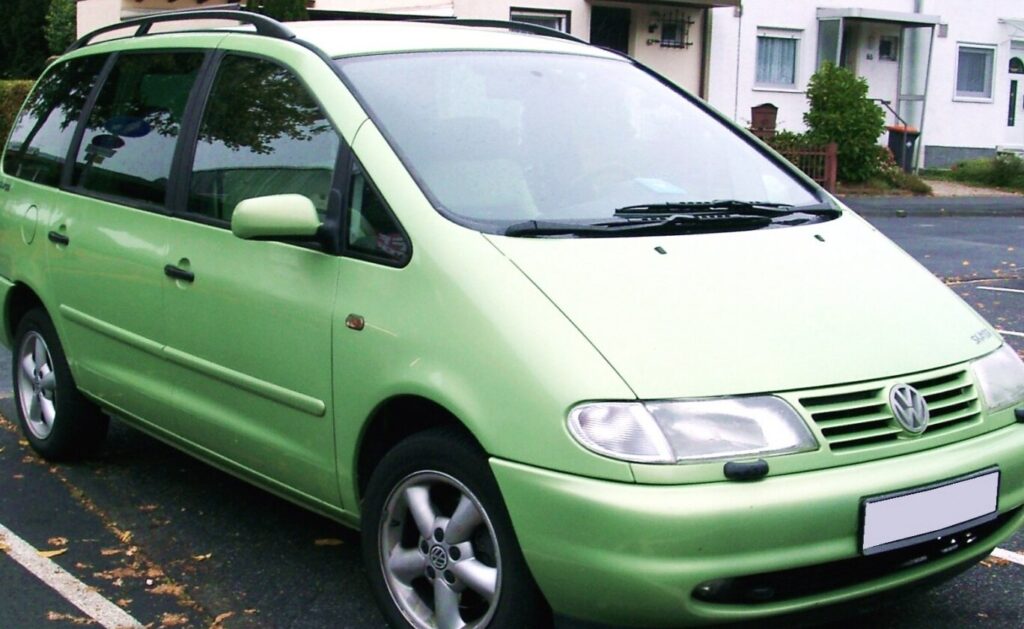
The Volkswagen Sharan I 2.0 i (116 hp) Automatic, produced between September 1995 and February 2000, represents a significant entry point into the first generation of Volkswagen’s popular minivan. Part of the Sharan I series (model code 1HX0/A3), this variant aimed to provide family-oriented transportation with the convenience of an automatic transmission. Positioned as a mid-range offering, it slotted below the more powerful 2.8 VR6 models and above the base 1.8 and diesel options. The Sharan, developed in collaboration with Ford (resulting in the Ford Galaxy and SEAT Alhambra), was Volkswagen’s initial foray into the large MPV segment, designed to compete with established players like the Renault Espace and Chrysler Voyager, primarily targeting the European market.
Technical Specifications
| Brand | Volkswagen |
| Model | Sharan |
| Generation | Sharan I |
| Type (Engine) | 2.0 i (116 Hp) Automatic |
| Start of production | September, 1995 |
| End of production | February, 2000 |
| Powertrain Architecture | Internal Combustion engine |
| Body type | Minivan, MPV |
| Seats | 7 |
| Doors | 5 |
| Fuel consumption (urban) | 16.5 l/100 km (14.3 US mpg, 17.1 UK mpg, 6.1 km/l) |
| Fuel consumption (extra urban) | 8.6 l/100 km (27.4 US mpg, 32.8 UK mpg, 11.6 km/l) |
| Fuel Type | Petrol (Gasoline) |
| Acceleration 0 – 100 km/h | 17.2 sec |
| Acceleration 0 – 62 mph | 17.2 sec |
| Acceleration 0 – 60 mph | 16.3 sec |
| Maximum speed | 172 km/h (106.88 mph) |
| Weight-to-power ratio | 14.8 kg/Hp, 67.6 Hp/tonne |
| Weight-to-torque ratio | 10.3 kg/Nm, 96.8 Nm/tonne |
| Power | 116 Hp @ 5400 rpm |
| Power per litre | 58.5 Hp/l |
| Torque | 166 Nm @ 3600 rpm (122.44 lb.-ft. @ 3600 rpm) |
| Engine layout | Front, Transverse |
| Engine Model/Code | ADY |
| Engine displacement | 1984 cm3 (121.07 cu. in.) |
| Number of cylinders | 4 |
| Engine configuration | Inline |
| Cylinder Bore | 82.5 mm (3.25 in.) |
| Piston Stroke | 92.8 mm (3.65 in.) |
| Compression ratio | 10:1 |
| Number of valves per cylinder | 2 |
| Fuel injection system | Multi-port manifold injection |
| Engine aspiration | Naturally aspirated engine |
| Valvetrain | OHC |
| Engine oil capacity | 4 l (4.23 US qt | 3.52 UK qt) |
| Coolant capacity | 6.3 l (6.66 US qt | 5.54 UK qt) |
| Kerb Weight | 1715 kg (3780.93 lbs.) |
| Max. weight | 2350 kg (5180.86 lbs.) |
| Max load | 635 kg (1399.94 lbs.) |
| Trunk (boot) space – minimum | 256 l (9.04 cu. ft.) |
| Trunk (boot) space – maximum | 2610 l (92.17 cu. ft.) |
| Fuel tank capacity | 60 l (15.85 US gal | 13.2 UK gal) |
| Length | 4617 mm (181.77 in.) |
| Width | 1810 mm (71.26 in.) |
| Height | 1730 mm (68.11 in.) |
| Wheelbase | 2835 mm (111.61 in.) |
| Front track | 1530 mm (60.24 in.) |
| Rear track | 1524 mm (60 in.) |
| Drivetrain Architecture | Front wheel drive |
| Number of gears | 4 |
| Gearbox type | Automatic transmission |
| Front suspension | Spring Strut |
| Rear suspension | Coil spring |
| Front brakes | Ventilated discs |
| Rear brakes | Ventilated discs |
| Assisting systems | ABS (Anti-lock braking system) |
| Steering type | Steering rack and pinion |
| Power steering | Hydraulic Steering |
| Tires size | 195/65 R15 T |
| Wheel rims size | 15 |
Powertrain & Engine Architecture
The Sharan I 2.0 i Automatic utilizes the Volkswagen ADY engine code, a 1.984-liter inline-four cylinder gasoline engine. This engine is a naturally aspirated unit featuring a single overhead camshaft (OHC) design and two valves per cylinder. Fuel delivery is managed by a multi-port fuel injection system, providing adequate, though not exceptional, fuel atomization for the time. The ADY engine produces 116 horsepower at 5400 rpm and 166 Nm (122.44 lb-ft) of torque at 3600 rpm. The engine’s design prioritized reliability and fuel efficiency over outright performance. Paired with this engine is a four-speed automatic transmission. This transmission, while offering convenience, was known for being somewhat conservative in its gearing, prioritizing smooth shifts over rapid acceleration. It wasn’t a particularly advanced automatic by modern standards, lacking features like manual shift modes or adaptive learning.
Driving Characteristics
The driving experience in the Sharan I 2.0 i Automatic is best described as comfortable and practical, rather than sporty. The 116 hp engine, coupled with the four-speed automatic, delivers adequate power for everyday driving and highway cruising, but acceleration is noticeably slower than the VR6 variants. The 0-60 mph time of around 16.3 seconds reflects this. The automatic transmission’s gear ratios are geared towards fuel economy and smooth operation, meaning the engine often feels strained during quick overtaking maneuvers or when fully loaded with passengers and luggage. The front-wheel-drive configuration provides predictable handling, but the Sharan’s high center of gravity and relatively soft suspension setup result in noticeable body roll during cornering. Compared to the five-speed manual version of the 2.0 i, the automatic sacrifices some responsiveness and fuel efficiency for the convenience of automatic gear changes.
Equipment & Trim Levels
The 2.0 i Automatic trim level typically included features such as power windows, central locking, and an adjustable steering wheel as standard equipment. Interior upholstery was generally cloth, with options for upgraded materials available. Air conditioning was a common option, as were features like a radio/cassette player and power mirrors. Higher trim levels, often denoted by additional packages, could include features like alloy wheels, a sunroof, and upgraded sound systems. The Sharan’s interior was designed with practicality in mind, offering a spacious cabin with flexible seating arrangements. The rear seats could be folded or removed entirely to maximize cargo space.
Chassis & Braking
The Sharan I utilizes a relatively simple chassis design. Front suspension consists of MacPherson strut setup, while the rear employs a coil spring arrangement. Braking duties are handled by ventilated disc brakes on all four wheels, providing adequate stopping power for the vehicle’s weight. An Anti-lock Braking System (ABS) was standard, enhancing safety during emergency braking situations. The Sharan’s suspension tuning prioritizes ride comfort over sporty handling, resulting in a relatively soft and forgiving ride quality. Stabilizer bars were fitted to both the front and rear axles to help reduce body roll, but the Sharan’s high center of gravity still contributes to noticeable lean in corners.
Market Reception & Comparison
The Sharan I 2.0 i Automatic received generally positive reviews for its spaciousness, practicality, and comfortable ride. However, critics often noted its relatively slow acceleration and somewhat dated automatic transmission. Compared to the more powerful VR6 models, the 2.0 i Automatic offered a more affordable entry point into the Sharan range, but at the cost of performance. Fuel economy was considered reasonable for a vehicle of its size and class, but not exceptional. The 1.8L manual version offered slightly better fuel economy and a more engaging driving experience, while the diesel variants provided superior fuel efficiency but lacked the refinement of the gasoline engines.
Legacy
The Volkswagen Sharan I 2.0 i Automatic, while not the most exciting variant in the lineup, proved to be a reliable and practical family vehicle. The ADY engine is known for its durability, and the four-speed automatic transmission, while not cutting-edge, is generally robust. In the used car market today, these vehicles are often found with relatively high mileage, but well-maintained examples can still provide years of reliable service. Parts availability is generally good, and the Sharan’s relatively simple mechanical design makes it accessible to home mechanics. The Sharan I established Volkswagen as a major player in the MPV segment, paving the way for subsequent generations of the Sharan and its sister models, the Ford Galaxy and SEAT Alhambra.