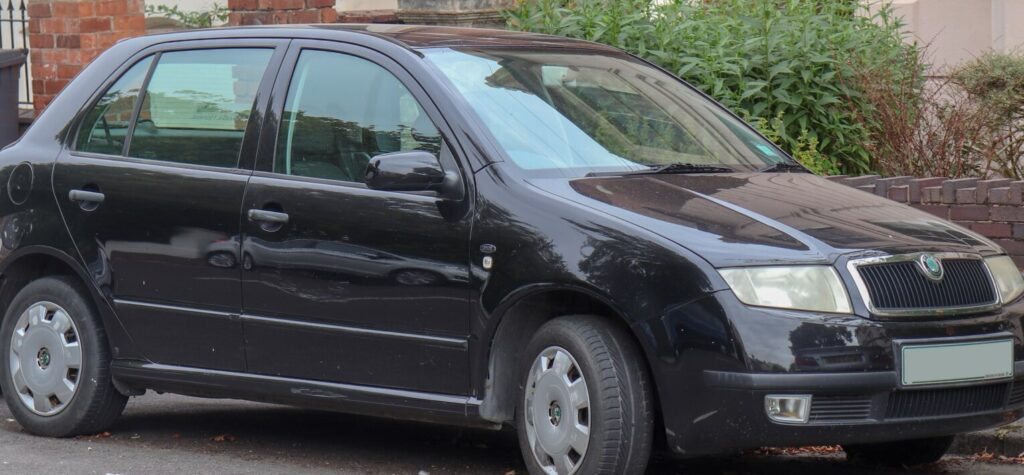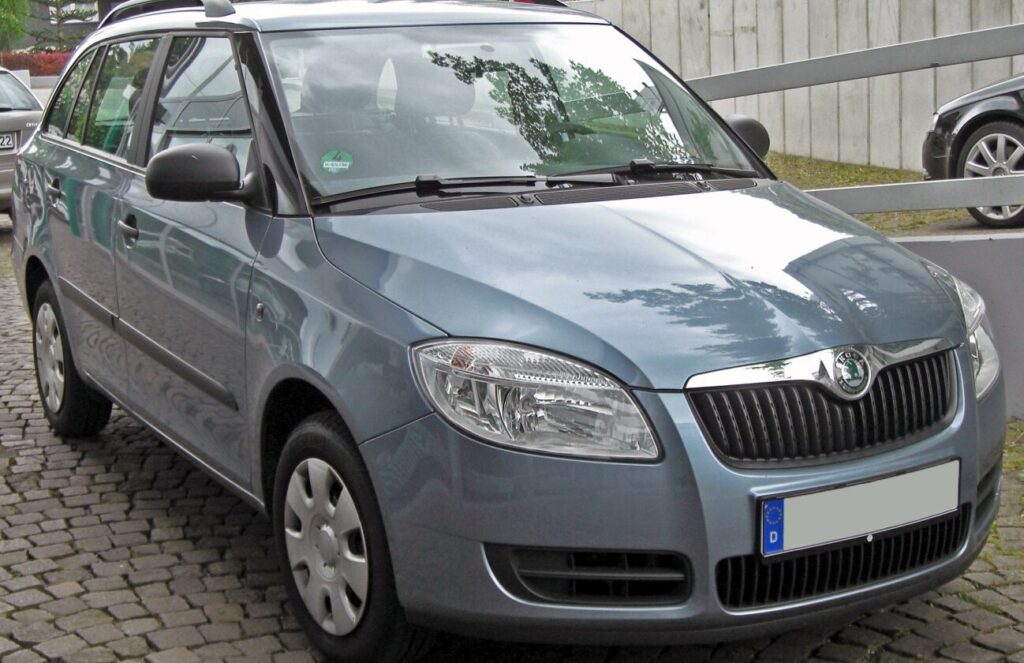
The Skoda Fabia II Combi 1.6 HTP 16V Tiptronic, produced between April 2007 and 2010, represents a practical and affordable option within the second generation (Typ 5J) Fabia Combi range. Positioned as a mid-range offering, it combined a relatively fuel-efficient engine with the convenience of an automatic transmission, appealing to buyers prioritizing ease of use over outright performance. This variant was primarily sold in European markets, where compact station wagons, or estates, remained popular for their versatility and practicality. The Fabia II Combi itself was built on the Volkswagen Group’s A5 (Polo 9N) platform, also known as the 1HX0 platform, sharing components with the Volkswagen Polo, SEAT Ibiza, and Audi A1.
Technical Specifications
| Brand | Skoda |
| Model | Fabia |
| Generation | Fabia II Combi |
| Type (Engine) | 1.6 HTP 16V (105 Hp) Tiptronic |
| Start of production | April, 2007 |
| End of production | 2010 |
| Powertrain Architecture | Internal Combustion engine |
| Body type | Station wagon (estate) |
| Seats | 5 |
| Doors | 5 |
| Fuel consumption (urban) | 10.2 l/100 km (23.1 US mpg, 27.7 UK mpg, 9.8 km/l) |
| Fuel consumption (extra urban) | 6 l/100 km (39.2 US mpg, 47.1 UK mpg, 16.7 km/l) |
| Fuel consumption (combined) | 7.5 l/100 km (31.4 US mpg, 37.7 UK mpg, 13.3 km/l) |
| Fuel Type | Petrol (Gasoline) |
| Acceleration 0 – 100 km/h | 11.5 sec |
| Acceleration 0 – 62 mph | 11.5 sec |
| Acceleration 0 – 60 mph | 10.9 sec |
| Maximum speed | 185 km/h (114.95 mph) |
| Emission standard | Euro 4 |
| Weight-to-power ratio | 11.3 kg/Hp, 88.2 Hp/tonne |
| Weight-to-torque ratio | 7.8 kg/Nm, 128.6 Nm/tonne |
| Power | 105 Hp @ 5600 rpm |
| Power per litre | 65.7 Hp/l |
| Torque | 153 Nm @ 3800 rpm (112.85 lb.-ft. @ 3800 rpm) |
| Engine layout | Front, Transverse |
| Engine Model/Code | EA111 / BTS |
| Engine displacement | 1598 cm3 (97.52 cu. in.) |
| Number of cylinders | 4 |
| Engine configuration | Inline |
| Cylinder Bore | 76.5 mm (3.01 in.) |
| Piston Stroke | 86.9 mm (3.42 in.) |
| Compression ratio | 10.5:1 |
| Number of valves per cylinder | 4 |
| Fuel injection system | Multi-port manifold injection |
| Engine aspiration | Naturally aspirated engine |
| Engine oil capacity | 3.6 l (3.8 US qt | 3.17 UK qt) |
| Coolant | 5.9 l (6.23 US qt | 5.19 UK qt) |
| Kerb Weight | 1190 kg (2623.5 lbs.) |
| Max. weight | 1630 kg (3593.53 lbs.) |
| Max load | 440 kg (970.03 lbs.) |
| Trunk (boot) space – minimum | 480 l (16.95 cu. ft.) |
| Trunk (boot) space – maximum | 1226 l (43.3 cu. ft.) |
| Fuel tank capacity | 45 l (11.89 US gal | 9.9 UK gal) |
| Length | 4239 mm (166.89 in.) |
| Width | 1642 mm (64.65 in.) |
| Height | 1498 mm (58.98 in.) |
| Wheelbase | 2462 mm (96.93 in.) |
| Front track | 1435 mm (56.5 in.) |
| Rear (Back) track | 1424 mm (56.06 in.) |
| Drivetrain Architecture | Front wheel drive |
| Number of gears and type of gearbox | 6 gears, automatic transmission |
| Front suspension | Coil spring |
| Rear suspension | Coil spring |
| Front brakes | Disc |
| Rear brakes | Disc |
| Assisting systems | ABS (Anti-lock braking system) |
| Steering type | Steering rack and pinion |
| Tires size | 165/70 R14; 195/55 R15; 205/45 R16 |
Powertrain & Engine Architecture
The heart of the Fabia II Combi 1.6 HTP Tiptronic is the EA111 series 1.6-liter inline-four engine, specifically the BTS code variant. This engine, part of the HTP (High Torque Pump) family, was designed to offer a balance between fuel efficiency and acceptable performance. It features a multi-point fuel injection system and a 16-valve dual overhead camshaft (DOHC) valvetrain. The HTP engines were known for their relatively narrow powerband and reliance on variable valve timing to improve low-end torque. The ‘Tiptronic’ transmission is a six-speed automatic gearbox, offering both fully automatic operation and a manual shift mode for greater driver control. This transmission was a common choice for those seeking convenience, though it wasn’t known for its particularly sporty or rapid shifts.
Driving Characteristics
The 105 hp output and 153 Nm (113 lb-ft) of torque delivered by the 1.6 HTP engine, coupled with the six-speed automatic, resulted in a comfortable but not particularly exhilarating driving experience. Acceleration from 0-100 km/h (0-62 mph) took around 11.5 seconds, and top speed was limited to 185 km/h (115 mph). The automatic transmission, while smooth, did detract from the engine’s responsiveness. Compared to the 1.4-liter engine offered in lower trims, the 1.6 HTP provided noticeably more power, especially during overtaking maneuvers. However, it fell short of the performance offered by the more powerful 1.9 TDI diesel or the 2.0-liter petrol variants. The gear ratios were tuned for fuel economy rather than outright acceleration, resulting in a relaxed cruising experience but requiring the transmission to downshift frequently when climbing hills or accelerating quickly.
Equipment & Trim Levels
The 1.6 HTP Tiptronic trim typically included standard features such as air conditioning, power windows, central locking, and an audio system. Safety equipment included ABS brakes, front airbags, and seatbelt pretensioners. Higher trim levels offered options like alloy wheels, a multi-function steering wheel, parking sensors, and a climate control system. Interior upholstery was typically cloth, with a functional and durable design. The dashboard layout was straightforward and user-friendly, reflecting Skoda’s focus on practicality and value.
Chassis & Braking
The Fabia II Combi featured a MacPherson strut front suspension and a torsion beam rear suspension. This setup provided a comfortable ride quality, although it wasn’t particularly sporty. The braking system consisted of disc brakes on all four wheels, providing adequate stopping power for the vehicle’s weight and performance. ABS (Anti-lock Braking System) was standard, enhancing safety during emergency braking situations. The suspension was tuned to prioritize ride comfort over handling precision, making it well-suited for everyday driving conditions.
Market Reception & Comparison
The Skoda Fabia II Combi 1.6 HTP Tiptronic was generally well-received as a practical and affordable family car. Critics praised its spacious interior, fuel efficiency, and comfortable ride. However, the engine was sometimes criticized for its lack of refinement and relatively narrow powerband. Compared to the diesel variants, the 1.6 HTP offered lower fuel economy but a quieter and smoother driving experience. The automatic transmission was appreciated by those seeking convenience, but some reviewers found it to be somewhat sluggish in its responses. In terms of reliability, the EA111 engine was generally considered to be reasonably dependable, although issues with timing chain tensioners were known to occur in some cases.
Legacy
The Skoda Fabia II Combi 1.6 HTP Tiptronic remains a relatively common sight on used car markets today. Its affordability and practicality continue to appeal to budget-conscious buyers. While the engine isn’t known for its exceptional performance or longevity, it is generally reliable if properly maintained. Regular oil changes and attention to the timing chain are crucial for ensuring long-term durability. The Fabia II Combi, in general, established Skoda as a serious contender in the European compact car segment, offering a compelling combination of value, practicality, and build quality.