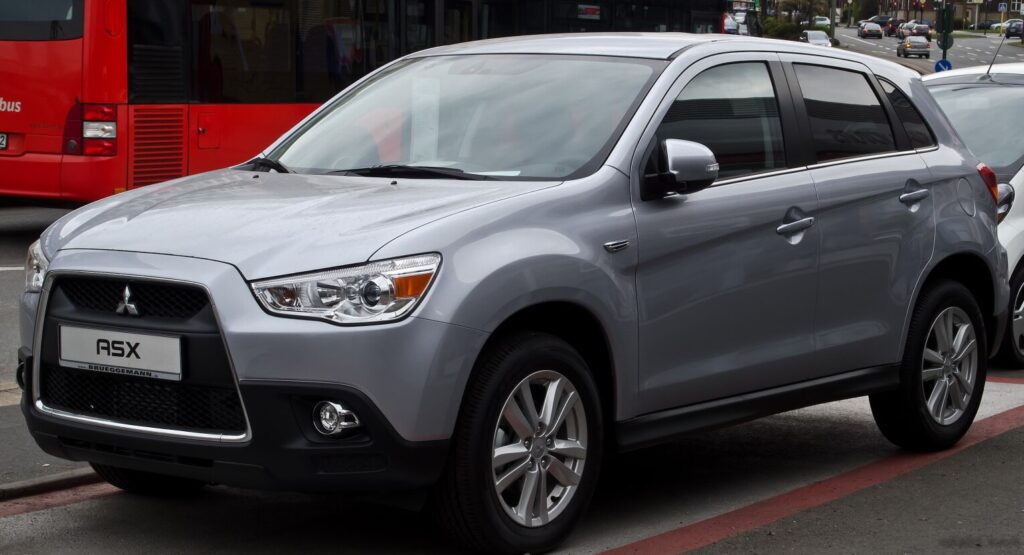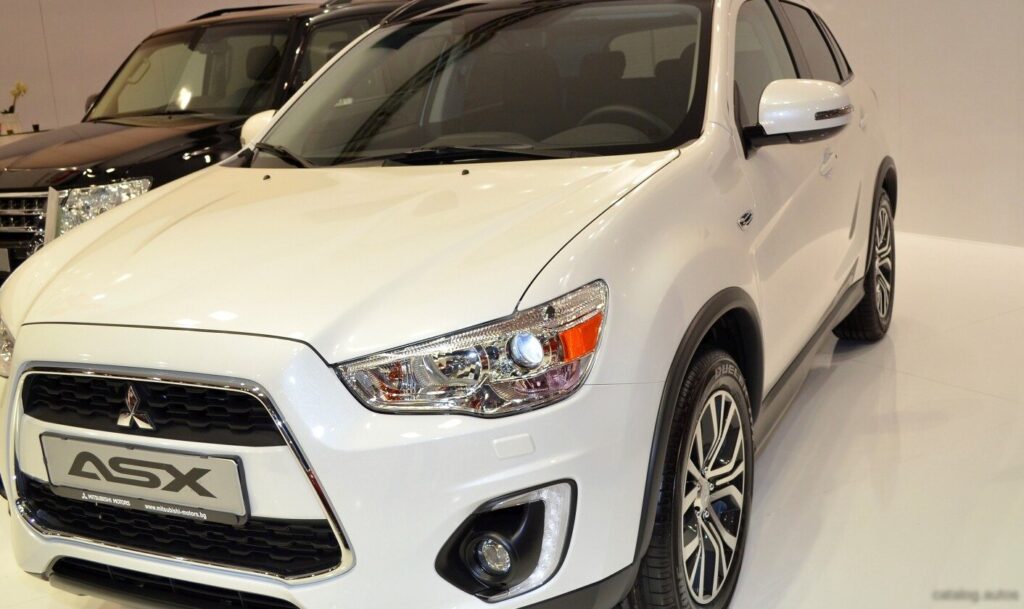
The Mitsubishi ASX 1.8 Di-D AWD (facelift, 2012-2015) represents a significant iteration of Mitsubishi’s compact crossover SUV, designed primarily for the European and Asian markets. Introduced as part of the ASX I generation’s mid-life refresh, this variant combined a fuel-efficient diesel engine with the added capability of all-wheel drive. Positioned as a mid-range offering within the ASX lineup, it aimed to balance practicality, economy, and all-weather performance. Production spanned from 2012 to 2015, serving as a key model in Mitsubishi’s efforts to compete in the increasingly popular compact SUV segment.
Technical Specifications
| Brand | Mitsubishi |
| Model | ASX |
| Generation | ASX I (facelift 2012) |
| Type (Engine) | 1.8 Di-D (150 Hp) AWD |
| Start of production | 2012 |
| End of production | 2015 |
| Powertrain Architecture | Internal Combustion engine |
| Body type | SUV, Crossover |
| Seats | 5 |
| Doors | 5 |
| Fuel consumption (urban) | 6.9 l/100 km (34.1 US mpg, 40.9 UK mpg, 14.5 km/l) |
| Fuel consumption (extra urban) | 5 l/100 km (47 US mpg, 56.5 UK mpg, 20 km/l) |
| Fuel consumption (combined) | 5.7 l/100 km (41.3 US mpg, 49.6 UK mpg, 17.5 km/l) |
| CO2 emissions | 150 g/km |
| Fuel Type | Diesel |
| Maximum speed | 198 km/h (123.03 mph) |
| Weight-to-power ratio | 10.2 kg/Hp, 98.4 Hp/tonne |
| Weight-to-torque ratio | 5.1 kg/Nm, 196.7 Nm/tonne |
| Power | 150 Hp @ 4000 rpm |
| Power per litre | 83.4 Hp/l |
| Torque | 300 Nm @ 2000-3000 rpm (221.27 lb.-ft. @ 2000-3000 rpm) |
| Engine layout | Front, Transverse |
| Engine Model/Code | 4N13 |
| Engine displacement | 1798 cm3 (109.72 cu. in.) |
| Number of cylinders | 4 |
| Engine configuration | Inline |
| Cylinder Bore | 83 mm (3.27 in.) |
| Piston Stroke | 83.1 mm (3.27 in.) |
| Compression ratio | 14.9:1 |
| Number of valves per cylinder | 4 |
| Fuel injection system | Diesel Commonrail |
| Engine aspiration | Turbocharger, Intercooler |
| Valvetrain | DOHC |
| Engine oil capacity | 5.3 l (5.6 US qt | 4.66 UK qt) |
| Coolant | 7.5 l (7.93 US qt | 6.6 UK qt) |
| Kerb Weight | 1525 kg (3362.05 lbs.) |
| Max. weight | 2060 kg (4541.52 lbs.) |
| Max load | 535 kg (1179.47 lbs.) |
| Trunk (boot) space – minimum | 384 l (13.56 cu. ft.) |
| Trunk (boot) space – maximum | 1219 l (43.05 cu. ft.) |
| Fuel tank capacity | 60 l (15.85 US gal | 13.2 UK gal) |
| Max. roof load | 80 kg (176.37 lbs.) |
| Permitted trailer load with brakes (12%) | 1400 kg (3086.47 lbs.) |
| Permitted trailer load without brakes | 750 kg (1653.47 lbs.) |
| Permitted towbar download | 70 kg (154.32 lbs.) |
| Length | 4295 mm (169.09 in.) |
| Width | 1770 mm (69.69 in.) |
| Height | 1625 mm (63.98 in.) |
| Wheelbase | 2670 mm (105.12 in.) |
| Front track | 1525 mm (60.04 in.) |
| Rear (Back) track | 1525 mm (60.04 in.) |
| Front overhang | 870 mm (34.25 in.) |
| Rear overhang | 755 mm (29.72 in.) |
| Ride height (ground clearance) | 170 mm (6.69 in.) |
| Drive wheel | All wheel drive (4×4) |
| Number of gears and type of gearbox | 6 gears, manual transmission |
| Front suspension | Independent, type McPherson with coil spring and anti-roll bar |
| Rear suspension | Independent multi-link spring suspension with stabilizer |
| Front brakes | Ventilated discs |
| Rear brakes | Disc |
| Assisting systems | ABS (Anti-lock braking system) |
| Steering type | Steering rack and pinion |
| Power steering | Electric Steering |
| Tires size | 215/65 R16; 215/60 R17 |
| Wheel rims size | 6.5J x 16; 6.5J x 17 |
INTRODUCTION
The 2012 facelift of the Mitsubishi ASX I, featuring the 1.8 Di-D AWD variant, was a crucial update for the model. The ASX (Active Sport Crossover) was initially launched in 2010, built on the Mitsubishi GS platform (shared with the Outlander and Peugeot 4007). The facelift brought revised styling, improved interior materials, and enhancements to the engine range. The 1.8 Di-D AWD model specifically targeted buyers seeking a compact SUV with good fuel economy and the security of all-wheel drive, particularly in regions with inclement weather. It was a popular choice in Europe and parts of Asia, where diesel engines were favored for their efficiency.
Powertrain & Engine Architecture
The heart of the ASX 1.8 Di-D AWD is the 4N13 1.8-liter four-cylinder diesel engine. This engine utilizes a common-rail direct injection system, delivering fuel directly into the cylinders at extremely high pressure for optimized combustion. The 4N13 features a turbocharger with an intercooler, boosting power output and improving torque across a wider rev range. The engine also incorporates a Diesel Particulate Filter (DPF) to reduce emissions, a standard feature for modern diesel engines. The engine’s DOHC (Double Overhead Camshaft) valvetrain, with four valves per cylinder, further enhances breathing and efficiency. The 150 horsepower and 300 Nm (221 lb-ft) of torque are delivered between 2000 and 3000 rpm, providing a usable powerband for everyday driving. The engine is transversely mounted in the front of the vehicle. The ASX 1.8 Di-D AWD was exclusively offered with a 6-speed manual transmission, prioritizing fuel efficiency and driver engagement over the convenience of an automatic.
Driving Characteristics
The 1.8 Di-D AWD ASX offers a balanced driving experience. While not a performance-oriented vehicle, the 150 hp engine provides adequate power for most driving situations. The 6-speed manual transmission allows for precise gear selection, and the turbocharger provides a noticeable boost in acceleration. The all-wheel-drive system enhances traction, particularly on slippery surfaces, making it a confident performer in adverse weather conditions. Compared to the lower-powered 1.6-liter petrol versions, the 1.8 Di-D offers significantly more torque, resulting in better responsiveness and easier overtaking. However, it doesn’t match the performance of the higher-spec 2.0-liter petrol models. The gear ratios are tuned for fuel efficiency, meaning the engine can feel slightly strained at higher speeds. Overall, the driving experience is comfortable and composed, prioritizing practicality and efficiency.
Equipment & Trim Levels
The ASX 1.8 Di-D AWD typically came equipped with a reasonable level of standard features. These included air conditioning, electric front and rear windows, a CD/radio system with MP3 compatibility, and alloy wheels. Safety features such as ABS (Anti-lock Braking System), Electronic Stability Control (ESC), and multiple airbags were also standard. Higher trim levels offered additional features like climate control, a touchscreen infotainment system with navigation, parking sensors, and leather upholstery. Optional extras included a panoramic sunroof, xenon headlights, and a premium sound system. Interior upholstery was typically cloth, with higher trims offering partial leather options. The dashboard layout was functional and straightforward, with a focus on ease of use.
Chassis & Braking
The ASX utilizes a McPherson strut suspension setup at the front and an independent multi-link suspension at the rear, providing a comfortable ride and good handling characteristics. The all-wheel-drive system employs a viscous coupling to distribute torque between the front and rear axles as needed, enhancing traction without requiring driver intervention. Braking duties are handled by ventilated discs at the front and solid discs at the rear, providing adequate stopping power. The steering is rack and pinion with electric power assistance, offering a light and responsive feel. Stabilizer bars are fitted to both the front and rear axles to reduce body roll during cornering.
Market Reception & Comparison
The Mitsubishi ASX 1.8 Di-D AWD was generally well-received by automotive critics. It was praised for its fuel efficiency, comfortable ride, and the added security of all-wheel drive. However, some reviewers noted that the engine could be somewhat noisy and that the interior materials weren’t as premium as some competitors. Compared to other trims in the ASX lineup, the 1.8 Di-D AWD offered a compelling balance of performance and economy. It was more expensive than the 1.6-liter petrol versions but provided significantly more torque and better fuel economy. Compared to rivals like the Nissan Qashqai and Kia Sportage, the ASX 1.8 Di-D AWD offered a competitive package, particularly in terms of value for money.
Legacy
The 4N13 engine, found in the ASX 1.8 Di-D AWD, has proven to be a relatively reliable unit when properly maintained. Common issues include DPF blockages (particularly with frequent short journeys) and potential problems with the turbocharger. However, these are generally manageable with regular servicing and preventative maintenance. In the used car market, the ASX 1.8 Di-D AWD remains a popular choice for buyers seeking a practical and economical compact SUV. Its all-wheel-drive capability and relatively low running costs make it an attractive option, particularly in regions with challenging weather conditions. While it may not offer the latest technology or the most refined driving experience, it represents a solid and dependable vehicle that continues to offer good value for money.