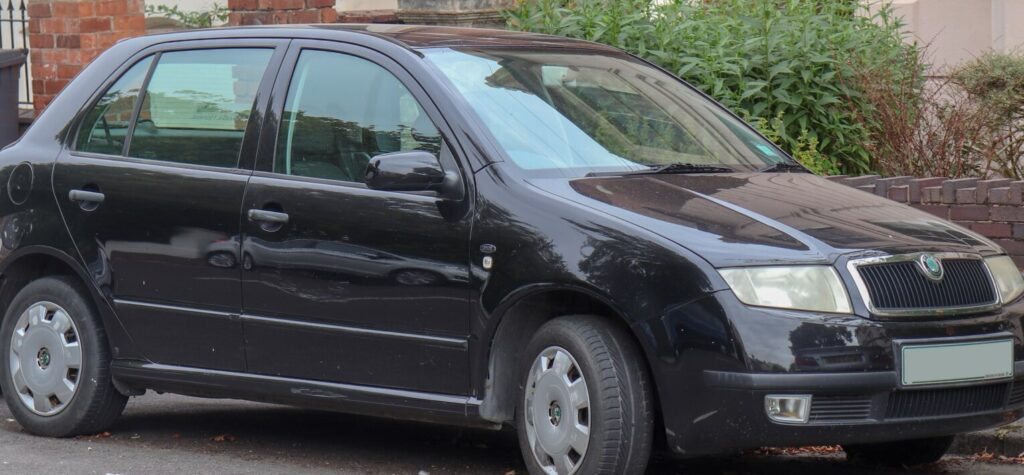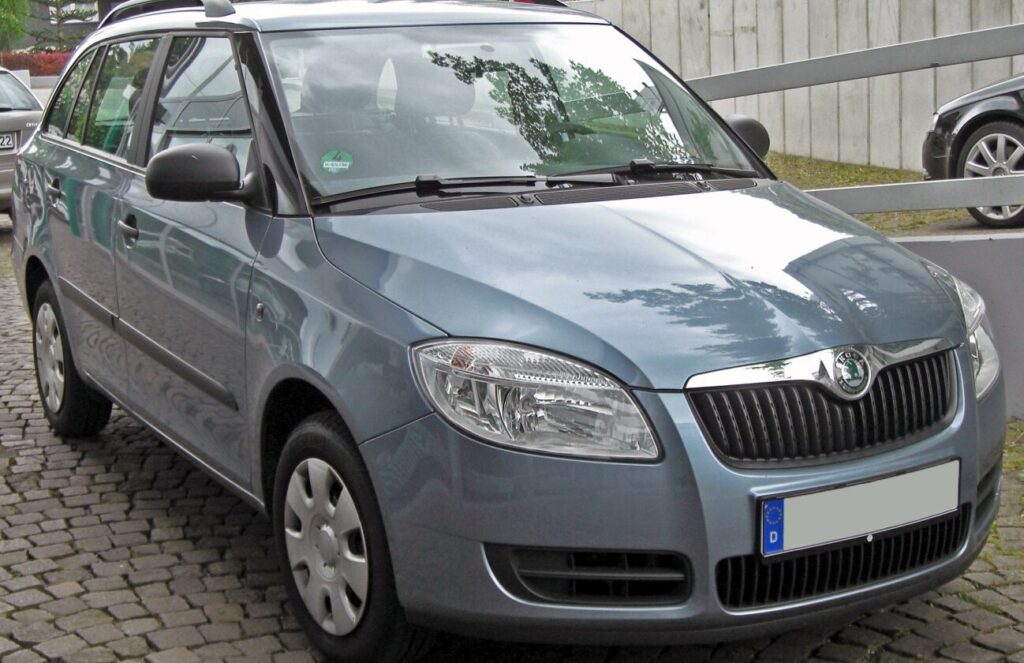
The Skoda Fabia II Combi 1.9 TDI (105 hp) was a popular station wagon variant produced between 2007 and 2010, forming a key part of Skoda’s lineup during that period. Based on the Volkswagen Group’s A5 (or PQ35) platform – also known as the 1HX0/A3 platform – the Fabia II Combi aimed to offer practicality and fuel efficiency in a compact package. This particular engine and transmission combination represented a mid-range offering, positioned between the lower-powered petrol engines and the more expensive, higher-performance TDI variants. It was primarily marketed towards families and individuals seeking an economical and versatile vehicle for everyday use.
Technical Specifications
| Brand | Skoda |
| Model | Fabia |
| Generation | Fabia II Combi |
| Type (Engine) | 1.9 TDI (105 Hp) |
| Start of production | 2007 |
| End of production | 2010 |
| Powertrain Architecture | Internal Combustion engine |
| Body type | Station wagon (estate) |
| Seats | 5 |
| Doors | 5 |
| Fuel consumption (urban) | 6.4 l/100 km (36.8 US mpg, 44.1 UK mpg, 15.6 km/l) |
| Fuel consumption (extra urban) | 4.1 l/100 km (57.4 US mpg, 68.9 UK mpg, 24.4 km/l) |
| Fuel consumption (combined) | 4.9 l/100 km (48 US mpg, 57.6 UK mpg, 20.4 km/l) |
| CO2 emissions | 129 g/km |
| Fuel Type | Diesel |
| Acceleration 0 – 100 km/h | 11 sec |
| Acceleration 0 – 62 mph | 11 sec |
| Acceleration 0 – 60 mph | 10.5 sec |
| Maximum speed | 191 km/h (118.68 mph) |
| Emission standard | Euro 4 |
| Weight-to-power ratio | 11.2 kg/Hp, 89.4 Hp/tonne |
| Weight-to-torque ratio | 4.9 kg/Nm, 204.3 Nm/tonne |
| Power | 105 Hp @ 4000 rpm |
| Power per litre | 55.4 Hp/l |
| Torque | 240 Nm @ 1800 rpm (177.01 lb.-ft. @ 1800 rpm) |
| Engine layout | Front, Transverse |
| Engine Model/Code | EA188 / BSW |
| Engine displacement | 1896 cm3 (115.7 cu. in.) |
| Number of cylinders | 4 |
| Engine configuration | Inline |
| Cylinder Bore | 79.5 mm (3.13 in.) |
| Piston Stroke | 95.5 mm (3.76 in.) |
| Compression ratio | 19:1 |
| Number of valves per cylinder | 2 |
| Fuel injection system | Pump-nozzle (Unit Injector) |
| Engine aspiration | Turbocharger, Intercooler |
| Valvetrain | SOHC |
| Engine oil capacity | 4.3 l (4.54 US qt | 3.78 UK qt) |
| Coolant | 6.8 l (7.19 US qt | 5.98 UK qt) |
| Kerb Weight | 1175 kg (2590.43 lbs.) |
| Max. weight | 1705 kg (3758.88 lbs.) |
| Max load | 530 kg (1168.45 lbs.) |
| Trunk (boot) space – minimum | 505 l (17.83 cu. ft.) |
| Trunk (boot) space – maximum | 1485 l (52.44 cu. ft.) |
| Fuel tank capacity | 45 l (11.89 US gal | 9.9 UK gal) |
| Max. roof load | 75 kg (165.35 lbs.) |
| Permitted trailer load with brakes (12%) | 1200 kg (2645.55 lbs.) |
| Permitted trailer load without brakes | 450 kg (992.08 lbs.) |
| Permitted towbar download | 50 kg (110.23 lbs.) |
| Length | 4239 mm (166.89 in.) |
| Width | 1642 mm (64.65 in.) |
| Height | 1498 mm (58.98 in.) |
| Wheelbase | 2462 mm (96.93 in.) |
| Front track | 1420-1436 mm (55.91 – 56.54 in.) |
| Rear track | 1410-1426 mm (55.51 – 56.14 in.) |
| Ride height (ground clearance) | 135 mm (5.31 in.) |
| Drag coefficient (Cd) | 0.32 |
| Minimum turning circle | 10 m (32.81 ft.) |
| Drivetrain Architecture | The Internal combustion engine (ICE) drives the front wheels of the vehicle. |
| Drive wheel | Front wheel drive |
| Number of gears and type of gearbox | 5 gears, manual transmission |
| Front suspension | Independent type McPherson, Transverse stabilizer |
| Rear suspension | Coil spring, Torsion |
| Front brakes | Ventilated discs |
| Rear brakes | Disc |
| Assisting systems | ABS (Anti-lock braking system) |
| Steering type | Steering rack and pinion |
| Power steering | Electric Steering |
| Tires size | 165/70 R14; 185/60 R14; 195/55 R15 |
| Wheel rims size | 5J x 14; 6J x 14; 6J x 15 |
INTRODUCTION
The Skoda Fabia II Combi 1.9 TDI (105 hp) was produced from 2007 to 2010, representing a practical and fuel-efficient option within the second generation Fabia Combi range. It built upon the success of the original Fabia, offering increased space and versatility thanks to its station wagon body style. The 1.9 TDI engine, a mainstay of the Volkswagen Group’s diesel offerings, provided a balance between performance and economy, making it a popular choice for those seeking a reliable and affordable family car. This variant occupied a middle ground in the Fabia Combi lineup, offering more power and refinement than the base petrol models, but at a lower price point than the more powerful TDI versions.
Powertrain & Engine Architecture
The heart of this Fabia Combi is the 1.9-liter, four-cylinder diesel engine, specifically the EA188 series, often identified by the engine code BSW. This engine utilizes a pump-nozzle (unit injector) fuel injection system, a technology known for its precision and efficiency. The engine features a single overhead camshaft (SOHC) valvetrain operating two valves per cylinder. A turbocharger with an intercooler is employed to boost power and torque, delivering 105 horsepower at 4000 rpm and 240 Nm (177 lb-ft) of torque at 1800 rpm. The engine’s transverse mounting and front-wheel-drive configuration were standard for this platform. The 5-speed manual transmission was the standard pairing for this engine, offering a good balance between fuel economy and drivability. The gear ratios were tuned for maximizing fuel efficiency while still providing adequate acceleration for everyday driving.
Driving Characteristics
The 1.9 TDI 105 hp engine in the Fabia Combi provided a respectable, if not exhilarating, driving experience. Acceleration from 0-60 mph took around 10.5 seconds, and top speed was approximately 118.68 mph. The engine’s strong low-end torque made it well-suited for everyday driving, providing ample power for overtaking and climbing hills. Compared to the higher-output TDI variants, this version felt less urgent, but it offered a smoother and more relaxed driving experience. The 5-speed manual transmission was generally well-matched to the engine, although some drivers found the gear ratios slightly tall, requiring downshifts for quicker acceleration. The Fabia Combi’s suspension provided a comfortable ride, absorbing bumps and imperfections in the road effectively. However, it wasn’t particularly sporty, with noticeable body roll in corners.
Equipment & Trim Levels
The Fabia II Combi 1.9 TDI (105 hp) typically came equipped with a reasonable level of standard features. These included central locking, electric front windows, power steering, and an ABS anti-lock braking system. Interior upholstery was typically cloth, with a functional and durable design. Dashboard configuration was straightforward and easy to use. Optional extras included alloy wheels, air conditioning, a CD stereo system, and rear electric windows. Higher trim levels offered additional features such as climate control, parking sensors, and upgraded interior trim.
Chassis & Braking
The Fabia II Combi utilized a McPherson strut front suspension and a torsion beam rear suspension. This setup provided a good balance between ride comfort and handling. The front brakes were ventilated discs, while the rear brakes were solid discs. The braking system was generally effective, providing adequate stopping power for everyday driving. Stabilizer bars were fitted to both the front and rear axles to reduce body roll. The chassis was designed to provide a stable and predictable driving experience, prioritizing comfort and practicality over outright sportiness.
Market Reception & Comparison
The Skoda Fabia II Combi 1.9 TDI (105 hp) was generally well-received by automotive critics. It was praised for its fuel efficiency, practicality, and affordability. Compared to the petrol-powered Fabia Combi models, the TDI version offered significantly better fuel economy and more torque. However, it was more expensive to purchase. Compared to the more powerful TDI variants, the 105 hp version offered a more affordable entry point into the diesel range, but at the expense of some performance. Reliability was generally good, although some owners reported issues with the pump-nozzle fuel injection system over the long term.
Legacy
The Skoda Fabia II Combi 1.9 TDI (105 hp) remains a popular choice in the used car market today, particularly for those seeking an economical and reliable family car. The 1.9 TDI engine is known for its durability, although regular maintenance is essential to prevent issues with the fuel injection system. Parts availability is generally good, and repair costs are relatively low. While newer cars offer more advanced technology and features, the Fabia II Combi 1.9 TDI continues to represent a practical and affordable option for budget-conscious buyers.