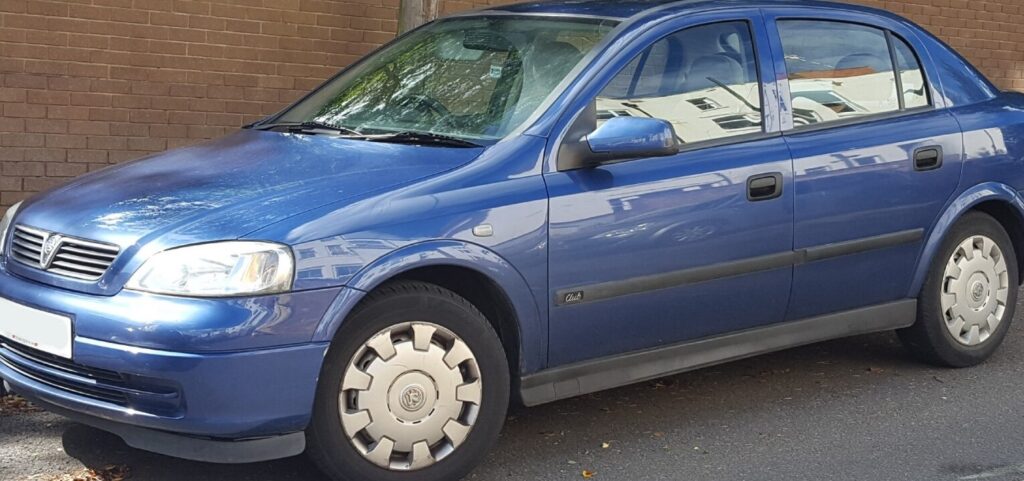
The Vauxhall Astra Mk IV, produced from 1998 to 2004, represented a significant step forward for the British marque, building upon the success of its predecessor. Within the Mk IV range, the 2.0 DI (Direct Injection) variant, producing 82 horsepower, occupied a unique position. This model, powered by a diesel engine, was aimed at buyers prioritizing fuel economy and practicality over outright performance. It was positioned as a sensible, economical choice within the broader Astra lineup, which also included petrol engines and higher-output diesel options. The Mk IV Astra shared its platform (the 1HX0) with the Opel Astra, reflecting General Motors’ ownership of Vauxhall at the time.
Technical Specifications
| Brand | Vauxhall |
| Model | Astra |
| Generation | Astra Mk IV CC |
| Type (Engine) | 2.0 DI (82 Hp) |
| Start of production | 1998 |
| End of production | 2004 |
| Powertrain Architecture | Internal Combustion engine |
| Body type | Hatchback |
| Seats | 5 |
| Doors | 5 |
| Fuel consumption (urban) | 7.6 l/100 km (30.9 US mpg) |
| Fuel consumption (extra urban) | 4.8 l/100 km (49 US mpg) |
| Fuel consumption (combined) | 5.8 l/100 km (40.6 US mpg) |
| Fuel Type | Diesel |
| Acceleration 0 – 100 km/h | 14.5 sec |
| Acceleration 0 – 62 mph | 14.5 sec |
| Acceleration 0 – 60 mph | 13.8 sec |
| Maximum speed | 175 km/h (108.74 mph) |
| Weight-to-power ratio | 14.6 kg/Hp |
| Weight-to-torque ratio | 6.5 kg/Nm |
| Power | 82 Hp @ 4300 rpm |
| Power per litre | 41.1 Hp/l |
| Torque | 185 Nm @ 1800 rpm (136.45 lb.-ft. @ 1800 rpm) |
| Engine layout | Front, Transverse |
| Engine Model/Code | X20DTL, Y20DTL |
| Engine displacement | 1995 cm3 (121.74 cu. in.) |
| Number of cylinders | 4 |
| Engine configuration | Inline |
| Number of valves per cylinder | 4 |
| Fuel injection system | Direct injection |
| Engine aspiration | Turbocharger |
| Engine oil capacity | 5.5 l (5.81 US qt | 4.84 UK qt) |
| Coolant capacity | 7.9 l (8.35 US qt | 6.95 UK qt) |
| Kerb Weight | 1195 kg (2634.52 lbs.) |
| Max. weight | 1765 kg (3891.16 lbs.) |
| Max load | 570 kg (1256.63 lbs.) |
| Trunk (boot) space – minimum | 370 l (13.07 cu. ft.) |
| Trunk (boot) space – maximum | 1180 l (41.67 cu. ft.) |
| Fuel tank capacity | 52 l (13.74 US gal | 11.44 UK gal) |
| Length | 4110 mm (161.81 in.) |
| Width | 1710 mm (67.32 in.) |
| Width including mirrors | 1967 mm (77.44 in.) |
| Height | 1425 mm (56.1 in.) |
| Wheelbase | 2606 mm (102.6 in.) |
| Ride height (ground clearance) | 160 mm (6.3 in.) |
| Minimum turning circle | 10 m (32.81 ft.) |
| Drivetrain Architecture | Front wheel drive |
| Number of gears | 5 |
| Gearbox type | Manual transmission |
| Front brakes | Ventilated discs |
| Rear brakes | Drum |
| Tires size | 195/60 R15 |
| Wheel rims size | 15 |
Powertrain & Engine Architecture
The heart of the Astra 2.0 DI was the X20DTL or Y20DTL engine, a 1.995-liter inline-four cylinder diesel. This engine utilized direct fuel injection, a technology that improved fuel efficiency and reduced emissions compared to older indirect injection systems. The engine was turbocharged, providing a modest boost in power and torque. The direct injection system employed a high-pressure common rail setup, delivering fuel directly into the combustion chamber for more precise control. The engine featured a single overhead camshaft (SOHC) operating four valves per cylinder. The five-speed manual transmission was the standard offering, chosen for its efficiency and cost-effectiveness. The transmission’s gear ratios were geared towards maximizing fuel economy rather than providing sporty acceleration.
Driving Characteristics
The 2.0 DI Astra offered a practical and economical driving experience. With 82 horsepower and 185 Nm (136 lb-ft) of torque, acceleration was not its strong suit. The 0-60 mph time of around 13.8 seconds reflects this. However, the engine’s torque delivery, peaking at 1800 rpm, provided adequate pulling power for everyday driving and overtaking maneuvers. Compared to the petrol-powered Astra variants, the 2.0 DI offered significantly better fuel economy. It also felt more relaxed on the highway, thanks to the engine’s ability to maintain cruising speeds without excessive revving. Compared to the higher-output 2.0 DI variants (typically around 100 hp), this version felt noticeably less powerful, but it also offered lower running costs.
Equipment & Trim Levels
The 2.0 DI Astra typically came with a reasonable level of standard equipment, reflecting its position as a mainstream model. This included central locking, power steering, and an adjustable steering column. Interior upholstery was typically cloth, and the dashboard featured a functional, if somewhat basic, design. Optional extras included air conditioning, alloy wheels, and an upgraded stereo system. Trim levels varied depending on the market, but generally, the 2.0 DI was offered in base and mid-range configurations. The focus was on providing a comfortable and practical interior rather than luxurious appointments.
Chassis & Braking
The Astra Mk IV utilized a MacPherson strut front suspension and a torsion beam rear suspension. This setup provided a good balance between ride comfort and handling. The 2.0 DI variant, being a heavier model due to the diesel engine, often featured slightly stiffer suspension components to maintain stability. Front brakes were ventilated discs, providing adequate stopping power, while rear brakes were drums, a cost-saving measure common in this class of vehicle. The steering was hydraulically assisted, offering a reasonable level of feedback.
Market Reception & Comparison
The Astra 2.0 DI was generally well-received by critics as a sensible and economical choice. Its fuel efficiency was a major selling point, particularly in Europe where diesel fuel was often cheaper than petrol. However, its performance was often criticized as being underwhelming. Compared to other diesel Astras, such as the 1.7 DI, the 2.0 DI offered more power and refinement, but at a slightly higher price point. Against petrol-powered rivals, it offered superior fuel economy but lacked the same level of responsiveness.
Legacy
The X20DTL and Y20DTL engines proved to be relatively reliable, although they were not without their issues. Common problems included turbocharger failure and issues with the fuel injection system. However, with regular maintenance, these engines could provide many years of service. Today, the Astra Mk IV 2.0 DI is a relatively affordable used car, appealing to buyers looking for a practical and economical vehicle. Its simplicity and relatively low running costs make it a popular choice for those seeking a reliable and inexpensive mode of transportation. The engine, while not particularly powerful by modern standards, remains a capable performer for everyday driving.