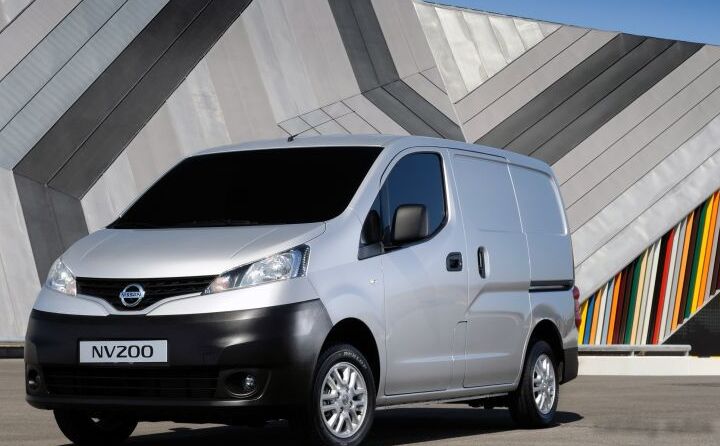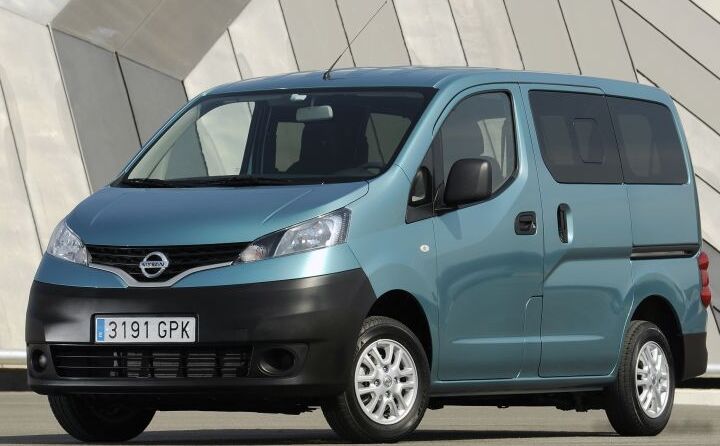
The Nissan NV200 Combi 1.6, producing 110 horsepower, was a popular compact van offered by Nissan from 2009 to 2019. Positioned as a versatile and economical option, the Combi served as a passenger-focused variant of the broader NV200 light commercial vehicle range. It found significant traction in European and Asian markets, particularly with families and businesses needing a practical, yet affordable, people carrier or small cargo vehicle. This specific 1.6-liter configuration represented an entry-level powertrain option within the NV200 Combi lineup, offering a balance between fuel efficiency and usability.
Technical Specifications
| Brand | Nissan |
| Model | NV200 |
| Generation | NV200 Combi |
| Type (Engine) | 1.6 (110 Hp) |
| Start of production | 2009 |
| End of production | 2019 |
| Powertrain Architecture | Internal Combustion engine |
| Body type | Minivan |
| Seats | 5 |
| Doors | 5 |
| Fuel consumption (urban) | 9.1 l/100 km (25.8 US mpg, 31 UK mpg, 11 km/l) |
| Fuel consumption (extra urban) | 6.3 l/100 km (37.3 US mpg, 44.8 UK mpg, 15.9 km/l) |
| Fuel consumption (combined) | 7.3 l/100 km (32.2 US mpg, 38.7 UK mpg, 13.7 km/l) |
| CO2 emissions | 169 g/km |
| Fuel Type | Petrol (Gasoline) |
| Maximum speed | 165 km/h (102.53 mph) |
| Emission standard | Euro 6 |
| Weight-to-power ratio | 11.6 kg/Hp, 86.2 Hp/tonne |
| Weight-to-torque ratio | 8.3 kg/Nm, 119.9 Nm/tonne |
| Power | 110 Hp @ 6000 rpm |
| Power per litre | 68.8 Hp/l |
| Torque | 153 Nm @ 4400 rpm (112.85 lb.-ft. @ 4400 rpm) |
| Engine layout | Front, Transverse |
| Engine Model/Code | HR16DE |
| Engine displacement | 1598 cm3 (97.52 cu. in.) |
| Number of cylinders | 4 |
| Engine configuration | Inline |
| Number of valves per cylinder | 4 |
| Fuel injection system | Multi-port manifold injection |
| Engine aspiration | Naturally aspirated engine |
| Engine oil capacity | 4.3 l (4.54 US qt | 3.78 UK qt) |
| Coolant capacity | 6.3 l (6.66 US qt | 5.54 UK qt) |
| Kerb Weight | 1276-1358 kg (2813.1 – 2993.88 lbs.) |
| Max. weight | 1970 kg (4343.11 lbs.) |
| Max load | 612-694 kg (1349.23 – 1530.01 lbs.) |
| Trunk (boot) space – minimum | 2300 l (81.22 cu. ft.) |
| Trunk (boot) space – maximum | 3100 l (109.48 cu. ft.) |
| Fuel tank capacity | 55 l (14.53 US gal | 12.1 UK gal) |
| Max. roof load | 100 kg (220.46 lbs.) |
| Permitted trailer load with brakes (12%) | 1100 kg (2425.08 lbs.) |
| Permitted trailer load without brakes | 640 kg (1410.96 lbs.) |
| Permitted towbar download | 44 kg (97 lbs.) |
| Length | 4400 mm (173.23 in.) |
| Width | 1695 mm (66.73 in.) |
| Height | 1860 mm (73.23 in.) |
| Wheelbase | 2725 mm (107.28 in.) |
| Front track | 1490 mm (58.66 in.) |
| Rear (Back) track | 1510 mm (59.45 in.) |
| Minimum turning circle | 10.60 m (34.78 ft.) |
| Drivetrain Architecture | Front wheel drive |
| Number of gears and type of gearbox | 5 gears, manual transmission |
| Front suspension | Independent type McPherson |
| Rear suspension | Leaf spring |
| Front brakes | Disc |
| Rear brakes | Drum |
| Assisting systems | ABS (Anti-lock braking system) |
| Steering type | Steering rack and pinion |
| Tires size | 175/70 R14C |
| Wheel rims size | 5.5JJ x 14 |
Powertrain & Engine Architecture
The NV200 Combi 1.6 was powered by Nissan’s HR16DE engine, a 1.6-liter inline-four cylinder gasoline engine. This engine is a naturally aspirated design, utilizing multi-port fuel injection for precise fuel delivery. The HR16DE features dual overhead camshafts (DOHC) and four valves per cylinder, contributing to its relatively efficient operation. The engine’s architecture prioritized reliability and low-end torque over outright horsepower. The 110 hp output was achieved at 6000 rpm, while peak torque of 153 Nm (112.85 lb-ft) arrived at 4400 rpm. The engine was paired with a 5-speed manual transmission, which was the standard offering for this variant. The transmission was chosen for its simplicity and cost-effectiveness, contributing to the overall affordability of the vehicle.
Driving Characteristics
The 1.6-liter engine and 5-speed manual transmission combination in the NV200 Combi provided adequate, though not exhilarating, performance. Acceleration was modest, with a focus on providing sufficient power for everyday driving situations. The gear ratios were tuned for fuel economy, meaning the engine needed to be revved somewhat to achieve brisk acceleration. Compared to potential higher-output engine options (which weren’t widely available on the Combi), this variant felt less responsive, particularly when fully loaded with passengers or cargo. However, the lower power output also translated to improved fuel efficiency, making it a practical choice for urban commuting and longer journeys. The front-wheel-drive configuration offered predictable handling, although it wasn’t designed for sporty driving.
Equipment & Trim Levels
The NV200 Combi 1.6 typically came with a fairly basic level of standard equipment, reflecting its position as an entry-level model. Standard features generally included power steering, central locking, electric front windows, and an adjustable steering column. Safety features such as ABS (Anti-lock Braking System) and driver/passenger airbags were also standard. Interior upholstery was typically cloth, and the dashboard featured a functional, if somewhat utilitarian, design. Optional extras could include air conditioning, a radio/CD player, and upgraded interior trim. Higher trim levels, if available, might have added features like alloy wheels, rear parking sensors, and a more sophisticated audio system.
Chassis & Braking
The NV200 Combi utilized a McPherson strut independent suspension system at the front, providing a reasonable level of ride comfort and handling. The rear suspension employed a leaf spring setup, a cost-effective solution that prioritized load-carrying capacity over sophisticated handling. The front brakes were disc brakes, offering adequate stopping power, while the rear brakes were drum brakes, a common feature in this class of vehicle to keep costs down. The steering system was a rack and pinion type, providing reasonably precise steering feel. The tires were typically 175/70 R14C, designed for durability and load-carrying capability.
Market Reception & Comparison
The Nissan NV200 Combi 1.6 was generally well-received as a practical and affordable people carrier. Critics praised its spacious interior, versatile seating configuration, and fuel efficiency. However, some reviewers noted that the 1.6-liter engine felt underpowered, particularly when the vehicle was fully loaded. Compared to other compact vans in the market, the NV200 Combi offered a competitive price point and a good level of standard equipment. Its fuel economy was generally comparable to other vehicles in its class, and its reliability was considered to be good. The 1.6L engine was often seen as a good compromise for those prioritizing economy over performance, while those needing more power would often look at larger engine options in competing models.
Legacy
The Nissan NV200 Combi, including the 1.6-liter variant, has proven to be a relatively reliable vehicle in the used car market. The HR16DE engine is known for its durability, and the simple mechanical design makes it relatively easy and inexpensive to maintain. While not a particularly exciting vehicle to drive, the NV200 Combi’s practicality and affordability have ensured its continued popularity as a budget-friendly people carrier and small commercial vehicle. Parts availability remains good, and the vehicle’s straightforward design makes it a popular choice for independent mechanics. Today, well-maintained examples of the NV200 Combi 1.6 can still be found offering dependable transportation for families and small businesses.