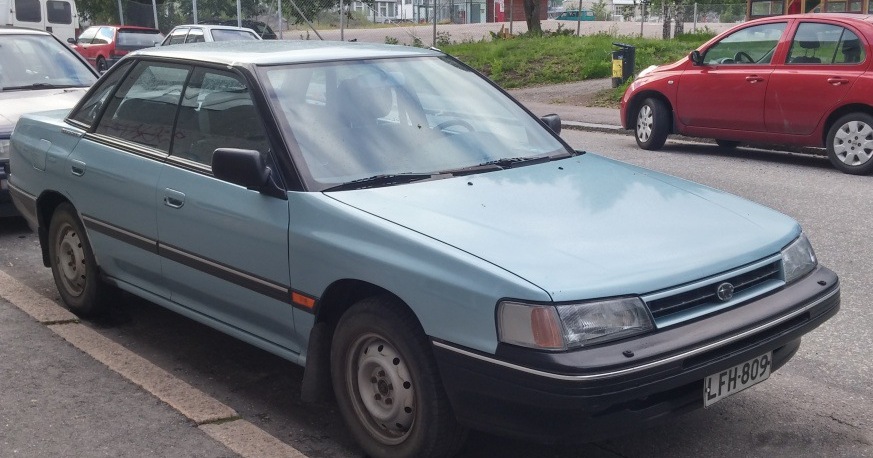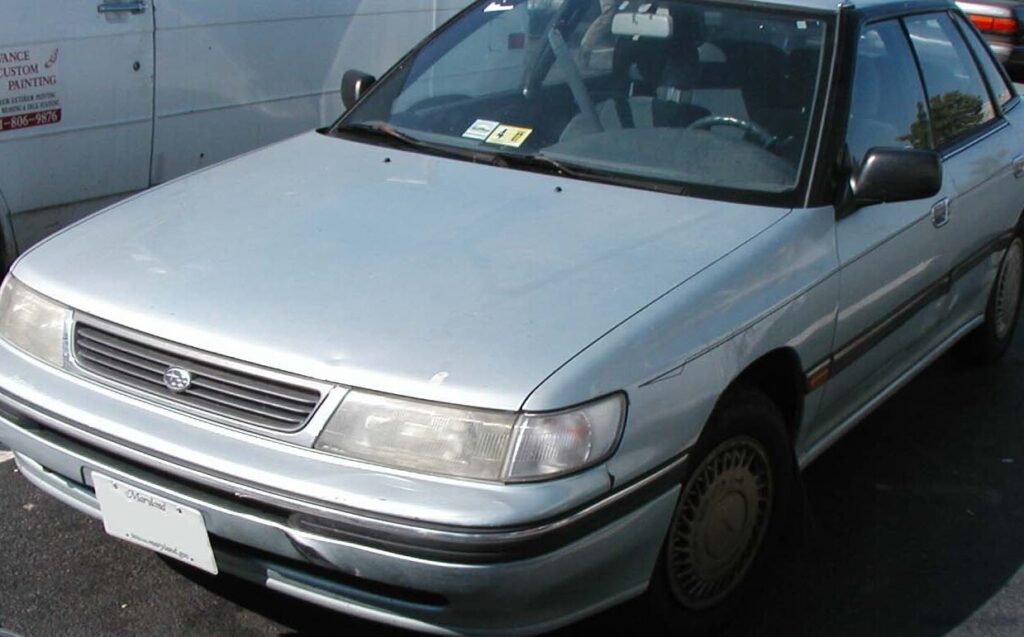
The Subaru Legacy I (BC, facelift released in 1991) 2000 Turbo, a variant of the first-generation Legacy, represented a significant step forward for the Japanese automaker in the mid-size sedan segment. Produced from 1991 to 1994, this model combined Subaru’s signature symmetrical all-wheel drive with a turbocharged 2.0-liter boxer engine, offering a compelling blend of performance and practicality. It was positioned as the performance flagship of the BC series, appealing to drivers seeking a more engaging driving experience than the naturally aspirated models. The facelift brought subtle styling updates and refinements to the original Legacy design, solidifying its presence in markets like the United States, Canada, Europe, and Australia.
Technical Specifications
| Brand | Subaru |
| Model | Legacy |
| Generation | Legacy I (BC, facelift 1991) |
| Type (Engine) | 2000 turbo (220 Hp) AWD |
| Start of production | 1991 |
| End of production | 1994 |
| Powertrain Architecture | Internal Combustion engine |
| Body type | Sedan |
| Seats | 5 |
| Doors | 4 |
| Fuel Type | Petrol (Gasoline) |
| Acceleration 0 – 100 km/h | 6.7 sec |
| Acceleration 0 – 62 mph | 6.7 sec |
| Acceleration 0 – 60 mph | 6.4 sec |
| Maximum speed | 230 km/h (142.92 mph) |
| Weight-to-power ratio | 6.3 kg/Hp, 160 Hp/tonne |
| Weight-to-torque ratio | 5.1 kg/Nm, 196.4 Nm/tonne |
| Power | 220 Hp @ 6400 rpm |
| Power per litre | 110.3 Hp/l |
| Torque | 270 Nm @ 4000 rpm (199.14 lb.-ft. @ 4000 rpm) |
| Engine layout | Front, Longitudinal |
| Engine Model/Code | EJ20G |
| Engine displacement | 1994 cm3 (121.68 cu. in.) |
| Number of cylinders | 4 |
| Engine configuration | Boxer |
| Cylinder Bore | 92 mm (3.62 in.) |
| Piston Stroke | 75 mm (2.95 in.) |
| Compression ratio | 8.5:1 |
| Number of valves per cylinder | 4 |
| Fuel injection system | Multi-port manifold injection |
| Engine aspiration | Turbocharger |
| Valvetrain | DOHC |
| Engine oil capacity | 4.5 l (4.76 US qt | 3.96 UK qt) |
| Coolant | 6.1 l (6.45 US qt | 5.37 UK qt) |
| Kerb Weight | 1375 kg (3031.36 lbs) |
| Max. weight | 1870 kg (4122.64 lbs) |
| Max load | 495 kg (1091.29 lbs) |
| Trunk (boot) space – minimum | 405 l (14.3 cu. ft.) |
| Trunk (boot) space – maximum | 630 l (22.25 cu. ft.) |
| Fuel tank capacity | 60 l (15.85 US gal | 13.2 UK gal) |
| Max. roof load | 80 kg (176.37 lbs) |
| Permitted trailer load with brakes (12%) | 1000 kg (2204.62 lbs) |
| Permitted trailer load without brakes | 500 kg (1102.31 lbs) |
| Permitted towbar download | 75 kg (165.35 lbs) |
| Length | 4545 mm (178.94 in.) |
| Width | 1690 mm (66.54 in.) |
| Height | 1385 mm (54.53 in.) |
| Wheelbase | 2580 mm (101.57 in.) |
| Front track | 1465 mm (57.68 in.) |
| Rear (Back) track | 1455 mm (57.28 in.) |
| Ride height (ground clearance) | 170 mm (6.69 in.) |
| Minimum turning circle | 10.1 m (33.14 ft.) |
| Drive wheel | All wheel drive (4×4) |
| Number of gears and type of gearbox | 5 gears, manual transmission |
| Front suspension | Wishbone |
| Rear suspension | Several levers and rods |
| Front brakes | Ventilated discs |
| Rear brakes | Disc |
| Assisting systems | ABS (Anti-lock braking system) |
| Steering type | Steering rack and pinion |
| Power steering | Hydraulic Steering |
| Tires size | 205/60 R15 |
| Wheel rims size | 16 |
Powertrain & Engine Architecture
The heart of the Legacy 2000 Turbo was the EJ20G engine, a 1994cc, horizontally-opposed (boxer) four-cylinder. This engine was a key component of Subaru’s engineering philosophy, offering a low center of gravity for improved handling. The EJ20G featured a single overhead camshaft (SOHC) design per cylinder bank, operating four valves per cylinder. A Mitsubishi TD05 turbocharger, along with an intercooler, boosted power output to 220 horsepower at 6400 rpm and 270 Nm (199 lb-ft) of torque at 4000 rpm. Fuel delivery was managed by a multi-port fuel injection system. The engine was longitudinally mounted, driving all four wheels through a five-speed manual transmission. This configuration was crucial for Subaru’s all-wheel-drive system, providing optimal weight distribution and traction.
Driving Characteristics
The Legacy 2000 Turbo offered a noticeably more spirited driving experience compared to the base models. The turbocharger provided a surge of power in the mid-range, making overtaking and highway merging effortless. While not a dedicated sports sedan, the combination of all-wheel drive and the turbocharged engine delivered confident handling and impressive acceleration – 0 to 60 mph in approximately 6.4 seconds. The five-speed manual transmission allowed for precise control, although the turbo lag was noticeable at lower engine speeds. Compared to the naturally aspirated 2.2-liter engine available in other Legacy trims, the 2000 Turbo provided a significant performance upgrade, but at the cost of slightly reduced fuel economy.
Equipment & Trim Levels
The 2000 Turbo trim typically included features such as power windows, power locks, and a basic audio system. Interior upholstery was generally cloth, although leather options were sometimes available. Air conditioning was standard. The dashboard layout was functional and straightforward, prioritizing usability over luxury. Optional extras included a sunroof, upgraded audio systems, and alloy wheels. The overall interior ambiance was comfortable but not overly opulent, reflecting the car’s positioning as a practical and performance-oriented sedan.
Chassis & Braking
The Legacy 2000 Turbo utilized a MacPherson strut front suspension and a multi-link rear suspension, providing a good balance between ride comfort and handling. Ventilated disc brakes were fitted to the front wheels, while solid discs were used at the rear. Anti-lock brakes (ABS) were standard, enhancing safety and control. The chassis was reinforced compared to the base models to handle the increased power output of the turbocharged engine. The all-wheel-drive system employed a viscous coupling center differential, automatically distributing torque between the front and rear axles as needed.
Market Reception & Comparison
The Legacy 2000 Turbo was generally well-received by automotive critics, who praised its performance, handling, and all-wheel-drive system. It was often compared to other turbocharged sedans of the era, such as the Mitsubishi Galant VR-4 and the Mazda 626 Turbo. While the Legacy offered a more practical and affordable alternative to some of its rivals, it sometimes lacked the refinement and luxury features found in more expensive European sedans. Fuel economy was a concern for some reviewers, as the turbocharged engine consumed more fuel than the naturally aspirated options. However, the overall value proposition of the Legacy 2000 Turbo – combining performance, practicality, and all-weather capability – made it a popular choice among enthusiasts.
Legacy
The EJ20G engine, while robust, is known to require diligent maintenance, particularly regarding oil changes and turbocharger health. The turbocharger itself is a potential point of failure, and finding replacement parts can be challenging today. The all-wheel-drive system, while effective, also requires periodic maintenance to ensure proper operation. Despite these potential issues, the Legacy 2000 Turbo remains a sought-after vehicle among Subaru enthusiasts and collectors. Well-maintained examples command a premium in the used car market, appreciated for their rarity, performance, and historical significance as a pioneering all-wheel-drive sedan. The BC chassis Legacy, and the EJ20G engine, laid the groundwork for Subaru’s continued success in the performance car segment.