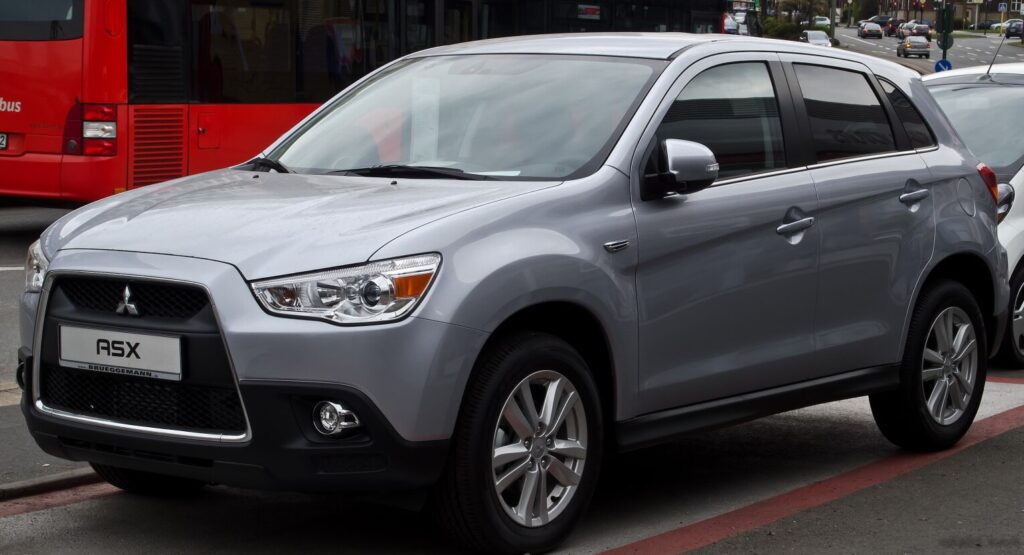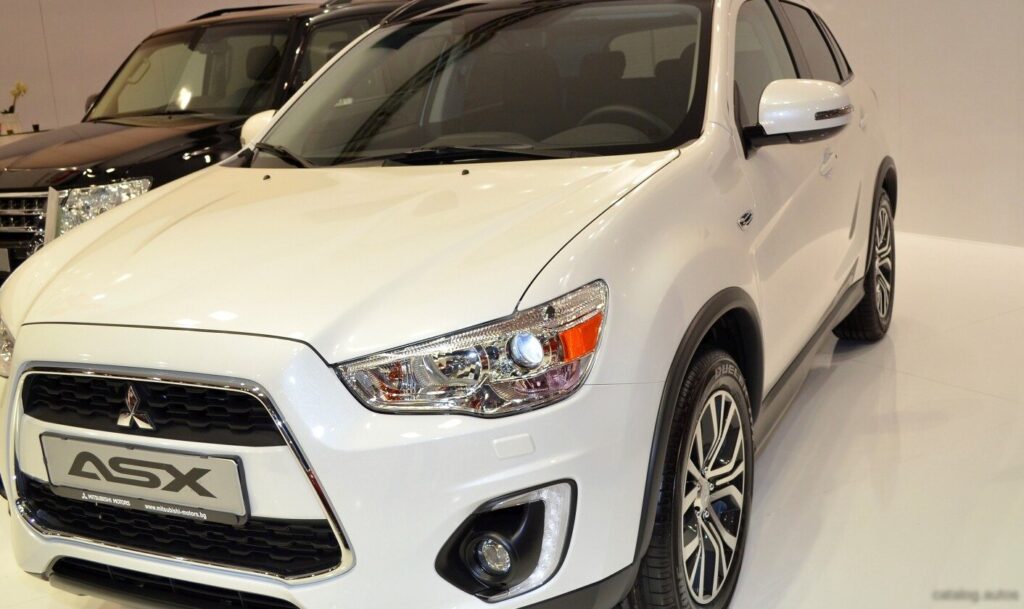
The Mitsubishi ASX I (facelift 2012) 2.0, a compact crossover SUV produced between 2012 and 2016, represented a significant refresh of Mitsubishi’s entry into the increasingly popular C-segment crossover market. Positioned as a mid-range offering within the ASX lineup, the 2.0-liter variant aimed to balance affordability with a reasonable level of performance and features. This facelift brought styling updates, improved interior materials, and refinements to the suspension, building upon the foundation of the original ASX launched in 2010, which itself was based on the shared global platform also underpinning the Peugeot 4008 and Citroën C4 Aircross. The ASX, marketed globally under various names, was particularly important for Mitsubishi in Europe and Asia, offering a practical and relatively affordable alternative to more established competitors.
Technical Specifications
| Brand | Mitsubishi |
| Model | ASX |
| Generation | ASX I (facelift 2012) |
| Type (Engine) | 2.0 (150 Hp) |
| Start of production | 2012 |
| End of production | 2016 |
| Powertrain Architecture | Internal Combustion engine |
| Body type | SUV, Crossover |
| Seats | 5 |
| Doors | 5 |
| Fuel consumption (urban) | 10.1 l/100 km (23.3 US mpg, 28 UK mpg, 9.9 km/l) |
| Fuel consumption (extra urban) | 6.3 l/100 km (37.3 US mpg, 44.8 UK mpg, 15.9 km/l) |
| Fuel consumption (combined) | 7.7 l/100 km (30.5 US mpg, 36.7 UK mpg, 13 km/l) |
| CO2 emissions | 181 g/km |
| Fuel Type | Petrol (Gasoline) |
| Maximum speed | 194 km/h (120.55 mph) |
| Weight-to-power ratio | 9.1 kg/Hp, 110.3 Hp/tonne |
| Weight-to-torque ratio | 6.9 kg/Nm, 144.9 Nm/tonne |
| Power | 150 Hp @ 6000 rpm |
| Power per litre | 75.1 Hp/l |
| Torque | 197 Nm @ 4200 rpm (145.3 lb.-ft. @ 4200 rpm) |
| Engine layout | Front, Transverse |
| Engine Model/Code | 4B11 |
| Engine displacement | 1998 cm3 (121.93 cu. in.) |
| Number of cylinders | 4 |
| Engine configuration | Inline |
| Cylinder Bore | 86 mm (3.39 in.) |
| Piston Stroke | 86 mm (3.39 in.) |
| Compression ratio | 10:1 |
| Number of valves per cylinder | 4 |
| Fuel injection system | Multi-port manifold injection |
| Engine aspiration | Naturally aspirated engine |
| Valvetrain | DOHC |
| Engine oil capacity | 4.3 l (4.54 US qt, 3.78 UK qt) |
| Coolant | 7.5 l (7.93 US qt, 6.6 UK qt) |
| Kerb Weight | 1360 kg (2998.29 lbs.) |
| Max. weight | 1970 kg (4343.11 lbs.) |
| Max load | 610 kg (1344.82 lbs.) |
| Trunk (boot) space – minimum | 384 l (13.56 cu. ft.) |
| Trunk (boot) space – maximum | 1219 l (43.05 cu. ft.) |
| Fuel tank capacity | 60 l (15.85 US gal, 13.2 UK gal) |
| Max. roof load | 80 kg (176.37 lbs.) |
| Permitted trailer load with brakes (12%) | 1300 kg (2866.01 lbs.) |
| Permitted trailer load without brakes | 725 kg (1598.35 lbs.) |
| Permitted towbar download | 65 kg (143.3 lbs.) |
| Length | 4295 mm (169.09 in.) |
| Width | 1770 mm (69.69 in.) |
| Height | 1625 mm (63.98 in.) |
| Wheelbase | 2670 mm (105.12 in.) |
| Front track | 1525 mm (60.04 in.) |
| Rear (Back) track | 1525 mm (60.04 in.) |
| Front overhang | 870 mm (34.25 in.) |
| Rear overhang | 755 mm (29.72 in.) |
| Ride height (ground clearance) | 195 mm (7.68 in.) |
| Drivetrain Architecture | The Internal combustion engine (ICE) drives the front wheels of the vehicle. |
| Drive wheel | Front wheel drive |
| Number of gears and type of gearbox | 5 gears, manual transmission |
| Front suspension | Independent, type McPherson with coil spring and anti-roll bar |
| Rear suspension | Independent multi-link spring suspension with stabilizer |
| Front brakes | Ventilated discs |
| Rear brakes | Disc |
| Assisting systems | ABS (Anti-lock braking system) |
| Steering type | Steering rack and pinion |
| Power steering | Electric Steering |
| Tires size | 215/65 R16; 215/60 R17 |
| Wheel rims size | 6.5J x 16; 6.5J x 17 |
Powertrain & Engine Architecture
The 2012-2016 Mitsubishi ASX 2.0 utilized the 4B11 engine, a 1.998-liter inline-four cylinder gasoline engine. This engine is a naturally aspirated powerplant featuring a double overhead camshaft (DOHC) valvetrain with four valves per cylinder. It employed multi-point fuel injection, delivering fuel directly into the intake ports. The 4B11 is known for its relatively simple design and robust construction. The engine produced 150 horsepower at 6000 rpm and 197 Nm (145.3 lb-ft) of torque at 4200 rpm. The engine’s compression ratio was 10:1. The ASX 2.0 was typically paired with a five-speed manual transmission, although a continuously variable transmission (CVT) was also offered in some markets. The CVT aimed to improve fuel efficiency and provide smoother acceleration, but the manual transmission remained popular for drivers seeking more direct control.
Driving Characteristics
The 2.0-liter engine in the ASX provided adequate, but not exceptional, performance. Acceleration was reasonable for everyday driving, but the ASX wasn’t particularly quick. The five-speed manual transmission offered a decent spread of gears, allowing the engine to operate efficiently at highway speeds. The CVT, when equipped, prioritized fuel economy over outright performance, sometimes exhibiting a “rubber band” feel during acceleration. Compared to the lower-powered 1.6-liter engine option, the 2.0-liter offered a noticeable improvement in responsiveness, particularly when fully loaded or tackling inclines. However, it didn’t match the performance of the higher-end variants available in some markets, such as those with more powerful turbocharged engines. The ASX’s front-wheel-drive configuration contributed to predictable handling, but it lacked the all-weather capability of all-wheel-drive models.
Equipment & Trim Levels
The ASX 2.0 typically came equipped with a reasonable level of standard features. Base models included air conditioning, power windows and locks, a basic audio system, and ABS brakes. Higher trim levels added features such as alloy wheels, a touchscreen infotainment system, rear parking sensors, and climate control. Interior upholstery was typically cloth, with leather options available on higher-spec models. Optional extras included a panoramic sunroof, navigation system, and upgraded audio systems. The overall interior design was functional and practical, though not particularly luxurious.
Chassis & Braking
The ASX I utilized a McPherson strut front suspension and a multi-link rear suspension. This setup provided a comfortable ride quality, absorbing bumps and imperfections in the road reasonably well. Stabilizer bars were fitted to both the front and rear axles to reduce body roll during cornering. Braking duties were handled by ventilated discs at the front and solid discs at the rear. ABS (Anti-lock Braking System) was standard, enhancing safety and control during emergency braking situations. The ASX’s chassis was designed to provide a balance between comfort and handling, prioritizing ride quality over sporty dynamics.
Market Reception & Comparison
The Mitsubishi ASX 2.0 was generally well-received by critics as a practical and affordable crossover SUV. It was praised for its comfortable ride, spacious interior, and reasonable fuel economy. However, some reviewers criticized its somewhat uninspired styling and lack of engaging driving dynamics. Compared to competitors like the Nissan Qashqai and Kia Sportage, the ASX offered a competitive price point but lacked the brand recognition and refinement of some rivals. Fuel economy figures of around 7.7 l/100 km (30.5 US mpg) were considered average for its class. Reliability was generally good, with few major issues reported.
Legacy
The Mitsubishi ASX I (facelift 2012) 2.0 remains a relatively common sight on used car markets. The 4B11 engine is known for its durability and relatively low maintenance costs, making it a reliable choice for budget-conscious buyers. While not a particularly exciting vehicle, the ASX 2.0 offered a practical and affordable transportation solution for families and individuals seeking a compact crossover SUV. Its simple mechanical design and readily available parts contribute to its continued appeal in the used car market. The ASX helped establish Mitsubishi as a player in the competitive crossover segment, paving the way for future models.