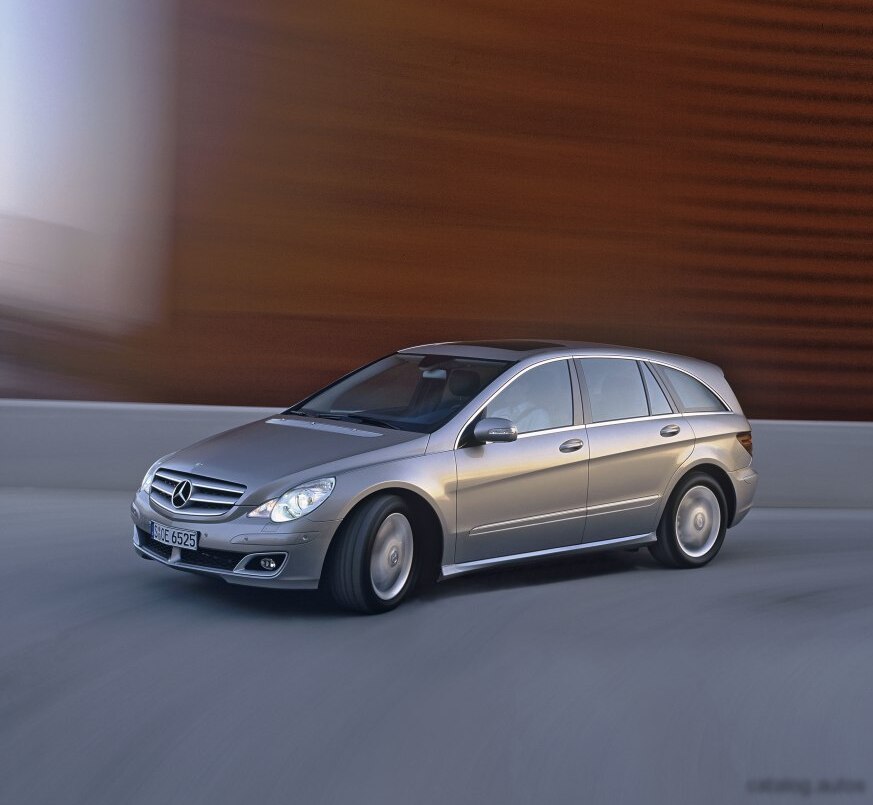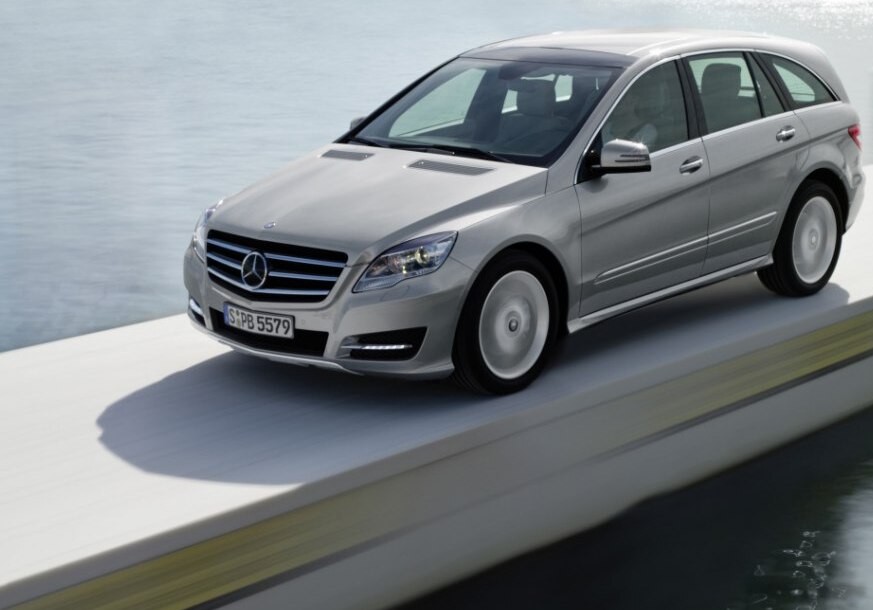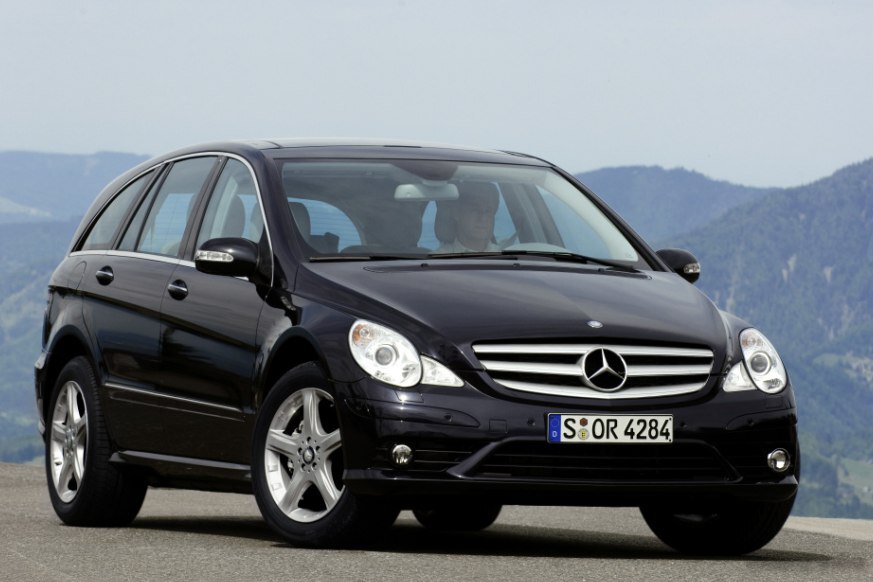
The Mercedes-Benz R-Class (W251) R 350 V6, produced from 2007 to 2010, represented a unique offering in the luxury vehicle segment. Positioned as a spacious, six or seven-seat vehicle, the R-Class aimed to blend the practicality of a minivan with the driving experience and prestige associated with the Mercedes-Benz brand. The R 350 V6 variant, equipped with the M272 engine and the 7G-TRONIC automatic transmission, served as a mid-range option within the R-Class lineup, offering a balance between performance, fuel economy, and luxury features. It was primarily marketed towards families seeking a versatile and comfortable vehicle for long journeys and everyday use, particularly in markets where larger SUVs and minivans were popular.
Technical Specifications
| Brand | Mercedes-Benz |
| Model | R-class |
| Generation | R-class (W251) |
| Type (Engine) | R 350 V6 (272 Hp) G-TRONIC |
| Start of production | 2007 |
| End of production | 2010 |
| Powertrain Architecture | Internal Combustion engine |
| Body type | Station wagon (estate) |
| Seats | 5 |
| Doors | 5 |
| Fuel consumption (urban) | 15.4-15.6 l/100 km (15.3 – 15.1 US mpg, 18.3 – 18.1 UK mpg, 6.5 – 6.4 km/l) |
| Fuel consumption (extra urban) | 8.6-8.8 l/100 km (27.4 – 26.7 US mpg, 32.8 – 32.1 UK mpg, 11.6 – 11.4 km/l) |
| Fuel consumption (combined) | 11.1-11.3 l/100 km (21.2 – 20.8 US mpg, 25.4 – 25 UK mpg, 9 – 8.8 km/l) |
| CO2 emissions | 265 g/km |
| Fuel Type | Petrol (Gasoline) |
| Acceleration 0 – 100 km/h | 8.1 sec |
| Acceleration 0 – 62 mph | 8.1 sec |
| Acceleration 0 – 60 mph | 7.7 sec |
| Maximum speed | 234 km/h (145.4 mph) |
| Emission standard | Euro 5 |
| Weight-to-power ratio | 7.8 kg/Hp, 127.7 Hp/tonne |
| Weight-to-torque ratio | 6.1 kg/Nm, 164.3 Nm/tonne |
| Power | 272 Hp @ 6000 rpm |
| Power per litre | 77.8 Hp/l |
| Torque | 350 Nm @ 2400-5000 rpm (258.15 lb.-ft. @ 2400-5000 rpm) |
| Engine layout | Front, Longitudinal |
| Engine Model/Code | M 272.967 |
| Engine displacement | 3498 cm3 (213.46 cu. in.) |
| Number of cylinders | 6 |
| Engine configuration | V-engine |
| Compression ratio | 10.7:1 |
| Fuel injection system | Multi-port manifold injection |
| Engine aspiration | Naturally aspirated engine |
| Engine oil capacity | 8 l (8.45 US qt | 7.04 UK qt) |
| Coolant capacity | 10.1 l (10.67 US qt | 8.89 UK qt) |
| Kerb Weight | 2130 kg (4695.85 lbs.) |
| Max. weight | 2790 kg (6150.9 lbs.) |
| Max load | 660 kg (1455.05 lbs.) |
| Trunk (boot) space – minimum | 550 l (19.42 cu. ft.) |
| Trunk (boot) space – maximum | 1950 l (68.86 cu. ft.) |
| Fuel tank capacity | 80 l (21.13 US gal | 17.6 UK gal) |
| Permitted trailer load with brakes (12%) | 2100 kg (4629.71 lbs.) |
| Permitted trailer load without brakes | 750 kg (1653.47 lbs.) |
| Length | 4922 mm (193.78 in.) |
| Width | 1922 mm (75.67 in.) |
| Height | 1674 mm (65.91 in.) |
| Wheelbase | 2980 mm (117.32 in.) |
| Front track | 1661 mm (65.39 in.) |
| Rear (Back) track | 1651 mm (65 in.) |
| Minimum turning circle | 11.8 m (38.71 ft.) |
| Drivetrain Architecture | Rear wheel drive |
| Drive wheel | Rear wheel drive |
| Number of gears and type of gearbox | 7 gears, automatic transmission G-TRONIC |
| Front suspension | Double wishbone |
| Rear suspension | Independent multi-link spring suspension with stabilizer |
| Front brakes | Ventilated discs |
| Rear brakes | Disc |
| Assisting systems | ABS (Anti-lock braking system) |
| Steering type | Steering rack and pinion |
| Power steering | Hydraulic Steering |
| Tires size | 235/65 R17 |
| Wheel rims size | 17 |
Powertrain & Engine Architecture
The R 350 V6 was powered by the M272.967 3.5-liter naturally aspirated V6 engine. This engine, a staple in many Mercedes-Benz vehicles of the era, featured a 60-degree V-angle and utilized a three-valve-per-cylinder design (two intake, one exhaust). The engine employed multi-port fuel injection and a relatively high 10.7:1 compression ratio to maximize efficiency and power output. The M272 engine was known for its smooth operation and refined character. Paired with the engine was the 7G-TRONIC seven-speed automatic transmission. This transmission, a significant advancement over previous Mercedes-Benz automatics, offered smoother shifts, improved fuel economy, and a wider range of gear ratios. The 7G-TRONIC featured a torque converter lock-up clutch that engaged in multiple gears, further enhancing efficiency. The drivetrain was configured for rear-wheel drive, providing a more traditional driving experience compared to the available 4MATIC all-wheel-drive system.
Driving Characteristics
The R 350 V6 offered a comfortable and composed driving experience. With 272 horsepower and 350 Nm (258 lb-ft) of torque, acceleration was adequate for most situations, with a 0-60 mph time of around 7.7 seconds. However, it wasn’t a particularly sporty vehicle. The 7G-TRONIC transmission contributed to smooth gear changes, but could sometimes feel hesitant during quick downshifts. Compared to the R 500 V8, the R 350 offered less outright performance, but it provided better fuel economy. Against the diesel-powered R 320 CDI, the R 350 traded the diesel’s superior torque and fuel efficiency for a smoother, quieter engine and potentially lower maintenance costs in the long run. The R 350’s gear ratios were tuned for comfortable cruising, making it well-suited for long highway journeys.
Equipment & Trim Levels
The R 350 V6 typically came standard with a generous array of features, including leather upholstery, power-adjustable front seats, dual-zone automatic climate control, a premium audio system, and a sunroof. Optional extras included a rear-seat entertainment system, navigation, parking sensors, and upgraded leather options. Trim levels varied depending on the market, but generally offered increasing levels of luxury and technology. The base trim provided a comfortable and well-equipped interior, while higher trims added features like wood trim, more advanced audio systems, and additional driver-assistance technologies. The R-Class was designed to be a luxurious and practical vehicle, and the R 350 V6 offered a good balance of both.
Chassis & Braking
The R-Class (W251) utilized a unibody construction, providing a good balance of rigidity and weight. The front suspension featured a double wishbone design, while the rear suspension employed an independent multi-link setup with a stabilizer bar. This suspension configuration aimed to provide a comfortable ride and predictable handling. The R 350 V6 was equipped with ventilated disc brakes at the front and solid discs at the rear. Anti-lock braking system (ABS) was standard, enhancing braking performance and stability. The steering system was a rack-and-pinion setup with hydraulic power assistance, providing precise and responsive steering feel.
Market Reception & Comparison
The Mercedes-Benz R-Class was a polarizing vehicle upon its release. Critics praised its spacious interior, comfortable ride, and luxurious features, but many questioned its unconventional styling and its positioning within the Mercedes-Benz lineup. The R 350 V6 was generally well-received as a sensible and practical option, offering a good balance of performance and fuel economy. However, it often played second fiddle to the more powerful R 500 and the fuel-efficient R 320 CDI in terms of critical acclaim. Fuel economy for the R 350 V6 was reasonable for its size and class, averaging around 21 mpg combined. Reliability was generally good, although some owners reported issues with the electronic systems and the air suspension (if equipped).
Legacy
The Mercedes-Benz R-Class, while not a commercial success in the same vein as other Mercedes-Benz models, remains a unique and interesting vehicle. The R 350 V6 powertrain, while not without its quirks, proved to be relatively reliable and durable. On the used car market, the R 350 V6 represents a relatively affordable entry point into the Mercedes-Benz luxury segment. Well-maintained examples can still provide years of comfortable and reliable service, making them an attractive option for families seeking a spacious and versatile vehicle. The R-Class paved the way for the later GLS-Class, demonstrating Mercedes-Benz’s willingness to experiment with new vehicle concepts and cater to niche markets.