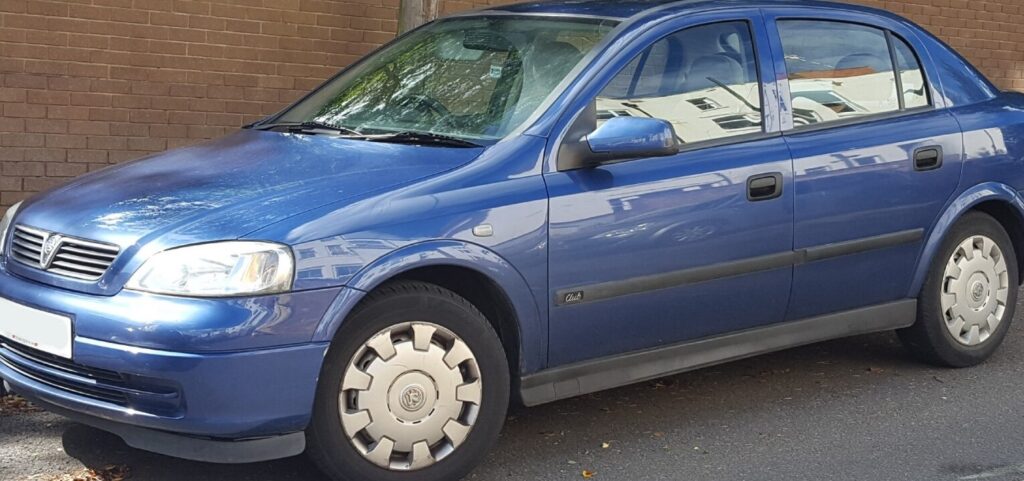
The Vauxhall Astra Mk IV, produced from 1998 to 2004, represented a significant step forward for the British marque, building upon the success of its predecessor. Within the Mk IV range, the 2.0 DTI 16V variant, introduced around 1999 and continuing through 2004, offered a diesel-powered option aimed at drivers prioritizing fuel economy and torque. This model occupied a mid-range position in the Astra lineup, slotting between the lower-powered petrol engines and the more expensive, higher-performance trims. It was available in both 3-door and 5-door hatchback body styles, catering to a broad range of buyers. The Astra Mk IV, and specifically this 2.0 DTI version, was a common sight on British and European roads, offering a practical and relatively affordable transportation solution.
Technical Specifications
| Brand | Vauxhall |
| Model | Astra |
| Generation | Astra Mk IV CC |
| Type (Engine) | 2.0 DTI 16V (101 Hp) |
| Start of production | 1999 |
| End of production | 2004 |
| Powertrain Architecture | Internal Combustion engine |
| Body type | Hatchback |
| Seats | 5 |
| Doors | 3-5 |
| Fuel consumption (urban) | 7.5 l/100 km (31.4 US mpg) |
| Fuel consumption (extra urban) | 4.6 l/100 km (51.1 US mpg) |
| Fuel consumption (combined) | 5.6 l/100 km (42 US mpg) |
| Fuel Type | Diesel |
| Acceleration 0 – 100 km/h | 12 sec |
| Acceleration 0 – 62 mph | 12 sec |
| Acceleration 0 – 60 mph | 11.4 sec |
| Maximum speed | 188 km/h (116.82 mph) |
| Weight-to-power ratio | 12.4 kg/Hp |
| Weight-to-torque ratio | 6.1 kg/Nm |
| Power | 101 Hp @ 4300 rpm |
| Torque | 205 Nm @ 1650 rpm (151.2 lb.-ft. @ 1650 rpm) |
| Engine layout | Front, Transverse |
| Engine Model/Code | Y20DTH |
| Engine displacement | 1995 cm3 (121.74 cu. in.) |
| Number of cylinders | 4 |
| Engine configuration | Inline |
| Cylinder Bore | 84 mm (3.31 in.) |
| Piston Stroke | 90 mm (3.54 in.) |
| Compression ratio | 18.5:1 |
| Number of valves per cylinder | 4 |
| Engine aspiration | Turbocharger |
| Engine oil capacity | 5.5 l (5.81 US qt | 4.84 UK qt) |
| Coolant capacity | 5.9 l (6.23 US qt | 5.19 UK qt) |
| Kerb Weight | 1250 kg (2755.78 lbs.) |
| Max. weight | 1770 kg (3902.18 lbs.) |
| Max load | 520 kg (1146.4 lbs.) |
| Trunk (boot) space – minimum | 370 l (13.07 cu. ft.) |
| Trunk (boot) space – maximum | 1180 l (41.67 cu. ft.) |
| Fuel tank capacity | 52 l (13.74 US gal | 11.44 UK gal) |
| Permitted trailer load with brakes (12%) | 1200 kg (2645.55 lbs.) |
| Permitted trailer load without brakes | 595 kg (1311.75 lbs.) |
| Length | 4110 mm (161.81 in.) |
| Width | 1710 mm (67.32 in.) |
| Width including mirrors | 1967 mm (77.44 in.) |
| Height | 1425 mm (56.1 in.) |
| Wheelbase | 2606 mm (102.6 in.) |
| Minimum turning circle | 10 m (32.81 ft.) |
| Drivetrain Architecture | Front wheel drive |
| Number of gears | 5 |
| Type of gearbox | Manual transmission |
| Front brakes | Ventilated discs |
| Rear brakes | Disc |
| Tires size | 195/60 R15 |
| Wheel rims size | 15 |
Powertrain & Engine Architecture
The heart of the Astra 2.0 DTI 16V is the Y20DTH engine, a 1995cc inline-four cylinder diesel. This engine is a direct injection diesel, utilizing a common rail system for precise fuel delivery. The ‘16V’ designation indicates the four valves per cylinder, enhancing breathing and contributing to improved power output. The Y20DTH engine benefits from a turbocharger with an intercooler, boosting power and torque. The engine’s fuel injection system is electronically controlled, optimizing combustion for efficiency and reduced emissions. The five-speed manual transmission was the standard offering, providing a balance between fuel economy and driver control. The transmission’s gear ratios were tuned to maximize the engine’s torque, providing strong acceleration in everyday driving situations.
Driving Characteristics
The 2.0 DTI 16V Astra offered a distinctly different driving experience compared to its petrol-powered siblings. While lacking the outright acceleration of the 1.8 or 2.0 litre petrol versions, it compensated with a significantly broader torque curve. This meant strong pulling power from low engine speeds, making it well-suited for overtaking and carrying loads. The five-speed manual transmission allowed drivers to keep the engine in its optimal power band. Compared to the higher-output petrol engines, the diesel felt less eager to rev, but provided a more relaxed and economical driving experience. The steering was light and precise, typical of Vauxhall/Opel vehicles of the era, and the suspension provided a comfortable ride, although it could feel slightly unsettled on rougher road surfaces.
Equipment & Trim Levels
The 2.0 DTI 16V Astra typically came equipped with a reasonable level of standard features. These included central locking, power steering, electric front windows, and an adjustable steering column. Interior upholstery was generally cloth, with a durable and practical finish. Higher trim levels, such as the ‘CD’ or ‘SE’ variants, added features like alloy wheels, air conditioning, a CD player, and upgraded interior trim. Optional extras included a sunroof, rear electric windows, and metallic paint. The dashboard layout was functional and straightforward, with clearly labelled controls.
Chassis & Braking
The Astra Mk IV utilized a MacPherson strut front suspension and a torsion beam rear suspension. This setup provided a good balance between ride comfort and handling. The 2.0 DTI models, due to their increased weight compared to the lower-spec petrol versions, often featured slightly stiffer springs and dampers to maintain stability. Braking was typically handled by ventilated discs on the front wheels and solid discs on the rear. Anti-lock Braking System (ABS) was often included as standard equipment, enhancing safety. The steering system was a rack and pinion setup, providing precise and responsive steering feel.
Market Reception & Comparison
The Astra 2.0 DTI 16V was generally well-received by automotive critics as a practical and economical choice. It was praised for its fuel efficiency and strong torque output, making it ideal for long-distance driving and carrying passengers or cargo. However, some reviewers noted that the engine could be somewhat noisy compared to petrol alternatives. Compared to the 1.8 litre petrol version, the 2.0 DTI offered significantly better fuel economy but slightly slower acceleration. Against other diesel rivals, such as the Volkswagen Golf TDI, the Astra offered a competitive package in terms of price and equipment.
Legacy
The Y20DTH engine, found in the Astra 2.0 DTI, proved to be a relatively reliable unit when properly maintained. Common issues included turbocharger failure and problems with the fuel injection system, but these were not widespread. Today, the Astra Mk IV 2.0 DTI can be found on the used car market at affordable prices. It remains a popular choice for those seeking a practical and economical vehicle. While not a performance car, it offers a comfortable and reliable driving experience, and its strong torque output makes it well-suited for everyday use. Parts availability is generally good, and the relatively simple mechanical design makes it accessible for DIY maintenance.