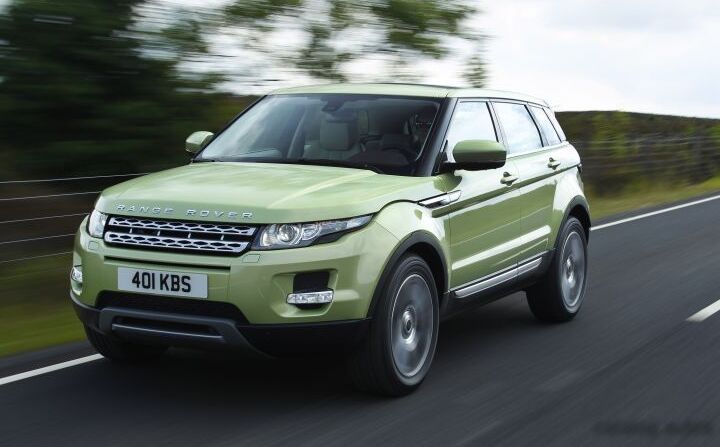
The Land Rover Range Rover Evoque I 2.0 Si4 (240 Hp) AWD Automatic represents a significant entry in the luxury compact SUV segment, produced between 2012 and 2015. Positioned as a mid-to-high trim level within the first generation Evoque (L538) lineup, it aimed to blend Range Rover’s iconic design language with a more accessible price point and a focus on modern technology. Built on the Land Rover-Ford developed 240 platform, shared with the Ford Kuga/Escape, the Evoque sought to attract a younger demographic to the brand while maintaining the off-road capability expected of a Range Rover. This particular variant, with its 2.0-liter turbocharged engine and six-speed automatic transmission, was a popular choice for buyers seeking a balance of performance, refinement, and all-weather capability.
Technical Specifications
| Brand | Land Rover |
| Model | Range Rover Evoque |
| Generation | Range Rover Evoque I |
| Type (Engine) | 2.0 Si4 (240 Hp) AWD Automatic |
| Start of production | 2012 |
| End of production | 2015 |
| Powertrain Architecture | Internal Combustion engine |
| Body type | SUV |
| Seats | 5 |
| Doors | 5 |
| Fuel consumption (urban) | 11.9 l/100 km (19.8 US mpg) |
| Fuel consumption (extra urban) | 6.9 l/100 km (34.1 US mpg) |
| Fuel consumption (combined) | 8.7 l/100 km (27 US mpg) |
| CO2 emissions | 199 g/km |
| Fuel Type | Petrol (Gasoline) |
| Acceleration 0 – 100 km/h | 7.6 sec |
| Acceleration 0 – 62 mph | 7.6 sec |
| Acceleration 0 – 60 mph | 7.2 sec |
| Maximum speed | 217 km/h (134.84 mph) |
| Emission standard | Euro 5 |
| Weight-to-power ratio | 7 kg/Hp |
| Weight-to-torque ratio | 4.9 kg/Nm |
| Power | 240 Hp |
| Torque | 340 Nm (250.77 lb.-ft.) |
| Engine layout | Front, Transverse |
| Engine Model/Code | EcoBoost / 204PT |
| Engine displacement | 1999 cm3 (121.99 cu. in.) |
| Number of cylinders | 4 |
| Engine configuration | Inline |
| Cylinder Bore | 87.5 mm (3.44 in.) |
| Piston Stroke | 83.1 mm (3.27 in.) |
| Compression ratio | 10:1 |
| Number of valves per cylinder | 4 |
| Fuel injection system | Direct injection |
| Engine aspiration | Turbocharger, Intercooler |
| Engine oil capacity | 5.6 l (5.92 US qt | 4.93 UK qt) |
| Coolant | 8.4 l (8.88 US qt | 7.39 UK qt) |
| Kerb Weight | 1670 kg (3681.72 lbs.) |
| Fuel tank capacity | 70 l (18.49 US gal | 15.4 UK gal) |
| Length | 4355 mm (171.46 in.) |
| Width | 1965 mm (77.36 in.) |
| Height | 1635 mm (64.37 in.) |
| Wheelbase | 2660 mm (104.72 in.) |
| Drag coefficient (Cd) | 0.35 |
| Minimum turning circle | 11.3 m (37.07 ft.) |
| Drive wheel | All wheel drive (4×4) |
| Number of gears | 6 |
| Gearbox type | automatic transmission |
| Front suspension | Independent, type McPherson with coil spring and anti-roll bar |
| Rear suspension | Independent multi-link suspension |
| Front brakes | Ventilated discs |
| Rear brakes | Disc |
| Steering type | Steering rack and pinion |
| Power steering | Electric Steering |
Powertrain & Engine Architecture
At the heart of the Evoque 2.0 Si4 lies the Ford EcoBoost 2.0-liter inline-four cylinder engine, designated as the 204PT engine code. This engine, part of Ford’s EcoBoost family, utilizes direct fuel injection, a single scroll turbocharger, and variable valve timing on both intake and exhaust camshafts. The engine produces 240 horsepower and 340 Nm (250 lb-ft) of torque. The direct injection system allows for precise fuel delivery, enhancing efficiency and power output. The six-speed automatic transmission, sourced from Aisin, was specifically tuned for the Evoque to provide smooth shifts and optimized gear ratios for both on-road comfort and off-road performance. While a six-speed manual was available in some markets, the automatic was the more common choice in the US and many other regions.
Driving Characteristics
The 2.0 Si4 Automatic Evoque offered a comfortable and capable driving experience. Acceleration from 0-60 mph took approximately 7.2 seconds, making it reasonably quick for its class. The automatic transmission, while generally smooth, could sometimes feel hesitant during quick downshifts. The all-wheel-drive system, featuring Terrain Response technology, allowed drivers to select different driving modes (General, Grass/Gravel/Snow, Mud/Ruts, Sand) to optimize traction for various conditions. Compared to the 2.2-liter diesel variants, the 2.0 Si4 offered more immediate power delivery but consumed more fuel. The manual transmission versions of the 2.0 Si4 provided a more engaging driving experience, but the automatic was favored by those prioritizing convenience.
Equipment & Trim Levels
The 2.0 Si4 typically came well-equipped, even in base form. Standard features included leather upholstery, dual-zone climate control, a touchscreen infotainment system, and parking sensors. Higher trim levels, such as the Prestige, added features like premium audio systems (Meridian), panoramic sunroofs, and adaptive headlights. Optional extras included heated seats, navigation, and various cosmetic enhancements. Interior materials were generally of high quality, reflecting the Range Rover brand’s emphasis on luxury. The dashboard layout was modern and driver-focused, with intuitive controls.
Chassis & Braking
The Evoque’s chassis was designed to balance on-road comfort with off-road capability. It utilized an independent McPherson strut front suspension and an independent multi-link rear suspension. The steering was electrically assisted, providing a light and precise feel. Braking duties were handled by ventilated discs at the front and solid discs at the rear. Anti-lock brakes (ABS) and electronic stability control (ESC) were standard safety features. The suspension tuning was generally geared towards comfort, but it provided adequate control in spirited driving. The all-wheel-drive system contributed to enhanced stability and traction in adverse conditions.
Market Reception & Comparison
The Range Rover Evoque was widely praised for its stylish design and luxurious interior. The 2.0 Si4 Automatic variant received generally positive reviews, with critics noting its smooth ride and capable performance. However, some reviewers criticized its fuel economy, which was lower than that of the diesel models. Compared to competitors like the BMW X3 and Audi Q5, the Evoque offered a more distinctive design and a greater emphasis on off-road capability. The diesel variants were often favored by European buyers due to lower running costs, while the 2.0 Si4 appealed to those prioritizing performance and refinement.
Legacy
The first-generation Range Rover Evoque, including the 2.0 Si4 Automatic, proved to be a successful model for Land Rover, attracting a new customer base to the brand. The EcoBoost engine, while generally reliable, can be prone to timing chain wear if not properly maintained. Regular oil changes and adherence to the manufacturer’s service schedule are crucial for long-term reliability. On the used car market, the Evoque 2.0 Si4 holds its value reasonably well, particularly well-maintained examples with low mileage. It remains a popular choice for buyers seeking a stylish, capable, and relatively affordable luxury SUV.