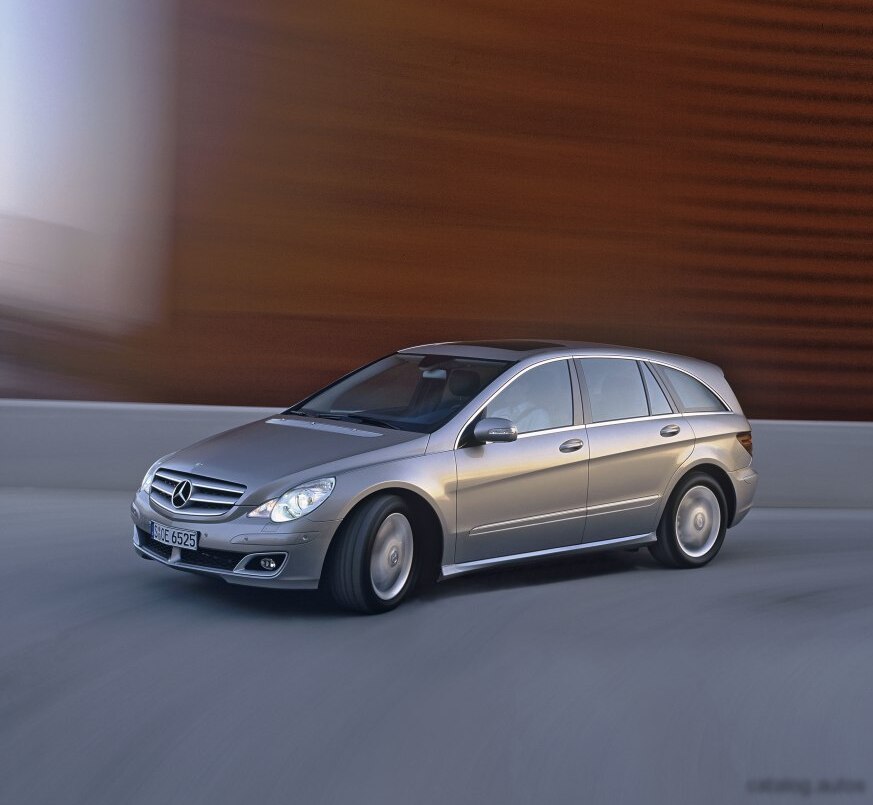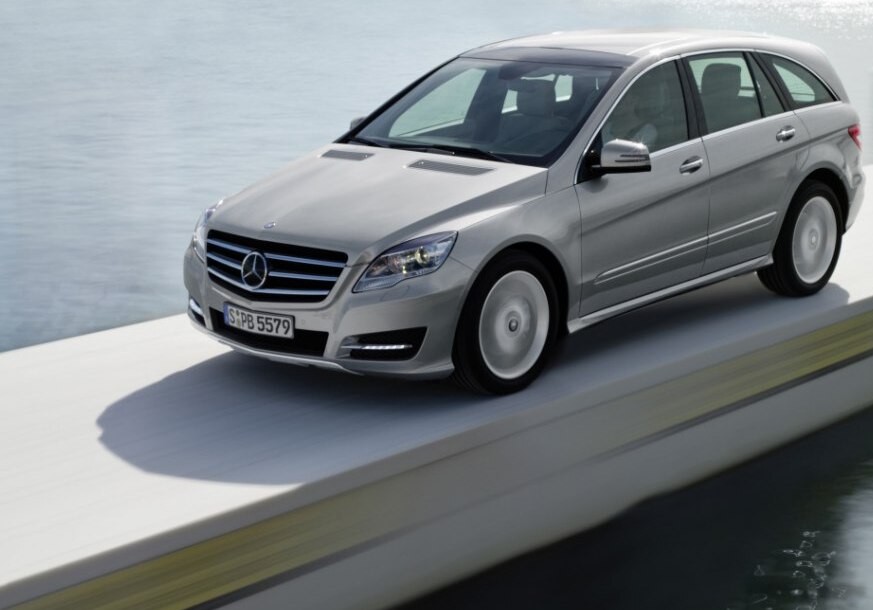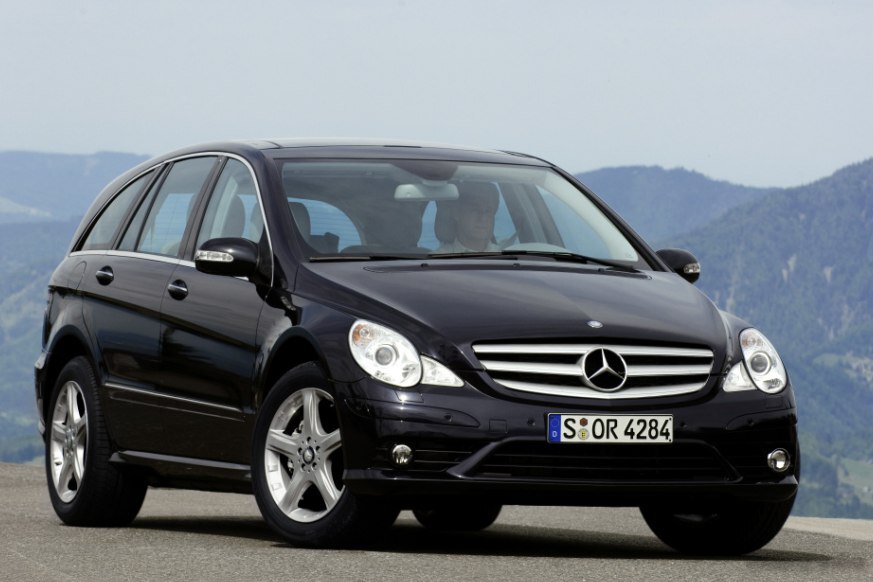
The Mercedes-Benz R-Class (W251) R 500 V8 4MATIC, produced from 2005 to 2007, represented a unique offering in the luxury vehicle segment. Positioned as a spacious, six-seat crossover, the R 500 aimed to blend the practicality of a minivan with the prestige and driving experience associated with the Mercedes-Benz brand. It was part of the first generation (W251) of the R-Class, a vehicle that attempted to carve out a new niche in the market, appealing to buyers seeking an alternative to traditional SUVs and minivans. The R 500 was the top-of-the-line model in the initial lineup, offering the most powerful engine option and standard all-wheel drive.
Technical Specifications
| Brand | Mercedes-Benz |
| Model | R-class |
| Generation | R-class (W251) |
| Type | R 500 V8 (306 Hp) 4MATIC 7G-TRONIC |
| Start of production | 2005 |
| End of production | 2007 |
| Powertrain Architecture | Internal Combustion engine |
| Body type | Station wagon (estate) |
| Seats | 6 |
| Doors | 5 |
| Fuel consumption (urban) | 18.6-19.5 l/100 km (12.6 – 12.1 US mpg, 15.2 – 14.5 UK mpg, 5.4 – 5.1 km/l) |
| Fuel consumption (extra urban) | 10.1-10.6 l/100 km (23.3 – 22.2 US mpg, 28 – 26.6 UK mpg, 9.9 – 9.4 km/l) |
| Fuel consumption (combined) | 13.3-13.9 l/100 km (17.7 – 16.9 US mpg, 21.2 – 20.3 UK mpg, 7.5 – 7.2 km/l) |
| CO2 emissions | 317-331 g/km |
| Fuel Type | Petrol (Gasoline) |
| Acceleration 0 – 100 km/h | 6.9 sec |
| Acceleration 0 – 62 mph | 6.9 sec |
| Acceleration 0 – 60 mph | 6.6 sec |
| Maximum speed | 245 km/h (152.24 mph) |
| Emission standard | Euro 4 |
| Weight-to-power ratio | 6.9 kg/Hp, 144.7 Hp/tonne |
| Weight-to-torque ratio | 4.6 kg/Nm, 217.5 Nm/tonne |
| Power | 306 Hp @ 5600 rpm |
| Torque | 460 Nm @ 2700-4750 rpm (339.28 lb.-ft. @ 2700-4750 rpm) |
| Engine layout | Front, Longitudinal |
| Engine Model/Code | M 113.971 |
| Engine displacement | 4966 cm3 (303.04 cu. in.) |
| Number of cylinders | 8 |
| Engine configuration | V-engine |
| Cylinder Bore | 97 mm (3.82 in.) |
| Piston Stroke | 84 mm (3.31 in.) |
| Compression ratio | 10:1 |
| Number of valves per cylinder | 3 |
| Fuel injection system | Multi-port manifold injection |
| Engine aspiration | Naturally aspirated engine |
| Valvetrain | SOHC |
| Engine oil capacity | 8.5 l (8.98 US qt | 7.48 UK qt) |
| Coolant capacity | 10.1 l (10.67 US qt | 8.89 UK qt) |
| Kerb Weight | 2115 kg (4662.78 lbs.) |
| Max. weight | 2865 kg (6316.24 lbs.) |
| Max load | 750 kg (1653.47 lbs.) |
| Trunk (boot) space – maximum | 1950 l (68.86 cu. ft.) |
| Fuel tank capacity | 80 l (21.13 US gal | 17.6 UK gal) |
| Max. roof load | 100 kg (220.46 lbs.) |
| Permitted trailer load with brakes (12%) | 2100 kg (4629.71 lbs.) |
| Permitted trailer load without brakes | 750 kg (1653.47 lbs.) |
| Length | 4922 mm (193.78 in.) |
| Width | 1922 mm (75.67 in.) |
| Width including mirrors | 2168 mm (85.35 in.) |
| Height | 1661 mm (65.39 in.) |
| Wheelbase | 2980 mm (117.32 in.) |
| Front track | 1665 mm (65.55 in.) |
| Rear track | 1658 mm (65.28 in.) |
| Front overhang | 922 mm (36.3 in.) |
| Rear overhang | 1020 mm (40.16 in.) |
| Minimum turning circle | 11.7 m (38.39 ft.) |
| Drivetrain Architecture | All wheel drive (4×4) |
| Number of gears | 7 |
| Gearbox type | Automatic transmission G-TRONIC |
| Front suspension | Double wishbone, Transverse stabilizer |
| Rear suspension | Independent multi-link suspension, Air suspension, Transverse stabilizer |
| Front brakes | Ventilated discs |
| Rear brakes | Ventilated discs |
Powertrain & Engine Architecture
The R 500 was powered by Mercedes-Benz’s M113.971 5.0-liter naturally aspirated V8 engine. This engine, a mainstay in many Mercedes-Benz models of the era, was known for its smooth power delivery and robust construction. It featured a single overhead camshaft (SOHC) design per cylinder bank, utilizing three valves per cylinder (two intake, one exhaust). Fuel delivery was handled by a multi-port fuel injection system. The engine produced 306 horsepower at 5600 rpm and 460 Nm (339 lb-ft) of torque between 2700 and 4750 rpm. The engine’s longitudinal mounting and all-wheel-drive system contributed to its balanced handling characteristics.
The R 500 was exclusively paired with Mercedes-Benz’s 7G-TRONIC seven-speed automatic transmission. This transmission was a significant advancement over previous automatic gearboxes, offering smoother shifts, improved fuel efficiency, and a wider range of gear ratios. The 7G-TRONIC allowed the engine to operate more efficiently at highway speeds and provided responsive acceleration when needed. The transmission was electronically controlled and featured a manual shift mode for drivers who preferred more control.
Driving Characteristics
The R 500 offered a refined and comfortable driving experience. The V8 engine provided ample power for effortless acceleration and highway cruising. While not a sports car, the R 500 could sprint from 0 to 60 mph in approximately 6.6 seconds. The 7G-TRONIC transmission contributed to smooth and seamless gear changes, enhancing the overall driving experience. The 4MATIC all-wheel-drive system provided excellent traction in various weather conditions. Compared to the R320 CDI (diesel) or the R350 (V6 gasoline) models, the R 500 prioritized performance over fuel economy. The V6 and diesel models offered better gas mileage but lacked the V8’s immediate power and responsiveness.
Equipment & Trim Levels
The R 500 came standard with a comprehensive list of features, befitting its position as the flagship model. These included leather upholstery, wood trim, a premium sound system, automatic climate control, power-adjustable front seats with memory function, and a sunroof. Optional extras included rear-seat entertainment systems, a navigation system, and upgraded wheels. The interior was designed to be luxurious and spacious, with seating for up to six passengers. The third-row seats were relatively comfortable for adults, making the R 500 a viable option for families.
Chassis & Braking
The R-Class featured a robust chassis designed to handle the vehicle’s weight and provide a comfortable ride. The front suspension utilized a double wishbone design with a transverse stabilizer bar, while the rear suspension employed an independent multi-link setup with air suspension and another transverse stabilizer. The air suspension system allowed the driver to adjust the ride height, providing increased ground clearance for off-road driving or a lower ride height for improved aerodynamics. The R 500 was equipped with ventilated disc brakes on all four wheels, providing ample stopping power. Anti-lock braking system (ABS) was standard.
Market Reception & Comparison
The Mercedes-Benz R-Class, and particularly the R 500, received mixed reviews from critics. While praised for its spacious interior, luxurious features, and comfortable ride, it was often criticized for its unconventional styling and high price tag. Compared to the R320 CDI and R350, the R 500 offered superior performance but suffered from significantly lower fuel economy. The R 500’s fuel consumption of 13.3-13.9 l/100 km (17.7-16.9 mpg) was considerably higher than the diesel and V6 models. Reliability reports were generally positive, although the complex air suspension system could be prone to issues over time.
Legacy
The Mercedes-Benz R-Class was discontinued after the 2007 model year due to slow sales. While it didn’t achieve mainstream success, the R-Class remains a unique and interesting vehicle. The M113 V8 engine, used in the R 500, is known for its durability and is generally considered a reliable powerplant. On the used car market, the R 500 can be found at relatively affordable prices, making it an attractive option for buyers seeking a spacious and luxurious crossover with a powerful V8 engine. However, potential buyers should be aware of the potential maintenance costs associated with the air suspension and other complex systems.