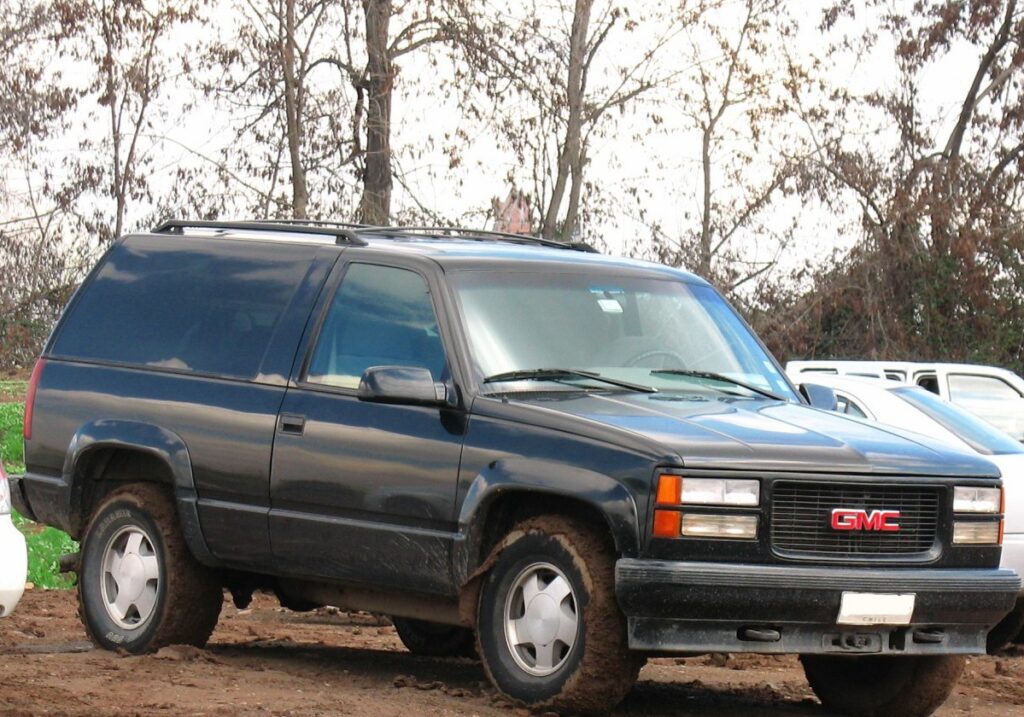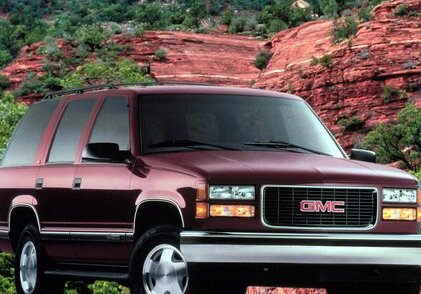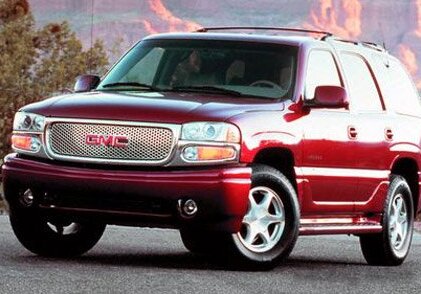
The GMC Yukon II, specifically the variant equipped with the 4.8-liter V8 engine producing 275 horsepower and paired with a four-speed automatic transmission and four-wheel drive, was a significant offering in the full-size SUV market from 2000 to 2006. This model, based on the GMT800 platform, represented GMC’s entry into the increasingly popular segment of large, body-on-frame SUVs, competing directly with vehicles like the Chevrolet Tahoe, Ford Expedition, and Dodge Durango. The Yukon II aimed to provide a balance of capability, space, and relative affordability within the Yukon lineup, positioning itself as a workhorse vehicle suitable for families and those needing towing capacity.
Technical Specifications
| Brand | GMC |
| Model | Yukon |
| Generation | Yukon II (GMT800) |
| Type (Engine) | 4.8 V8 (275 Hp) 4WD Automatic |
| Start of production | 2000 |
| End of production | 2006 |
| Powertrain Architecture | Internal Combustion engine |
| Body type | SUV |
| Seats | 9 |
| Doors | 5 |
| Fuel consumption (urban) | 16.8 l/100 km (14 US mpg, 16.8 UK mpg) |
| Fuel consumption (extra urban) | 13.8 l/100 km (17 US mpg, 20.5 UK mpg) |
| Fuel Type | Petrol (Gasoline) |
| Weight-to-power ratio | 8.5 kg/Hp (117 Hp/tonne) |
| Weight-to-torque ratio | 6 kg/Nm (167.2 Nm/tonne) |
| Power | 275 Hp @ 5200 rpm |
| Power per litre | 57.2 Hp/l |
| Torque | 393 Nm @ 4000 rpm (289.86 lb.-ft. @ 4000 rpm) |
| Engine layout | Front, Longitudinal |
| Engine displacement | 4807 cm3 (293.34 cu. in.) |
| Number of cylinders | 8 |
| Engine configuration | V-engine |
| Cylinder Bore | 96 mm (3.78 in.) |
| Piston Stroke | 83 mm (3.27 in.) |
| Compression ratio | 9.5:1 |
| Number of valves per cylinder | 2 |
| Fuel injection system | Multi-port manifold injection |
| Engine aspiration | Naturally aspirated engine |
| Engine oil capacity | 5.7 l (6.02 US qt | 5.02 UK qt) |
| Coolant | 15.8 l (16.7 US qt | 13.9 UK qt) |
| Kerb Weight | 2350 kg (5180.86 lbs.) |
| Max. weight | 3085 kg (6801.26 lbs.) |
| Max load | 735 kg (1620.4 lbs.) |
| Trunk (boot) space – minimum | 453 l (16 cu. ft.) |
| Trunk (boot) space – maximum | 2962 l (104.6 cu. ft.) |
| Fuel tank capacity | 98 l (25.89 US gal | 21.56 UK gal) |
| Length | 5052 mm (198.9 in.) |
| Width | 2004 mm (78.9 in.) |
| Height | 1948 mm (76.69 in.) |
| Wheelbase | 2946 mm (115.98 in.) |
| Front track | 1651 mm (65 in.) |
| Rear (Back) track | 1676 mm (65.98 in.) |
| Drivetrain Architecture | All wheel drive (4×4). Internal Combustion engine. |
| Number of gears and type of gearbox | 4 gears, automatic transmission |
| Front suspension | Independent coil spring, Torsion |
| Rear suspension | Independent multi-link suspension, Coil spring |
| Front brakes | Ventilated discs |
| Rear brakes | Disc |
| Assisting systems | ABS (Anti-lock braking system) |
| Power steering | Hydraulic Steering |
| Tires size | 245/75 R16 |
| Wheel rims size | 7J x 16 |
Powertrain & Engine Architecture
The heart of this Yukon II variant is the 4.8L (293 cubic inch) Vortec 4800 V8 engine. This engine, part of GM’s Vortec family, is a 90-degree OHV (Overhead Valve) design featuring two valves per cylinder. It utilizes a cast iron block with aluminum cylinder heads, a configuration chosen for its durability and cost-effectiveness. The engine employs multi-port fuel injection, delivering fuel directly to each intake port for improved combustion efficiency. The 4L60E four-speed automatic transmission was the standard pairing for this engine. This transmission is known for its robustness, but also for its relatively conservative gear ratios, prioritizing fuel economy and smooth operation over outright performance. The 4L60E features electronic control for shift points and torque converter lockup, contributing to a more refined driving experience.
Driving Characteristics
The 4.8L V8 and 4L60E automatic combination in the Yukon II delivered adequate, but not exhilarating, performance. Acceleration from 0 to 60 mph typically took around 8-9 seconds. The engine produced sufficient torque for everyday driving and towing, but it lacked the punch of the available 5.3L or 6.0L V8 options. The four-speed automatic, while smooth, could feel somewhat dated compared to transmissions with more gears. The gear ratios were optimized for highway cruising and towing, meaning the engine often operated at lower RPMs, sacrificing some responsiveness in city driving. Compared to manual transmission equipped Yukons (which were rare), the automatic offered greater convenience but diminished driver engagement and slightly lower fuel economy.
Equipment & Trim Levels
The 4.8L Yukon II typically came standard with features like air conditioning, power windows and locks, an AM/FM stereo, and cloth upholstery. Higher trim levels, such as the SLT, added features like leather upholstery, heated seats, a premium sound system, and alloy wheels. Optional extras included a DVD entertainment system, sunroof, and upgraded towing packages. The interior design was functional and spacious, prioritizing practicality over luxury. The third-row seating, while present, was best suited for children or shorter adults.
Chassis & Braking
The GMT800 platform utilized a body-on-frame construction, providing a robust and durable chassis. The front suspension consisted of independent coil springs and torsion bars, while the rear suspension employed an independent multi-link setup with coil springs. This suspension configuration aimed to balance ride comfort with handling stability. Braking duties were handled by ventilated discs at the front and solid discs at the rear. Anti-lock brakes (ABS) were standard equipment. The Yukon II’s substantial weight necessitated a capable braking system, but stopping distances were not particularly short compared to lighter vehicles.
Market Reception & Comparison
Critics generally viewed the 4.8L Yukon II as a competent, if unremarkable, SUV. It was praised for its spacious interior, comfortable ride, and towing capacity. However, the 4.8L engine was often criticized for being underpowered, especially when fully loaded or towing a trailer. Fuel economy was also a concern, averaging around 14-17 mpg in real-world driving. Compared to the 5.3L V8 Yukon models, the 4.8L offered lower initial cost and slightly better fuel economy, but at the expense of performance. The 4.8L appealed to buyers who prioritized affordability and practicality over outright power.
Legacy
The 4.8L Vortec V8, while not the most powerful engine offered in the Yukon II, proved to be remarkably reliable. With proper maintenance, these engines can easily exceed 200,000 miles. The 4L60E transmission, while occasionally prone to issues, is also generally durable. Today, used Yukon II models with the 4.8L engine are relatively affordable and represent a good value for buyers seeking a large, capable SUV. However, potential buyers should be aware of the potential for rust, especially in areas with harsh winters. The Yukon II remains a popular choice for those needing a workhorse vehicle for hauling passengers and cargo, and its enduring reliability ensures its continued presence on roads today.