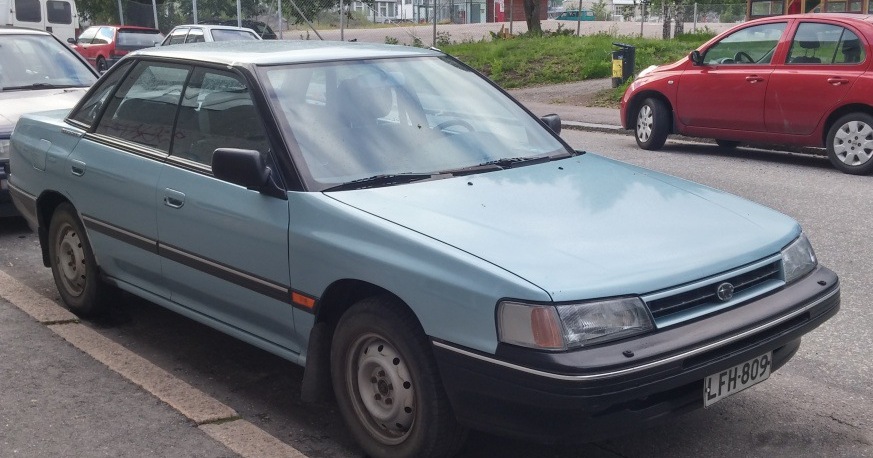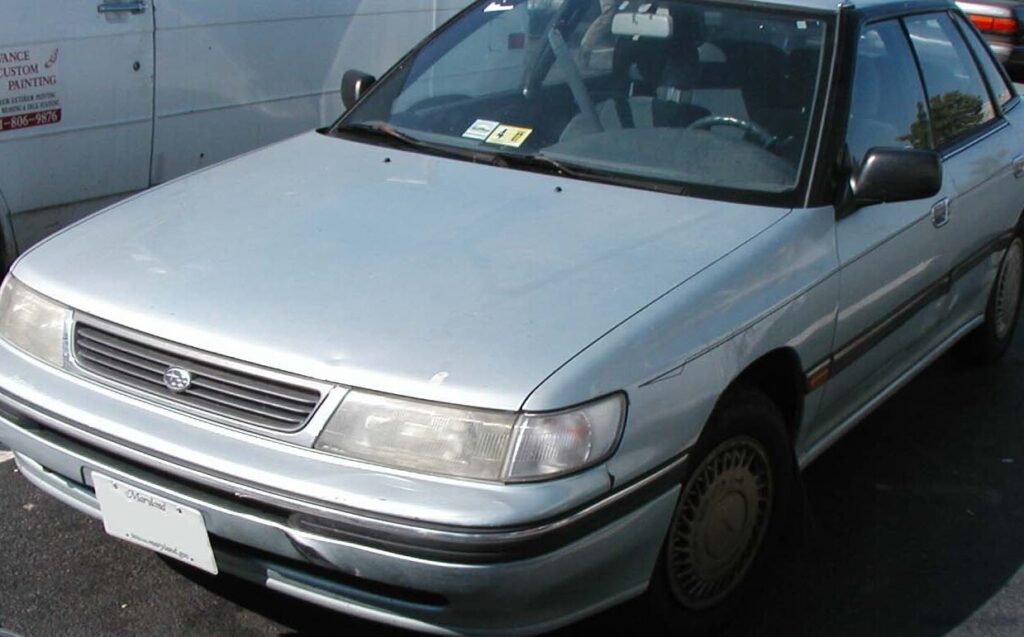
The Subaru Legacy I (BC, facelift released in 1991) 2200, equipped with a 136 horsepower engine and an automatic transmission, represents a significant step in Subaru’s expansion into the mainstream family sedan market. Produced from 1991 to 1994, this variant occupied a mid-range position within the first-generation Legacy lineup, offering a blend of practicality, all-wheel-drive capability, and relative comfort. It was designed to appeal to buyers seeking a dependable, all-weather vehicle with a more refined driving experience than Subaru’s earlier offerings. The BC series, a facelift of the original Legacy (introduced in 1989), brought subtle styling updates and improvements to the interior and mechanical components.
Technical Specifications
| Brand | Subaru |
| Model | Legacy |
| Generation | Legacy I (BC, facelift 1991) |
| Type | 2200 (136 Hp) AWD Automatic |
| Start of production | 1991 |
| End of production | 1994 |
| Powertrain Architecture | Internal Combustion engine |
| Body type | Sedan |
| Seats | 5 |
| Doors | 4 |
| Fuel Type | Petrol (Gasoline) |
| Weight-to-power ratio | 9.1 kg/Hp, 109.7 Hp/tonne |
| Weight-to-torque ratio | 6.6 kg/Nm, 152.4 Nm/tonne |
| Power | 136 Hp @ 6000 rpm |
| Power per litre | 61.5 Hp/l |
| Torque | 189 Nm @ 4800 rpm (139.4 lb.-ft. @ 4800 rpm) |
| Engine layout | Front, Longitudinal |
| Engine Model/Code | EJ22E |
| Engine displacement | 2212 cm3 (134.98 cu. in.) |
| Number of cylinders | 4 |
| Engine configuration | Boxer |
| Cylinder Bore | 96.9 mm (3.81 in.) |
| Piston Stroke | 75 mm (2.95 in.) |
| Compression ratio | 9.5:1 |
| Number of valves per cylinder | 4 |
| Fuel injection system | Multi-port manifold injection |
| Engine aspiration | Naturally aspirated engine |
| Valvetrain | DOHC |
| Engine oil capacity | 4.5 l (4.76 US qt | 3.96 UK qt) |
| Coolant | 6.1 l (6.45 US qt | 5.37 UK qt) |
| Kerb Weight | 1240 kg (2733.73 lbs.) |
| Max. weight | 1780 kg (3924.23 lbs.) |
| Max load | 540 kg (1190.5 lbs.) |
| Trunk (boot) space – minimum | 405 l (14.3 cu. ft.) |
| Trunk (boot) space – maximum | 630 l (22.25 cu. ft.) |
| Fuel tank capacity | 60 l (15.85 US gal | 13.2 UK gal) |
| Max. roof load | 80 kg (176.37 lbs.) |
| Length | 4545 mm (178.94 in.) |
| Width | 1690 mm (66.54 in.) |
| Height | 1400 mm (55.12 in.) |
| Wheelbase | 2580 mm (101.57 in.) |
| Front track | 1465 mm (57.68 in.) |
| Rear (Back) track | 1455 mm (57.28 in.) |
| Ride height (ground clearance) | 170 mm (6.69 in.) |
| Minimum turning circle (turning diameter) | 10.1 m (33.14 ft.) |
| Drive wheel | All wheel drive (4×4) |
| Number of gears and type of gearbox | 4 gears, automatic transmission |
| Front suspension | Independent type McPherson |
| Rear suspension | Several levers and rods |
| Front brakes | Ventilated discs |
| Rear brakes | Disc |
| Assisting systems | ABS (Anti-lock braking system) |
| Steering type | Steering rack and pinion |
| Power steering | Hydraulic Steering |
| Tires size | 185/70 R14 |
| Wheel rims size | 14 |
Powertrain & Engine Architecture
The heart of the Legacy 2200 Automatic is the EJ22E, a 2.2-liter horizontally-opposed (boxer) four-cylinder engine. This engine design, a Subaru hallmark, provides a lower center of gravity, contributing to improved handling and stability. The EJ22E utilizes multi-port fuel injection and a double overhead camshaft (DOHC) valvetrain, allowing for efficient combustion and reasonable power output. The 9.5:1 compression ratio was a standard figure for the time, balancing performance and fuel economy. Paired with this engine is a four-speed automatic transmission. This transmission, while providing convenience, was not known for its particularly sporty character. It prioritized smooth shifts and ease of use over aggressive downshifting or quick acceleration. The transmission’s gear ratios were tuned for comfortable cruising and adequate performance in everyday driving situations.
Driving Characteristics
The 136 horsepower and 189 Nm (139.4 lb-ft) of torque delivered by the EJ22E and automatic transmission combination resulted in a driving experience that was competent but not exhilarating. Acceleration was adequate for merging onto highways and passing slower vehicles, but it lacked the punch of the manual transmission versions or the higher-output engines available in the Legacy range. The automatic transmission, while smooth, could feel somewhat sluggish, particularly when attempting quick maneuvers. The all-wheel-drive system, however, provided excellent traction in various weather conditions, making the Legacy 2200 Automatic a capable and sure-footed vehicle. The power delivery was relatively linear, with peak torque arriving at 4800 rpm. This meant that the engine felt reasonably responsive in the mid-range, but it began to lose steam as the revs climbed higher.
Equipment & Trim Levels
The 2200 Automatic trim typically included features such as power steering, air conditioning, and an AM/FM radio. Interior upholstery was generally cloth, with a relatively simple and functional dashboard layout. Optional extras could include a sunroof, upgraded audio systems, and power windows. The trim level aimed for a balance between affordability and comfort, making it an attractive option for families and individuals seeking a practical and reliable vehicle. Compared to the base models, the 2200 Automatic offered a step up in terms of engine performance and standard features.
Chassis & Braking
The Legacy 2200 Automatic featured an independent McPherson strut suspension in the front and a multi-link suspension in the rear. This setup provided a comfortable ride quality and decent handling characteristics. The car was equipped with ventilated disc brakes in the front and solid disc brakes in the rear. An anti-lock braking system (ABS) was often included as standard equipment, enhancing safety and control during emergency braking situations. The suspension was tuned for a balance between comfort and handling, prioritizing a smooth ride over aggressive cornering. Stabilizer bars were present on both axles, helping to reduce body roll during turns.
Market Reception & Comparison
The Subaru Legacy I, in general, was well-received by automotive critics for its practicality, reliability, and all-wheel-drive system. However, the 2200 Automatic variant often received mixed reviews. While praised for its convenience and all-weather capability, it was sometimes criticized for its relatively lackluster performance compared to the manual transmission models or the more powerful engines available in the Legacy lineup. Fuel economy was considered average for the time. Compared to the 1.8L and 2.0L versions, the 2200 offered more power but at the cost of slightly increased fuel consumption. The 2200 Automatic was positioned as a comfortable and practical option for buyers who prioritized ease of use and all-weather capability over outright performance.
Legacy
The EJ22E engine, when properly maintained, proved to be a durable and reliable powerplant. However, like many engines of its era, it was susceptible to oil leaks and head gasket failures, particularly if maintenance was neglected. The four-speed automatic transmission, while generally reliable, could experience issues with solenoid failure or valve body wear over time. Today, the Subaru Legacy I 2200 Automatic is considered a classic car, and well-maintained examples are sought after by enthusiasts. Its all-wheel-drive system and durable construction make it a capable and enjoyable vehicle for those seeking a taste of 1990s Japanese engineering. Finding parts can be challenging, but a dedicated community of Subaru enthusiasts continues to support the preservation of these vehicles.