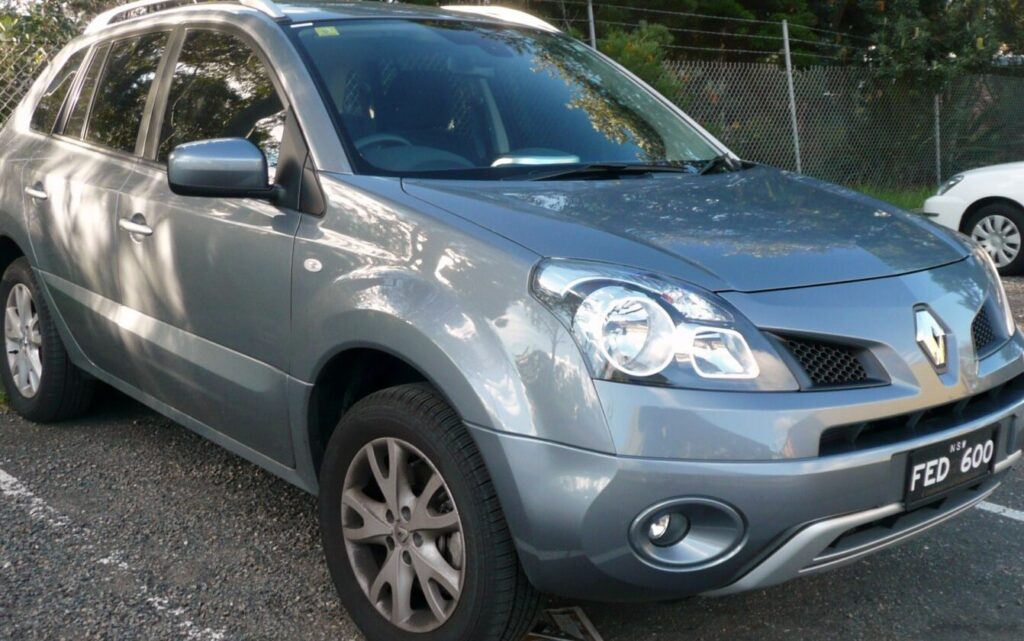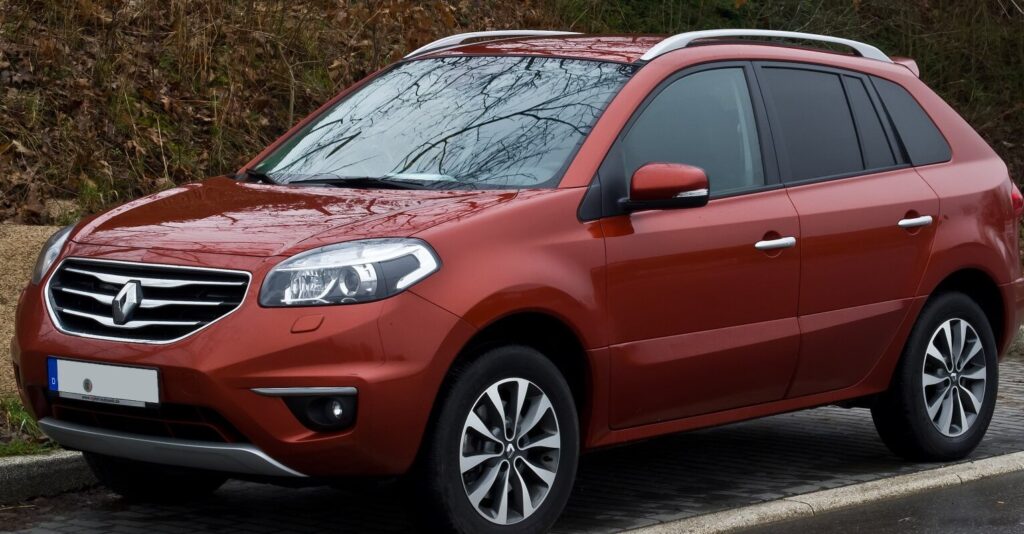
The Renault Koleos Phase II 2.0 (150 hp) represents a mid-cycle refresh of Renault’s entry into the compact SUV segment, produced from 2011 to 2013. Positioned as a more affordable and practical alternative to premium competitors, the Koleos aimed to provide a spacious and comfortable family vehicle. This particular variant, powered by the 2.0-liter diesel engine paired with a six-speed manual transmission, served as a core offering within the Koleos lineup, balancing fuel efficiency with adequate performance for everyday driving. It was primarily marketed in Europe and other international markets where diesel engines held significant popularity.
Technical Specifications
| Brand | Renault |
| Model | Koleos |
| Generation | Koleos (Phase II) |
| Type (Engine) | 2.0 (150 Hp) |
| Start of production | 2011 |
| End of production | 2013 |
| Powertrain Architecture | Internal Combustion engine |
| Body type | SUV |
| Seats | 5 |
| Doors | 5 |
| Fuel consumption (urban) | 6.9 l/100 km (34.1 US mpg) |
| Fuel consumption (extra urban) | 5.1 l/100 km (46.1 US mpg) |
| Fuel consumption (combined) | 5.7 l/100 km (41.3 US mpg) |
| CO2 emissions | 148 g/km |
| Fuel Type | Diesel |
| Acceleration 0 – 100 km/h | 10 sec |
| Acceleration 0 – 62 mph | 10 sec |
| Acceleration 0 – 60 mph | 9.5 sec |
| Maximum speed | 183 km/h (113.71 mph) |
| Emission standard | Euro 5 |
| Weight-to-power ratio | 11 kg/Hp |
| Weight-to-torque ratio | 5.2 kg/Nm |
| Power | 150 Hp @ 4000 rpm |
| Torque | 320 Nm @ 2000 rpm (236.02 lb.-ft. @ 2000 rpm) |
| Engine layout | Front, Transverse |
| Engine Model/Code | M9R |
| Engine displacement | 1995 cm3 (121.74 cu. in.) |
| Number of cylinders | 4 |
| Engine configuration | Inline |
| Cylinder Bore | 84 mm (3.31 in.) |
| Piston Stroke | 90 mm (3.54 in.) |
| Compression ratio | 15.7:1 |
| Number of valves per cylinder | 4 |
| Fuel injection system | Diesel Commonrail |
| Engine aspiration | Turbocharger, Intercooler |
| Engine oil capacity | 7.4 l (7.82 US qt | 6.51 UK qt) |
| Coolant capacity | 8 l (8.45 US qt | 7.04 UK qt) |
| Kerb Weight | 1649 kg (3635.42 lbs.) |
| Max. weight | 2200 kg (4850.17 lbs.) |
| Max load | 551 kg (1214.75 lbs.) |
| Fuel tank capacity | 65 l (17.17 US gal | 14.3 UK gal) |
| Length | 4520 mm (177.95 in.) |
| Width | 1855 mm (73.03 in.) |
| Height | 1695 mm (66.73 in.) |
| Wheelbase | 2690 mm (105.91 in.) |
| Front track | 1545 mm (60.83 in.) |
| Rear track | 1550 mm (61.02 in.) |
| Minimum turning circle | 11.6 m (38.06 ft.) |
| Drivetrain | Front wheel drive |
| Number of gears | 6 |
| Gearbox type | Manual transmission |
| Front suspension | Independent, McPherson with coil spring and anti-roll bar |
| Rear suspension | Independent multi-link suspension |
| Front brakes | Ventilated discs |
| Rear brakes | Ventilated discs |
| Assisting systems | ABS (Anti-lock braking system) |
| Steering type | Steering rack and pinion |
| Tires size | 225/60 R17 99H |
| Wheel rims size | 6.5J x 17 |
INTRODUCTION
The Renault Koleos Phase II 2.0 (150 hp) arrived as part of a broader effort by Renault to expand its presence in the growing compact SUV market. Building upon the original Koleos launched in 2008, the Phase II model, introduced in 2011, featured revised styling, improved interior materials, and enhanced equipment levels. This variant, equipped with the 2.0 dCi engine and a six-speed manual gearbox, was designed to appeal to buyers seeking a practical, fuel-efficient, and reasonably priced SUV. It slotted into the Koleos range as a mid-range option, offering a balance between the base models and the more powerful, often four-wheel-drive, versions.
Powertrain & Engine Architecture
At the heart of the Koleos 2.0 (150 hp) lies the Renault M9R engine, a 2.0-liter inline-four cylinder diesel. This engine is a common rail direct injection (CRDI) unit, utilizing piezo injectors for precise fuel delivery and optimized combustion. The M9R engine is known for its robust construction and relatively good reliability. It features a single turbocharger with an intercooler to boost power and efficiency. The 150 horsepower output is achieved at 4000 rpm, while the peak torque of 320 Nm (236 lb-ft) is available from just 2000 rpm, providing good low-end grunt for everyday driving. The six-speed manual transmission offers a good spread of ratios, allowing for both relaxed cruising and responsive acceleration. The gearbox is known for its smooth operation and relatively precise shift feel.
Driving Characteristics
The Koleos 2.0 (150 hp) delivers a comfortable and composed driving experience. While not particularly sporty, the engine provides sufficient power for most driving situations, including highway overtaking and navigating hilly terrain. The manual transmission allows for greater driver control compared to the automatic options available on other Koleos trims. The gear ratios are well-matched to the engine’s torque curve, ensuring that power is readily available when needed. Compared to the higher-output 2.5-liter petrol version, the 2.0 dCi offers significantly better fuel economy and a more relaxed driving experience. However, it lacks the outright acceleration of the petrol engine. Against other diesel Koleos variants, such as those with four-wheel drive, the front-wheel-drive 2.0 (150 hp) model offers improved fuel efficiency and a slightly lighter overall weight, but sacrifices off-road capability.
Equipment & Trim Levels
The Koleos 2.0 (150 hp) typically came equipped with a respectable level of standard features. These generally included air conditioning, a CD player with auxiliary input, power windows and mirrors, and central locking. Higher trim levels added features such as alloy wheels, a leather-wrapped steering wheel, automatic climate control, and a more advanced audio system. Optional extras included a panoramic sunroof, leather upholstery, and a navigation system. Interior upholstery was typically cloth, with higher trims offering partial or full leather options. The dashboard layout was functional and straightforward, with a focus on ease of use.
Chassis & Braking
The Koleos Phase II utilizes a McPherson strut front suspension and an independent multi-link rear suspension. This setup provides a good balance between ride comfort and handling. The suspension is tuned for comfort, absorbing bumps and imperfections in the road surface effectively. Front and rear ventilated disc brakes provide adequate stopping power. Anti-lock Braking System (ABS) is standard, enhancing safety during emergency braking situations. The Koleos 2.0 (150 hp) typically features a smaller diameter stabilizer bar compared to higher-performance variants, contributing to a softer ride but slightly reduced body roll during cornering.
Market Reception & Comparison
The Renault Koleos 2.0 (150 hp) received generally positive reviews from automotive critics. It was praised for its spacious interior, comfortable ride, and fuel efficiency. However, some critics noted that the engine could feel strained when fully loaded or driving uphill. Compared to rivals such as the Nissan Qashqai and Hyundai ix35, the Koleos offered a more generous interior space and a more refined ride. In terms of fuel economy, the 2.0 dCi engine performed competitively, offering comparable figures to similar diesel-powered SUVs. Reliability was generally considered to be good, although some owners reported minor issues with the electronic systems.
Legacy
The Renault Koleos 2.0 (150 hp) remains a relatively affordable and practical used car option. The M9R engine, while not without its potential issues (such as potential turbocharger wear and injector problems), is generally considered durable and relatively easy to maintain. Parts availability is good, and repair costs are reasonable. Today, these Koleos models are often sought after by buyers looking for a spacious and comfortable family SUV at a budget-friendly price point. The combination of a fuel-efficient diesel engine and a manual transmission continues to appeal to those prioritizing practicality and running costs.