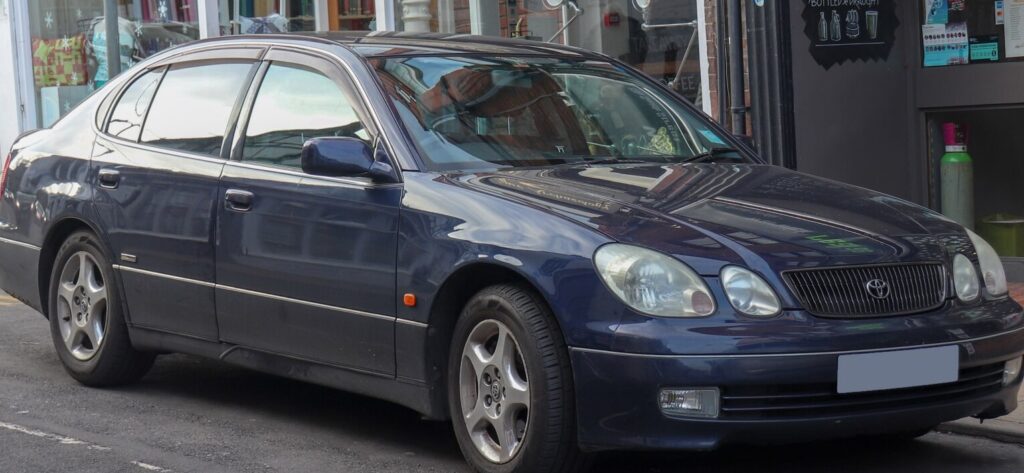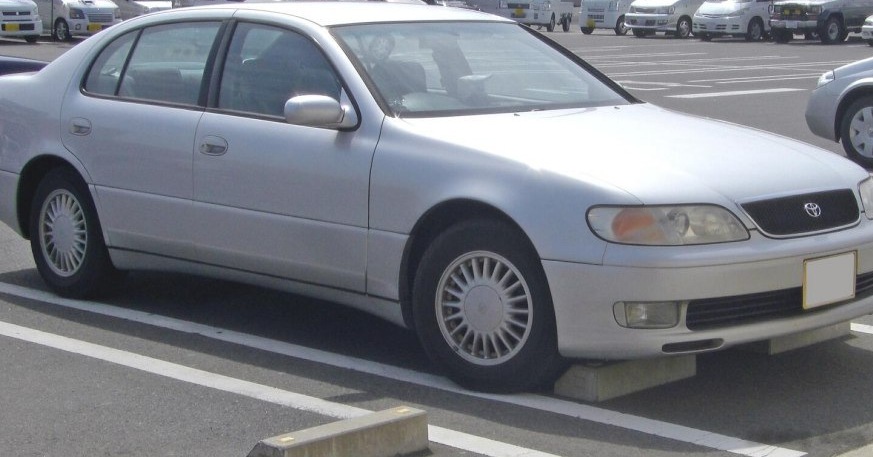
The Toyota Aristo (S14), produced between 1991 and 1997, represented Toyota’s foray into the luxury performance sedan segment, primarily aimed at the Japanese domestic market (JDM). Positioned above the Crown and Cresta, the Aristo sought to compete with established European rivals like the BMW 5 Series and Mercedes-Benz E-Class. The 3.0 i 24V Turbo variant, equipped with the 2JZ-GTE engine, was the performance flagship of the S14 lineup, offering a significant step up in power and handling compared to the naturally aspirated models. This model year bridged the gap between the earlier, more boxy designs and the more rounded aesthetics that would characterize later iterations of the Aristo.
Technical Specifications
| Brand | Toyota |
| Model | Aristo |
| Generation | Aristo (S14) |
| Type (Engine) | 3.0 i 24V Turbo (330 Hp) |
| Start of production | 1991 |
| End of production | 1997 |
| Powertrain Architecture | Internal Combustion engine |
| Body type | Sedan |
| Seats | 5 |
| Doors | 4 |
| Fuel consumption (combined) | 9.6 l/100 km (24.5 US mpg, 29.4 UK mpg, 10.4 km/l) |
| Fuel Type | Petrol (Gasoline) |
| Weight-to-power ratio | 5.1 kg/Hp, 196.4 Hp/tonne |
| Weight-to-torque ratio | 3.8 kg/Nm, 261.9 Nm/tonne |
| Power | 330 Hp @ 5600 rpm |
| Power per litre | 110.1 Hp/l |
| Torque | 440 Nm @ 4800 rpm (324.53 lb.-ft. @ 4800 rpm) |
| Engine layout | Front, Longitudinal |
| Engine Model/Code | 2JZ-GTE |
| Engine displacement | 2997 cm3 (182.89 cu. in.) |
| Number of cylinders | 6 |
| Engine configuration | Inline |
| Cylinder Bore | 86 mm (3.39 in.) |
| Piston Stroke | 86 mm (3.39 in.) |
| Compression ratio | 8.5:1 |
| Number of valves per cylinder | 4 |
| Fuel injection system | Multi-port manifold injection |
| Engine aspiration | Turbocharger |
| Valvetrain | DOHC |
| Engine oil capacity | 5.8 l (6.13 US qt | 5.1 UK qt) |
| Coolant | 8.5 l (8.98 US qt | 7.48 UK qt) |
| Kerb Weight | 1680 kg (3703.77 lbs.) |
| Max. weight | 1955 kg (4310.04 lbs.) |
| Max load | 275 kg (606.27 lbs.) |
| Trunk (boot) space – minimum | 404 l (14.27 cu. ft.) |
| Fuel tank capacity | 80 l (21.13 US gal | 17.6 UK gal) |
| Length | 4865 mm (191.54 in.) |
| Width | 1795 mm (70.67 in.) |
| Height | 1420 mm (55.91 in.) |
| Wheelbase | 2780 mm (109.45 in.) |
| Front track | 1535 mm (60.43 in.) |
| Rear (Back) track | 1510 mm (59.45 in.) |
| Drivetrain Architecture | Rear wheel drive |
| Number of gears and type of gearbox | 3 gears, automatic transmission |
| Front suspension | Double wishbone |
| Rear suspension | Double wishbone |
| Front brakes | Ventilated discs |
| Rear brakes | Ventilated discs |
| Assisting systems | ABS (Anti-lock braking system) |
| Steering type | Steering rack and pinion |
| Tires size | 225/55 R15 V |
Powertrain & Engine Architecture
The heart of the Aristo 3.0 i 24V Turbo is the legendary 2JZ-GTE 3.0-liter inline-six engine. This engine is renowned for its robustness and tuning potential. The 2JZ-GTE features a sequential twin-turbocharger system, utilizing two smaller turbochargers instead of one large unit. This configuration minimized turbo lag and provided a broad, flat torque curve. The engine employed a cast iron block and an aluminum cylinder head, incorporating a double overhead camshaft (DOHC) valvetrain with four valves per cylinder. Fuel delivery was managed by a multi-port fuel injection system. The automatic transmission was a 3-speed unit, designed to handle the substantial power output of the 2JZ-GTE. While not as sophisticated as modern transmissions, it was durable and provided relatively smooth shifts.
Driving Characteristics
The 3-speed automatic transmission, while reliable, wasn’t the most responsive. Acceleration was brisk, with the turbochargers delivering a noticeable surge of power in the mid-range. The rear-wheel-drive configuration provided a balanced driving experience, although the Aristo’s weight (1680 kg / 3703.77 lbs) was always apparent. Compared to the naturally aspirated 3.0-liter Aristo, the turbo variant offered a significantly more engaging driving experience. It also differed substantially from the 2.5-liter models, which were geared towards fuel efficiency and comfort. The automatic transmission did detract somewhat from the sporty feel, with manual transmission variants being favored by enthusiasts.
Equipment & Trim Levels
The 3.0 i 24V Turbo typically came well-equipped, reflecting its position as the top-of-the-line Aristo. Standard features included leather upholstery, power-adjustable front seats, a premium sound system, climate control, and power windows and locks. Optional extras included a sunroof, upgraded audio systems, and various cosmetic enhancements. The interior design was focused on luxury and comfort, with a wood-trimmed dashboard and high-quality materials. The exterior featured unique badging and often included alloy wheels.
Chassis & Braking
The Aristo S14 utilized a double wishbone suspension system at both the front and rear, providing a comfortable ride and decent handling characteristics. Ventilated disc brakes were fitted on all four wheels, providing adequate stopping power for the vehicle’s weight and performance. An Anti-lock Braking System (ABS) was standard, enhancing safety. The steering was rack and pinion, offering precise control. The tire size was 225/55 R15 V, a common size for the era, providing a good balance of grip and ride comfort.
Market Reception & Comparison
The Toyota Aristo 3.0 i 24V Turbo was generally well-received by Japanese automotive critics. It was praised for its powerful engine, comfortable ride, and luxurious interior. However, some critics noted that the automatic transmission held back the engine’s full potential. Compared to its European rivals, the Aristo offered a compelling combination of performance, luxury, and reliability at a competitive price point. Fuel economy, at 9.6 l/100 km (24.5 US mpg), was reasonable for a vehicle of its size and performance. Reliability was a strong point, with the 2JZ-GTE engine being known for its durability.
Legacy
The Toyota Aristo S14 3.0 i 24V Turbo has gained a cult following among JDM enthusiasts worldwide. The 2JZ-GTE engine remains highly sought after for its tuning potential and robustness. Today, well-maintained examples of the Aristo 3.0 i 24V Turbo are becoming increasingly collectible. The powertrain, while aging, is still considered reliable with proper maintenance. The car represents a unique blend of Japanese engineering and luxury, offering a distinctive alternative to European performance sedans of the era. Its enduring popularity is a testament to its quality and performance.