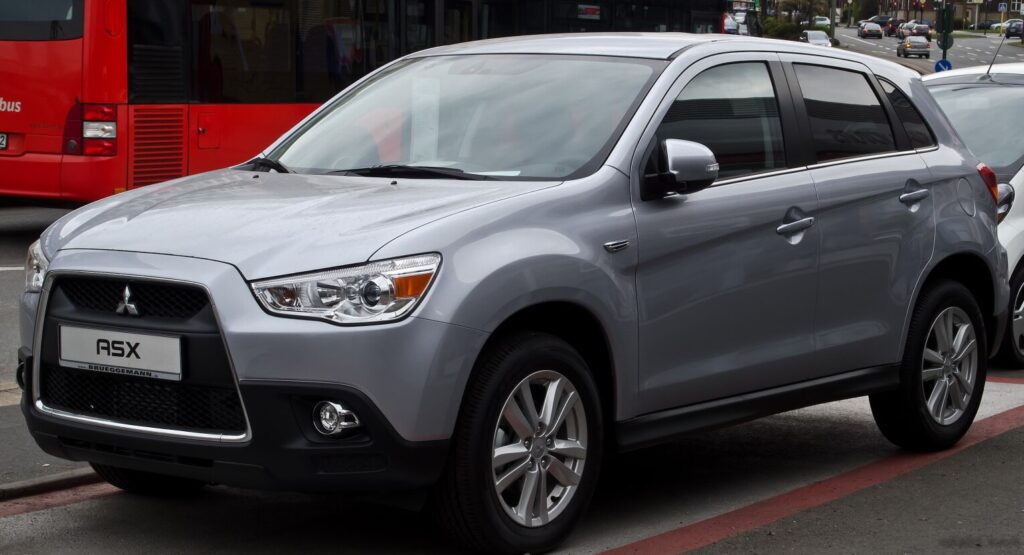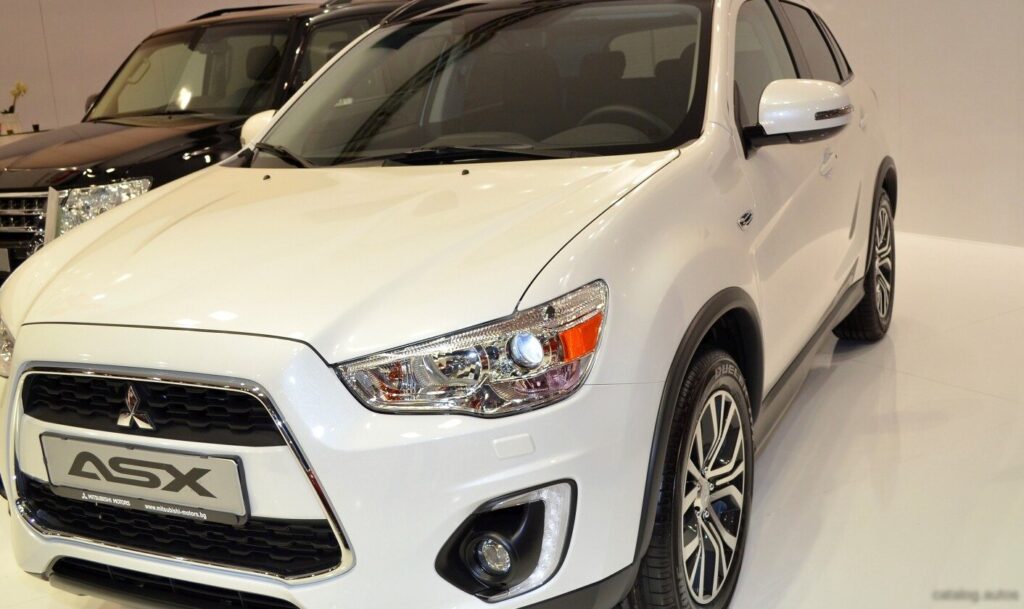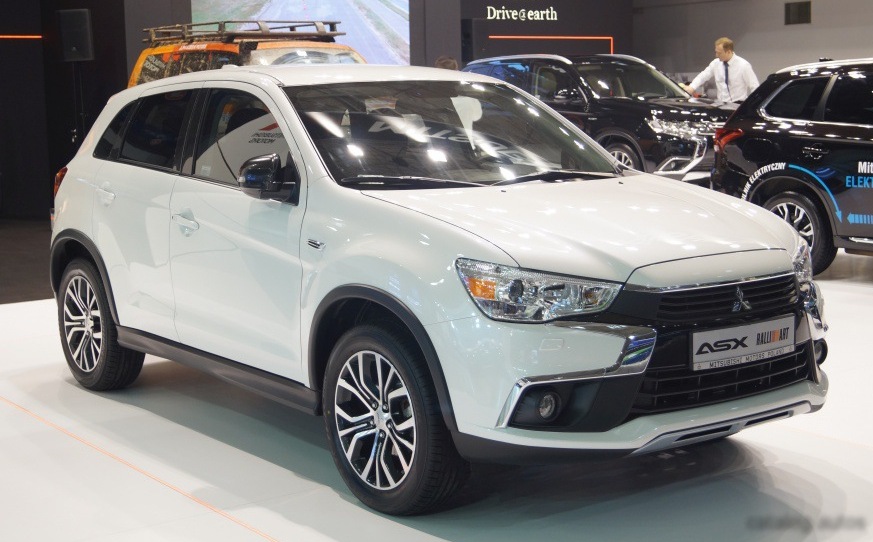
The Mitsubishi ASX I (facelift 2016) 1.6, a compact crossover SUV, represented an important iteration of Mitsubishi’s entry into the highly competitive European and Asian markets. Produced from 2016 to September 2019, this variant occupied a mid-range position within the ASX lineup, offering a balance between affordability, fuel efficiency, and practicality. The facelift brought styling updates and refinements to the original ASX, aiming to enhance its appeal to a broader customer base. This specific 1.6-liter engine and five-speed manual transmission combination was designed to appeal to buyers prioritizing economy and ease of driving over outright performance.
Technical Specifications
| Brand | Mitsubishi |
| Model | ASX |
| Generation | ASX I (facelift 2016) |
| Type (Engine) | 1.6 (117 Hp) |
| Start of production | 2016 |
| End of production | September, 2019 |
| Powertrain Architecture | Internal Combustion engine |
| Body type | SUV, Crossover |
| Seats | 5 |
| Doors | 5 |
| Fuel consumption (urban) | 6.9 l/100 km (34.1 US mpg, 40.9 UK mpg, 14.5 km/l) |
| Fuel consumption (extra urban) | 4.9 l/100 km (48 US mpg, 57.6 UK mpg, 20.4 km/l) |
| Fuel consumption (combined) | 5.7 l/100 km (41.3 US mpg, 49.6 UK mpg, 17.5 km/l) |
| CO2 emissions | 131 g/km |
| Fuel Type | Petrol (Gasoline) |
| Acceleration 0 – 100 km/h | 11.5 sec |
| Acceleration 0 – 62 mph | 11.5 sec |
| Acceleration 0 – 60 mph | 10.9 sec |
| Maximum speed | 183 km/h (113.71 mph) |
| Emission standard | Euro 6 |
| Weight-to-power ratio | 10.8 kg/Hp, 92.9 Hp/tonne |
| Weight-to-torque ratio | 8.2 kg/Nm, 122.2 Nm/tonne |
| Power | 117 Hp @ 6000 rpm |
| Power per litre | 73.6 Hp/l |
| Torque | 154 Nm @ 4000 rpm (113.58 lb.-ft. @ 4000 rpm) |
| Engine layout | Front, Transverse |
| Engine Model/Code | 4A92 |
| Engine displacement | 1590 cm3 (97.03 cu. in.) |
| Number of cylinders | 4 |
| Engine configuration | Inline |
| Cylinder Bore | 75 mm (2.95 in.) |
| Piston Stroke | 90 mm (3.54 in.) |
| Compression ratio | 11:1 |
| Number of valves per cylinder | 4 |
| Fuel injection system | Multi-port manifold injection |
| Engine aspiration | Naturally aspirated engine |
| Valvetrain | DOHC |
| Engine oil capacity | 4.2 l (4.44 US qt | 3.7 UK qt) |
| Coolant | 6 l (6.34 US qt | 5.28 UK qt) |
| Kerb Weight | 1260 kg (2777.82 lbs.) |
| Max. weight | 1870 kg (4122.64 lbs.) |
| Max load | 610 kg (1344.82 lbs.) |
| Trunk (boot) space – minimum | 419 l (14.8 cu. ft.) |
| Trunk (boot) space – maximum | 1219 l (43.05 cu. ft.) |
| Fuel tank capacity | 63 l (16.64 US gal | 13.86 UK gal) |
| Max. roof load | 80 kg (176.37 lbs.) |
| Permitted trailer load with brakes (12%) | 1200 kg (2645.55 lbs.) |
| Permitted trailer load without brakes | 665 kg (1466.07 lbs.) |
| Permitted towbar download | 60 kg (132.28 lbs.) |
| Length | 4355 mm (171.46 in.) |
| Width | 1770 mm (69.69 in.) |
| Width including mirrors | 2082 mm (81.97 in.) |
| Height | 1640 mm (64.57 in.) |
| Wheelbase | 2670 mm (105.12 in.) |
| Front track | 1525 mm (60.04 in.) |
| Rear (Back) track | 1530 mm (60.24 in.) |
| Ride height (ground clearance) | 190 mm (7.48 in.) |
| Minimum turning circle | 10.6 m (34.78 ft.) |
| Drivetrain Architecture | The Internal combustion engine (ICE) drives the front wheels of the vehicle. |
| Drive wheel | Front wheel drive |
| Number of gears and type of gearbox | 5 gears, manual transmission |
| Front suspension | Independent, type McPherson with coil spring and anti-roll bar |
| Rear suspension | Independent multi-link spring suspension with stabilizer |
| Front brakes | Ventilated discs |
| Rear brakes | Disc |
| Assisting systems | ABS (Anti-lock braking system) |
| Steering type | Steering rack and pinion |
| Power steering | Electric Steering |
| Tires size | 215/70 R16 |
| Wheel rims size | 6.5J X 16 |
Powertrain & Engine Architecture
The 2016 Mitsubishi ASX 1.6 utilized the 4A92 engine, a 1.6-liter inline-four cylinder gasoline engine. This engine is part of Mitsubishi’s 4A9 family, known for its relatively lightweight construction and focus on fuel efficiency. The 4A92 features a double overhead camshaft (DOHC) valvetrain with four valves per cylinder, contributing to improved breathing and power delivery. Fuel delivery is managed by a multi-point fuel injection system. The engine produces 117 horsepower at 6000 rpm and 154 Nm (113.58 lb-ft) of torque at 4000 rpm. The engine is transversely mounted, driving the front wheels through a five-speed manual transmission. This transmission was chosen for its simplicity and cost-effectiveness, aligning with the ASX 1.6’s positioning as an affordable crossover.
Driving Characteristics
The ASX 1.6 with the five-speed manual transmission offers a predictable, if not particularly exciting, driving experience. Acceleration from 0-60 mph takes approximately 10.9 seconds, and the top speed is around 113.71 mph. The engine’s torque peak at 4000 rpm means that most of the usable power is available in the mid-range, making it suitable for everyday driving situations. The five-speed gearbox is adequately spaced, but higher gears can feel somewhat strained at highway speeds. Compared to higher-output versions of the ASX, such as those equipped with a 1.8-liter engine, the 1.6-liter variant feels less responsive, particularly when fully loaded or tackling steep inclines. However, the lighter engine weight contributes to improved handling and a more nimble feel in urban environments.
Equipment & Trim Levels
The ASX 1.6 typically came equipped with a reasonable level of standard features. These generally included air conditioning, power windows, power door locks, a basic audio system with USB connectivity, and ABS brakes. Higher trim levels, available as options, could add features such as alloy wheels, a touchscreen infotainment system, rear parking sensors, and cruise control. Interior upholstery was typically cloth, with a functional and durable design. The dashboard layout was straightforward and user-friendly, prioritizing practicality over luxury.
Chassis & Braking
The ASX I utilized a McPherson strut front suspension and a multi-link rear suspension, providing a comfortable ride quality. Stabilizer bars were fitted to both axles to reduce body roll during cornering. The braking system consisted of ventilated discs on the front wheels and solid discs on the rear. ABS (Anti-lock Braking System) was standard, enhancing safety and control during emergency braking situations. The suspension tuning was geared towards comfort and everyday usability, rather than sporty handling.
Market Reception & Comparison
The Mitsubishi ASX 1.6 was generally well-received as an affordable and practical crossover SUV. Critics praised its fuel efficiency and comfortable ride, but noted its lack of outright performance. Compared to other trims in the ASX lineup, the 1.6-liter variant offered the most competitive price point, making it an attractive option for budget-conscious buyers. Its fuel economy of around 41.3 US mpg combined was a significant selling point, particularly in markets with high fuel prices. However, the 1.8-liter ASX offered noticeably more power and a more refined driving experience, albeit at a higher cost.
Legacy
The Mitsubishi ASX I (facelift 2016) 1.6 has proven to be a relatively reliable vehicle in the used car market. The 4A92 engine is generally considered durable, and routine maintenance is relatively straightforward and affordable. While not known for exceptional performance, the 1.6-liter engine has a good track record for longevity. Common issues reported by owners include minor electrical glitches and wear and tear on suspension components. Overall, the ASX 1.6 remains a viable option for buyers seeking a practical and economical crossover SUV.