
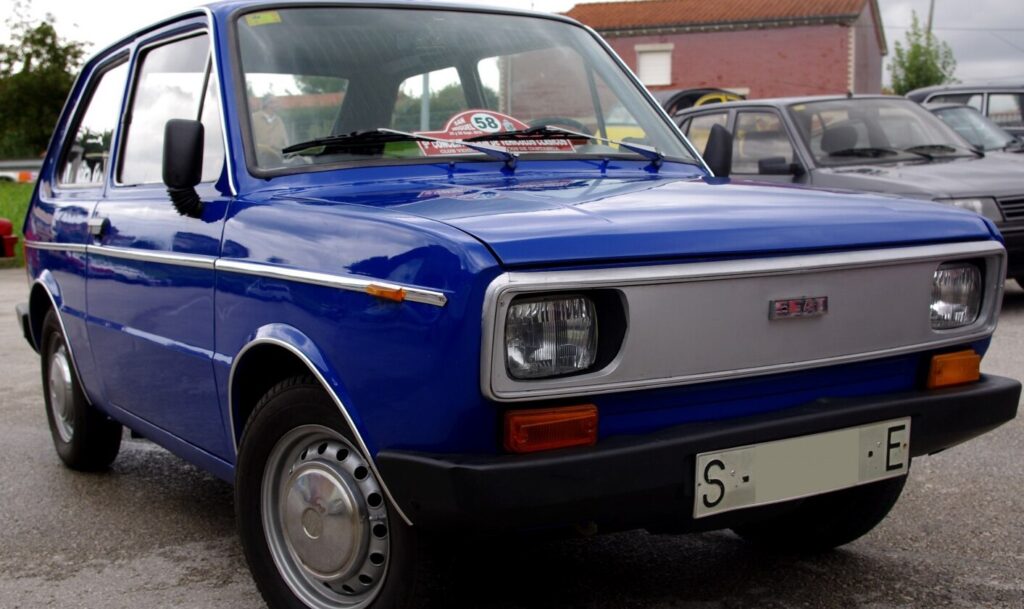
The SEAT 133, specifically the 0.8-liter (34 horsepower) variant produced between 1974 and 1979, represents a significant chapter in the Spanish automotive industry. Derived from the Fiat 800, the 133 was SEAT’s mainstay model during a period of economic transition in Spain. It served as affordable and practical transportation for a growing middle class, and was a key component in SEAT’s strategy to motorize the nation. This particular engine and configuration was the entry-level offering, designed for economy and accessibility rather than performance. It was a crucial model for SEAT, establishing the brand’s reputation for reliability and value.
Technical Specifications
| Brand | SEAT |
| Model | 133 |
| Generation | 133 |
| Type (Engine) | 0.8 (34 Hp) |
| Start of Production | 1974 |
| End of Production | 1979 |
| Powertrain Architecture | Internal Combustion Engine |
| Body Type | Sedan |
| Seats | 4-5 |
| Doors | 2 |
| Fuel Type | Petrol (Gasoline) |
| Power | 34 Hp |
| Engine Model/Code | DB |
| Engine Aspiration | Naturally Aspirated |
| Engine Oil Capacity | 3.25 l (3.43 US qt | 2.86 UK qt) |
| Coolant Capacity | 7.5 l (7.93 US qt | 6.6 UK qt) |
Introduction
The SEAT 133 was born out of a licensing agreement with Fiat in the early 1970s. SEAT, then a state-owned company, sought to modernize Spanish automotive production, and the Fiat 800 provided a readily available and relatively simple platform. The 133 was essentially a rebadged and slightly modified version of the Fiat, adapted to Spanish manufacturing capabilities and market demands. Production began in 1974, and the model quickly became a common sight on Spanish roads. The 0.8-liter engine was the base offering, positioned below the later 1.2 and 1.4-liter variants. It was intended to provide the most affordable entry point into SEAT ownership.
Powertrain & Engine Architecture
The heart of the SEAT 133 0.8 was the DB engine, a 848cc inline-four cylinder petrol engine. This engine was a relatively simple design, featuring a single overhead camshaft and two valves per cylinder. It utilized a Solex carburetor for fuel delivery, a common setup for the time, and offered a modest 34 horsepower. The engine’s architecture prioritized durability and ease of maintenance over outright performance. The engine block was cast iron, contributing to its robustness. The transmission was a four-speed manual, the only option available with this engine. The engine’s low compression ratio and relatively conservative tuning were geared towards maximizing fuel economy and minimizing emissions, important considerations even in the 1970s. The DB engine was known for its simplicity, making it relatively easy to repair and maintain, even by amateur mechanics.
Driving Characteristics
The driving experience in a SEAT 133 0.8 was decidedly unhurried. With only 34 horsepower propelling a vehicle weighing around 780 kilograms (1720 lbs), acceleration was slow, and overtaking required careful planning. The four-speed manual transmission had relatively long gear ratios, further emphasizing the engine’s focus on economy. Top speed was around 75 mph (120 km/h), but cruising at such speeds was not particularly comfortable or refined. However, the 133’s light steering and relatively compact size made it easy to maneuver in urban environments. The suspension, consisting of independent front suspension and a live rear axle with leaf springs, provided a reasonably comfortable ride, although it could be somewhat bouncy on uneven surfaces. Compared to the later, more powerful 1.2 and 1.4-liter versions, the 0.8-liter model felt significantly underpowered, particularly when carrying a full load of passengers or luggage.
Equipment & Trim Levels
The SEAT 133 0.8 was a fairly basic vehicle, reflecting its position as the entry-level model. Standard equipment included cloth upholstery, vinyl floor covering, and basic instrumentation consisting of a speedometer, fuel gauge, and temperature gauge. The dashboard was simple and functional, with minimal ornamentation. Optional extras were limited, but could include a radio, heater, and upgraded seat upholstery. The exterior trim was also minimal, with chrome bumpers and simple hubcaps. The interior space was adequate for a small family, but it was not particularly luxurious. The focus was on providing a practical and affordable means of transportation, rather than offering a high level of comfort or refinement.
Chassis & Braking
The SEAT 133 featured a body-on-frame construction, a common practice for the time. The chassis was relatively simple, providing a solid and durable foundation for the vehicle. The front suspension utilized independent wishbones and coil springs, while the rear suspension employed a live axle with leaf springs. Braking was provided by drum brakes on all four wheels, which were adequate for the vehicle’s weight and performance. Steering was of the worm-and-roller type, offering relatively light steering effort but lacking precision. The 133 did not feature power steering or power brakes, further emphasizing its basic nature. Stabilizer bars were not typically fitted to the 0.8-liter model, contributing to a slightly more pronounced body roll in corners.
Market Reception & Comparison
The SEAT 133 0.8 was generally well-received in Spain, particularly by those seeking an affordable and reliable family car. Critics praised its durability and ease of maintenance, but acknowledged its lack of performance. Compared to the later 1.2 and 1.4-liter versions, the 0.8-liter model offered significantly lower fuel economy, but also a lower purchase price. It was often seen as a sensible choice for urban commuters and those who prioritized practicality over performance. The 133 competed with other small European cars of the time, such as the Renault 5 and the Citroën 2CV, but it offered a unique blend of Spanish design and Italian engineering. Its relatively low price point made it a popular choice among budget-conscious buyers.
Legacy
The SEAT 133 0.8, while not a performance icon, played a vital role in the development of the Spanish automotive industry. It helped to establish SEAT as a major player in the domestic market and laid the foundation for the company’s future success. Today, the 133 is a popular classic car among enthusiasts, particularly in Spain. The 0.8-liter engine, while not particularly powerful, is known for its reliability and simplicity. Parts availability can be a challenge, but the engine’s straightforward design makes it relatively easy to repair. Well-maintained examples of the 133 0.8 are becoming increasingly collectible, representing a nostalgic reminder of a bygone era of Spanish motoring. The car’s enduring appeal lies in its simplicity, affordability, and its place in Spanish automotive history.
