Technical Specifications
| Brand | Renault |
| Model | Koleos |
| Generation | Koleos (Phase II) |
| Type (Engine) | 2.5 (170 Hp) |
| Start of production | 2011 |
| End of production | 2013 |
| Powertrain Architecture | Internal Combustion engine |
| Body type | SUV |
| Seats | 5 |
| Doors | 5 |
| Fuel consumption (urban) | 12.9 l/100 km (18.2 US mpg, 21.9 UK mpg, 7.8 km/l) |
| Fuel consumption (extra urban) | 7.7 l/100 km (30.5 US mpg, 36.7 UK mpg, 13 km/l) |
| Fuel consumption (combined) | 9.6 l/100 km (24.5 US mpg, 29.4 UK mpg, 10.4 km/l) |
| CO2 emissions | 230 g/km |
| Fuel Type | Petrol (Gasoline) |
| Acceleration 0 – 100 km/h | 10 sec |
| Acceleration 0 – 62 mph | 10 sec |
| Acceleration 0 – 60 mph | 9.5 sec |
| Maximum speed | 183 km/h (113.71 mph) |
| Emission standard | Euro 4 |
| Weight-to-power ratio | 9.2 kg/Hp, 108.7 Hp/tonne |
| Weight-to-torque ratio | 6.9 kg/Nm, 144.5 Nm/tonne |
| Power | 170 Hp @ 6000 rpm |
| Power per litre | 68.3 Hp/l |
| Torque | 226 Nm @ 4400 rpm (166.69 lb.-ft. @ 4400 rpm) |
| Engine layout | Front, Transverse |
| Engine Model/Code | 2TR |
| Engine displacement | 2488 cm3 (151.83 cu. in.) |
| Number of cylinders | 4 |
| Engine configuration | Inline |
| Cylinder Bore | 89 mm (3.5 in.) |
| Piston Stroke | 100 mm (3.94 in.) |
| Compression ratio | 9.6:1 |
| Number of valves per cylinder | 4 |
| Fuel injection system | Multi-port manifold injection |
| Engine aspiration | Naturally aspirated engine |
| Engine oil capacity | 5.1 l (5.39 US qt | 4.49 UK qt) |
| Coolant | 7.2 l (7.61 US qt | 6.34 UK qt) |
| Kerb Weight | 1564 kg (3448.03 lbs.) |
| Max. weight | 2100 kg (4629.71 lbs.) |
| Max load | 536 kg (1181.68 lbs.) |
| Fuel tank capacity | 65 l (17.17 US gal | 14.3 UK gal) |
| Length | 4520 mm (177.95 in.) |
| Width | 1855 mm (73.03 in.) |
| Height | 1695 mm (66.73 in.) |
| Wheelbase | 2690 mm (105.91 in.) |
| Front track | 1545 mm (60.83 in.) |
| Rear track | 1550 mm (61.02 in.) |
| Minimum turning circle | 11.6 m (38.06 ft.) |
| Drivetrain Architecture | Front wheel drive |
| Number of gears | 6 gears, manual transmission |
| Front suspension | Independent, type McPherson with coil spring and anti-roll bar |
| Rear suspension | Independent multi-link suspension |
| Front brakes | Ventilated discs |
| Rear brakes | Ventilated discs |
| Assisting systems | ABS (Anti-lock braking system) |
| Steering type | Steering rack and pinion |
| Tires size | 225/60 R17 99H |
| Wheel rims size | 6.5J x 17 |
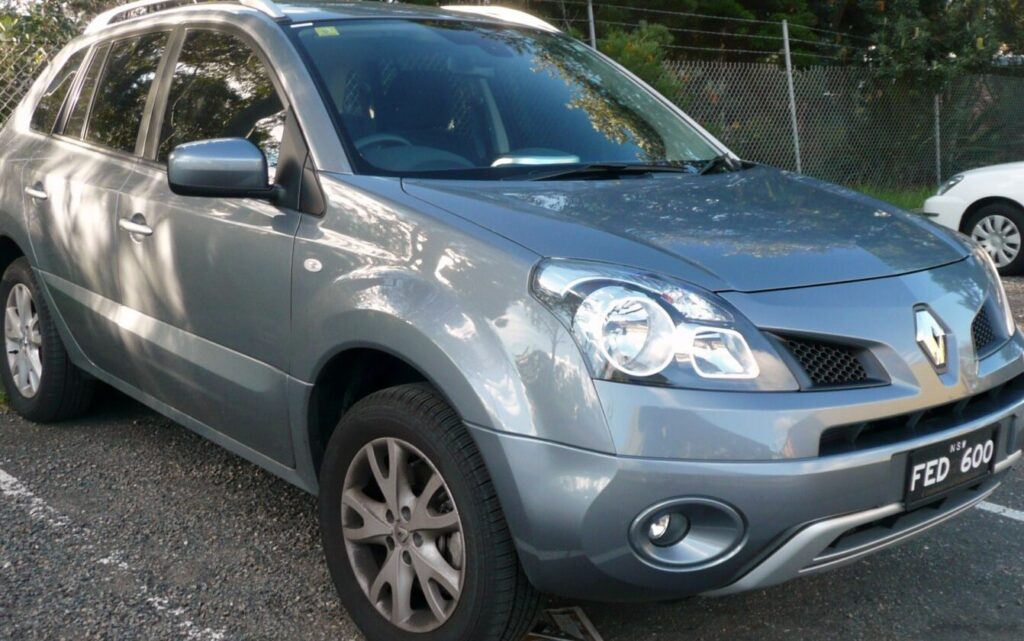
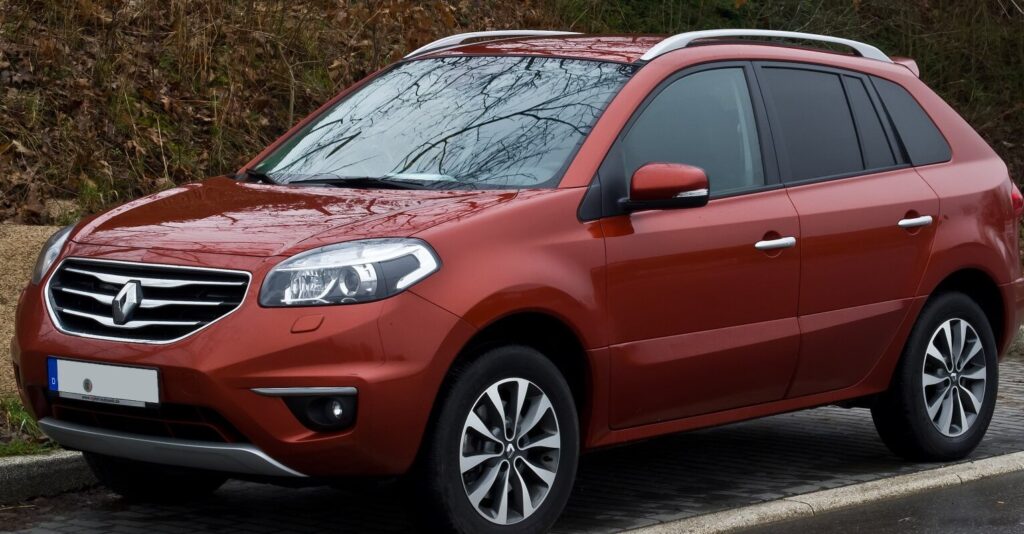
The Renault Koleos Phase II 2.5, produced between 2011 and 2013, was a mid-cycle refresh of Renault’s entry into the increasingly popular compact SUV segment. Designed as a more accessible alternative to higher-priced European SUVs, the Koleos prioritized family-friendly practicality and comfort. This particular variant, powered by a 2.5-liter four-cylinder engine generating 170 horsepower, was primarily marketed in regions outside of Europe, where Renault’s SUV strategy differed significantly. Within the Koleos lineup, the 2.5-liter model occupied a middle ground, offering a performance upgrade over the base 2.0-liter engine while remaining more affordable than potential future diesel or higher-output gasoline options. The Koleos Phase II was built on the Nissan/Renault C platform, a shared architecture also underpinning models like the Nissan X-Trail and Rogue.
Powertrain & Engine Architecture
The Koleos 2.5’s engine was the 2TR, a 2.5-liter inline-four cylinder gasoline engine. This engine wasn’t known for cutting-edge technology, but rather for its inherent simplicity and proven durability. It employed a multi-point fuel injection system, delivering fuel directly into the intake ports for efficient combustion. The engine featured a single overhead camshaft (SOHC) valvetrain with four valves per cylinder, a common design choice for maximizing volumetric efficiency and broad power delivery. The 2TR engine produced 170 horsepower at 6000 rpm and 226 Nm (166.69 lb-ft) of torque at 4400 rpm. A six-speed manual transmission was the standard transmission for this variant, providing a direct connection between the engine and the front wheels. While an automatic transmission was offered in some markets with this engine, the manual was more prevalent in regions where this trim level was commonly sold.
Driving Characteristics
The Koleos 2.5 equipped with the manual transmission delivered a reasonably engaging driving experience for its class. Acceleration from 0-60 mph took approximately 9.5 seconds, which was sufficient for everyday driving needs but didn’t position it as a particularly sporty SUV. The six-speed manual gearbox allowed drivers to maintain the engine within its optimal power band, providing adequate responsiveness. Compared to a potential diesel variant (which wasn’t widely available with this generation Koleos), the 2.5-liter gasoline engine lacked the characteristic low-end torque of a diesel, necessitating more frequent downshifts during overtaking maneuvers or when climbing hills. The manual transmission also offered a more connected and engaging feel compared to the optional automatic, which could sometimes feel hesitant. The front-wheel-drive configuration contributed to a lighter front end, enhancing steering feel compared to all-wheel-drive versions.
Equipment & Trim Levels
The Koleos 2.5 typically came with a respectable level of standard equipment. Interior appointments included cloth upholstery, air conditioning, a basic audio system with a CD player, and power windows and door locks. Higher trim levels, often identified by specific package names, added features such as alloy wheels, a more sophisticated audio system with Bluetooth connectivity, cruise control, and automatic climate control. Safety features included ABS brakes, front airbags, and seatbelt pretensioners. Optional extras could include a sunroof, leather upholstery, and parking sensors, allowing buyers to customize their vehicle to their preferences.
Chassis & Braking
The Koleos Phase II featured an independent suspension system on all four wheels. The front suspension utilized a McPherson strut design, incorporating coil springs and an anti-roll bar to minimize body roll during cornering. The rear suspension employed a multi-link setup, designed to provide a comfortable ride and improved handling stability. Braking was handled by ventilated discs on all four wheels, providing adequate stopping power for the vehicle’s weight. ABS (Anti-lock Braking System) was standard equipment, enhancing safety during emergency braking situations by preventing wheel lockup.
Market Reception & Comparison
The Renault Koleos 2.5 was generally well-received as a practical and affordable SUV option. Critics consistently praised its spacious interior and comfortable ride quality. However, the 2.5-liter engine sometimes drew criticism for feeling somewhat underpowered, particularly when the vehicle was fully loaded with passengers and cargo. Fuel economy was also a point of concern, with combined fuel consumption figures averaging around 9.6 l/100 km (24.5 US mpg). Compared to competitors like the Honda CR-V or Toyota RAV4, the Koleos offered a more European-inspired design aesthetic and a slightly softer ride, but often lacked the established brand recognition and strong resale value of its Japanese rivals.
Legacy
The Renault Koleos Phase II 2.5, while not a revolutionary vehicle, proved to be a reliable and durable SUV. The 2TR engine, despite its relatively straightforward design, has earned a reputation for longevity when properly maintained. In the used car market today, these Koleos models represent a relatively affordable entry point into the compact SUV segment. While it didn’t achieve the same level of popularity as some of its competitors, the Koleos 2.5 remains a viable option for buyers seeking a spacious, comfortable, and reasonably priced SUV, offering a unique blend of European styling and practicality.