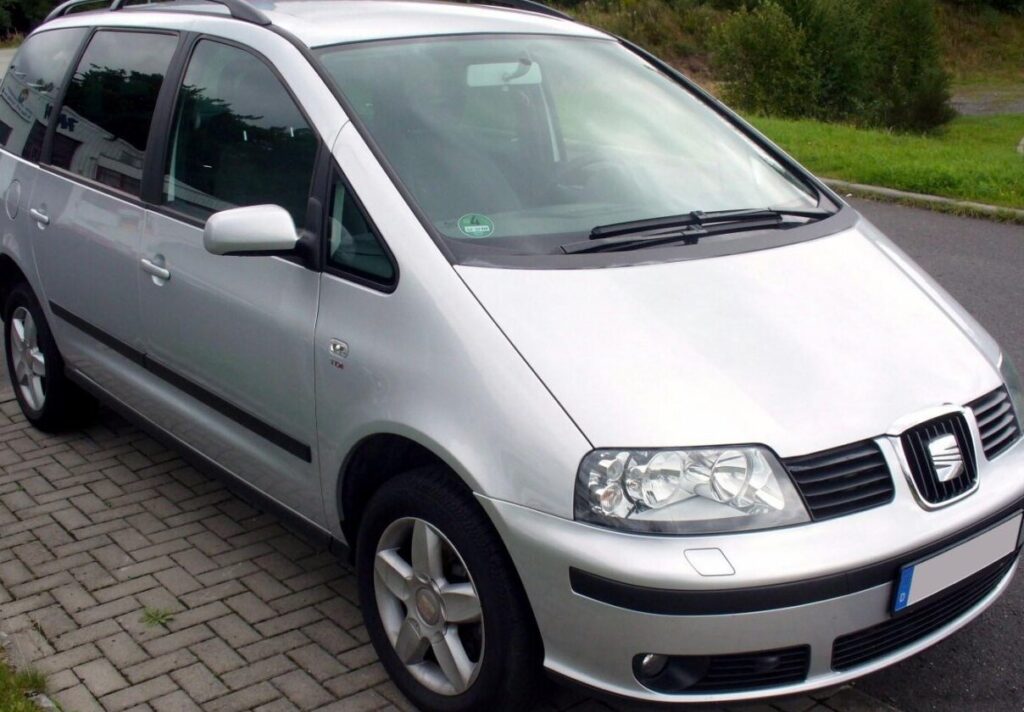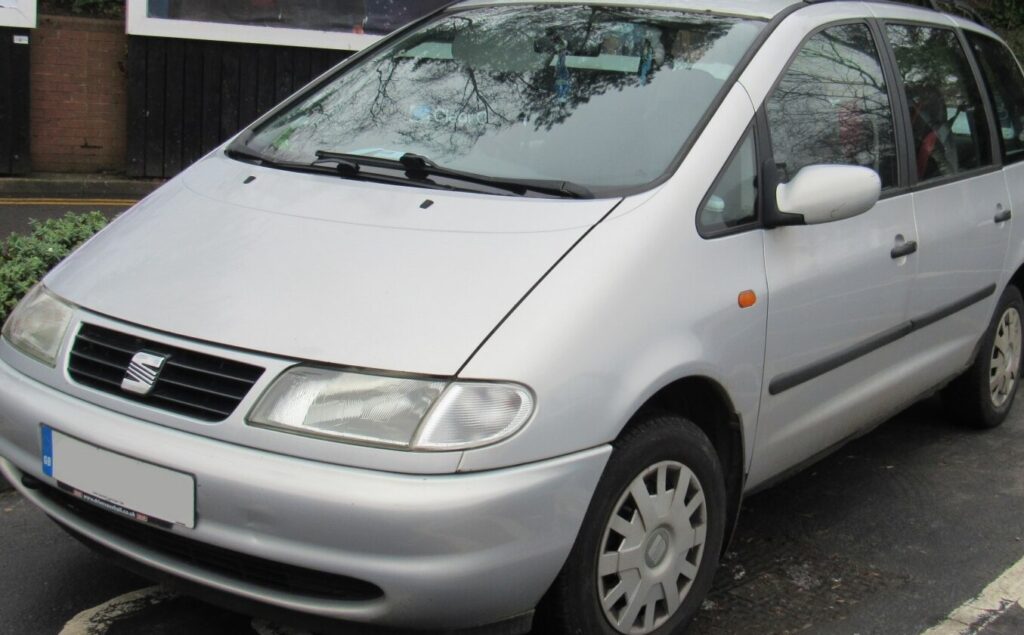
The Seat Alhambra I (7M) 1.9 TDI, producing 110 horsepower, was a significant model in Seat’s lineup during its production run from September 1997 to February 2000. Positioned as a practical and spacious family vehicle, the Alhambra was a collaborative effort with Volkswagen, sharing its platform and many components with the VW Sharan. This first generation Alhambra (designated 7M) aimed to provide a competitive offering in the burgeoning European MPV (Multi-Purpose Vehicle) market, emphasizing versatility and comfort. The 1.9 TDI variant, with its diesel engine, was particularly popular in Europe due to favorable taxation and fuel economy compared to gasoline alternatives.
Technical Specifications
| Brand | Seat |
| Model | Alhambra |
| Generation | Alhambra I (7M) |
| Type (Engine) | 1.9 TDI (110 Hp) |
| Start of production | September, 1997 |
| End of production | February, 2000 |
| Powertrain Architecture | Internal Combustion engine |
| Body type | Minivan, MPV |
| Seats | 7 |
| Doors | 5 |
| Fuel consumption (urban) | 8.6 l/100 km (27.4 US mpg) |
| Fuel consumption (extra urban) | 5.3 l/100 km (44.4 US mpg) |
| Fuel Type | Diesel |
| Acceleration 0 – 100 km/h | 16.4 sec |
| Acceleration 0 – 62 mph | 16.4 sec |
| Acceleration 0 – 60 mph | 15.6 sec |
| Maximum speed | 172 km/h (106.88 mph) |
| Weight-to-power ratio | 15.9 kg/Hp |
| Weight-to-torque ratio | 7.5 kg/Nm |
| Power | 110 Hp @ 4150 rpm |
| Torque | 235 Nm @ 1900 rpm (173.33 lb.-ft. @ 1900 rpm) |
| Engine layout | Front, Transverse |
| Engine Model/Code | AFN, AVG |
| Engine displacement | 1896 cm3 (115.7 cu. in.) |
| Number of cylinders | 4 |
| Engine configuration | Inline |
| Cylinder Bore | 79.5 mm (3.13 in.) |
| Piston Stroke | 95.5 mm (3.76 in.) |
| Compression ratio | 19.5:1 |
| Number of valves per cylinder | 2 |
| Fuel injection system | Direct injection |
| Engine aspiration | Turbocharger, Intercooler |
| Valvetrain | OHC |
| Engine oil capacity | 4.3 l (4.54 US qt | 3.78 UK qt) |
| Coolant capacity | 6.8 l (7.19 US qt | 5.98 UK qt) |
| Kerb Weight | 1754 kg (3866.91 lbs.) |
| Max. weight | 2400 kg (5291.09 lbs.) |
| Max load | 646 kg (1424.19 lbs.) |
| Trunk (boot) space – minimum | 256 l (9.04 cu. ft.) |
| Trunk (boot) space – maximum | 1597 l (56.4 cu. ft.) |
| Fuel tank capacity | 70 l (18.49 US gal | 15.4 UK gal) |
| Length | 4617 mm (181.77 in.) |
| Width | 1810 mm (71.26 in.) |
| Height | 1728 mm (68.03 in.) |
| Wheelbase | 2835 mm (111.61 in.) |
| Front track | 1528 mm (60.16 in.) |
| Rear track | 1514 mm (59.61 in.) |
| Drivetrain Architecture | Front wheel drive |
| Number of gears | 5 |
| Gearbox type | Manual transmission |
| Front suspension | Wishbone |
| Rear suspension | Inclined Lever |
| Front brakes | Ventilated discs |
| Rear brakes | Disc |
| Assisting systems | ABS (Anti-lock braking system) |
| Steering type | Steering rack and pinion |
| Power steering | Hydraulic |
| Tires size | 205/60 R16 |
Powertrain & Engine Architecture
The heart of the Alhambra 1.9 TDI was the 1.9-liter, inline four-cylinder diesel engine, available with either the AFN or AVG engine code depending on the specific market and year. This engine was a mainstay of the Volkswagen Group’s diesel offerings during the late 1990s. It featured direct fuel injection, a turbocharger with an intercooler, and an overhead camshaft (OHC) valvetrain. The direct injection system, a key technology at the time, allowed for more precise fuel delivery, improving efficiency and reducing emissions. The turbocharger and intercooler boosted power output, providing a reasonable level of performance for a family vehicle. The 5-speed manual transmission was the standard offering, chosen for its efficiency and driver engagement. The engine’s robust construction and relatively simple design contributed to its reputation for reliability.
Driving Characteristics
The 110 horsepower 1.9 TDI engine in the Alhambra provided adequate, though not exhilarating, performance. Acceleration from 0-60 mph took around 15.6 seconds, and top speed was approximately 107 mph. The engine’s 235 Nm (173 lb-ft) of torque, available from a low 1900 rpm, made it well-suited for carrying passengers and luggage. The manual transmission’s gear ratios were geared towards maximizing fuel economy and providing smooth cruising. Compared to higher-output TDI variants (like the later 130 hp versions), the 110 hp model felt less stressed when fully loaded, but also required more planning when overtaking. The Alhambra’s relatively high weight (around 3867 lbs) meant that the engine had to work harder, especially on inclines.
Equipment & Trim Levels
The Alhambra 1.9 TDI typically came with a reasonable level of standard equipment, reflecting its position as a family-oriented vehicle. This included power windows, central locking, power steering, and an ABS anti-lock braking system. Interior upholstery was typically cloth, with a functional and durable design. Optional extras included air conditioning, alloy wheels, a sunroof, and upgraded audio systems. Trim levels varied slightly depending on the market, but generally focused on adding comfort and convenience features. The Alhambra wasn’t positioned as a luxury vehicle, so the emphasis was on practicality and value.
Chassis & Braking
The Alhambra I (7M) utilized a front-wheel-drive layout with independent wishbone suspension at the front and an inclined lever rear suspension. This setup aimed to provide a comfortable ride while maintaining reasonable handling characteristics. The front brakes were ventilated discs, providing good stopping power, while the rear brakes were solid discs. The steering was a hydraulic power-assisted rack and pinion system, offering a good balance of feel and ease of use. The suspension was tuned for comfort, prioritizing a smooth ride over sporty handling. Stabilizer bars were included to reduce body roll during cornering.
Market Reception & Comparison
The Seat Alhambra 1.9 TDI was generally well-received by automotive critics as a practical and spacious MPV. Its fuel economy was a major selling point, particularly in Europe where diesel fuel was cheaper and more readily available than gasoline. Compared to the petrol-powered Alhambra variants, the 1.9 TDI offered significantly better fuel efficiency. However, some critics noted that the engine could be somewhat noisy and lacked the refinement of some of its competitors. Compared to the VW Sharan, which it was mechanically identical to, the Alhambra often offered a slightly lower price point, making it an attractive option for budget-conscious buyers.
Legacy
The 1.9 TDI engine, in its various iterations, proved to be remarkably durable and reliable. The Alhambra 1.9 TDI, even with high mileage, can still be found on the road today, a testament to its robust engineering. The engine’s simplicity and relatively low stress levels contribute to its longevity. However, like any older vehicle, maintenance is key to ensuring continued reliability. Common issues include wear and tear on suspension components, turbocharger failure (if not properly maintained), and potential issues with the fuel injection system. In the used car market, the Alhambra 1.9 TDI remains a popular choice for those seeking a practical and affordable MPV, particularly those who prioritize fuel economy and reliability.