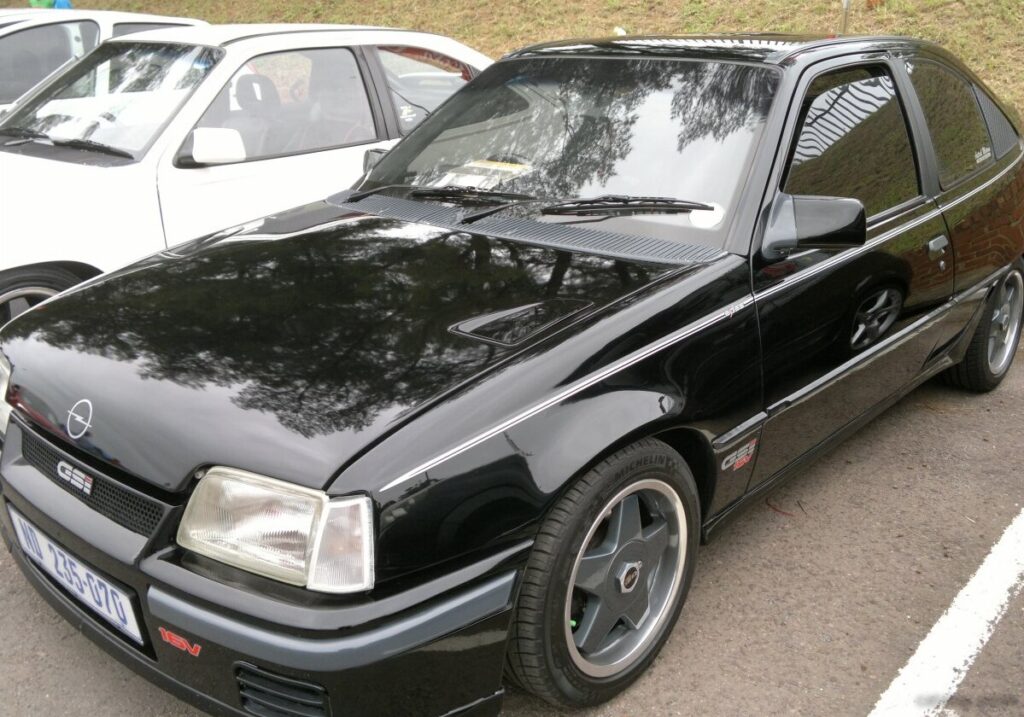
The Opel Kadett E CC 1.4i, producing 60 horsepower, was a mainstay of the Kadett E range during its relatively short production run from 1990 to 1991. Positioned as the entry-level model, it offered affordable transportation within the compact car segment in Europe. The Kadett E, launched in 1986, represented a significant step forward for Opel, moving to a more modern, aerodynamic design and benefiting from advancements in engine technology. The “CC” designation signified the ‘Coupe’ or ‘Commodore’ body style, referring to the hatchback configuration. This variant played a crucial role in attracting budget-conscious buyers and served as a gateway into the Kadett lineup.
Technical Specifications
| Brand | Opel |
| Model | Kadett |
| Generation | Kadett E CC |
| Type (Engine) | 1.4i (60 Hp) |
| Start of production | 1990 |
| End of production | 1991 |
| Powertrain Architecture | Internal Combustion engine |
| Body type | Hatchback |
| Seats | 5 |
| Doors | 3-5 |
| Fuel Type | Petrol (Gasoline) |
| Acceleration 0 – 100 km/h | 15 sec |
| Acceleration 0 – 62 mph | 15 sec |
| Acceleration 0 – 60 mph | 14.3 sec |
| Maximum speed | 160 km/h (99.42 mph) |
| Weight-to-power ratio | 14.4 kg/Hp, 69.4 Hp/tonne |
| Weight-to-torque ratio | 9.2 kg/Nm, 108.7 Nm/tonne |
| Power | 60 Hp @ 5800 rpm |
| Power per litre | 46.3 Hp/l |
| Torque | 94 Nm @ 3400-3800 rpm (69.33 lb.-ft. @ 3400-3800 rpm) |
| Engine layout | Front, Transverse |
| Engine Model/Code | C14NZ |
| Engine displacement | 1297 cm3 (79.15 cu. in.) |
| Number of cylinders | 4 |
| Engine configuration | Inline |
| Cylinder Bore | 75 mm (2.95 in.) |
| Piston Stroke | 73.4 mm (2.89 in.) |
| Compression ratio | 8.2:1 |
| Number of valves per cylinder | 2 |
| Fuel injection system | Carburettor |
| Engine aspiration | Naturally aspirated engine |
| Valvetrain | SOHC |
| Engine oil capacity | 3 l (3.17 US qt | 2.64 UK qt) |
| Coolant | 6.2 l (6.55 US qt | 5.46 UK qt) |
| Kerb Weight | 865 kg (1907 lbs.) |
| Max. weight | 1380 kg (3042.38 lbs.) |
| Max load | 515 kg (1135.38 lbs.) |
| Trunk (boot) space – minimum | 485 l (17.13 cu. ft.) |
| Trunk (boot) space – maximum | 1385 l (48.91 cu. ft.) |
| Fuel tank capacity | 52 l (13.74 US gal | 11.44 UK gal) |
| Length | 3998 mm (157.4 in.) |
| Width | 1663 mm (65.47 in.) |
| Height | 1400 mm (55.12 in.) |
| Wheelbase | 2520 mm (99.21 in.) |
| Front track | 1400 mm (55.12 in.) |
| Rear (Back) track | 1406 mm (55.35 in.) |
| Minimum turning circle | 10.5 m (34.45 ft.) |
| Drivetrain Architecture | The Internal combustion engine (ICE) drives the front wheels of the vehicle. |
| Drive wheel | Front wheel drive |
| Number of gears and type of gearbox | 5 gears, manual transmission |
| Front brakes | Disc |
| Rear brakes | Drum |
| Tires size | 175/70 R13 |
| Wheel rims size | 13 |
Powertrain & Engine Architecture
The heart of the Kadett E CC 1.4i was the C14NZ engine, a 1.3-liter (1297cc) inline-four cylinder unit. This engine was characterized by its simplicity and durability, relying on a single overhead camshaft (SOHC) valvetrain with two valves per cylinder. Unlike some of its more sophisticated counterparts, the C14NZ utilized a carburetor for fuel delivery, a cost-saving measure that contributed to its affordability. The carburetor system, while less efficient than fuel injection, was relatively easy to maintain and repair. The engine produced 60 horsepower at 5800 rpm and 94 Nm (69.33 lb-ft) of torque between 3400 and 3800 rpm. This power was transmitted to the front wheels through a standard five-speed manual transmission. The engine’s transverse mounting within the front-wheel-drive configuration maximized interior space.
Driving Characteristics
The 1.4i variant of the Kadett E was not known for its blistering performance. Acceleration from 0 to 60 mph took approximately 14.3 seconds, and its top speed was around 99 mph. The carburetor and relatively low compression ratio (8.2:1) resulted in a somewhat sluggish throttle response, particularly at lower engine speeds. However, the engine proved to be reasonably tractable for everyday driving, offering sufficient power for urban commutes and highway cruising, albeit with the need for frequent gear changes. Compared to the more powerful 1.6-liter and 2.0-liter Kadett E models, the 1.4i felt noticeably underpowered, especially when fully loaded with passengers and luggage. The five-speed manual transmission helped to keep the engine within its optimal operating range, but it couldn’t fully compensate for the engine’s limited output.
Equipment & Trim Levels
The Kadett E CC 1.4i was typically offered with a basic level of equipment, reflecting its position as the entry-level model. Standard features generally included cloth upholstery, a basic instrument cluster, and manual windows and door locks. Power steering and central locking were often optional extras. Interior trim was functional and durable, prioritizing practicality over luxury. Optional equipment could include a radio/cassette player, upgraded seat fabrics, and a sunroof. The overall interior design was typical of early 1990s European compact cars – simple, functional, and focused on providing a comfortable driving experience without excessive frills.
Chassis & Braking
The Kadett E CC featured a MacPherson strut front suspension and a torsion beam rear suspension. This setup provided a reasonable balance between ride comfort and handling. The 1.4i model typically used disc brakes on the front wheels and drum brakes on the rear. While adequate for normal driving conditions, the braking system lacked the stopping power of the larger-engined Kadett E variants. The car’s relatively light weight (approximately 1907 lbs) helped to mitigate the limitations of the braking system. Stabilizer bars were often optional, and their absence could contribute to noticeable body roll during cornering.
Market Reception & Comparison
The Kadett E CC 1.4i was generally well-received as an affordable and reliable compact car. Critics acknowledged its practicality and fuel efficiency, but often noted its lack of performance. Compared to other 1.4-liter models in its class, the Kadett E offered a competitive level of equipment and a relatively spacious interior. However, rivals such as the Volkswagen Golf and Ford Escort often offered more refined driving experiences and a wider range of engine options. The 1.4i’s fuel economy was a strong point, making it an attractive option for budget-conscious buyers. Reliability was generally good, although the carburetor system required periodic maintenance and adjustment.
Legacy
The Opel Kadett E CC 1.4i, while not the most powerful or technologically advanced version of the Kadett E, remains a fondly remembered car for many European drivers. Its simplicity, durability, and affordability made it a popular choice for first-time car buyers and those seeking economical transportation. Today, well-maintained examples are becoming increasingly sought after by classic car enthusiasts. The C14NZ engine, while not known for its high performance, proved to be a robust and reliable unit, capable of covering high mileage with proper maintenance. The Kadett E CC 1.4i represents a significant chapter in Opel’s history, embodying the brand’s commitment to providing practical and affordable vehicles to the masses.