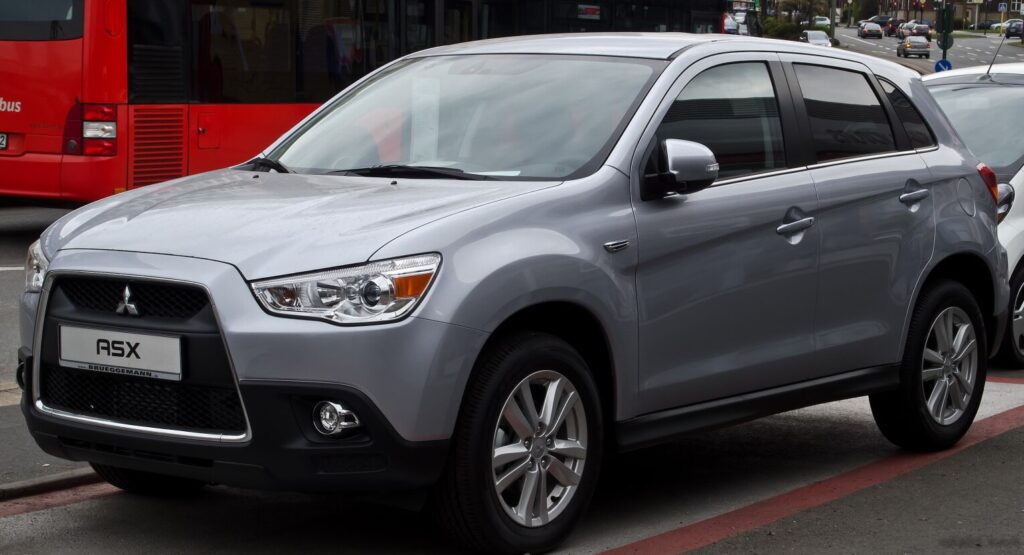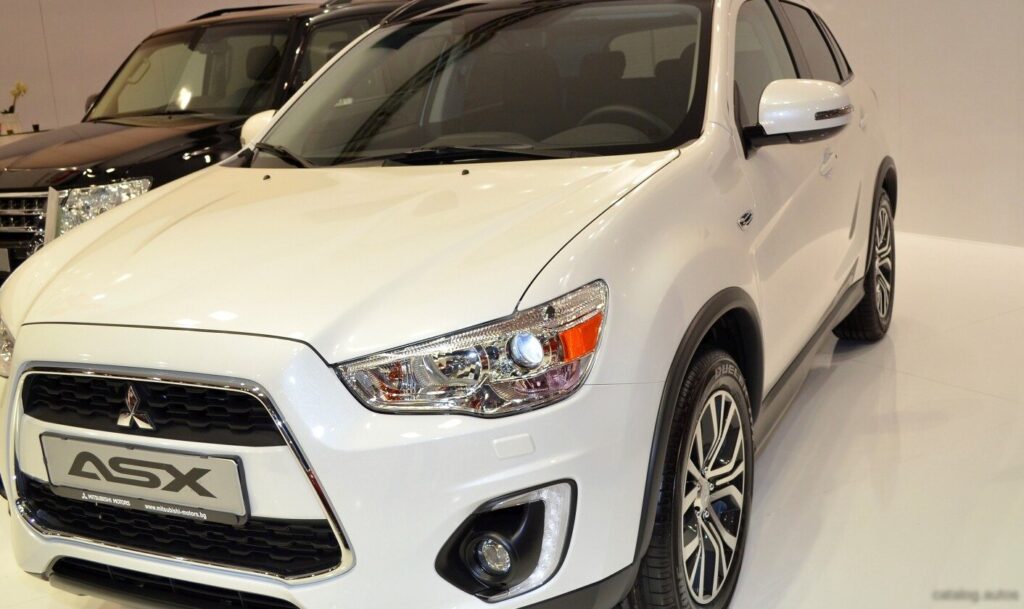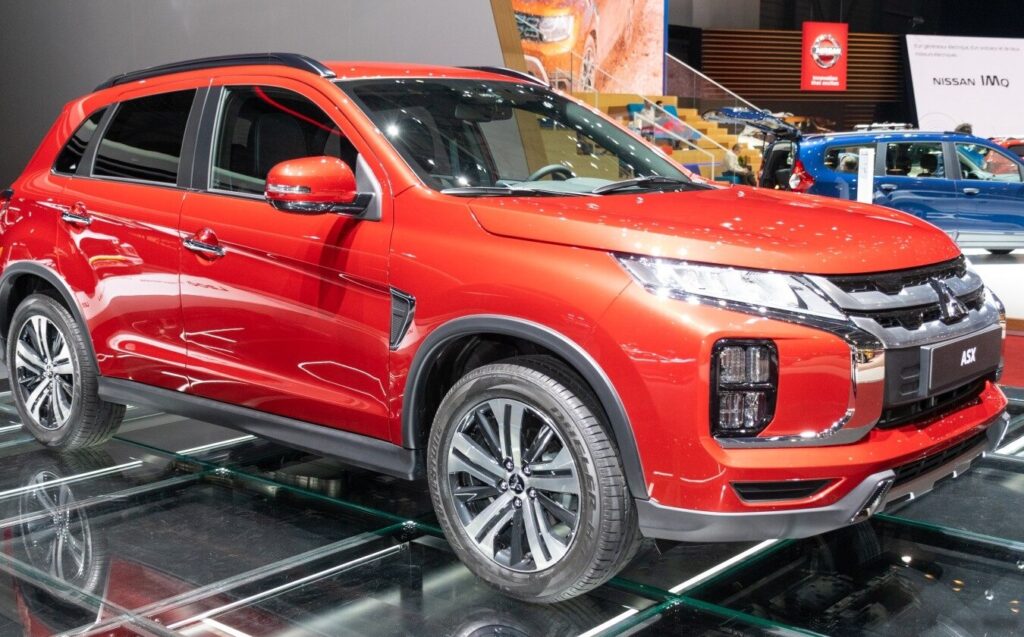
The Mitsubishi ASX I (facelift 2019) 2.0 (150 Hp) CVT represents a mid-cycle refresh of the first-generation ASX, a compact crossover SUV produced by Mitsubishi Motors. Introduced in September 2019 and continuing through October 2021, this variant aimed to provide a balance of fuel efficiency and adequate performance for the European and Asian markets, though it was also available in other regions. Positioned as a mainstream offering within the ASX lineup, it sat between the base 1.6L engine options and the more powerful, though less common, variants. The facelift brought updated styling and minor technological improvements to the existing platform, the 1HX0 series.
Technical Specifications
| Brand | Mitsubishi |
| Model | ASX |
| Generation | ASX I (facelift 2019) |
| Type (Engine) | 2.0 (150 Hp) CVT |
| Start of production | September, 2019 |
| End of production | October, 2021 |
| Powertrain Architecture | Internal Combustion engine |
| Body type | SUV, Crossover |
| Seats | 5 |
| Doors | 5 |
| Fuel consumption (urban) | 7.7 l/100 km (30.5 US mpg) |
| Fuel consumption (extra urban) | 5.8 l/100 km (40.6 US mpg) |
| Fuel consumption (combined) | 6.5 l/100 km (36.2 US mpg) |
| CO2 emissions | 149 g/km |
| Fuel Type | Petrol (Gasoline) |
| Acceleration 0 – 100 km/h | 11.7 sec |
| Acceleration 0 – 62 mph | 11.7 sec |
| Acceleration 0 – 60 mph | 11.1 sec |
| Maximum speed | 190 km/h (118.06 mph) |
| Emission standard | Euro 6 d-TEMP-EVAP-ISC |
| Weight-to-power ratio | 9.2 kg/Hp |
| Weight-to-torque ratio | 7.1 kg/Nm |
| Power | 150 Hp @ 6000 rpm |
| Torque | 195 Nm @ 4200 rpm (143.82 lb.-ft. @ 4200 rpm) |
| Engine layout | Front, Transverse |
| Engine Model/Code | 4J11 |
| Engine displacement | 1998 cm3 (121.93 cu. in.) |
| Number of cylinders | 4 |
| Engine configuration | Inline |
| Cylinder Bore | 86 mm (3.39 in.) |
| Piston Stroke | 86 mm (3.39 in.) |
| Compression ratio | 10.5:1 |
| Number of valves per cylinder | 4 |
| Fuel injection system | Multi-port manifold injection |
| Engine aspiration | Naturally aspirated engine |
| Valvetrain | SOHC, MIVEC |
| Engine oil capacity | 4.3 l (4.54 US qt | 3.78 UK qt) |
| Coolant | 7.5 l (7.93 US qt | 6.6 UK qt) |
| Kerb Weight | 1386 kg (3055.61 lbs.) |
| Max. weight | 1970 kg (4343.11 lbs.) |
| Max load | 584 kg (1287.5 lbs.) |
| Trunk (boot) space – minimum | 406 l (14.34 cu. ft.) |
| Trunk (boot) space – maximum | 1206 l (42.59 cu. ft.) |
| Fuel tank capacity | 63 l (16.64 US gal | 13.86 UK gal) |
| Max. roof load | 80 kg (176.37 lbs.) |
| Permitted trailer load with brakes (12%) | 1300 kg (2866.01 lbs.) |
| Permitted trailer load without brakes | 730 kg (1609.37 lbs.) |
| Permitted towbar download | 65 kg (143.3 lbs.) |
| Length | 4365 mm (171.85 in.) |
| Width | 1770 mm (69.69 in.) |
| Width including mirrors | 2080 mm (81.89 in.) |
| Height | 1640 mm (64.57 in.) |
| Wheelbase | 2670 mm (105.12 in.) |
| Front track | 1525 mm (60.04 in.) |
| Rear (Back) track | 1530 mm (60.24 in.) |
| Front overhang | 930 mm (36.61 in.) |
| Rear overhang | 765 mm (30.12 in.) |
| Ride height (ground clearance) | 190 mm (7.48 in.) |
| Minimum turning circle | 10.6 m (34.78 ft.) |
| Drivetrain Architecture | Front wheel drive |
| Number of gears and type of gearbox | 6 gears, automatic transmission CVT |
| Front suspension | Independent type McPherson |
| Rear suspension | Independent multi-link suspension |
| Front brakes | Ventilated discs |
| Rear brakes | Disc |
| Assisting systems | ABS (Anti-lock braking system) |
| Steering type | Steering rack and pinion |
Powertrain & Engine Architecture
The 2019 ASX 2.0 CVT is powered by Mitsubishi’s 4J11 engine, a 1.998-liter (2.0L) inline-four cylinder gasoline engine. This engine utilizes a multi-point fuel injection system and a single overhead camshaft (SOHC) configuration with Mitsubishi’s MIVEC (Mitsubishi Innovative Valve timing Electronic Control) variable valve timing technology. MIVEC optimizes valve timing for improved performance and fuel efficiency across the engine’s operating range. The 4J11 produces 150 horsepower at 6000 rpm and 195 Nm (143.82 lb-ft) of torque at 4200 rpm. The engine is transversely mounted in the front of the vehicle. Paired with the 4J11 is a continuously variable transmission (CVT) with six pre-programmed “virtual” gear ratios, designed to mimic the feel of a traditional automatic transmission while maximizing fuel economy. The CVT lacks fixed gear ratios, instead utilizing a belt-and-pulley system to provide a seamless and continuously changing drive ratio.
Driving Characteristics
The 2.0L CVT powertrain delivers adequate, but not particularly sporty, performance. Acceleration from 0-60 mph takes approximately 11.1 seconds, and 0-100 km/h in 11.7 seconds. The CVT prioritizes fuel efficiency over rapid acceleration. The “virtual” gear ratios attempt to provide a more engaging driving experience than a traditional CVT, but the engine can still exhibit a characteristic “rubber band” feel under hard acceleration, where engine RPMs rise quickly without a corresponding increase in vehicle speed. Compared to manual transmission versions of the ASX, or those equipped with more powerful engines, the 2.0L CVT feels less responsive. However, it offers a smoother and more comfortable driving experience, particularly in urban environments. The CVT’s programming is tuned for efficiency, resulting in relatively low engine speeds at cruising speeds.
Equipment & Trim Levels
The 2.0 CVT trim of the ASX I (facelift 2019) typically included standard features such as air conditioning, power windows and locks, a touchscreen infotainment system with Bluetooth connectivity, and basic safety equipment like ABS, airbags, and stability control. Higher trim levels offered additional features like alloy wheels, a rearview camera, parking sensors, and upgraded interior materials. Interior upholstery was generally cloth, with options for leather in higher-spec models. The dashboard layout was updated during the 2019 facelift, featuring a more modern design and improved ergonomics. Optional extras included a panoramic sunroof, navigation system, and premium audio system.
Chassis & Braking
The ASX I (facelift 2019) utilizes an independent McPherson strut suspension in the front and an independent multi-link suspension in the rear. This setup provides a comfortable ride quality and reasonable handling characteristics. The front brakes are ventilated discs, while the rear brakes are solid discs. ABS (Anti-lock Braking System) is standard. The suspension tuning is geared towards comfort rather than sporty handling, with a focus on absorbing bumps and providing a stable ride. Stabilizer bars are present on both the front and rear axles to reduce body roll during cornering.
Market Reception & Comparison
The Mitsubishi ASX 2.0 CVT was generally well-received as a practical and affordable crossover SUV. Critics praised its fuel efficiency and comfortable ride, but noted its lack of outright performance. Compared to other trims in the ASX lineup, the 2.0L CVT offered a good balance of price and features. The 1.6L engine options were more affordable but offered less power, while the higher-output variants were more expensive. In terms of fuel economy, the 2.0L CVT performed competitively with similar vehicles in its class. Reliability was generally considered good, with the 4J11 engine proving to be a durable and dependable unit.
Legacy
The Mitsubishi ASX I (facelift 2019) 2.0 CVT remains a relatively common sight on the used car market. The 4J11 engine and CVT transmission have proven to be reasonably reliable, although regular maintenance is crucial. CVT transmissions, in general, require specific fluid changes and careful driving habits to ensure longevity. The ASX’s relatively simple mechanical design and readily available parts contribute to its affordability and ease of maintenance. While not a particularly exciting vehicle to drive, the 2.0L CVT ASX offers a practical and economical transportation solution for those seeking a compact crossover SUV.