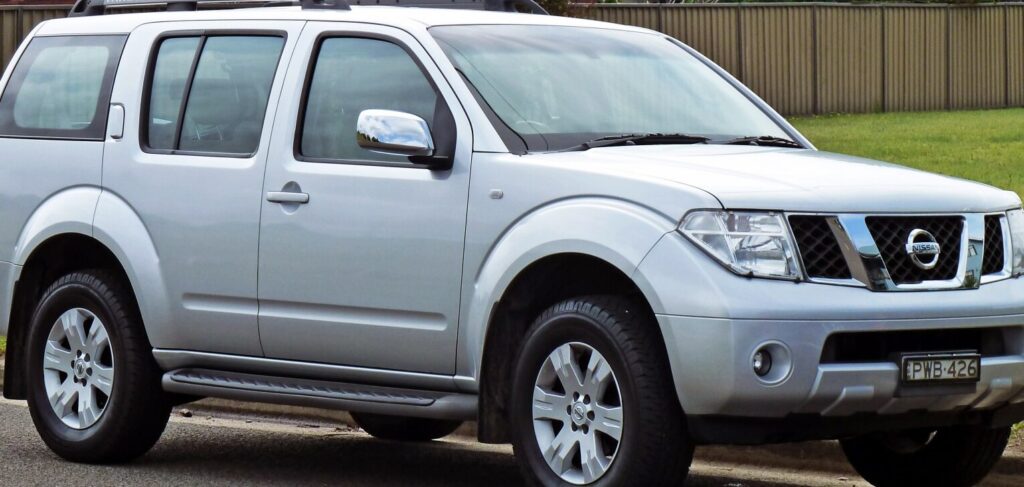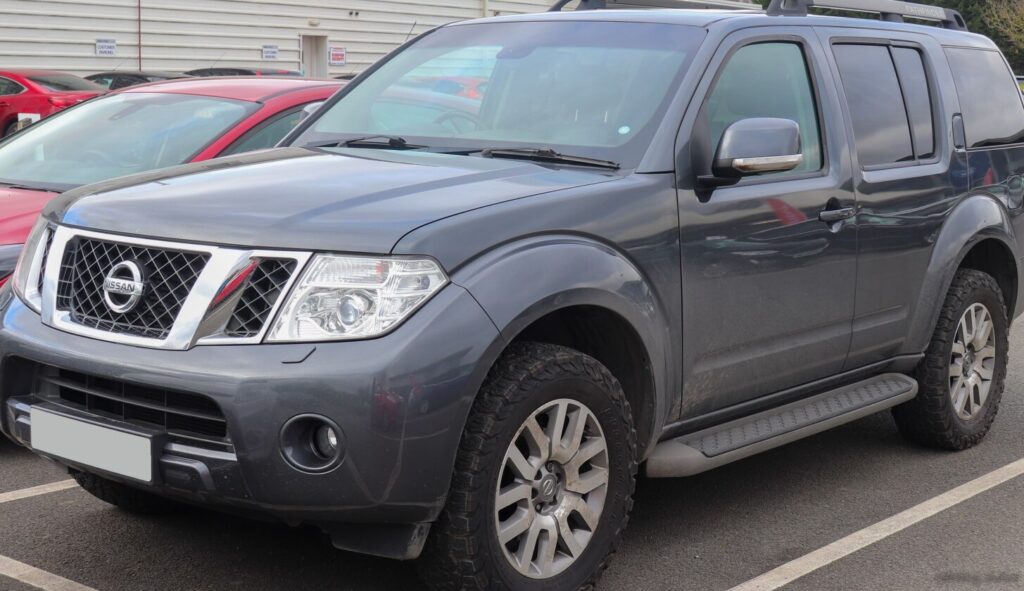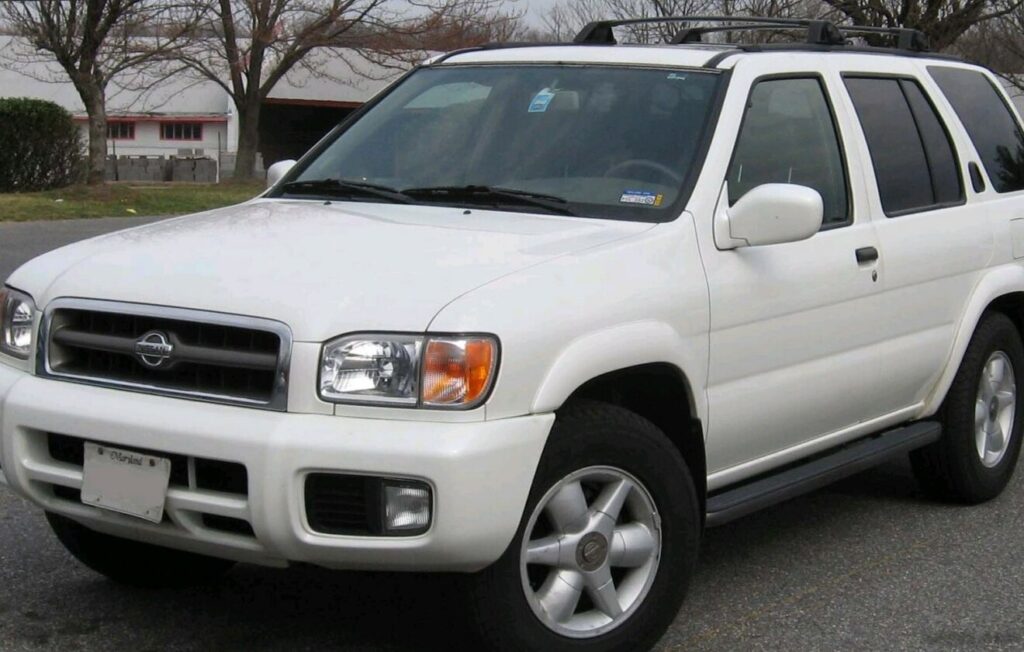
The Nissan Pathfinder II, manufactured between 2001 and 2004, marked a substantial evolution in Nissan’s mid-size SUV lineup. The 3.5i V6 24V LE 4WD variant, powered by the VQ35DE engine producing 243 horsepower, represented a premium offering within the Pathfinder II range. This model aimed to balance family-friendly spaciousness, respectable off-road capability through its four-wheel-drive system, and a more potent engine for those requiring increased towing capacity or performance. It was primarily targeted towards American families desiring a versatile SUV suitable for both daily commutes and weekend excursions.
Technical Specifications
| Brand | Nissan |
| Model | Pathfinder |
| Generation | Pathfinder II |
| Type (Engine) | 3.5 i V6 24V LE (243 Hp) 4WD |
| Start of production | 2001 |
| End of production | 2004 |
| Powertrain Architecture | Internal Combustion engine |
| Body type | SUV |
| Seats | 5 |
| Doors | 5 |
| Fuel consumption (urban) | 15.7 l/100 km (15 US mpg, 18 UK mpg, 6.4 km/l) |
| Fuel consumption (extra urban) | 14.7 l/100 km (16 US mpg, 19.2 UK mpg, 6.8 km/l) |
| Fuel Type | Petrol (Gasoline) |
| Acceleration 0 – 100 km/h | 9.2 sec |
| Acceleration 0 – 62 mph | 9.2 sec |
| Acceleration 0 – 60 mph | 8.7 sec |
| Maximum speed | 164 km/h (101.9 mph) |
| Weight-to-power ratio | 8.2 kg/Hp, 122.1 Hp/tonne |
| Weight-to-torque ratio | 5.5 kg/Nm, 180.4 Nm/tonne |
| Power | 243 Hp @ 6000 rpm |
| Power per litre | 69.5 Hp/l |
| Torque | 359 Nm @ 3200 rpm (264.78 lb.-ft. @ 3200 rpm) |
| Engine layout | Front, Longitudinal |
| Engine Model/Code | VQ35DE |
| Engine displacement | 3498 cm3 (213.46 cu. in.) |
| Number of cylinders | 6 |
| Engine configuration | V-engine |
| Cylinder Bore | 95.5 mm (3.76 in.) |
| Piston Stroke | 81.4 mm (3.2 in.) |
| Compression ratio | 10:1 |
| Number of valves per cylinder | 4 |
| Fuel injection system | Multi-port manifold injection |
| Engine aspiration | Naturally aspirated engine |
| Valvetrain | DOHC |
| Engine oil capacity | 5 l (5.28 US qt | 4.4 UK qt) |
| Coolant capacity | 9.2 l (9.72 US qt | 8.09 UK qt) |
| Kerb Weight | 1990 kg (4387.2 lbs.) |
| Trunk (boot) space – minimum | 1076 l (38 cu. ft.) |
| Trunk (boot) space – maximum | 2407 l (85 cu. ft.) |
| Fuel tank capacity | 80 l (21.13 US gal | 17.6 UK gal) |
| Length | 4640 mm (182.68 in.) |
| Width | 1820 mm (71.65 in.) |
| Height | 1800 mm (70.87 in.) |
| Wheelbase | 2700 mm (106.3 in.) |
| Front track | 1539 mm (60.59 in.) |
| Rear track | 1544 mm (60.79 in.) |
| Drive wheel | All wheel drive (4×4) |
| Number of gears | 4 |
| Gearbox type | automatic transmission |
| Front suspension | Coil spring |
| Rear suspension | Coil spring |
| Front brakes | Ventilated discs |
| Rear brakes | Drum |
| Assisting systems | ABS (Anti-lock braking system) |
| Steering type | Steering rack and pinion |
| Power steering | Hydraulic Steering |
| Tires size | 255/65 R16 |
Powertrain & Engine Architecture
The 3.5i LE’s core was Nissan’s VQ35DE 3.5-liter V6 engine. This engine, belonging to the celebrated VQ engine family, was renowned for its smooth operation, substantial power output, and overall dependability. The VQ35DE featured a 60-degree V-angle, dual overhead camshafts (DOHC), and four valves per cylinder. It employed a multi-port fuel injection system, directly injecting fuel into the intake ports. The engine generated 243 horsepower at 6000 rpm and 264 lb-ft of torque at 3200 rpm. A four-speed automatic transmission was coupled with this engine, prioritizing comfortable and convenient operation. While not as performance-oriented as a manual transmission, the automatic provided smooth gear changes and was well-suited for everyday driving and towing. The 4WD system was a part-time system, allowing the driver to switch between two-wheel drive and four-wheel drive as needed.
Driving Characteristics
The 3.5i V6 Automatic Pathfinder II delivered a noticeable performance improvement over the base 3.3-liter V6 models. Acceleration to 60 mph was achieved in approximately 8.7 seconds, making it reasonably quick for an SUV of its size. The four-speed automatic transmission offered adequate gear ratios for both city and highway driving, although some reviewers observed it could feel somewhat dated compared to newer transmissions with more gears. The torque output of 264 lb-ft provided ample power for towing trailers or tackling moderately challenging terrain. The 4WD system enhanced traction in adverse conditions, making it a capable vehicle for light off-roading. However, it wasn’t intended for demanding rock crawling or extreme off-road pursuits.
Equipment & Trim Levels
The “LE” designation signified a higher trim level, meaning the 3.5i LE came standard with numerous comfort and convenience features. These typically included alloy wheels, a premium sound system, power windows and locks, air conditioning, and a leather-wrapped steering wheel. Optional extras could encompass a sunroof, upgraded audio systems, and a navigation system. Interior upholstery was generally cloth, with leather available as an upgrade. The dashboard layout was functional and user-friendly, emphasizing ease of operation over elaborate design.
Chassis & Braking
The Pathfinder II utilized a body-on-frame construction, providing a robust and durable platform. The suspension system consisted of coil springs at all four corners, delivering a comfortable ride quality. Front brakes were ventilated discs, offering good stopping power, while rear brakes were drums. This configuration was sufficient for the vehicle’s weight and intended use, though not as advanced as four-wheel disc brakes. Anti-lock brakes (ABS) were standard, enhancing safety by preventing wheel lockup during hard braking. The steering system was a hydraulic rack-and-pinion setup, providing responsive and precise handling.
Market Reception & Comparison
The 3.5i V6 LE 4WD Pathfinder II generally received positive reviews from automotive critics. It was lauded for its powerful engine, spacious interior, and comfortable ride. However, some reviewers pointed out that fuel economy was relatively low, averaging around 15-16 mpg in combined driving. Compared to the base 3.3-liter V6 models, the 3.5i offered a significant performance gain, but at a higher price. When compared to competitors like the Ford Explorer and Jeep Grand Cherokee, the Pathfinder II presented a compelling blend of features and value. The 3.5L engine was often considered more refined than some of the V6 options offered by its rivals.
Legacy
The VQ35DE engine has demonstrated remarkable durability and reliability over the long term. Pathfinders equipped with this engine and the four-speed automatic transmission generally perform well with routine maintenance. Common issues include minor oil leaks and occasional sensor failures, but major mechanical problems are relatively uncommon. In the used car market, the 3.5i LE 4WD Pathfinder II remains a popular choice for buyers seeking a capable and dependable SUV. Its combination of power, space, and four-wheel-drive capability continues to make it a practical and versatile vehicle for families and outdoor enthusiasts. While fuel economy isn’t a standout feature, its overall reliability and relatively affordable price make it a worthwhile consideration.