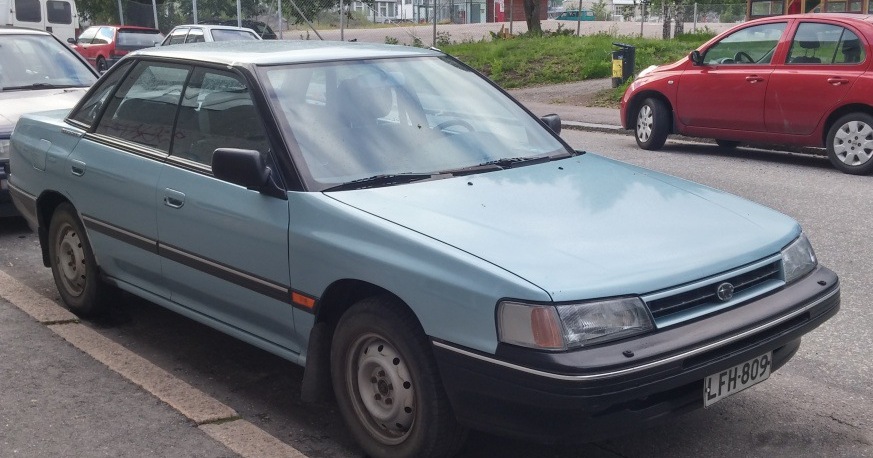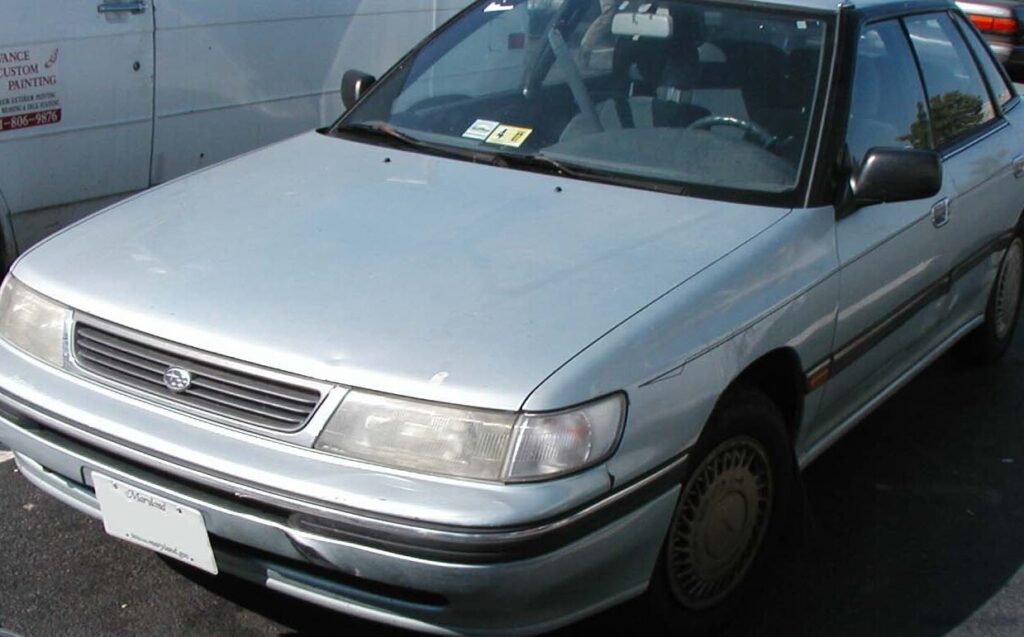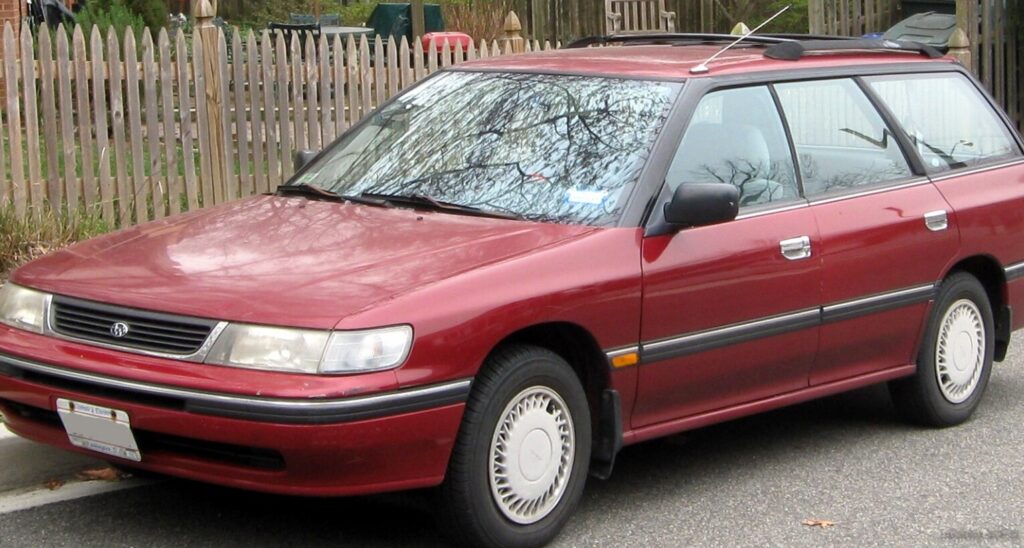
The Subaru Legacy I Station Wagon, specifically the BJF facelift model produced from 1992 to 1994, represented Subaru’s entry into the competitive mid-size wagon segment. This variant, equipped with the 2.0-liter EJ20E engine producing 116 horsepower and paired with an automatic transmission, and all-wheel drive, was positioned as a practical and capable family vehicle. It built upon the initial Legacy launch, offering a refreshed design and improved features. The BJF series was primarily sold in markets like Japan, Australia, and Europe, offering an alternative to domestic and European wagons.
Technical Specifications
| Brand | Subaru |
| Model | Legacy |
| Generation | Legacy I Station Wagon (BJF, facelift 1991) |
| Type (Engine) | 2000 (116 Hp) AWD Automatic |
| Start of production | 1992 |
| End of production | 1994 |
| Powertrain Architecture | Internal Combustion engine |
| Body type | Station wagon (estate) |
| Seats | 5 |
| Doors | 5 |
| Fuel consumption (urban) | 12.3 l/100 km (19.1 US mpg, 23 UK mpg, 8.1 km/l) |
| Fuel consumption (extra urban) | 7.6 l/100 km (30.9 US mpg, 37.2 UK mpg, 13.2 km/l) |
| Fuel consumption (combined) | 9.4 l/100 km (25 US mpg, 30.1 UK mpg, 10.6 km/l) |
| Fuel Type | Petrol (Gasoline) |
| Acceleration 0 – 100 km/h | 13.4 sec |
| Acceleration 0 – 62 mph | 13.4 sec |
| Acceleration 0 – 60 mph | 12.7 sec |
| Maximum speed | 175 km/h (108.74 mph) |
| Weight-to-power ratio | 11.6 kg/Hp, 86.2 Hp/tonne |
| Weight-to-torque ratio | 8.2 kg/Nm, 121.9 Nm/tonne |
| Power | 116 Hp @ 5600 rpm |
| Power per litre | 58.2 Hp/l |
| Torque | 164 Nm @ 4400 rpm (120.96 lb.-ft. @ 4400 rpm) |
| Engine layout | Front, Longitudinal |
| Engine Model/Code | EJ20E |
| Engine displacement | 1994 cm3 (121.68 cu. in.) |
| Number of cylinders | 4 |
| Engine configuration | Boxer |
| Cylinder Bore | 92 mm (3.62 in.) |
| Piston Stroke | 75 mm (2.95 in.) |
| Compression ratio | 9.5:1 |
| Number of valves per cylinder | 4 |
| Fuel injection system | Multi-port manifold injection |
| Engine aspiration | Naturally aspirated engine |
| Valvetrain | SOHC |
| Engine oil capacity | 4.5 l (4.76 US qt | 3.96 UK qt) |
| Coolant | 6.1 l (6.45 US qt | 5.37 UK qt) |
| Kerb Weight | 1345 kg (2965.22 lbs.) |
| Max. weight | 1950 kg (4299.01 lbs.) |
| Max load | 605 kg (1333.8 lbs.) |
| Trunk (boot) space – minimum | 420 l (14.83 cu. ft.) |
| Trunk (boot) space – maximum | 1550 l (54.74 cu. ft.) |
| Fuel tank capacity | 60 l (15.85 US gal | 13.2 UK gal) |
| Max. roof load | 100 kg (220.46 lbs.) |
| Permitted trailer load with brakes (12%) | 950 kg (2094.39 lbs.) |
| Permitted trailer load without brakes | 500 kg (1102.31 lbs.) |
| Permitted towbar download | 75 kg (165.35 lbs.) |
| Length | 4620 mm (181.89 in.) |
| Width | 1690 mm (66.54 in.) |
| Height | 1480 mm (58.27 in.) |
| Wheelbase | 2580 mm (101.57 in.) |
| Front track | 1460 mm (57.48 in.) |
| Rear (Back) track | 1455 mm (57.28 in.) |
| Ride height (ground clearance) | 165 mm (6.5 in.) |
| Minimum turning circle | 10.1 m (33.14 ft.) |
| Drive wheel | All wheel drive (4×4) |
| Number of gears and type of gearbox | 4 gears, automatic transmission |
| Front suspension | Independent type McPherson |
| Rear suspension | Several levers and rods |
| Front brakes | Ventilated discs |
| Rear brakes | Disc |
| Assisting systems | ABS (Anti-lock braking system) |
| Steering type | Steering rack and pinion |
| Power steering | Hydraulic Steering |
| Tires size | 185/70 R14 |
| Wheel rims size | 5J x 14 |
INTRODUCTION
The Subaru Legacy I Station Wagon BJF facelift, produced between 1992 and 1994, was a significant model for Subaru, expanding their presence in the practical family car market. It was part of the first generation Legacy (BC/BF series), which debuted in 1989, and the BJF represented a mid-cycle refresh. This wagon body style, popular in Europe and Japan, offered increased cargo capacity compared to the sedan. The 2.0-liter engine with 116 horsepower and an automatic transmission was a common configuration, aimed at buyers prioritizing ease of use and comfort over outright performance. It sat within the Legacy lineup as a mid-range offering, positioned below the more powerful 2.2-liter options and above the base 1.8-liter models.
Powertrain & Engine Architecture
The heart of this Legacy variant is the EJ20E 2.0-liter horizontally-opposed (boxer) four-cylinder engine. This engine, a hallmark of Subaru, was known for its smooth operation and relatively compact size. The EJ20E featured a single overhead camshaft (SOHC) design, operating with four valves per cylinder. Fuel delivery was managed by a multi-port fuel injection system, providing precise fuel metering for improved efficiency and emissions. The engine produced 116 horsepower at 5600 rpm and 164 Nm (120.96 lb-ft) of torque at 4400 rpm. The automatic transmission was a four-speed unit, designed to provide smooth and convenient shifting. While not particularly sporty, it was well-suited to the engine’s torque curve and the wagon’s intended use as a family vehicle. The engine code ‘EJ20E’ is crucial for identifying specific parts and maintenance requirements.
Driving Characteristics
The 116 hp, automatic transmission combination in the Legacy wagon delivered a comfortable, if not exhilarating, driving experience. Acceleration from 0-60 mph took around 12.7 seconds, and top speed was approximately 108.74 mph. The automatic transmission, while convenient, did result in some power loss compared to the available five-speed manual. Gear ratios were optimized for fuel economy and smooth cruising rather than rapid acceleration. The all-wheel-drive system provided enhanced traction, particularly in inclement weather, making it a capable vehicle for year-round use. Compared to the higher-output 2.2-liter versions, this variant felt noticeably less powerful, especially when fully loaded with passengers and cargo. However, it offered a more relaxed and fuel-efficient driving experience.
Equipment & Trim Levels
The BJF facelift Legacy wagon with the 2.0-liter engine and automatic transmission typically came equipped with a reasonable level of standard features. These included power steering, central locking, electric windows, and an AM/FM radio. Interior upholstery was typically cloth, with a practical and durable finish. Optional extras included a sunroof, upgraded audio systems, and air conditioning. Trim levels varied depending on the market, but generally, this configuration represented a mid-range offering. Higher trim levels added features like alloy wheels, upgraded interior trim, and more sophisticated audio systems.
Chassis & Braking
The Legacy wagon featured an independent McPherson strut suspension in the front, providing a comfortable ride and predictable handling. The rear suspension utilized a multi-link setup, further enhancing ride quality and stability. Braking duties were handled by ventilated discs at the front and solid discs at the rear. An anti-lock braking system (ABS) was often included as standard equipment, improving braking performance and safety. The chassis was designed to balance comfort and handling, providing a stable platform for the wagon body style. Stabilizer bars were fitted to both the front and rear axles to reduce body roll during cornering.
Market Reception & Comparison
The Subaru Legacy I Station Wagon, particularly this 2.0-liter automatic variant, was generally well-received by automotive critics as a practical and reliable family vehicle. It was praised for its spacious interior, comfortable ride, and all-wheel-drive capability. However, some critics noted that the engine lacked outright power, and the automatic transmission could feel sluggish at times. Compared to other wagons in its class, such as the Volvo 240 or the Ford Mondeo, the Legacy offered a unique combination of all-wheel drive and a horizontally-opposed engine. Fuel economy was respectable for its time, averaging around 25 US mpg in combined driving. Reliability was generally good, although regular maintenance was essential to ensure the longevity of the engine and transmission.
Legacy
The EJ20E engine, found in this Legacy variant, proved to be a durable and reliable powerplant when properly maintained. While not immune to age-related issues, these engines are known to last for high mileage with regular oil changes and timely servicing. Today, the Subaru Legacy I Station Wagon BJF facelift is considered a classic car, particularly in markets where it was originally sold. Finding well-maintained examples can be challenging, but they offer a unique and affordable entry point into the world of classic Subarus. The all-wheel-drive system and boxer engine continue to be hallmarks of the Subaru brand, and this Legacy wagon represents an important step in the company’s history.