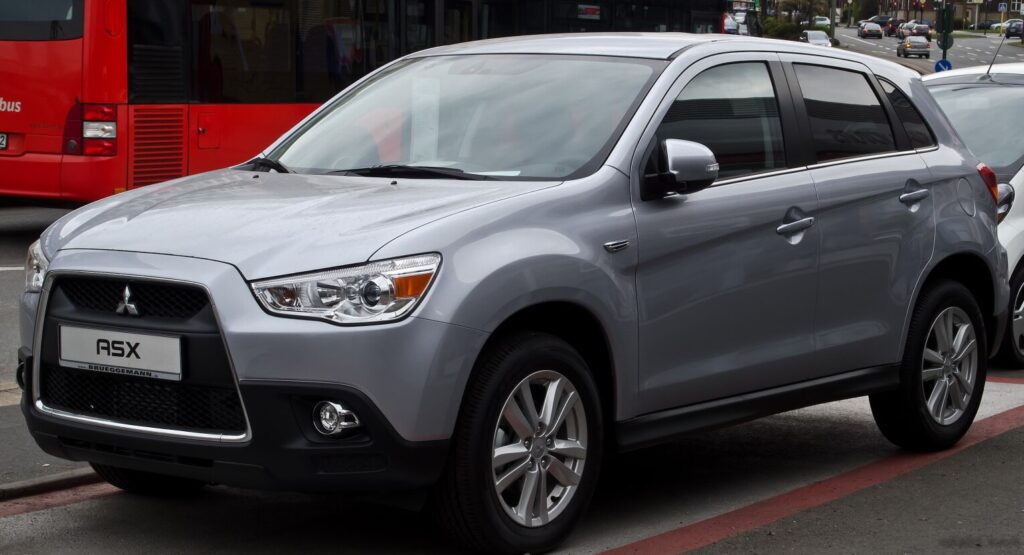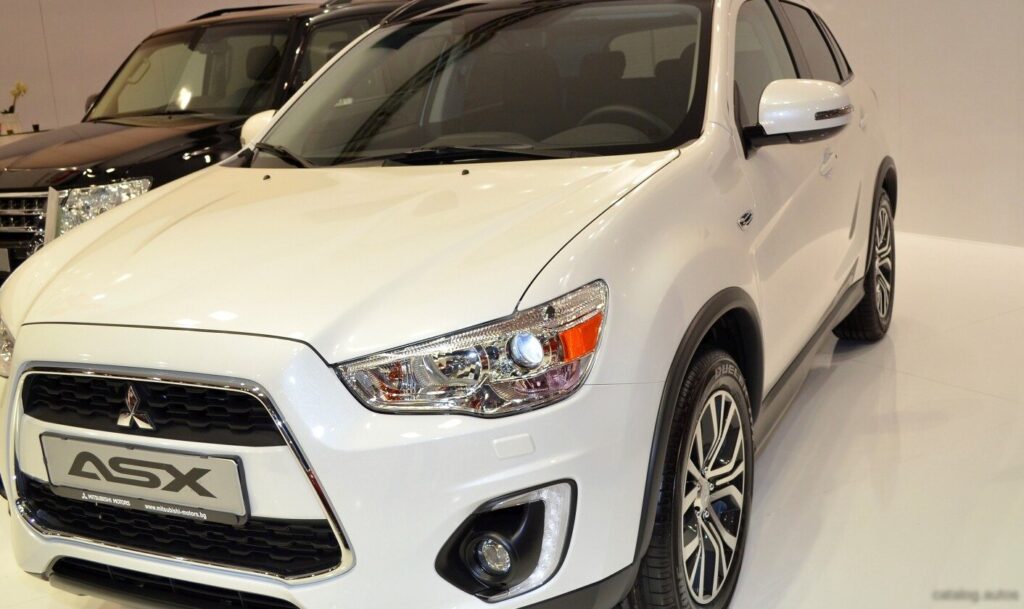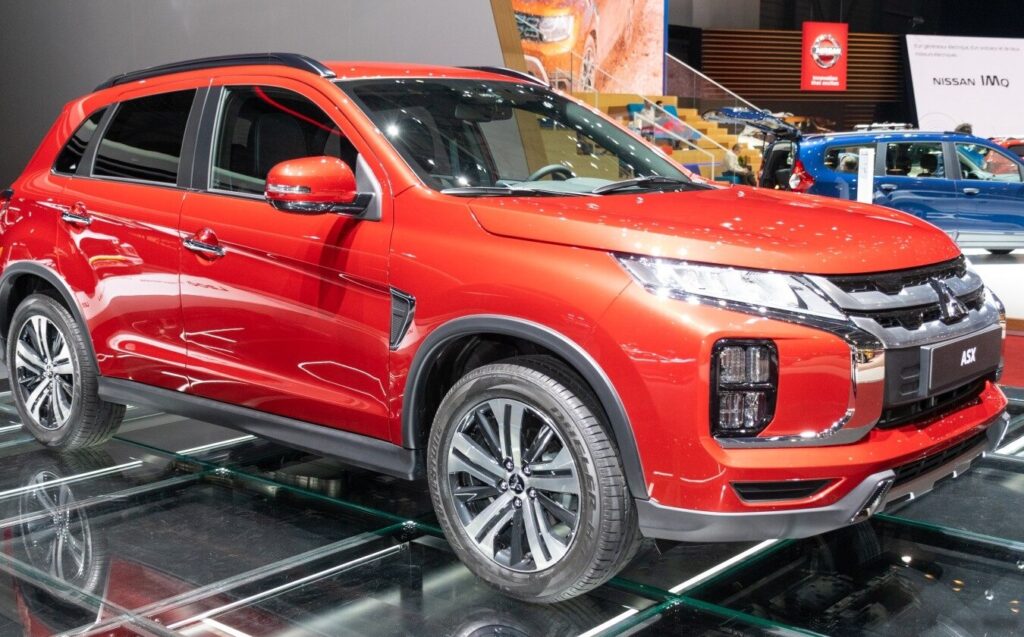
The Mitsubishi ASX I (facelift 2019) 2.4 MIVEC (167 Hp) CVT represents a mid-cycle refresh of the first-generation ASX, a compact crossover SUV produced by Mitsubishi Motors. Introduced in 2019 and continuing through 2023, this variant aimed to provide a balance of performance and fuel efficiency within the ASX lineup. It was primarily marketed in Europe, Australia, and other regions outside of North America, where the ASX was not initially sold under the Mitsubishi brand. This specific configuration – the 2.4-liter MIVEC engine paired with a continuously variable transmission (CVT) – occupied a position in the mid-range of the ASX offerings, offering more power than the base engine options while remaining more accessible than the top-tier trims.
Technical Specifications
| Brand | Mitsubishi |
| Model | ASX |
| Generation | ASX I (facelift 2019) |
| Type (Engine) | 2.4 MIVEC (167 Hp) CVT |
| Start of production | 2019 |
| End of production | 2023 |
| Powertrain Architecture | Internal Combustion engine |
| Body type | SUV, Crossover |
| Seats | 5 |
| Doors | 5 |
| Fuel consumption (combined) | 7.9 l/100 km (29.8 US mpg, 35.8 UK mpg, 12.7 km/l) |
| CO2 emissions | 186 g/km |
| Fuel Type | Petrol (Gasoline) |
| Weight-to-power ratio | 8.4 kg/Hp, 119.5 Hp/tonne |
| Weight-to-torque ratio | 6.3 kg/Nm, 158.8 Nm/tonne |
| Power | 167 Hp @ 6000 rpm |
| Power per litre | 70.8 Hp/l |
| Torque | 222 Nm @ 4100 rpm (163.74 lb.-ft. @ 4100 rpm) |
| Engine layout | Front, Transverse |
| Engine Model/Code | 4B12 |
| Engine displacement | 2360 cm3 (144.02 cu. in.) |
| Number of cylinders | 4 |
| Engine configuration | Inline |
| Cylinder Bore | 88 mm (3.46 in.) |
| Piston Stroke | 97 mm (3.82 in.) |
| Compression ratio | 10.5:1 |
| Number of valves per cylinder | 4 |
| Fuel injection system | Multi-port manifold injection |
| Kerb Weight | 1398-1437 kg (3082.06 – 3168.04 lbs.) |
| Max. weight | 1970 kg (4343.11 lbs.) |
| Max load | 533-572 kg (1175.06 – 1261.04 lbs.) |
| Trunk (boot) space – maximum | 1193 l (42.13 cu. ft.) |
| Fuel tank capacity | 63 l (16.64 US gal | 13.86 UK gal) |
| Max. roof load | 80 kg (176.37 lbs.) |
| Permitted trailer load with brakes (12%) | 1300 kg (2866.01 lbs.) |
| Permitted trailer load without brakes | 750 kg (1653.47 lbs.) |
| Permitted towbar download | 130 kg (286.6 lbs.) |
| Length | 4365 mm (171.85 in.) |
| Width | 1810 mm (71.26 in.) |
| Height | 1640 mm (64.57 in.) |
| Wheelbase | 2670 mm (105.12 in.) |
| Front track | 1545 mm (60.83 in.) |
| Rear (Back) track | 1545 mm (60.83 in.) |
| Ride height (ground clearance) | 205 mm (8.07 in.) |
| Minimum turning circle (turning diameter) | 10.6 m (34.78 ft.) |
| Approach angle | 20.1° |
| Departure angle | 31.4° |
| Drivetrain Architecture | The Internal combustion engine (ICE) drives the front wheels of the vehicle. |
| Drive wheel | Front wheel drive |
| Number of gears and type of gearbox | automatic transmission CVT |
| Front suspension | Independent, type McPherson with coil spring and anti-roll bar |
| Rear suspension | Independent multi-link spring suspension with stabilizer |
| Front brakes | Ventilated discs |
| Rear brakes | Disc |
| Assisting systems | ABS (Anti-lock braking system) |
| Steering type | Steering rack and pinion |
| Tires size | 225/55 R18 98H |
| Wheel rims size | 7.0J x 18 |
Powertrain & Engine Architecture
The heart of this ASX variant is the 4B12 2.4-liter inline-four engine. This engine is a member of Mitsubishi’s MIVEC (Mitsubishi Innovative Valve timing and lift Electronic Control) family, utilizing variable valve timing on both the intake and exhaust camshafts to optimize performance and fuel efficiency across the engine’s operating range. The 4B12 features a multi-port fuel injection system, delivering fuel directly into the intake ports. The engine produces 167 horsepower at 6000 rpm and 222 Nm (163.74 lb-ft) of torque at 4100 rpm. This power is then transferred to the front wheels via a continuously variable transmission (CVT). Mitsubishi’s CVT design prioritizes smooth acceleration and fuel economy over the stepped gear changes of a traditional automatic transmission. The CVT lacks fixed gear ratios, instead utilizing a belt-and-pulley system to provide a virtually infinite number of ratios within its operating range.
Driving Characteristics
The 2.4 MIVEC CVT combination in the ASX offers a comfortable and predictable driving experience. While not particularly sporty, the engine provides adequate power for everyday driving situations, including highway merging and overtaking. The CVT contributes to smooth acceleration, but can sometimes feel less responsive than a traditional automatic, particularly under hard acceleration where the engine may “drone” as it holds a high rpm. Compared to the lower-powered 1.6-liter engine options, the 2.4 MIVEC offers a noticeable improvement in performance. However, it doesn’t match the responsiveness of the diesel variants, which offered higher torque figures at lower engine speeds. The CVT’s programming is tuned for efficiency, prioritizing fuel economy over aggressive acceleration.
Equipment & Trim Levels
The 2.4 MIVEC CVT trim typically included a reasonable level of standard equipment. This generally encompassed features such as air conditioning, power windows and locks, a touchscreen infotainment system with Bluetooth connectivity, and alloy wheels. Higher trim levels, available as options, could add features like leather upholstery, a sunroof, a rearview camera, and advanced driver-assistance systems (ADAS) such as lane departure warning and automatic emergency braking. Interior upholstery was typically cloth in the base trims, with leather options available on higher-spec models. Dashboard configurations were generally consistent across the range, featuring a straightforward layout with easy-to-use controls.
Chassis & Braking
The ASX I utilized a front-wheel-drive platform with independent suspension at all four corners. The front suspension employed a McPherson strut design with coil springs and an anti-roll bar, while the rear featured a multi-link setup, also with coil springs and a stabilizer bar. This suspension configuration aimed to provide a balance of ride comfort and handling stability. Braking duties were handled by ventilated discs at the front and solid discs at the rear. An Anti-lock Braking System (ABS) was standard equipment, enhancing braking performance and safety. The steering system was a rack-and-pinion setup, providing precise and responsive steering feel.
Market Reception & Comparison
The Mitsubishi ASX I (facelift 2019) 2.4 MIVEC CVT was generally well-received as a practical and comfortable crossover SUV. Critics praised its spacious interior, user-friendly infotainment system, and reasonable fuel economy. However, some reviewers noted that the CVT could feel somewhat unrefined under hard acceleration. Compared to other trims in the ASX lineup, the 2.4 MIVEC CVT offered a good balance of performance and price. The diesel variants were often favored by those prioritizing fuel economy and torque, while the lower-powered gasoline engines appealed to budget-conscious buyers. Fuel economy figures of around 7.9 l/100km were competitive within its class, but not class-leading.
Legacy
The 4B12 engine, in general, has proven to be a relatively reliable powerplant when properly maintained. The CVT transmission, however, can be a potential point of concern, as with any CVT. Regular fluid changes and adherence to the manufacturer’s recommended maintenance schedule are crucial for ensuring long-term reliability. In the used car market, the 2.4 MIVEC CVT ASX represents a solid value proposition, offering a comfortable and practical crossover SUV at a competitive price. Its relatively simple mechanical design and readily available parts contribute to its ongoing appeal.