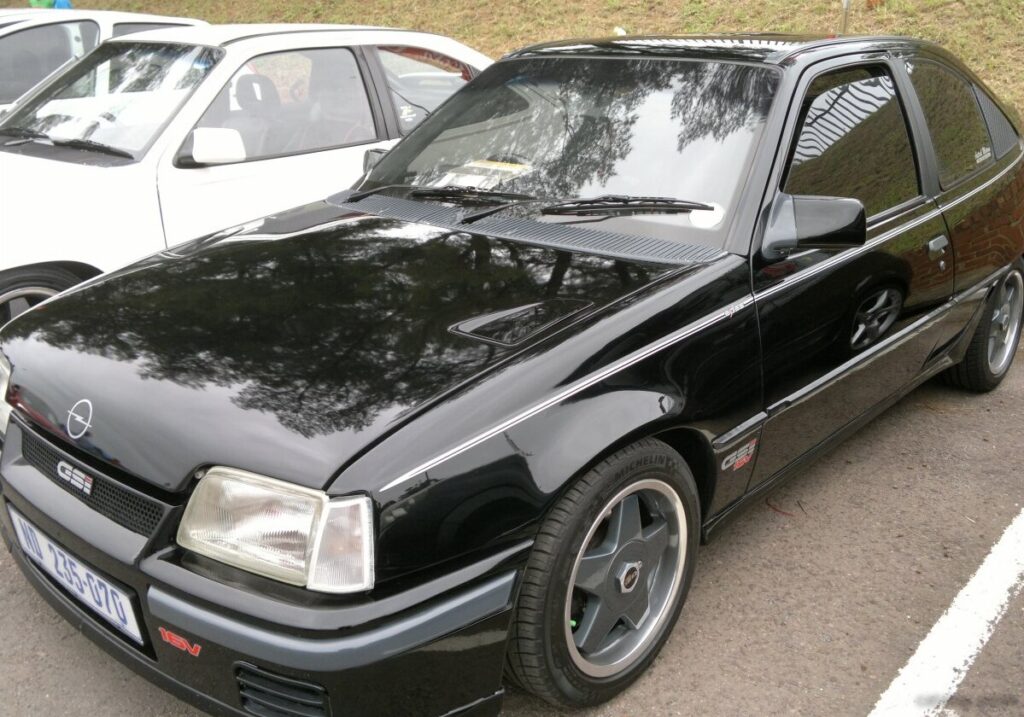
The Opel Kadett E CC 1.6 D, produced between 1984 and 1989, represented the diesel-powered entry point into the Kadett E range. Positioned as an economical and practical option, it catered to buyers prioritizing fuel efficiency over outright performance. The Kadett E, internally designated the T85, was a significant model for Opel, building upon the success of its predecessors and offering a more modern and refined package. The “CC” designation signified the ‘Coupe’ or ‘Comfort’ body style, referring to the hatchback configuration. This variant played a crucial role in Opel’s European market share during a period of increasing fuel costs and demand for affordable transportation.
Technical Specifications
| Brand | Opel |
| Model | Kadett |
| Generation | Kadett E CC |
| Type (Engine) | 1.6 D (55 Hp) |
| Start of production | 1984 |
| End of production | 1989 |
| Powertrain Architecture | Internal Combustion engine |
| Body type | Hatchback |
| Seats | 5 |
| Doors | 3-5 |
| Fuel Type | Diesel |
| Acceleration 0 – 100 km/h | 19.5 sec |
| Acceleration 0 – 62 mph | 19.5 sec |
| Acceleration 0 – 60 mph | 18.5 sec |
| Maximum speed | 152 km/h (94.45 mph) |
| Weight-to-power ratio | 16.9 kg/Hp |
| Weight-to-torque ratio | 9.7 kg/Nm |
| Power | 55 Hp @ 4600 rpm |
| Power per litre | 34.4 Hp/l |
| Torque | 96 Nm @ 2400 rpm (70.81 lb.-ft. @ 2400 rpm) |
| Engine layout | Front, Transverse |
| Engine Model/Code | 16D |
| Engine displacement | 1598 cm3 (97.52 cu. in.) |
| Number of cylinders | 4 |
| Engine configuration | Inline |
| Cylinder Bore | 80 mm (3.15 in.) |
| Piston Stroke | 79.5 mm (3.13 in.) |
| Compression ratio | 23:1 |
| Number of valves per cylinder | 2 |
| Engine aspiration | Naturally aspirated |
| Valvetrain | SOHC |
| Engine oil capacity | 5 l (5.28 US qt | 4.4 UK qt) |
| Coolant | 7.5 l (7.93 US qt | 6.6 UK qt) |
| Kerb Weight | 930 kg (2050.3 lbs.) |
| Max. weight | 1435 kg (3163.63 lbs.) |
| Max load | 505 kg (1113.33 lbs.) |
| Trunk (boot) space – minimum | 485 l (17.13 cu. ft.) |
| Trunk (boot) space – maximum | 1385 l (48.91 cu. ft.) |
| Length | 3998 mm (157.4 in.) |
| Width | 1663 mm (65.47 in.) |
| Height | 1400 mm (55.12 in.) |
| Wheelbase | 2520 mm (99.21 in.) |
| Front track | 1406 mm (55.35 in.) |
| Rear (Back) track | 1406 mm (55.35 in.) |
| Minimum turning circle | 10.5 m (34.45 ft.) |
| Drivetrain Architecture | Front wheel drive |
| Number of gears | 4 |
| Gearbox type | Manual transmission |
| Front brakes | Disc |
| Rear brakes | Drum |
Powertrain & Engine Architecture
The heart of the Kadett E 1.6 D was the 16D engine, a 1.6-liter inline-four diesel. This engine was a naturally aspirated, indirect injection diesel, utilizing a Bosch rotary injection pump. The indirect injection design, common for diesels of this era, involved pre-chambers within the cylinder head to promote better combustion. The single overhead camshaft (SOHC) operated two valves per cylinder. While relatively simple in design, the 16D was known for its durability and fuel economy, albeit at the expense of performance. The four-speed manual transmission was the only gearbox option available with this engine, geared for maximizing fuel efficiency rather than acceleration. The engine’s relatively low compression ratio of 23:1 contributed to its longevity, but also limited its power output.
Driving Characteristics
The 1.6 D Kadett E offered a decidedly unhurried driving experience. With only 55 horsepower, acceleration was slow, taking nearly 20 seconds to reach 60 mph. The four-speed manual transmission featured relatively long gear ratios, further emphasizing fuel economy over responsiveness. The engine produced usable torque at low RPMs, making it adequate for everyday driving and city commuting, but overtaking maneuvers required careful planning. Compared to the gasoline-powered Kadett E variants, particularly the 1.6 or 2.0-liter models, the diesel felt significantly slower. Even compared to other diesel Kadett E models, like the later 1.7 D, the 1.6 D offered less power and refinement.
Equipment & Trim Levels
The 1.6 D Kadett E typically represented the base trim level. Standard equipment included basic steel wheels, cloth upholstery, and a simple dashboard layout. Power steering and central locking were generally not standard, but could be added as optional extras. Interior appointments were functional rather than luxurious, reflecting the car’s budget-oriented positioning. Optional equipment included a sunroof, upgraded audio systems, and tinted glass. The focus was on providing a practical and affordable vehicle, so creature comforts were kept to a minimum.
Chassis & Braking
The Kadett E utilized a MacPherson strut front suspension and a torsion beam rear suspension. The 1.6 D variant typically featured drum brakes on the rear wheels, contributing to cost savings. Front brakes were disc. Stabilizer bars were often omitted on the base models, resulting in a slightly more pronounced body roll during cornering. The suspension was tuned for comfort and ride quality, prioritizing a smooth ride over sporty handling. The relatively light weight of the vehicle, around 930 kg (2050 lbs), helped to mitigate the effects of the modest power output and basic suspension setup.
Market Reception & Comparison
The Kadett E 1.6 D was well-received in markets where fuel economy and affordability were paramount. Critics acknowledged its practicality and durability, but often noted its lack of performance. Compared to the gasoline-powered Kadett E models, the 1.6 D offered significantly better fuel economy, but at a considerable performance penalty. The 1.6 D was often seen as a sensible choice for fleet operators and drivers covering high mileage. Its reliability and low running costs made it a popular choice for those seeking a dependable and economical mode of transportation.
Legacy
The Opel Kadett E 1.6 D, while not a performance icon, remains a testament to the era of practical and durable automotive engineering. The 16D engine, despite its limitations, proved to be remarkably robust and capable of high mileage with proper maintenance. Today, well-maintained examples are sought after by enthusiasts and collectors, particularly those seeking a nostalgic reminder of 1980s European motoring. The Kadett E 1.6 D’s legacy lies in its affordability, fuel efficiency, and enduring reliability, solidifying its place as a significant model in Opel’s history. Finding parts can be challenging, but the relative simplicity of the engine and chassis makes it a viable project for home mechanics.