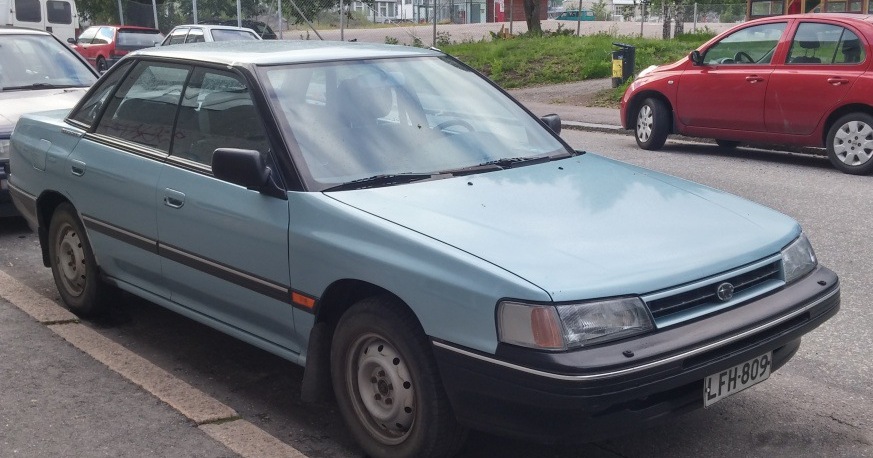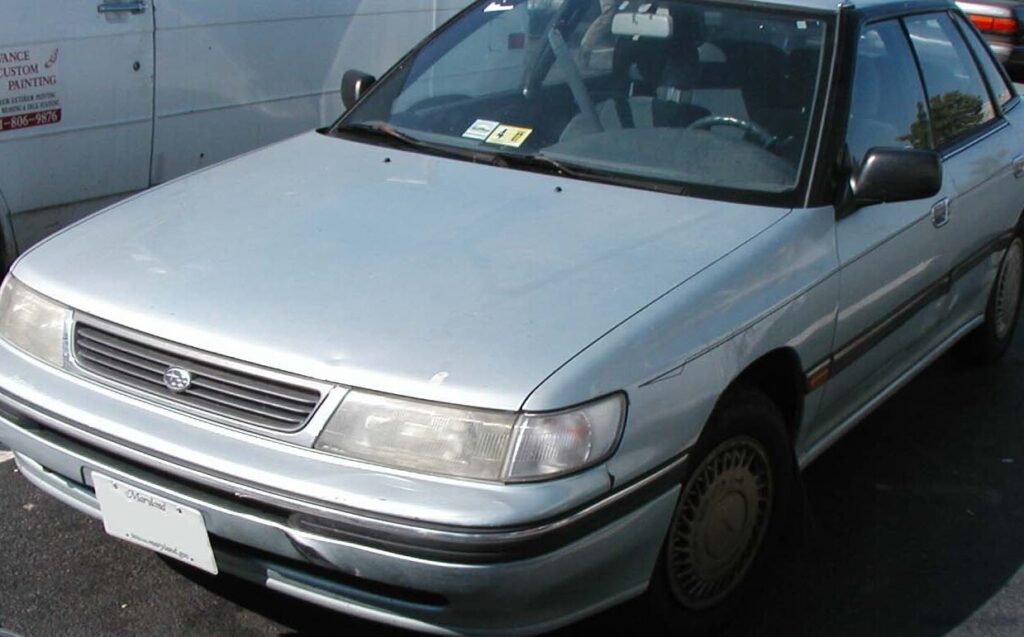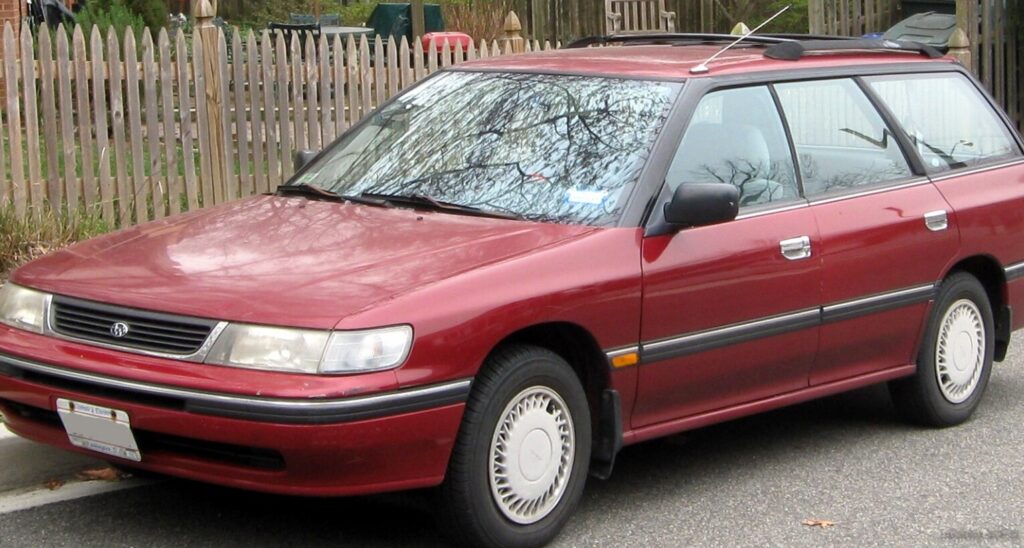
The Subaru Legacy I Station Wagon, specifically the BJF facelift model produced from 1991 to 1994, represented Subaru’s entry into the competitive mid-size wagon segment. This variant, equipped with the 2.2-liter EJ22E engine producing 136 horsepower and paired with a five-speed manual transmission, offered a compelling blend of practicality, all-wheel-drive capability, and Subaru’s signature boxer engine technology. Positioned as a step up from the base 1.8L models, the 2200 AWD wagon aimed at buyers needing more power for towing, navigating inclement weather, or simply enjoying a more spirited driving experience. It was a key model in establishing Subaru’s reputation for durable, all-weather vehicles in markets like North America and Europe.
Technical Specifications
| Brand | Subaru |
| Model | Legacy |
| Generation | Legacy I Station Wagon (BJF, facelift 1991) |
| Type (Engine) | 2200 (136 Hp) AWD |
| Start of production | 1991 |
| End of production | 1994 |
| Powertrain Architecture | Internal Combustion engine |
| Body type | Station wagon (estate) |
| Seats | 5 |
| Doors | 5 |
| Fuel Type | Petrol (Gasoline) |
| Weight-to-power ratio | 10.1 kg/Hp, 98.6 Hp/tonne |
| Weight-to-torque ratio | 7.3 kg/Nm, 137 Nm/tonne |
| Power | 136 Hp @ 6000 rpm |
| Power per litre | 61.5 Hp/l |
| Torque | 189 Nm @ 4800 rpm (139.4 lb.-ft. @ 4800 rpm) |
| Engine layout | Front, Longitudinal |
| Engine Model/Code | EJ22E |
| Engine displacement | 2212 cm3 (134.98 cu. in.) |
| Number of cylinders | 4 |
| Engine configuration | Boxer |
| Cylinder Bore | 97 mm (3.82 in.) |
| Piston Stroke | 75 mm (2.95 in.) |
| Compression ratio | 9.5:1 |
| Number of valves per cylinder | 4 |
| Fuel injection system | Multi-port manifold injection |
| Engine aspiration | Naturally aspirated engine |
| Valvetrain | SOHC |
| Engine oil capacity | 4.5 l (4.76 US qt | 3.96 UK qt) |
| Coolant | 6.2 l (6.55 US qt | 5.46 UK qt) |
| Kerb Weight | 1380 kg (3042.38 lbs) |
| Trunk (boot) space – minimum | 420 l (14.83 cu. ft.) |
| Trunk (boot) space – maximum | 1550 l (54.74 cu. ft.) |
| Fuel tank capacity | 60 l (15.85 US gal | 13.2 UK gal) |
| Length | 4620 mm (181.89 in.) |
| Width | 1690 mm (66.54 in.) |
| Height | 1480 mm (58.27 in.) |
| Wheelbase | 2580 mm (101.57 in.) |
| Front track | 1470 mm (57.87 in.) |
| Rear (Back) track | 1460 mm (57.48 in.) |
| Ride height (ground clearance) | 175 mm (6.89 in.) |
| Minimum turning circle (turning diameter) | 10.1 m (33.14 ft.) |
| Drive wheel | All wheel drive (4×4) |
| Number of gears and type of gearbox | 5 gears, manual transmission |
| Front suspension | Independent type McPherson |
| Rear suspension | Several levers and rods |
| Front brakes | Ventilated discs |
| Rear brakes | Disc |
| Assisting systems | ABS (Anti-lock braking system) |
| Steering type | Steering rack and pinion |
| Power steering | Hydraulic Steering |
| Tires size | 185/70 R14 84S |
| Wheel rims size | 14 |
Powertrain & Engine Architecture
The heart of the 1991-1994 Subaru Legacy I Station Wagon 2200 AWD is the EJ22E engine. This 2.2-liter, naturally aspirated, four-cylinder boxer engine is a defining characteristic of Subaru vehicles. The boxer configuration, with horizontally opposed pistons, provides a low center of gravity, contributing to improved handling and stability. The EJ22E utilizes a single overhead camshaft (SOHC) design and multi-port fuel injection. This engine was known for its relatively smooth operation and decent low-end torque, making it suitable for everyday driving. The five-speed manual transmission offered precise gear changes and allowed drivers to fully utilize the engine’s power band. The engine code ‘EJ22E’ signifies a specific iteration of the EJ22 series, optimized for fuel efficiency and reliability within the Legacy lineup.
Driving Characteristics
The 2200 AWD variant offered a noticeable step up in performance compared to the 1.8-liter models. While not a sports car, the 136 horsepower and 189 Nm (139.4 lb-ft) of torque provided adequate acceleration for highway merging and passing maneuvers. The all-wheel-drive system delivered excellent traction in various weather conditions, a key selling point for Subaru. The five-speed manual transmission allowed for good control over the engine’s power delivery. Compared to later, more powerful Legacy models, this variant felt less strained at higher speeds, but also lacked the outright acceleration of the turbocharged or larger displacement engines. The gear ratios were tuned for a balance between fuel economy and usability, making it a comfortable daily driver.
Equipment & Trim Levels
The 1991-1994 Subaru Legacy I Station Wagon 2200 AWD typically came standard with features like power steering, ABS brakes, and a basic audio system. Interior upholstery was generally cloth, with a functional, if somewhat spartan, dashboard layout. Optional extras included air conditioning, power windows, and upgraded audio systems. Trim levels varied by market, but generally, the 2200 AWD represented a mid-range offering, bridging the gap between the base models and the more luxurious or performance-oriented trims. The wagon body style itself was a significant feature, offering a large cargo area for families or those needing to transport bulky items.
Chassis & Braking
The Legacy I Station Wagon utilized an independent McPherson strut suspension in the front and a multi-link suspension in the rear. This setup provided a comfortable ride quality while maintaining reasonable handling characteristics. The braking system consisted of ventilated discs in the front and solid discs in the rear, providing adequate stopping power for the vehicle’s weight. The ABS system enhanced safety by preventing wheel lockup during hard braking. Stabilizer bars were included to reduce body roll during cornering, further improving handling. The chassis was designed to accommodate the all-wheel-drive system without compromising interior space.
Market Reception & Comparison
The Subaru Legacy I Station Wagon 2200 AWD was generally well-received by automotive critics for its practicality, all-weather capability, and unique boxer engine. It was often praised as a sensible and reliable choice for families and individuals needing a versatile vehicle. Compared to competitors like the Toyota Camry Wagon or Honda Accord Wagon, the Legacy offered the advantage of standard all-wheel drive. Fuel economy was respectable for its class, though not exceptional. Reliability was generally good, although the EJ22E engine was known to be susceptible to head gasket issues in some cases, a common problem with early Subaru boxer engines.
Legacy
The Subaru Legacy I Station Wagon 2200 AWD holds a significant place in Subaru’s history as a model that helped establish the brand’s reputation for durable, all-weather vehicles. The EJ22E engine, while prone to some maintenance issues, proved to be a robust and long-lasting powerplant when properly maintained. Today, these vehicles are increasingly sought after by enthusiasts and collectors, particularly those who appreciate the unique characteristics of Subaru’s boxer engine and all-wheel-drive system. Finding well-maintained examples can be challenging, but the 2200 AWD variant remains a testament to Subaru’s engineering prowess and commitment to building practical, reliable vehicles.