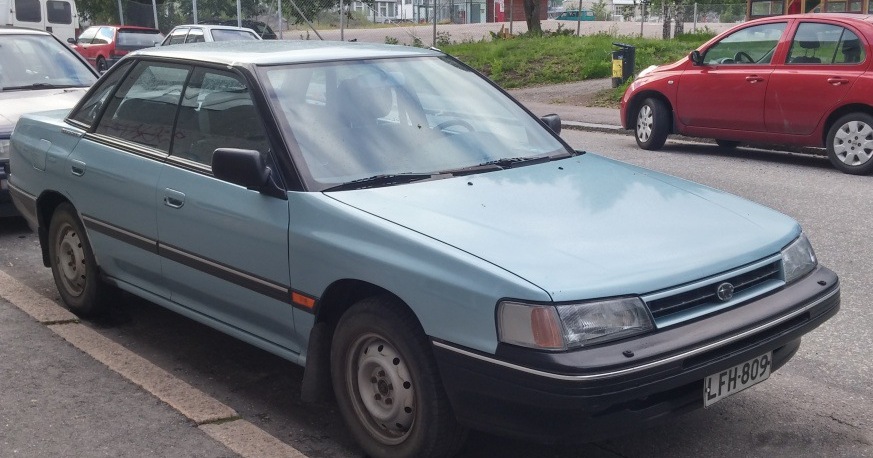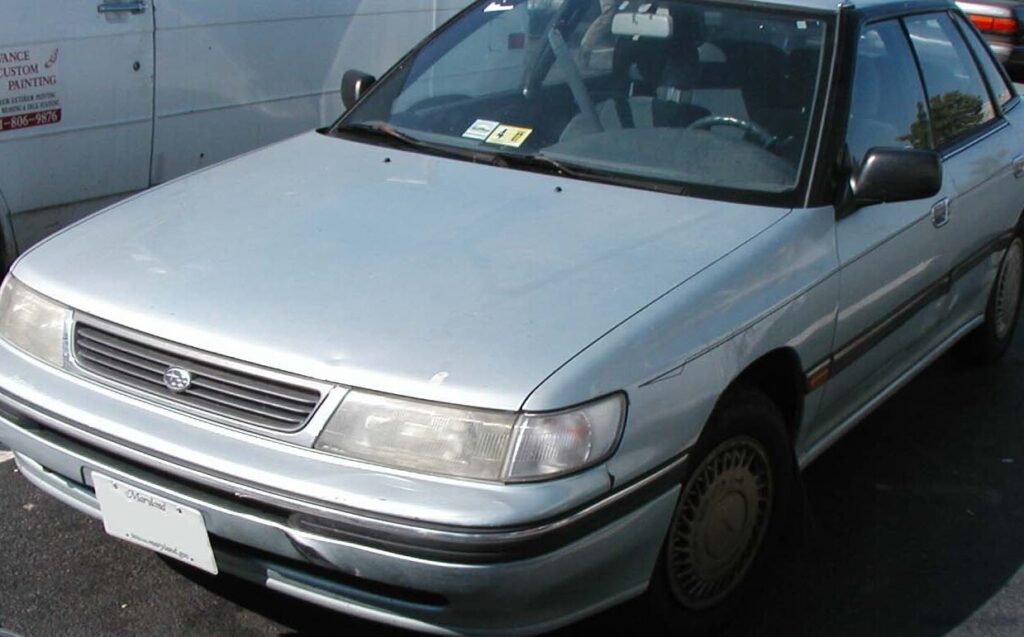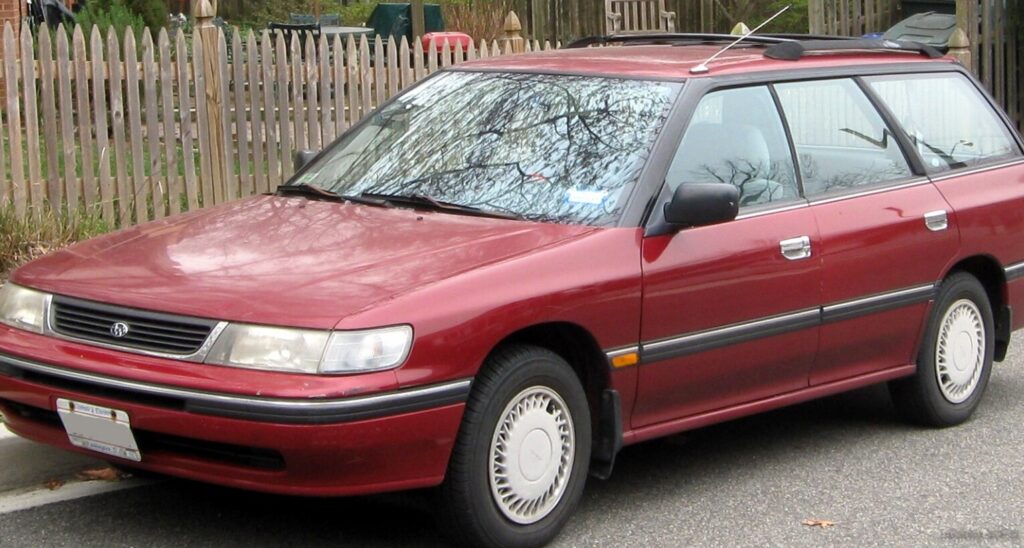
The Subaru Legacy I Station Wagon, specifically the BJF facelift model produced from 1991 to 1994, represented Subaru’s entry into the competitive mid-size wagon segment. This variant, equipped with the 2.2-liter EJ22E engine producing 136 horsepower and paired with an automatic transmission, and all-wheel drive, was positioned as a practical and capable family vehicle. It built upon the initial Legacy launch, offering a refreshed design and refined features. The BJF facelift brought subtle styling updates and improvements to the interior, solidifying the Legacy’s reputation for reliability and all-weather capability. This model was primarily sold in markets like Japan, Australia, and Europe, where station wagons held significant popularity.
Technical Specifications
| Brand | Subaru |
| Model | Legacy |
| Generation | Legacy I Station Wagon (BJF, facelift 1991) |
| Type (Engine) | 2200 (136 Hp) AWD Automatic |
| Start of production | 1991 |
| End of production | 1994 |
| Powertrain Architecture | Internal Combustion engine |
| Body type | Station wagon (estate) |
| Seats | 5 |
| Doors | 5 |
| Fuel Type | Petrol (Gasoline) |
| Power | 136 Hp @ 6000 rpm |
| Power per litre | 61.5 Hp/l |
| Torque | 189 Nm @ 4800 rpm / 139.4 lb.-ft. @ 4800 rpm |
| Engine layout | Front, Longitudinal |
| Engine Model/Code | EJ22E |
| Engine displacement | 2212 cm3 / 134.98 cu. in. |
| Number of cylinders | 4 |
| Engine configuration | Boxer |
| Cylinder Bore | 97 mm / 3.82 in. |
| Piston Stroke | 75 mm / 2.95 in. |
| Compression ratio | 9.5:1 |
| Number of valves per cylinder | 4 |
| Fuel injection system | Multi-port manifold injection |
| Engine aspiration | Naturally aspirated engine |
| Valvetrain | SOHC |
| Engine oil capacity | 4.5 l / 4.76 US qt | 3.96 UK qt |
| Coolant | 6.1 l / 6.45 US qt | 5.37 UK qt |
| Trunk (boot) space – minimum | 420 l / 14.83 cu. ft. |
| Trunk (boot) space – maximum | 1550 l / 54.74 cu. ft. |
| Fuel tank capacity | 60 l / 15.85 US gal | 13.2 UK gal |
| Length | 4620 mm / 181.89 in. |
| Width | 1690 mm / 66.54 in. |
| Height | 1480 mm / 58.27 in. |
| Wheelbase | 2580 mm / 101.57 in. |
| Front track | 1470 mm / 57.87 in. |
| Rear (Back) track | 1460 mm / 57.48 in. |
| Ride height (ground clearance) | 175 mm / 6.89 in. |
| Minimum turning circle (turning diameter) | 10.1 m / 33.14 ft. |
| Drive wheel | All wheel drive (4×4) |
| Number of gears and type of gearbox | 4 gears, automatic transmission |
| Front suspension | Independent type McPherson |
| Rear suspension | Several levers and rods |
| Front brakes | Ventilated discs |
| Rear brakes | Disc |
| Assisting systems | ABS (Anti-lock braking system) |
| Steering type | Steering rack and pinion |
| Power steering | Hydraulic Steering |
| Tires size | 185/70 R14 84S |
| Wheel rims size | 14 |
Powertrain & Engine Architecture
The heart of this Legacy variant is the EJ22E 2.2-liter horizontally-opposed (boxer) four-cylinder engine. This engine design, a Subaru hallmark, provides a low center of gravity, contributing to improved handling and stability. The EJ22E utilizes a single overhead camshaft (SOHC) valvetrain and multi-port fuel injection. The engine’s 9.5:1 compression ratio and relatively simple design prioritized reliability and smooth operation over outright performance. The automatic transmission is a conventional four-speed unit, designed to provide comfortable and effortless cruising. While not particularly sporty, it was well-suited to the car’s intended role as a family wagon. The engine’s longitudinal mounting, coupled with the all-wheel-drive system, required a more complex drivetrain layout compared to front-wheel-drive vehicles.
Driving Characteristics
The 136-horsepower output and automatic transmission combination resulted in a driving experience focused on comfort and ease of use. Acceleration was adequate for everyday driving, but not particularly brisk. The automatic transmission, while smooth, lacked the responsiveness of a manual gearbox. The all-wheel-drive system provided excellent traction in various weather conditions, making it a particularly appealing choice in regions with snow or rain. The gear ratios were tuned for fuel efficiency and relaxed cruising, rather than spirited performance. Compared to the manual transmission versions of the 2.2L, the automatic suffered a slight performance penalty, and the higher-output 2.5-liter engines offered significantly more power. However, the automatic provided a more accessible driving experience for a wider range of drivers.
Equipment & Trim Levels
The BJF facelift Legacy Station Wagon with the 2.2L engine and automatic transmission typically came with a reasonable level of standard equipment. This included power steering, central locking, and an AM/FM radio. Higher trim levels offered features such as air conditioning, power windows, and upgraded interior upholstery. Interior materials were generally durable and practical, reflecting the car’s family-oriented nature. Optional extras included a sunroof, alloy wheels, and a more sophisticated audio system. The dashboard layout was functional and straightforward, prioritizing ease of use over stylistic flair.
Chassis & Braking
The Legacy I Station Wagon utilized an independent McPherson strut suspension at the front and a multi-link suspension at the rear. This setup provided a comfortable ride and decent handling characteristics. The braking system consisted of ventilated discs at the front and solid discs at the rear. Anti-lock brakes (ABS) were often included as standard equipment, enhancing safety. The chassis was designed to provide a good balance between rigidity and weight, contributing to the car’s overall stability. Stabilizer bars were fitted to both the front and rear axles to reduce body roll during cornering.
Market Reception & Comparison
The Subaru Legacy I Station Wagon, particularly the 2.2L automatic variant, was generally well-received by critics and consumers alike. It was praised for its practicality, reliability, and all-weather capability. Fuel economy was considered reasonable for its class, although not exceptional. Compared to other station wagons of the time, such as the Toyota Camry Wagon or the Honda Accord Wagon, the Legacy offered a unique combination of features, including standard all-wheel drive. The automatic transmission was seen as a convenient option for many buyers, although some reviewers noted its lack of sportiness. Reliability was a strong point, with the EJ22E engine proving to be durable and long-lasting.
Legacy
The Subaru Legacy I Station Wagon, and specifically the 2.2L automatic variant, has maintained a respectable reputation for reliability in the used car market. The EJ22E engine is known for its longevity, provided it has been properly maintained. Common issues include oil leaks and occasional head gasket failures, but these are generally not catastrophic. Today, these vehicles are often sought after by enthusiasts and those looking for a practical and affordable all-wheel-drive wagon. While not a performance icon, the Legacy I Station Wagon represents a significant chapter in Subaru’s history, establishing the brand as a leader in all-wheel-drive technology and practical vehicle design. Its enduring appeal lies in its blend of functionality, reliability, and all-weather capability.