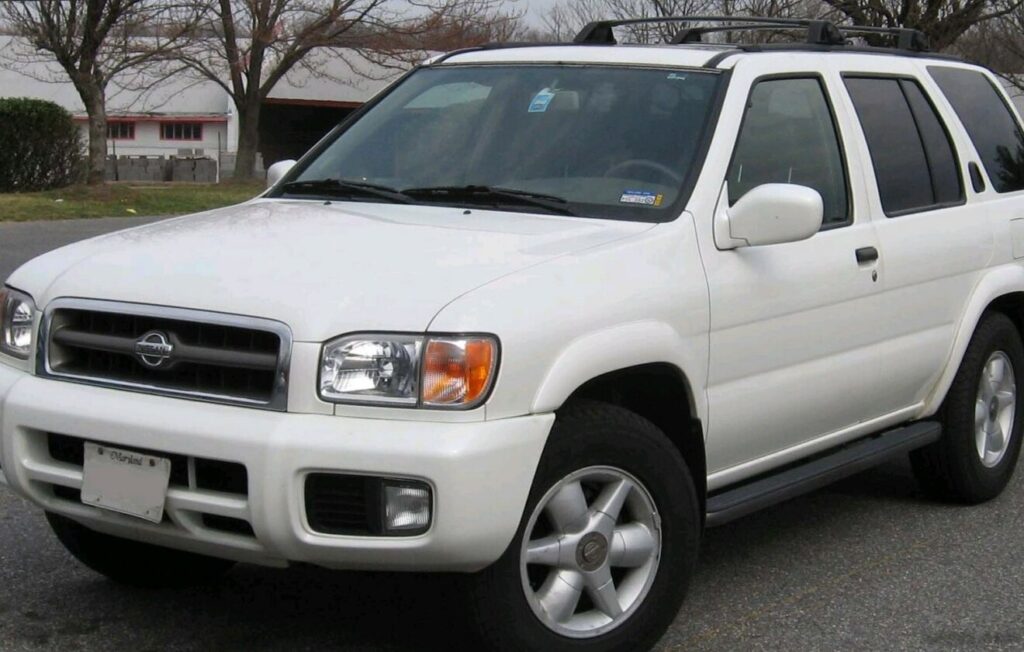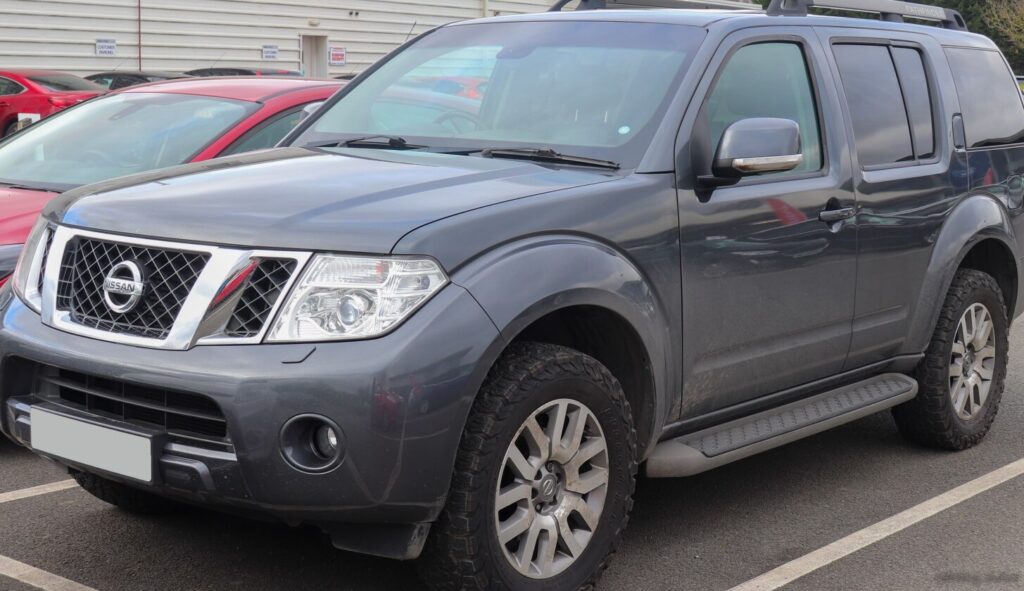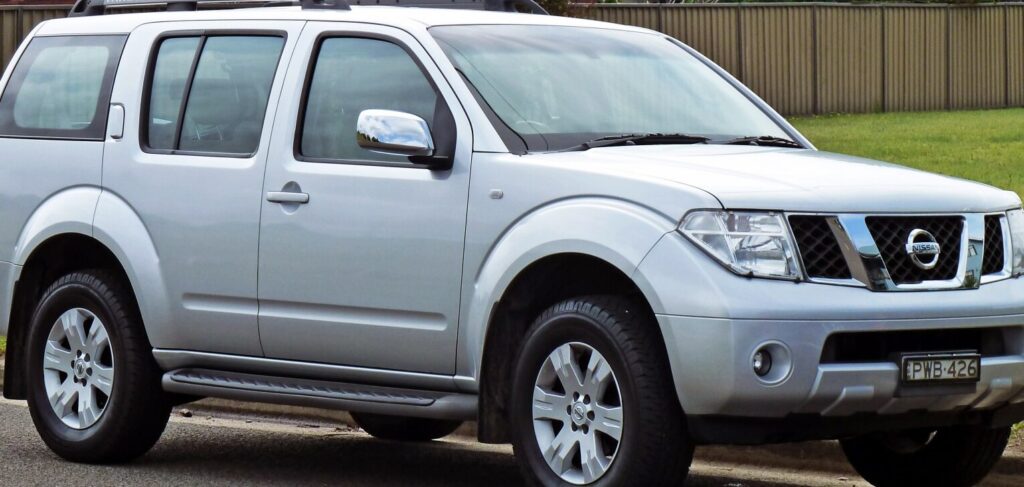
The Nissan Pathfinder III, produced from 2004 to 2010, represented a significant shift for Nissan’s mid-size SUV offering. Moving away from the truck-based chassis of its predecessors, the third-generation Pathfinder adopted a car-based platform – the D platform shared with the Altima and Murano – prioritizing on-road comfort and family-friendly usability. The 4.0i V6 4WD Automatic variant, equipped with the VQ40DE engine, occupied a prominent position in the lineup, offering a balance of power, capability, and convenience for American families seeking a versatile SUV. This model year saw a move towards a more refined driving experience, targeting buyers who desired a comfortable and capable vehicle for both daily commutes and weekend adventures.
Technical Specifications
| Brand | Nissan |
| Model | Pathfinder |
| Generation | Pathfinder III |
| Type (Engine) | 4.0 i V6 (269 Hp) 4WD Automatic |
| Start of production | 2004 |
| End of production | 2010 |
| Powertrain Architecture | Internal Combustion engine |
| Body type | SUV |
| Seats | 7 |
| Doors | 4 |
| Fuel consumption (urban) | 18.7 l/100 km (12.6 US mpg) |
| Fuel consumption (extra urban) | 10.5 l/100 km (22.4 US mpg) |
| Fuel consumption (combined) | 13.5 l/100 km (17.4 US mpg) |
| Fuel Type | Petrol (Gasoline) |
| Acceleration 0 – 100 km/h | 8.9 sec |
| Acceleration 0 – 62 mph | 8.9 sec |
| Acceleration 0 – 60 mph | 8.5 sec |
| Maximum speed | 190 km/h (118.06 mph) |
| Emission standard | Euro 4 |
| Weight-to-power ratio | 7.9 kg/Hp |
| Weight-to-torque ratio | 5.5 kg/Nm |
| Power | 269 Hp @ 5600 rpm |
| Torque | 385 Nm @ 4000 rpm (283.96 lb.-ft. @ 4000 rpm) |
| Engine layout | Front, Longitudinal |
| Engine Model/Code | VQ40DE |
| Engine displacement | 3954 cm3 (241.29 cu. in.) |
| Number of cylinders | 6 |
| Engine configuration | V-engine |
| Fuel injection system | Multi-port manifold injection |
| Engine aspiration | Naturally aspirated engine |
| Engine oil capacity | 5.1 l (5.39 US qt | 4.49 UK qt) |
| Coolant capacity | 10.2 l (10.78 US qt | 8.97 UK qt) |
| Kerb Weight | 2132 kg (4700.26 lbs.) |
| Max. weight | 2793 kg (6157.51 lbs.) |
| Max load | 661 kg (1457.26 lbs.) |
| Trunk (boot) space – minimum | 515 l (18.19 cu. ft.) |
| Trunk (boot) space – maximum | 2091 l (73.84 cu. ft.) |
| Fuel tank capacity | 80 l (21.13 US gal | 17.6 UK gal) |
| Length | 4877 mm (192.01 in.) |
| Width | 1854 mm (72.99 in.) |
| Height | 1879 mm (73.98 in.) |
| Wheelbase | 2850 mm (112.2 in.) |
| Front track | 1570 mm (61.81 in.) |
| Rear track | 1570 mm (61.81 in.) |
| Minimum turning circle | 12.4 m (40.68 ft.) |
| Drive wheel | All wheel drive (4×4) |
| Number of gears | 5 |
| Gearbox type | Automatic transmission |
| Power steering | Hydraulic Steering |
| Tires size | 255/65 R17 |
| Wheel rims size | 17 |
Powertrain & Engine Architecture
The heart of the Pathfinder 4.0i is the VQ40DE 4.0-liter V6 engine. This engine, a member of Nissan’s highly regarded VQ family, is known for its smooth operation and reliability. The VQ40DE features a 60-degree V-angle, dual overhead camshafts (DOHC), and multi-port fuel injection. Its aluminum block and cylinder heads contribute to a relatively lightweight construction. Producing 269 horsepower at 5600 rpm and 385 lb-ft of torque at 4000 rpm, the VQ40DE provided ample power for towing and everyday driving. The engine’s torque curve was relatively flat, offering good responsiveness across a wide range of engine speeds. Paired with a 5-speed automatic transmission, the powertrain delivered smooth and predictable shifts. This transmission was designed for durability and ease of use, prioritizing comfort over outright performance. The 4WD system was typically an electronically controlled part-time system, allowing the driver to switch between 2WD and 4WD modes as needed.
Driving Characteristics
The 4.0L V6 and 5-speed automatic combination in the Pathfinder III delivered a comfortable and capable driving experience. Acceleration from 0-60 mph was achieved in around 8.5 seconds, respectable for a mid-size SUV of this era. While not a sports car, the Pathfinder offered sufficient power for merging onto highways and passing other vehicles. The automatic transmission, while smooth, wasn’t particularly quick to downshift, meaning drivers sometimes needed to anticipate passing maneuvers. Compared to the base 2.5L four-cylinder engine, the 4.0L V6 provided a significant performance boost, especially when fully loaded or towing. Compared to potential manual transmission variants (not commonly available in the US market), the automatic offered less driver engagement but greater convenience. The 4WD system provided enhanced traction in inclement weather and on unpaved surfaces, making it a suitable choice for those living in areas with challenging road conditions.
Equipment & Trim Levels
The 4.0i V6 4WD Automatic trim typically included a generous array of standard features. These commonly included air conditioning, power windows and locks, keyless entry, a CD player with multiple speakers, and alloy wheels. Higher trim levels, such as the LE and SE, added features like leather upholstery, a sunroof, upgraded audio systems, and automatic climate control. Optional extras included a navigation system, rear-seat entertainment system, and a tow package. Interior upholstery was typically cloth on base models, with leather available on higher trims. The dashboard layout was functional and straightforward, prioritizing ease of use. Third-row seating was standard, providing seating for up to seven passengers, although space in the third row was limited.
Chassis & Braking
The Pathfinder III utilized an independent front suspension with MacPherson struts and a multi-link rear suspension. This suspension setup provided a comfortable ride quality, absorbing bumps and irregularities in the road surface effectively. Stabilizer bars were fitted to both the front and rear axles to reduce body roll during cornering. Braking duties were handled by disc brakes on all four wheels, with anti-lock braking system (ABS) as standard equipment. Rear drum brakes were sometimes found on lower trim levels. The steering was hydraulically assisted, providing a responsive and predictable feel. The Pathfinder’s chassis was designed to balance on-road comfort with off-road capability, offering a compromise between the two.
Market Reception & Comparison
The Nissan Pathfinder III 4.0i V6 4WD Automatic was generally well-received by automotive critics. It was praised for its comfortable ride, spacious interior, and powerful engine. However, some critics noted that the automatic transmission could be slow to respond at times, and the fuel economy was not particularly impressive. Compared to competitors like the Toyota 4Runner and Honda Pilot, the Pathfinder offered a more affordable price point and a more refined driving experience. The 4Runner was often seen as more rugged and off-road focused, while the Pilot prioritized interior space and family-friendliness. Fuel economy figures of around 17.4 mpg combined were typical, which was average for a mid-size SUV of that era.
Legacy
The VQ40DE engine has proven to be remarkably durable and reliable, with many examples exceeding 200,000 miles with proper maintenance. The 5-speed automatic transmission, while not as sophisticated as some newer transmissions, has also proven to be relatively trouble-free. Today, the Pathfinder III 4.0i V6 4WD Automatic remains a popular choice in the used car market, particularly among buyers seeking a capable and affordable SUV. Common maintenance items include regular oil changes, coolant flushes, and transmission fluid changes. Potential issues to watch out for include corrosion in areas prone to rust, and occasional problems with the 4WD system. Overall, the Pathfinder III 4.0i represents a solid and dependable SUV that continues to provide years of service to its owners.