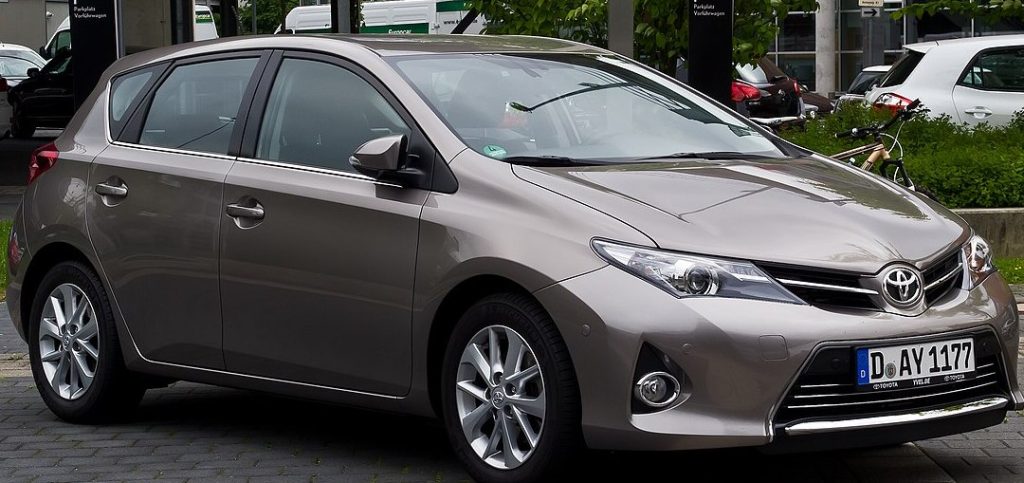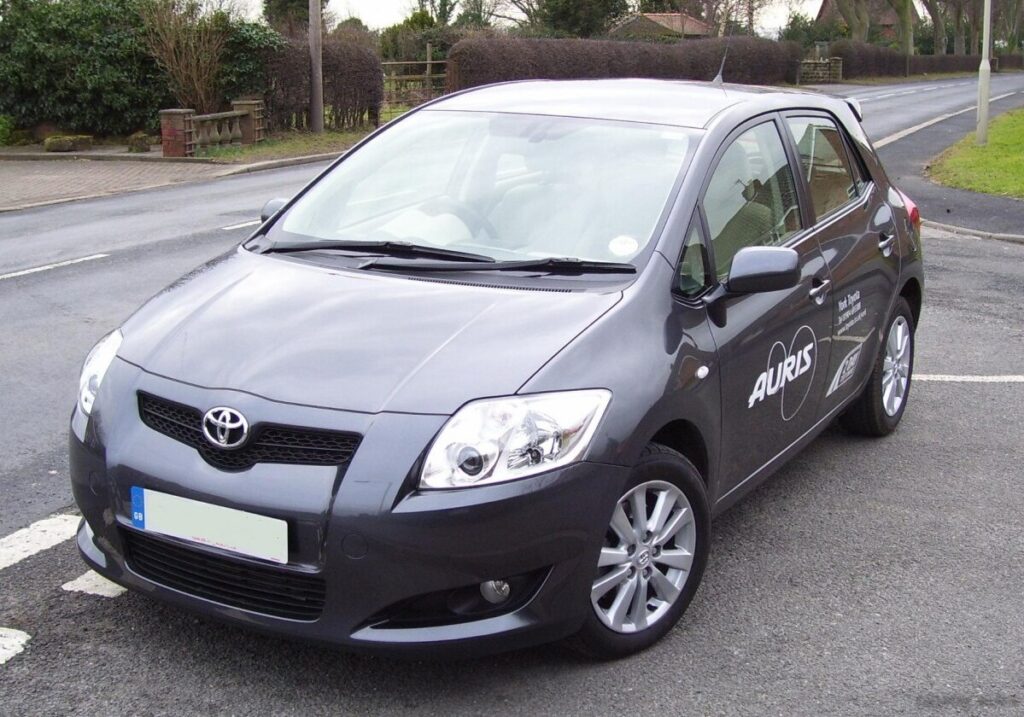
The Toyota Auris I 1.8 16V Valvematic, produced from 2009 to 2010, represented a significant step forward for Toyota’s compact hatchback offering in the European market. Positioned as a mid-range trim within the first generation Auris (E150/E180 series), this variant aimed to balance fuel efficiency with a respectable level of performance. It served as a key competitor to vehicles like the Volkswagen Golf, Ford Focus, and Opel/Vauxhall Astra, offering Toyota’s renowned reliability and a focus on practicality. This model was never officially sold in the North American market, but it provides an interesting case study in Toyota’s global engineering and market strategies.
Technical Specifications
| Brand | Toyota |
| Model | Auris |
| Generation | Auris I |
| Type (Engine) | 1.8 16V Valvematic (147 Hp) |
| Start of production | 2009 |
| End of production | 2010 |
| Powertrain Architecture | Internal Combustion engine |
| Body type | Hatchback |
| Seats | 5 |
| Doors | 5 |
| Fuel consumption (urban) | 8.6 l/100 km (27.4 US mpg) |
| Fuel consumption (extra urban) | 5.4 l/100 km (43.6 US mpg) |
| Fuel consumption (combined) | 6.6 l/100 km (35.6 US mpg) |
| Fuel Type | Petrol (Gasoline) |
| Acceleration 0 – 100 km/h | 9.5 sec |
| Acceleration 0 – 62 mph | 9.5 sec |
| Acceleration 0 – 60 mph | 9 sec |
| Maximum speed | 200 km/h (124.27 mph) |
| Power | 147 Hp @ 6400 rpm |
| Torque | 180 Nm @ 4000 rpm (132.76 lb.-ft. @ 4000 rpm) |
| Engine layout | Front, Transverse |
| Engine Model/Code | 2ZR-FAE |
| Engine displacement | 1798 cm3 (109.72 cu. in.) |
| Number of cylinders | 4 |
| Engine configuration | Inline |
| Number of valves per cylinder | 4 |
| Fuel injection system | Multi-port manifold injection |
| Engine aspiration | Naturally aspirated engine |
| Valvetrain | DOHC |
| Engine oil capacity | 4.2 l (4.44 US qt | 3.7 UK qt) |
| Coolant capacity | 5.6 l (5.92 US qt | 4.93 UK qt) |
| Trunk (boot) space – minimum | 350 l (12.36 cu. ft.) |
| Trunk (boot) space – maximum | 750 l (26.49 cu. ft.) |
| Fuel tank capacity | 55 l (14.53 US gal | 12.1 UK gal) |
| Length | 4220 mm (166.14 in.) |
| Width | 1760 mm (69.29 in.) |
| Height | 1515 mm (59.65 in.) |
| Wheelbase | 2600 mm (102.36 in.) |
| Front track | 1525 mm (60.04 in.) |
| Rear track | 1525 mm (60.04 in.) |
| Drivetrain Architecture | Front wheel drive |
| Number of gears | 6 |
| Gearbox type | Manual transmission |
| Front suspension | Spring Strut |
| Rear suspension | Torsion |
| Front brakes | Ventilated discs |
| Rear brakes | Disc |
| Assisting systems | ABS (Anti-lock braking system) |
| Steering type | Steering rack and pinion |
Powertrain & Engine Architecture
The heart of the Auris 1.8 16V Valvematic is the 2ZR-FAE engine, a 1.798-liter inline-four cylinder gasoline engine. This engine is notable for its Valvematic system, Toyota’s continuously variable valve timing and lift technology. Unlike traditional VVT-i systems that only adjust valve timing, Valvematic also alters valve lift, allowing for greater control over airflow into the cylinders. This results in improved fuel efficiency and a broader torque curve. The engine utilizes multi-port fuel injection and a double overhead camshaft (DOHC) configuration. The 6-speed manual transmission was standard, offering precise shifts and contributing to the car’s relatively engaging driving experience. The engine’s design prioritized refinement and efficiency over outright power, aligning with the Auris’s intended role as a practical and economical daily driver.
Driving Characteristics
The 147 horsepower and 132.76 lb-ft of torque produced by the 1.8L engine provided adequate, though not exhilarating, performance. Acceleration from 0-60 mph took approximately 9 seconds, making it competitive within its class. The Valvematic system helped to deliver a usable amount of torque across a wide RPM range, making it easy to drive in everyday traffic. Compared to the lower-powered 1.6L Auris variants, the 1.8 offered a noticeable improvement in responsiveness, particularly when overtaking or climbing hills. However, it didn’t possess the punch of higher-performance models available in other markets. The 6-speed manual transmission was well-matched to the engine’s characteristics, offering smooth gear changes and allowing the driver to keep the engine in its optimal power band. The overall driving experience was comfortable and refined, prioritizing ease of use over sporty handling.
Equipment & Trim Levels
The 1.8 16V Valvematic trim typically included features such as air conditioning, power windows and mirrors, a CD player with auxiliary input, and ABS brakes. Higher trim levels offered options like alloy wheels, a multi-function steering wheel, and upgraded interior upholstery. Interior materials were generally of good quality, reflecting Toyota’s commitment to build quality. The dashboard layout was functional and user-friendly, with logically placed controls. Optional extras included a sunroof, parking sensors, and a more advanced audio system.
Chassis & Braking
The Auris I utilized a front-wheel-drive layout with a MacPherson strut suspension in the front and a torsion beam suspension in the rear. This setup provided a good balance between ride comfort and handling. The front brakes were ventilated discs, while the rear brakes were solid discs, providing adequate stopping power for the vehicle’s weight and performance. ABS (Anti-lock Braking System) was standard, enhancing safety in emergency braking situations. The steering was a rack and pinion system, offering precise and responsive control.
Market Reception & Comparison
The Auris 1.8 16V Valvematic was generally well-received by automotive critics. It was praised for its fuel efficiency, comfortable ride, and Toyota’s reputation for reliability. However, some reviewers noted that the engine lacked the excitement of some of its competitors. Compared to the 1.6L Auris, the 1.8 offered a noticeable performance upgrade, but at a slightly higher price point. The 1.8 also offered better fuel economy than some of the larger-engined rivals, making it an attractive option for drivers seeking a balance between performance and efficiency. Reliability surveys consistently ranked the Auris highly, making it a popular choice in the used car market.
Legacy
The 2ZR-FAE engine, found in the Auris 1.8, has proven to be a durable and reliable powerplant. While not without its minor issues (such as occasional oil consumption in higher mileage examples), it generally requires minimal maintenance and offers long-term dependability. On the used car market, the Auris 1.8 16V Valvematic remains a popular choice for buyers seeking a practical, economical, and reliable hatchback. Its combination of fuel efficiency, comfortable ride, and Toyota’s renowned build quality ensures its continued appeal for years to come. The Valvematic technology, while not revolutionary, demonstrated Toyota’s commitment to improving engine efficiency and performance.