
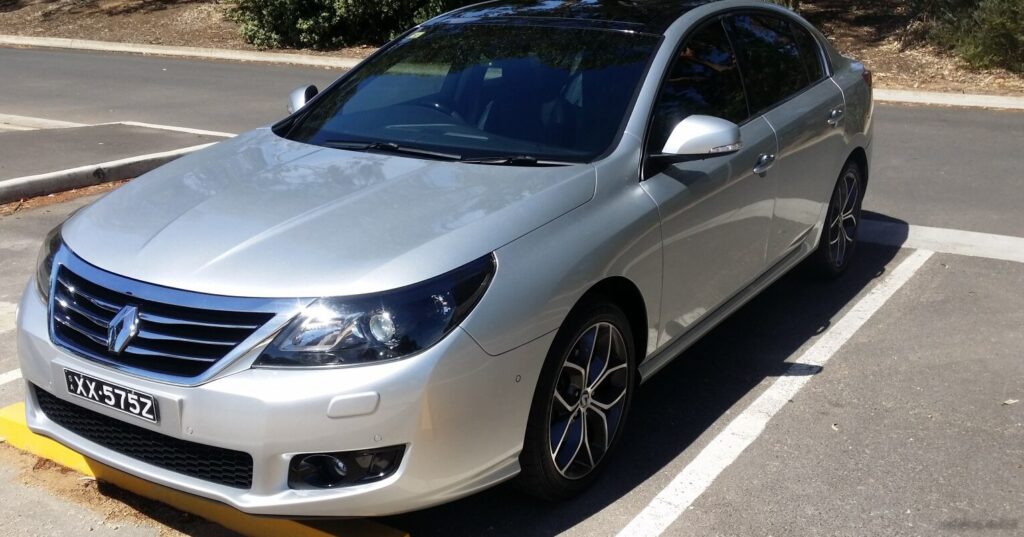
The Renault Latitude 2.0 dCi 16V (175 hp) FAP was a mid-size sedan produced by the French manufacturer Renault from 2010 to 2013. Positioned as a more upscale offering within Renault’s lineup, the Latitude aimed to compete with established players like the Ford Mondeo and Volkswagen Passat, particularly in European markets. It represented Renault’s attempt to offer a comfortable and well-equipped vehicle targeting business travelers and families seeking a spacious and refined sedan. This specific 2.0 dCi variant, equipped with a six-speed automatic transmission, served as a key volume seller, balancing performance with fuel efficiency.
Technical Specifications
| Brand | Renault |
| Model | Latitude |
| Generation | Latitude |
| Type (Engine) | 2.0 dCi 16V (175 Hp) FAP |
| Start of production | 2010 |
| End of production | 2013 |
| Powertrain Architecture | Internal Combustion engine |
| Body type | Sedan |
| Seats | 5 |
| Doors | 4 |
| Fuel consumption (urban) | 8.4 l/100 km (28 US mpg) |
| Fuel consumption (extra urban) | 5.5 l/100 km (42.8 US mpg) |
| Fuel consumption (combined) | 6.5 l/100 km (36.2 US mpg) |
| CO2 emissions | 170 g/km |
| Fuel Type | Diesel |
| Acceleration 0 – 100 km/h | 9.9 sec |
| Acceleration 0 – 62 mph | 9.9 sec |
| Acceleration 0 – 60 mph | 9.4 sec |
| Maximum speed | 215 km/h (133.59 mph) |
| Emission standard | Euro 4 |
| Weight-to-power ratio | 9.7 kg/Hp |
| Weight-to-torque ratio | 4.7 kg/Nm |
| Power | 175 Hp @ 3750 rpm |
| Torque | 360 Nm @ 2000 rpm (265.52 lb.-ft. @ 2000 rpm) |
| Engine layout | Front, Transverse |
| Engine Model/Code | M9R |
| Engine displacement | 1995 cm3 (121.74 cu. in.) |
| Number of cylinders | 4 |
| Engine configuration | Inline |
| Cylinder Bore | 84 mm (3.31 in.) |
| Piston Stroke | 90 mm (3.54 in.) |
| Number of valves per cylinder | 4 |
| Fuel injection system | Diesel Commonrail |
| Engine aspiration | Turbocharger, Intercooler |
| Valvetrain | DOHC |
| Engine oil capacity | 7.4 l (7.82 US qt | 6.51 UK qt) |
| Coolant capacity | 7.8 l (8.24 US qt | 6.86 UK qt) |
| Kerb Weight | 1695 kg (3736.84 lbs.) |
| Max. weight | 2180 kg (4806.08 lbs.) |
| Max load | 485 kg (1069.24 lbs.) |
| Trunk (boot) space – minimum | 477 l (16.85 cu. ft.) |
| Trunk (boot) space – maximum | 511 l (18.05 cu. ft.) |
| Fuel tank capacity | 70 l (18.49 US gal | 15.4 UK gal) |
| Length | 4897 mm (192.8 in.) |
| Width | 1832 mm (72.13 in.) |
| Height | 1483 mm (58.39 in.) |
| Wheelbase | 2762 mm (108.74 in.) |
| Front track | 1565 mm (61.61 in.) |
| Rear track | 1562 mm (61.5 in.) |
| Minimum turning circle | 11.2 m (36.75 ft.) |
| Drivetrain | Front wheel drive |
| Number of gears | 6 |
| Gearbox type | Automatic transmission |
| Front suspension | Independent type McPherson |
| Rear suspension | Independent multi-link suspension |
| Front brakes | Ventilated discs |
| Rear brakes | Disc |
| Steering type | Steering rack and pinion |
| Power steering | Electric Steering |
| Tires size | 225/45 R18 |
| Wheel rims size | 18 |
Powertrain & Engine Architecture
The Renault Latitude 2.0 dCi 16V utilized the M9R engine, a 2.0-liter inline-four cylinder diesel engine. This engine was a common sight in Renault and Nissan vehicles of the era, known for its robust construction and relatively good fuel economy. The ‘16V’ designation indicates the engine features four valves per cylinder, enhancing breathing and power output. The engine employed a common rail direct injection system, delivering fuel at extremely high pressure for optimized combustion. A turbocharger with an intercooler further boosted performance, providing increased air intake to the engine. The FAP (Filtre à Particules) or Diesel Particulate Filter was a crucial component, reducing harmful soot emissions to meet Euro 4 standards. The six-speed automatic transmission, sourced from Aisin, was chosen for its smoothness and efficiency. It featured adaptive shift logic, adjusting gear changes based on driving style and conditions.
Driving Characteristics
The 175 hp and 360 Nm (265 lb-ft) of torque provided by the 2.0 dCi engine delivered adequate performance for everyday driving. Acceleration from 0-60 mph took around 9.4 seconds, and top speed was rated at 133.59 mph. While not a sports sedan, the Latitude 2.0 dCi offered sufficient power for highway cruising and overtaking. Compared to the higher-output 2.0 dCi variants (some producing over 180 hp), this version prioritized fuel economy and a more relaxed driving experience. The automatic transmission, while smooth, could sometimes feel hesitant during quick downshifts. The gear ratios were tuned for efficiency, meaning the engine didn’t always feel as responsive as it could be. Compared to a manual transmission equipped Latitude, the automatic offered convenience but sacrificed some driver engagement.
Equipment & Trim Levels
The Renault Latitude 2.0 dCi 16V FAP was typically offered in well-equipped trim levels. Standard features often included automatic climate control, a CD/MP3 stereo system, power windows and mirrors, and alloy wheels. Higher trim levels added features like leather upholstery, a navigation system, parking sensors, and a premium sound system. Interior upholstery was generally cloth on base models, with leather options available. The dashboard layout was modern for its time, featuring a central touchscreen display for infotainment functions. Optional extras included a panoramic sunroof, heated seats, and advanced driver-assistance systems.
Chassis & Braking
The Latitude featured a comfortable ride thanks to its independent suspension setup. The front utilized a McPherson strut design, while the rear employed a multi-link system. This configuration provided good handling and stability. Braking duties were handled by ventilated discs at the front and solid discs at the rear. Anti-lock Braking System (ABS) was standard, enhancing safety during emergency braking. The Latitude’s weight of approximately 1695 kg (3737 lbs) meant the braking system needed to be effective to provide adequate stopping power. Stabilizer bars were fitted to both the front and rear axles to reduce body roll during cornering.
Market Reception & Comparison
The Renault Latitude received mixed reviews from automotive critics. It was praised for its spacious interior, comfortable ride, and generous equipment levels. However, some critics found the styling to be somewhat conservative and the driving experience lacked the dynamism of rivals like the Ford Mondeo. Fuel economy was generally considered good for a vehicle of its size and class. Compared to other trims in the Latitude lineup, the 2.0 dCi Automatic offered a good balance between performance, fuel efficiency, and price. It appealed to buyers who prioritized comfort and practicality over outright performance.
Legacy
The Renault Latitude, while not a massive sales success, offered a compelling package for buyers seeking a comfortable and well-equipped mid-size sedan. The M9R 2.0 dCi engine proved to be relatively reliable, although regular maintenance, particularly regarding the FAP filter, was crucial. On the used car market, the Latitude 2.0 dCi Automatic represents a relatively affordable option. Potential buyers should be aware of the potential costs associated with maintaining the diesel particulate filter and ensure the vehicle has been properly serviced. The Latitude remains a testament to Renault’s ambition to compete in the upper echelons of the mid-size sedan segment.
